
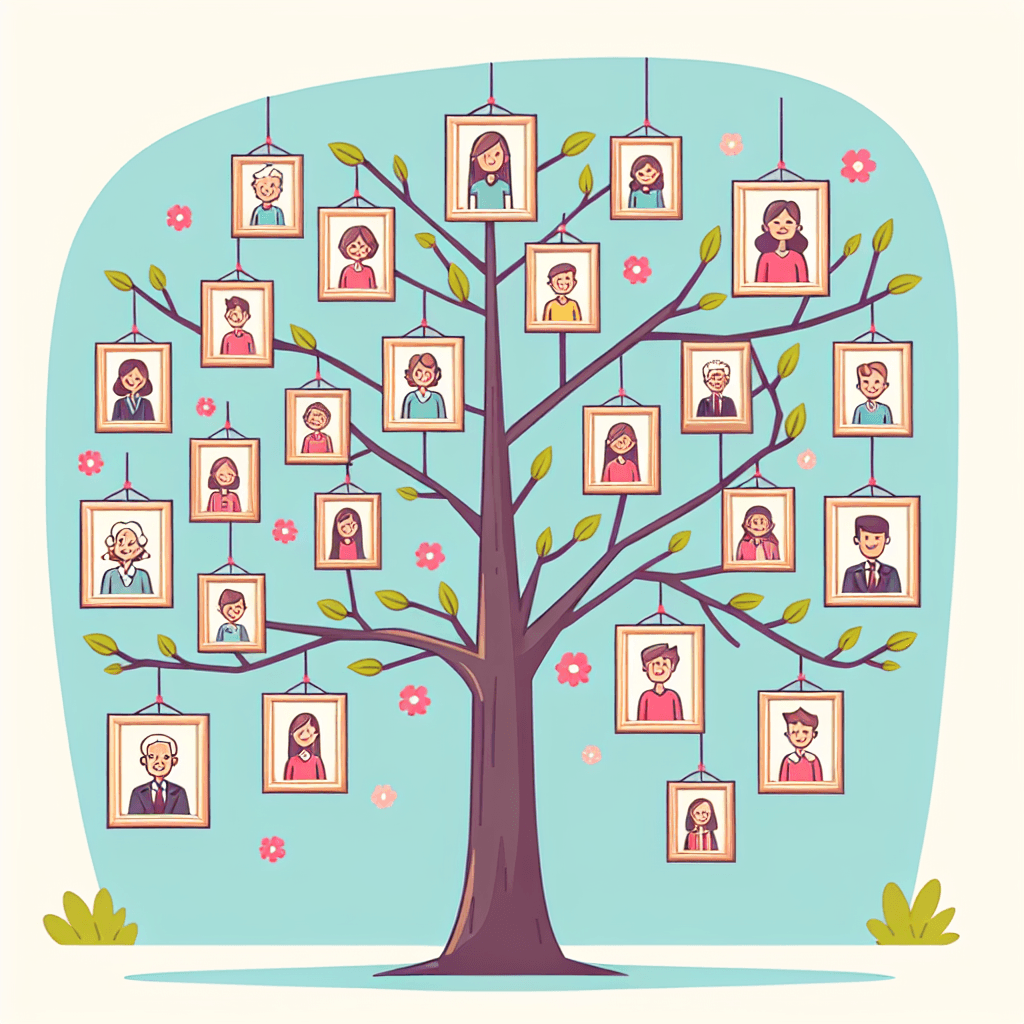
Mi árbol genealógico: Familia, fotos y descripciones
Inquiry Framework
Question Framework
Driving Question
The overarching question that guides the entire project.¿Cómo puedo construir un árbol genealógico que celebre la diversidad de mi familia (real o imaginaria) utilizando el español para describir las relaciones, características y legados que nos unen?Essential Questions
Supporting questions that break down major concepts.- ¿Cómo puedo representar las relaciones familiares a través de un árbol genealógico visualmente atractivo?
- ¿De qué manera el vocabulario y la gramática en español me ayudan a describir a los miembros de mi familia y sus características?
- ¿Cómo puedo usar adjetivos descriptivos y los verbos ser y tener para crear retratos concisos de mis familiares?
- ¿Qué estrategias puedo emplear para investigar y recopilar información sobre mi familia para incluirla en el árbol genealógico?
- ¿Cómo puedo adaptar el proyecto para representar una familia no tradicional o ficticia, manteniendo la precisión lingüística en español?
Standards & Learning Goals
Learning Goals
By the end of this project, students will be able to:- Students will be able to create a family tree (digital or physical) in Spanish.
- Students will be able to use family vocabulary, possessives, and descriptive adjectives in Spanish.
- Students will be able to use the verbs 'ser' and 'tener' to describe family members.
- Students will be able to write brief descriptions of family members in Spanish.
Entry Events
Events that will be used to introduce the project to studentsThe Mystery Relative
Students receive a partial family tree with a missing relative and a series of clues (in Spanish) about their identity. Students must use their Spanish vocabulary and grammar skills to decipher the clues and deduce who the missing relative is, sparking their interest in creating their own complete family tree.Portfolio Activities
Portfolio Activities
These activities progressively build towards your learning goals, with each submission contributing to the student's final portfolio.Brainstorming Familiar
Students will start by brainstorming all the family members they want to include in their family tree. This can include immediate family, extended family, pets, or even fictional characters if they choose the optional route. The goal is to create a comprehensive list to work from.Steps
Here is some basic scaffolding to help students complete the activity.Final Product
What students will submit as the final product of the activityA detailed list of family members with corresponding photos/drawings ready for the family tree.Alignment
How this activity aligns with the learning objectives & standardsLearning Goal: Students will be able to create a family tree (digital or physical) in Spanish.Vocabulario Familiar
Students create a vocabulary list of family-related terms in Spanish, including nouns (e.g., madre, padre, hermano/a) and adjectives (e.g., amable, trabajador/a). They will also practice using possessive adjectives (mi, tu, su, nuestro/a) and the verbs ser and tener.Steps
Here is some basic scaffolding to help students complete the activity.Final Product
What students will submit as the final product of the activityA comprehensive vocabulary list with example sentences using family terms, possessives, and the verbs ser and tener.Alignment
How this activity aligns with the learning objectives & standardsLearning Goal: Students will be able to use family vocabulary, possessives, and descriptive adjectives in Spanish. Learning Goal: Students will be able to use the verbs 'ser' and 'tener' to describe family members.Diseño del Árbol
Students will design the layout of their family tree. They can choose to create it digitally using tools like Canva, Google Slides, PowerPoint, or Genial.ly, or they can draw it by hand. They will decide how to organize family members and where to place photos/drawings.Steps
Here is some basic scaffolding to help students complete the activity.Final Product
What students will submit as the final product of the activityA designed layout of the family tree, ready for content to be added.Alignment
How this activity aligns with the learning objectives & standardsLearning Goal: Students will be able to create a family tree (digital or physical) in Spanish.Descripción Personal
Students will write a brief description in Spanish for at least six family members or pets, using the vocabulary and grammar learned. They will use descriptive adjectives, possessives, and the verbs ser and tener to create concise portraits of each person/pet.Steps
Here is some basic scaffolding to help students complete the activity.Final Product
What students will submit as the final product of the activitySix paragraphs in Spanish, each describing a different family member or pet.Alignment
How this activity aligns with the learning objectives & standardsLearning Goal: Students will be able to write brief descriptions of family members in Spanish. Learning Goal: Students will be able to use family vocabulary, possessives, and descriptive adjectives in Spanish. Learning Goal: Students will be able to use the verbs 'ser' and 'tener' to describe family members.El Árbol Familiar Completo
Students will assemble all the components to create their final family tree. They will add photos/drawings, names, and descriptions to their chosen medium (digital or hand-drawn). The final product will be a visually appealing and informative family tree in Spanish.Steps
Here is some basic scaffolding to help students complete the activity.Final Product
What students will submit as the final product of the activityA complete family tree (digital or hand-drawn) with photos/drawings and descriptions in Spanish for at least six family members or pets.Alignment
How this activity aligns with the learning objectives & standardsLearning Goal: Students will be able to create a family tree (digital or physical) in Spanish. Learning Goal: Students will be able to use family vocabulary, possessives, and descriptive adjectives in Spanish. Learning Goal: Students will be able to use the verbs 'ser' and 'tener' to describe family members. Learning Goal: Students will be able to write brief descriptions of family members in Spanish.Rubric & Reflection
Portfolio Rubric
Grading criteria for assessing the overall project portfolioÁrbol Familiar: Evaluación Integral
Precisión Lingüística
Evaluación del uso correcto del vocabulario, la gramática y la sintaxis en español.Vocabulario Familiar
Uso adecuado y variado del vocabulario relacionado con la familia (nombres de parentesco, adjetivos descriptivos).
Exemplary
4 PointsUso extenso y preciso del vocabulario familiar; demuestra un conocimiento profundo y matizado.
Proficient
3 PointsUso correcto y adecuado del vocabulario familiar; demuestra buen conocimiento.
Developing
2 PointsUso limitado del vocabulario familiar; algunas imprecisiones o repeticiones.
Beginning
1 PointsUso muy limitado del vocabulario familiar; errores frecuentes y falta de precisión.
Gramática y Sintaxis
Uso correcto de los posesivos (mi, tu, su, nuestro…), los verbos ser y tener, y la estructura de las oraciones.
Exemplary
4 PointsGramática y sintaxis impecables; uso preciso y natural de los posesivos y los verbos ser y tener.
Proficient
3 PointsGramática y sintaxis correctas; uso adecuado de los posesivos y los verbos ser y tener.
Developing
2 PointsAlgunos errores gramaticales y sintácticos que dificultan la comprensión; uso inconsistente de los posesivos y los verbos ser y tener.
Beginning
1 PointsErrores gramaticales y sintácticos frecuentes que dificultan la comprensión; uso incorrecto de los posesivos y los verbos ser y tener.
Contenido y Descripción
Evaluación de la calidad y la relevancia de la información proporcionada sobre los miembros de la familia (o personajes ficticios).Representación Familiar
Inclusión de al menos seis miembros de la familia (o personajes ficticios) y descripción clara de su relación con el estudiante.
Exemplary
4 PointsRepresentación completa y detallada de la familia (o personajes ficticios); incluye información relevante y precisa sobre cada miembro.
Proficient
3 PointsRepresentación adecuada de la familia (o personajes ficticios); incluye información clara sobre cada miembro.
Developing
2 PointsRepresentación incompleta de la familia (o personajes ficticios); falta información sobre algunos miembros.
Beginning
1 PointsRepresentación muy limitada de la familia (o personajes ficticios); falta información esencial sobre la mayoría de los miembros.
Calidad de las Descripciones
Creación de descripciones concisas y significativas utilizando adjetivos descriptivos y los verbos ser y tener.
Exemplary
4 PointsDescripciones originales y detalladas que capturan la esencia de cada miembro de la familia (o personaje ficticio); uso creativo del lenguaje.
Proficient
3 PointsDescripciones claras y precisas que proporcionan información relevante sobre cada miembro de la familia (o personaje ficticio).
Developing
2 PointsDescripciones básicas que carecen de detalles o profundidad; uso limitado de adjetivos descriptivos.
Beginning
1 PointsDescripciones muy breves e incompletas; falta información esencial y uso incorrecto del lenguaje.
Presentación y Diseño
Evaluación de la claridad, la organización y el atractivo visual del árbol genealógico.Organización y Estructura
Presentación lógica y jerárquica de la información; fácil de entender y seguir.
Exemplary
4 PointsEstructura clara y creativa que facilita la comprensión de las relaciones familiares; diseño innovador.
Proficient
3 PointsEstructura lógica y organizada que permite seguir fácilmente las relaciones familiares.
Developing
2 PointsEstructura confusa o poco clara que dificulta la comprensión de las relaciones familiares.
Beginning
1 PointsFalta de organización y estructura; la información es difícil de encontrar y entender.
Atractivo Visual
Uso de imágenes, colores y diseño para crear un árbol genealógico atractivo y visualmente interesante.
Exemplary
4 PointsDiseño visualmente impresionante y original que realza la presentación del árbol genealógico; uso creativo de imágenes y colores.
Proficient
3 PointsDiseño visualmente atractivo y bien elaborado que complementa la información presentada.
Developing
2 PointsDiseño básico que carece de atractivo visual; uso limitado de imágenes y colores.
Beginning
1 PointsDiseño descuidado y poco atractivo; falta de imágenes y colores.