
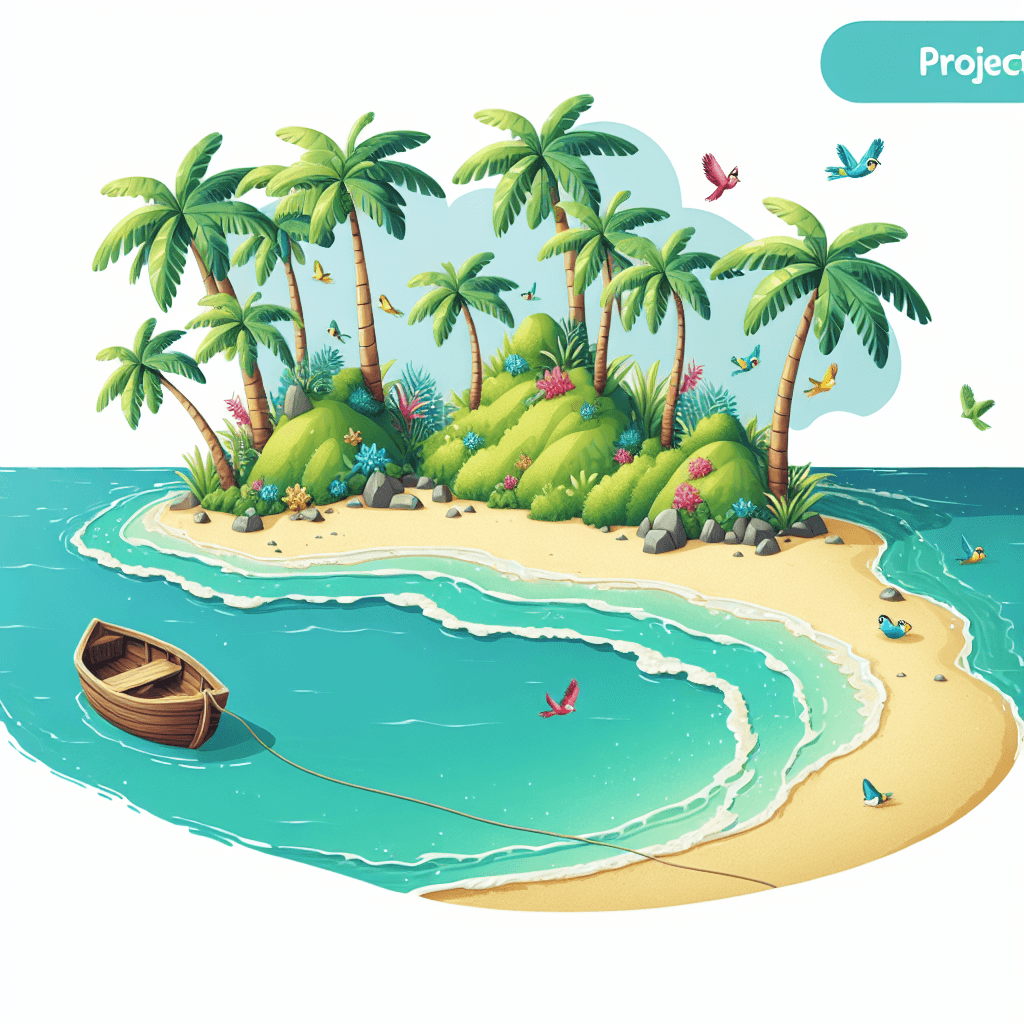
Michael's Island Return: A Kensuke's Kingdom Sequel
Inquiry Framework
Question Framework
Driving Question
The overarching question that guides the entire project.How can we craft a sequel to "Kensuke's Kingdom" that revisits Michael's Island, deepening its themes of friendship, survival, and environmentalism while honoring the original's setting and characters?Essential Questions
Supporting questions that break down major concepts.- How can we create a compelling narrative that honors the original story while introducing new conflicts and resolutions?
- What elements of setting, character development, and plot are crucial for maintaining the story's authenticity in a sequel?
- In what ways can we explore themes of friendship, survival, and environmentalism in the context of Michael's return to Kensuke's Island?
- How do we effectively use descriptive language and imagery to transport the reader back to the unique setting of the island?
- What is the significance of Kensuke's teachings and how do they influence Michael's actions and decisions in the sequel?
Standards & Learning Goals
Learning Goals
By the end of this project, students will be able to:- Develop a sequel to "Kensuke's Kingdom"
- Deepen themes of friendship, survival and environmentalism
- Maintain story's authenticity in a sequel
- Explore setting, character development and plot
Entry Events
Events that will be used to introduce the project to studentsLost Chapter Found
A 'lost chapter' from Kensuke's journal surfaces, detailing an unresolved conflict or secret about the island. Students debate the chapter's authenticity and its implications for Michael's return, sparking ideas for new characters and storylines.Environmental Impact Report
A fictional environmental report reveals new threats to Kensuke's island ecosystem. Students analyze the report and brainstorm how Michael could address these challenges in the sequel, focusing on themes of survival and environmentalism.Portfolio Activities
Portfolio Activities
These activities progressively build towards your learning goals, with each submission contributing to the student's final portfolio.Island Immersion: Sensory Details
Students revisit "Kensuke's Kingdom", focusing on the vivid sensory details of the island. They create a sensory map to deepen their understanding of the setting and its impact on the characters.Steps
Here is some basic scaffolding to help students complete the activity.Final Product
What students will submit as the final product of the activityA detailed sensory map of Kensuke's Island with textual evidence and reflections.Alignment
How this activity aligns with the learning objectives & standardsFocuses on exploring the setting and using descriptive language to transport the reader back to the island (Learning Goal: Explore setting, character development and plot).Character Comeback: Michael's Evolution
Students analyze Michael's character in "Kensuke's Kingdom" and brainstorm how he might have changed since leaving the island. They create a character profile outlining his skills, relationships, and motivations as he prepares to return.Steps
Here is some basic scaffolding to help students complete the activity.Final Product
What students will submit as the final product of the activityA character profile of Michael detailing his evolution and motivations for returning to the island.Alignment
How this activity aligns with the learning objectives & standardsFocuses on character development and maintaining the story's authenticity in a sequel (Learning Goal: Maintain story's authenticity in a sequel, Explore setting, character development and plot).Ethical Echoes: Environmental Challenges
Students research current environmental issues facing islands and marine ecosystems. They identify a specific threat relevant to Kensuke's Island and develop a plan for how Michael could address it in the sequel, considering themes of environmentalism and survival.Steps
Here is some basic scaffolding to help students complete the activity.Final Product
What students will submit as the final product of the activityA detailed plan outlining how Michael could address a specific environmental threat on Kensuke's Island, with consideration for themes of environmentalism and survival.Alignment
How this activity aligns with the learning objectives & standardsFocuses on deepening themes of environmentalism and survival (Learning Goal: Deepen themes of friendship, survival and environmentalism).Chapter One: The Journey Back
Students write the first chapter of their sequel, focusing on Michael's journey back to Kensuke's Island. They use descriptive language and imagery to transport the reader back to the unique setting of the island and introduce the new conflicts and challenges that Michael will face.Steps
Here is some basic scaffolding to help students complete the activity.Final Product
What students will submit as the final product of the activityThe first chapter of the sequel, detailing Michael's journey back to Kensuke's Island.Alignment
How this activity aligns with the learning objectives & standardsFocuses on developing a sequel and maintaining story's authenticity (Learning Goal: Develop a sequel to "Kensuke's Kingdom", Maintain story's authenticity in a sequel).Sequel Structure: Plotting the Return
Students brainstorm potential plot points for the sequel, focusing on the events leading up to Michael's return to the island, the challenges he faces upon arrival, and the resolution of the story. They create a plot outline to guide their writing process.Steps
Here is some basic scaffolding to help students complete the activity.Final Product
What students will submit as the final product of the activityA detailed plot outline for the sequel, including key events, conflicts, and resolutions.Alignment
How this activity aligns with the learning objectives & standardsFocuses on maintaining the story's authenticity in a sequel and exploring plot (Learning Goal: Maintain story's authenticity in a sequel, Explore setting, character development and plot).Rubric & Reflection
Portfolio Rubric
Grading criteria for assessing the overall project portfolioSequel Development Rubric: Kensuke's Kingdom
Narrative Coherence and Plot Development
This category evaluates the clarity, structure, and pacing of the sequel's plot. It assesses how well the student organizes events, builds suspense, and resolves conflicts in a manner that is engaging and logical.Plot Structure and Pacing
Evaluates the organization of the plot, including exposition, rising action, climax, falling action, and resolution, as well as the pacing of events and their impact on reader engagement.
Exemplary
4 PointsThe plot is exceptionally well-structured, with a clear and compelling narrative arc. Pacing is skillfully managed to maintain high reader engagement throughout the sequel. All plot elements contribute seamlessly to the overall story.
Proficient
3 PointsThe plot is well-organized with a discernible narrative arc. Pacing is generally effective, maintaining reader interest. Most plot elements contribute logically to the story.
Developing
2 PointsThe plot shows some organization, but the narrative arc may be unclear or inconsistent. Pacing is uneven, leading to moments of disengagement. Some plot elements may seem disjointed or irrelevant.
Beginning
1 PointsThe plot lacks clear organization and a discernible narrative arc. Pacing is ineffective, causing significant reader disengagement. Many plot elements are confusing or unrelated to the story.
Conflict and Resolution
Assesses the development and resolution of conflicts within the sequel, including the complexity of the conflicts, their impact on the characters, and the believability of the resolutions.
Exemplary
4 PointsConflicts are highly complex and deeply impact the characters, leading to meaningful growth and change. Resolutions are innovative, thought-provoking, and thoroughly satisfying.
Proficient
3 PointsConflicts are well-developed and create significant challenges for the characters. Resolutions are logical and effectively address the conflicts, providing closure to the story.
Developing
2 PointsConflicts are present but may lack depth or complexity. Resolutions are attempted but may feel rushed or unconvincing, leaving some issues unresolved.
Beginning
1 PointsConflicts are minimal or poorly defined, failing to create meaningful challenges for the characters. Resolutions are weak, illogical, or absent, leaving the story incomplete.
Character Development and Authenticity
This category focuses on the depth and consistency of character portrayal in the sequel. It evaluates how well the student develops both returning and new characters, ensuring they are believable, relatable, and true to the original story.Character Depth and Believability
Evaluates the complexity and depth of the characters, including their motivations, flaws, and relationships with other characters. Assesses how believable and relatable the characters are to the reader.
Exemplary
4 PointsCharacters are exceptionally well-developed, with complex motivations, realistic flaws, and nuanced relationships. They feel fully alive and deeply relatable, enhancing the story's emotional impact.
Proficient
3 PointsCharacters are well-developed, with clear motivations and believable relationships. They are relatable and contribute significantly to the story's overall impact.
Developing
2 PointsCharacters show some development, but their motivations may be unclear or inconsistent. Relationships are superficial, and characters may lack depth, reducing their impact on the story.
Beginning
1 PointsCharacters are poorly developed, with minimal motivations and weak relationships. They are unconvincing and fail to engage the reader, detracting from the story's quality.
Consistency with Original Characters
Assesses how well the student maintains the integrity of returning characters from 'Kensuke's Kingdom,' ensuring their actions, beliefs, and relationships remain consistent with the original story.
Exemplary
4 PointsThe portrayal of returning characters is flawlessly consistent with the original story, reflecting a deep understanding of their personalities, values, and relationships. Their actions and decisions feel authentic and true to their established traits.
Proficient
3 PointsThe portrayal of returning characters is generally consistent with the original story, with minor deviations that do not detract significantly from their established traits. Their actions and decisions are believable and in line with their original personalities.
Developing
2 PointsThe portrayal of returning characters shows some inconsistencies with the original story, potentially affecting their credibility. Their actions and decisions may occasionally contradict their established traits, causing confusion for the reader.
Beginning
1 PointsThe portrayal of returning characters is significantly inconsistent with the original story, fundamentally altering their personalities and relationships. Their actions and decisions are often illogical and undermine the story's continuity.
Thematic Depth and Relevance
This category evaluates how effectively the sequel explores and expands upon the original story's themes of friendship, survival, and environmentalism. It assesses the depth of thematic exploration and the relevance of the themes to the modern world.Exploration of Original Themes
Assesses how well the sequel delves into the original story's themes of friendship, survival, and environmentalism, offering new perspectives or deepening existing understandings.
Exemplary
4 PointsThe sequel masterfully explores the original themes of friendship, survival, and environmentalism, offering profound new insights and perspectives that resonate deeply with the reader. The thematic depth elevates the story to a new level of understanding.
Proficient
3 PointsThe sequel effectively explores the original themes of friendship, survival, and environmentalism, providing thoughtful insights and reinforcing their importance in the context of the story. The thematic exploration adds depth and meaning to the narrative.
Developing
2 PointsThe sequel touches upon the original themes of friendship, survival, and environmentalism, but the exploration may be superficial or lack depth. The thematic connections are present but not fully realized, limiting their impact on the story.
Beginning
1 PointsThe sequel largely ignores the original themes of friendship, survival, and environmentalism, missing opportunities to enrich the story with thematic depth. The lack of thematic exploration diminishes the overall quality and relevance of the narrative.
Relevance to Modern Issues
Evaluates how well the sequel connects the original themes to contemporary issues, such as climate change, social justice, or cultural understanding, making the story relevant and engaging for modern readers.
Exemplary
4 PointsThe sequel brilliantly connects the original themes to pressing contemporary issues, offering insightful commentary on climate change, social justice, or cultural understanding. The relevance to modern issues makes the story deeply engaging and thought-provoking.
Proficient
3 PointsThe sequel effectively connects the original themes to relevant contemporary issues, highlighting their significance in the modern world. The connections enhance the story's engagement and encourage readers to reflect on important societal challenges.
Developing
2 PointsThe sequel makes some connections between the original themes and contemporary issues, but the links may be tenuous or underdeveloped. The relevance to modern issues is limited, reducing the story's overall impact.
Beginning
1 PointsThe sequel fails to connect the original themes to contemporary issues, missing opportunities to make the story relevant and engaging for modern readers. The lack of relevance diminishes the story's overall impact and significance.
Creativity and Originality
This category assesses the student's ability to craft a sequel that is both creative and original, offering fresh perspectives and innovative ideas while staying true to the spirit of the original story.Innovation and Imagination
Evaluates the use of innovative ideas and imaginative concepts in the sequel, including new characters, plot twists, and thematic elements that enhance the story's originality.
Exemplary
4 PointsThe sequel is exceptionally innovative and imaginative, introducing groundbreaking ideas, unforgettable characters, and captivating plot twists that elevate the story to a new level of creativity. The originality of the sequel sets it apart as a truly exceptional work.
Proficient
3 PointsThe sequel is creative and imaginative, incorporating fresh ideas, compelling characters, and engaging plot twists that enhance the story's originality. The innovative elements add depth and excitement to the narrative.
Developing
2 PointsThe sequel shows some creativity, but the ideas may lack originality or feel underdeveloped. The imaginative elements are present but not fully realized, limiting their impact on the story.
Beginning
1 PointsThe sequel lacks creativity and originality, relying on clichés and uninspired ideas. The absence of imaginative elements diminishes the story's appeal and fails to engage the reader.
Adherence to the Original's Spirit
Assesses how well the sequel maintains the tone, style, and overall atmosphere of 'Kensuke's Kingdom,' ensuring that the new story feels like a natural extension of the original work.
Exemplary
4 PointsThe sequel flawlessly captures the tone, style, and atmosphere of 'Kensuke's Kingdom,' creating a seamless and authentic extension of the original story. The adherence to the original's spirit enhances the reader's immersion and reinforces the emotional connection to the characters and setting.
Proficient
3 PointsThe sequel effectively maintains the tone, style, and atmosphere of 'Kensuke's Kingdom,' creating a believable and engaging extension of the original story. The adherence to the original's spirit enhances the reader's enjoyment and reinforces the thematic connections.
Developing
2 PointsThe sequel shows some adherence to the tone, style, and atmosphere of 'Kensuke's Kingdom,' but there may be occasional inconsistencies that detract from the overall authenticity. The deviations from the original's spirit may disrupt the reader's immersion and weaken the thematic connections.
Beginning
1 PointsThe sequel fails to capture the tone, style, and atmosphere of 'Kensuke's Kingdom,' creating a disjointed and unconvincing extension of the original story. The lack of adherence to the original's spirit undermines the reader's engagement and diminishes the thematic resonance.