
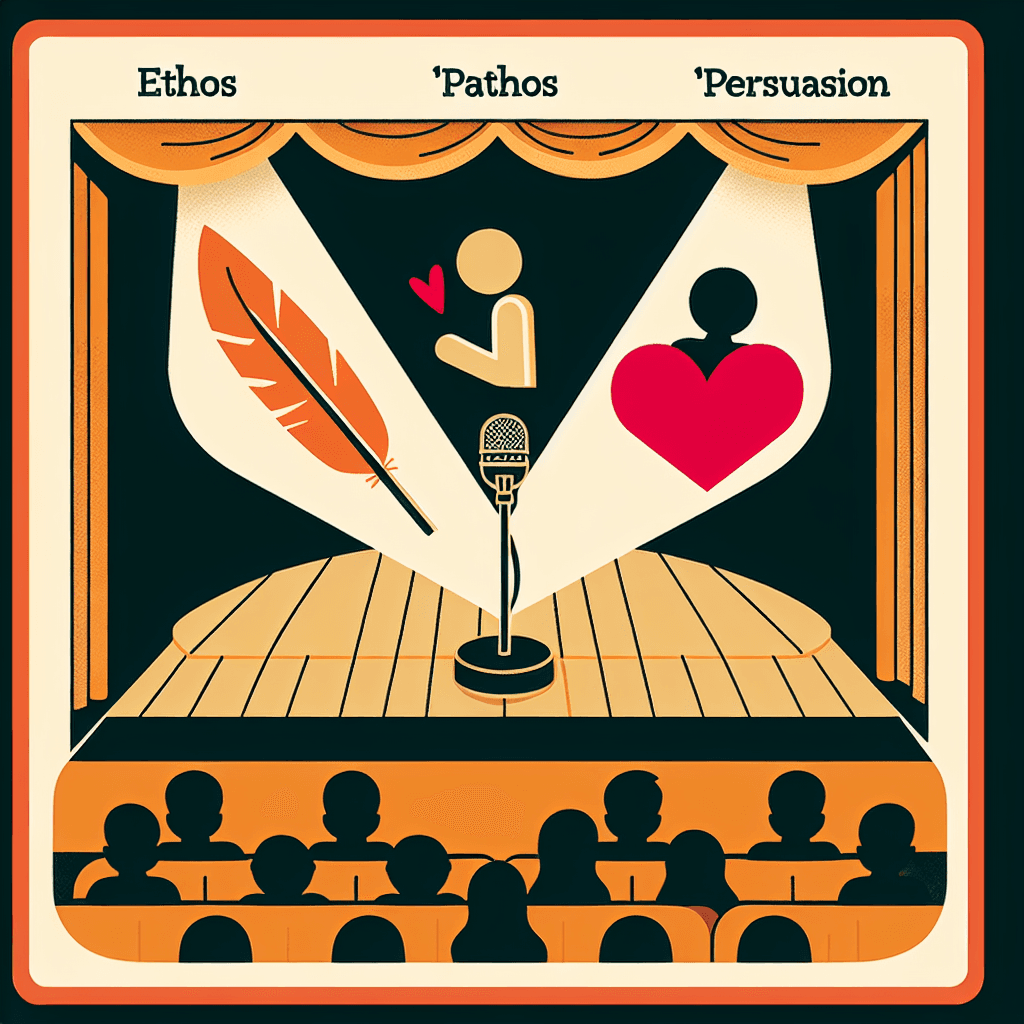
MLK's Rhetoric: Ethos, Pathos, and Persuasion in
Inquiry Framework
Question Framework
Driving Question
The overarching question that guides the entire project.How can we, as communication analysts, use Martin Luther King Jr.'s "Letter from Birmingham Jail" to understand and evaluate the impact of ethos, pathos, and logos in persuasive arguments, and how do these rhetorical devices shape our understanding of the Civil Rights Movement and contemporary issues?Essential Questions
Supporting questions that break down major concepts.- How does Martin Luther King Jr. utilize ethos, pathos, and logos in his "Letter from Birmingham Jail" to persuade his audience?
- What rhetorical devices does King employ to establish his credibility (ethos) and connect with the emotions (pathos) of his readers?
- In what ways does King's use of logic (logos) and evidence support his arguments and advance his point of view?
- How can we evaluate the effectiveness and ethical implications of King's rhetorical strategies in the context of the Civil Rights Movement?
- To what extent does King's letter reflect fallacious reasoning, exaggeration, or distortion of evidence, and how do these elements impact his overall argument?
- How can understanding ethos, pathos, and logos enhance our ability to critically evaluate persuasive arguments and identify potential fallacies in various forms of communication?
Standards & Learning Goals
Learning Goals
By the end of this project, students will be able to:- Understand and apply the concepts of ethos, pathos, and logos.
- Evaluate the effectiveness of rhetorical devices in persuasive writing.
- Analyze Martin Luther King Jr.'s "Letter from Birmingham Jail" for its use of persuasive techniques.
- Improve critical thinking and analytical skills.
Common Core Standards
Entry Events
Events that will be used to introduce the project to studentsDeconstructing the Dream
Students receive a vandalized copy of MLK's letter, with key rhetorical devices blacked out. Their challenge: restore the letter's persuasive power by identifying and justifying the missing ethos, pathos, and logos, sparking debate on MLK's intent and impact.MLK's Modern Message
Present students with contemporary social justice issues and ask them to create a 'Letter from [Current City]' in response, mirroring MLK's style and rhetorical strategies. This connects historical rhetoric to present-day activism and student experiences.Ethos, Pathos, Logos Remix
Present the letter as a modern-day social media campaign. Students must translate MLK's arguments into a series of tweets, memes, and short videos, grappling with how rhetorical appeals shift across different media and audiences.Portfolio Activities
Portfolio Activities
These activities progressively build towards your learning goals, with each submission contributing to the student's final portfolio.Rhetorical Device Spotlight: Ethos
Students will dissect the 'Letter from Birmingham Jail' to pinpoint instances where MLK establishes his credibility. They will analyze how his background, tone, and language contribute to his ethos.Steps
Here is some basic scaffolding to help students complete the activity.Final Product
What students will submit as the final product of the activityA detailed analysis of at least three instances of ethos in MLK's letter, explaining their impact on his argument.Alignment
How this activity aligns with the learning objectives & standardsFocuses on evaluating the speaker's point of view and use of rhetoric (ethos).Emotional Appeal Breakdown: Pathos
Students will explore how MLK evokes emotions in his audience. They will identify specific words, phrases, and anecdotes that appeal to the reader's feelings and analyze their effectiveness.Steps
Here is some basic scaffolding to help students complete the activity.Final Product
What students will submit as the final product of the activityA presentation outlining at least three examples of pathos in MLK's letter, including an explanation of their intended effect and effectiveness.Alignment
How this activity aligns with the learning objectives & standardsAddresses the evaluation of rhetoric (pathos) and its impact on the audience.Logical Argument Mapping: Logos
Students will map out MLK's logical arguments, identifying his claims, evidence, and reasoning. They will assess the strength and validity of his arguments.Steps
Here is some basic scaffolding to help students complete the activity.Final Product
What students will submit as the final product of the activityA visual map of MLK's logical arguments, including claims, evidence, and reasoning, along with an evaluation of their effectiveness.Alignment
How this activity aligns with the learning objectives & standardsCovers the evaluation of reasoning and use of evidence (logos) in supporting a point of view.Fallacy Finder: Spotting Errors in Reasoning
Students will critically examine MLK's letter for any instances of fallacious reasoning, exaggerated claims, or distorted evidence. They will analyze the impact of these elements on his overall argument.Steps
Here is some basic scaffolding to help students complete the activity.Final Product
What students will submit as the final product of the activityA report detailing any potential fallacies or distortions found in MLK's letter, along with an analysis of their impact. If no fallacies are found, the report should explain why the reasoning is sound.Alignment
How this activity aligns with the learning objectives & standardsAddresses the identification of fallacious reasoning or exaggerated or distorted evidence.Rubric & Reflection
Portfolio Rubric
Grading criteria for assessing the overall project portfolioRhetorical Analysis of MLK's Letter: A Rubric for Evaluating Ethos, Pathos, Logos, and Logical Fallacies
Understanding and Application of Ethos
Demonstrates understanding of ethos and its application in MLK's letter.Identification of Ethos
Accurately identifies instances where MLK establishes his credibility.
Exemplary
4 PointsIdentifies multiple instances of ethos with insightful explanations of how MLK establishes his credibility and authority. Demonstrates a sophisticated understanding of the context and purpose of these appeals.
Proficient
3 PointsIdentifies several instances of ethos and explains how MLK establishes his credibility and authority. Demonstrates a clear understanding of the appeals.
Developing
2 PointsIdentifies a few instances of ethos but struggles to fully explain how MLK establishes his credibility. Shows a basic understanding of the appeals.
Beginning
1 PointsStruggles to identify instances of ethos or explain how MLK establishes his credibility. Demonstrates a limited understanding of the appeals.
Analysis of Impact
Analyzes the impact of ethos on MLK's argument.
Exemplary
4 PointsProvides a comprehensive and nuanced analysis of how MLK's ethos enhances the persuasiveness and ethical dimensions of his argument. Connects ethos to the broader context of the Civil Rights Movement.
Proficient
3 PointsAnalyzes how MLK's ethos enhances the persuasiveness of his argument. Makes clear connections between his credibility and the impact on the audience.
Developing
2 PointsAttempts to analyze the impact of MLK's ethos, but the analysis is superficial or incomplete. Struggles to connect credibility to the overall argument.
Beginning
1 PointsFails to analyze the impact of MLK's ethos on his argument. Provides little to no connection between credibility and persuasiveness.
Understanding and Application of Pathos
Demonstrates understanding of pathos and its application in MLK's letter.Identification of Pathos
Accurately identifies instances where MLK appeals to emotions.
Exemplary
4 PointsIdentifies multiple examples of pathos with insightful analysis of the emotional impact on the reader and the strategic use of language and imagery.
Proficient
3 PointsIdentifies several examples of pathos and explains their intended emotional effect on the reader. Demonstrates a clear understanding of emotional appeals.
Developing
2 PointsIdentifies a few examples of pathos but struggles to fully explain their emotional impact. Shows a basic understanding of the appeals.
Beginning
1 PointsStruggles to identify instances of pathos or explain their emotional impact. Demonstrates a limited understanding of the appeals.
Analysis of Effectiveness
Analyzes the effectiveness of pathos in persuading the audience.
Exemplary
4 PointsProvides a comprehensive and nuanced analysis of how MLK's use of pathos effectively persuades his audience and connects with their values. Connects emotional appeals to social change.
Proficient
3 PointsAnalyzes how MLK's use of pathos persuades his audience. Makes clear connections between emotional appeals and their intended effect.
Developing
2 PointsAttempts to analyze the effectiveness of MLK's pathos, but the analysis is superficial or incomplete. Struggles to connect emotional appeals to persuasion.
Beginning
1 PointsFails to analyze the effectiveness of MLK's pathos. Provides little to no connection between emotional appeals and persuasion.
Understanding and Application of Logos
Demonstrates understanding of logos and its application in MLK's letter.Mapping of Logical Arguments
Accurately maps out MLK's logical arguments, including claims, evidence, and reasoning.
Exemplary
4 PointsPresents a clear, comprehensive, and insightful map of MLK's logical arguments, demonstrating a sophisticated understanding of the relationships between claims, evidence, and reasoning. Identifies underlying assumptions.
Proficient
3 PointsPresents a clear map of MLK's logical arguments, including claims, evidence, and reasoning. Demonstrates a clear understanding of the connections between them.
Developing
2 PointsAttempts to map out MLK's logical arguments, but the map is incomplete or contains inaccuracies. Struggles to connect claims, evidence, and reasoning effectively.
Beginning
1 PointsFails to map out MLK's logical arguments effectively. Demonstrates a limited understanding of claims, evidence, and reasoning.
Evaluation of Argument Strength
Evaluates the strength and validity of MLK's arguments.
Exemplary
4 PointsProvides a comprehensive and nuanced evaluation of the strength and validity of MLK's arguments, considering potential counterarguments and limitations. Demonstrates exceptional critical thinking.
Proficient
3 PointsEvaluates the strength and validity of MLK's arguments, providing clear reasoning and supporting evidence. Demonstrates effective critical thinking.
Developing
2 PointsAttempts to evaluate the strength and validity of MLK's arguments, but the evaluation is superficial or incomplete. Struggles to provide clear reasoning or supporting evidence.
Beginning
1 PointsFails to evaluate the strength and validity of MLK's arguments. Demonstrates minimal critical thinking.
Identification and Analysis of Logical Fallacies
Identifies and analyzes any potential logical fallacies or distortions of evidence in MLK's letter.Identification of Fallacies
Accurately identifies any logical fallacies or distortions of evidence.
Exemplary
4 PointsDemonstrates an exceptional ability to identify subtle logical fallacies or distortions of evidence, if present, with detailed explanations of their impact on the argument. Skillfully defends the absence of fallacies if none are found.
Proficient
3 PointsIdentifies any logical fallacies or distortions of evidence, if present, and explains their impact on the argument. Clearly justifies the absence of fallacies if none are found.
Developing
2 PointsAttempts to identify logical fallacies or distortions of evidence, but the analysis is incomplete or contains inaccuracies. Struggles to explain the impact on the argument.
Beginning
1 PointsFails to identify logical fallacies or distortions of evidence. Demonstrates a limited understanding of fallacious reasoning.
Impact Analysis
Analyzes the impact of fallacies on the persuasiveness and ethical implications of the argument.
Exemplary
4 PointsProvides a comprehensive and nuanced analysis of the impact of any identified fallacies on the persuasiveness and ethical dimensions of MLK's argument. Connects fallacies to broader ethical considerations in persuasive communication.
Proficient
3 PointsAnalyzes the impact of any identified fallacies on the persuasiveness and ethical implications of MLK's argument. Makes clear connections between fallacies and their consequences.
Developing
2 PointsAttempts to analyze the impact of fallacies, but the analysis is superficial or incomplete. Struggles to connect fallacies to persuasiveness or ethical implications.
Beginning
1 PointsFails to analyze the impact of fallacies on MLK's argument. Provides little to no connection between fallacies and persuasiveness or ethics.