
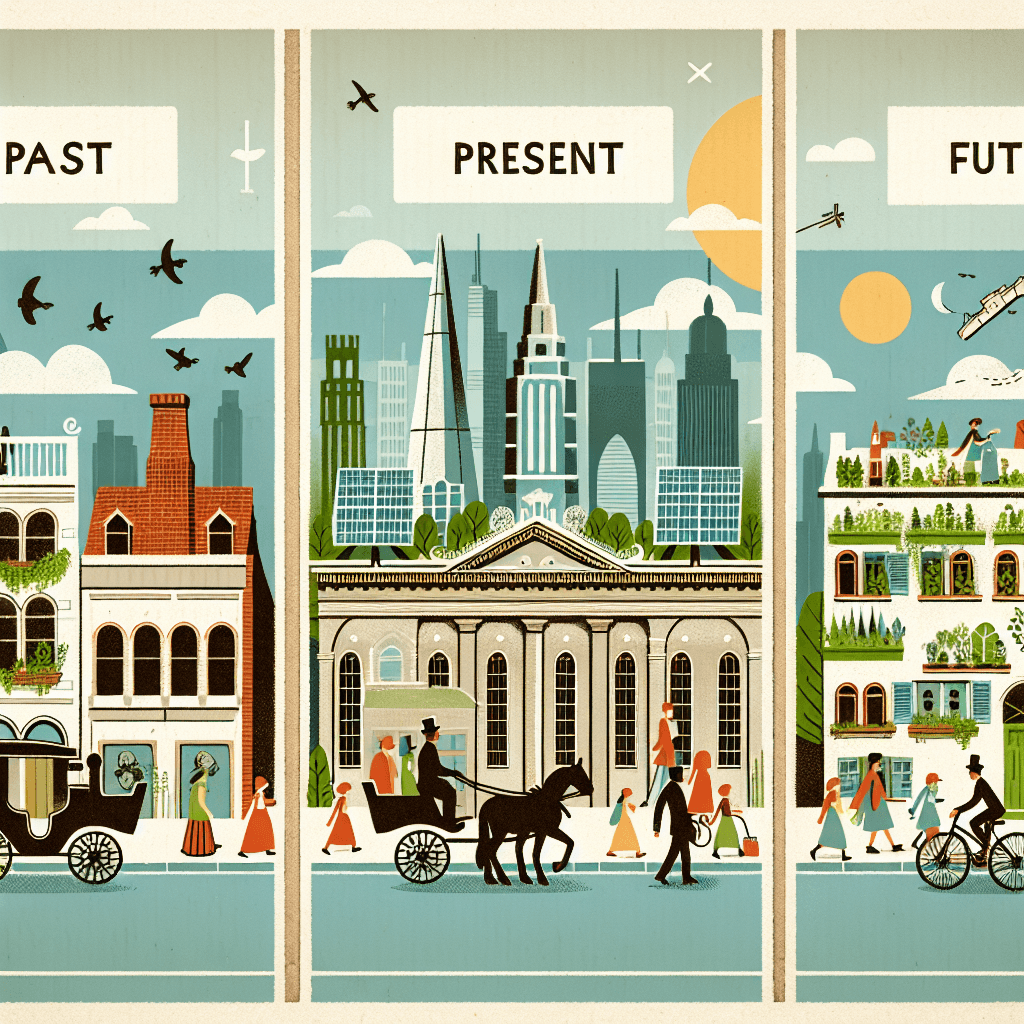
My City's Hidden Stories: Past, Present, and a Sustainable Future
Inquiry Framework
Question Framework
Driving Question
The overarching question that guides the entire project.How can we uncover and share the hidden stories of our city to build a healthier, more sustainable, and culturally rich community for the future?Essential Questions
Supporting questions that break down major concepts.- How have past events and people shaped our community?
- How does our community's culture and history impact our health and well-being?
- How can we create a healthier and more sustainable community while preserving its history and culture?
- How do different subjects (math, science, social studies, arts, etc.) help us understand our community?
- What are the challenges and opportunities in our community, and how can we address them?
- How can we use technology to share the hidden stories of our city?
Standards & Learning Goals
Learning Goals
By the end of this project, students will be able to:- Investigate personal and historical stories that shaped the community, analyzing social issues and cultural evolution.
- Identify practices that make a healthier and more sustainable neighborhood while preserving its history and culture.
- Research and present how religious teachings have advised towards deeds and livelihood that sustains health and culture.
- Read articles or stories about sustainable communities and discuss key ideas.
- Conduct interviews with community members to learn about their history and traditions.
- Write flashback stories highlighting how the neighborhood has evolved.
- Research and create biographies/autobiographies of significant local figures who impacted the community's health, culture, or development.
- Investigate how access to nutrition, physical activity, and health services affects the community's well-being.
- Study diseases prevalent in the neighborhood and explore solutions, linking them to understanding organ systems.
- Analyze numerical data on population growth, resource distribution, or local health statistics.
- Map out 2D and 3D layouts of community spaces, calculating areas and volumes for potential improvements like parks or health centers.
- Trace the journey of explorers or settlers in the country/city and relate it to how exploration/settlements shaped the community's development.
- Examine the cultural diversity in the neighborhood and its role in shaping local traditions.
- Sketch important landmarks or people, emphasizing their cultural and historical significance.
- Use typing and basic file management skills to create and organize digital presentations or reports on their findings.
- Develop simple maps or charts using computer software to represent data visually.
- Educate others about the importance of warm-ups, cool-downs, hydration, and rest for better physical and mental health.
- Present findings, observations, and recommendations for a sustainable, community-friendly approach to urban living.
Entry Events
Events that will be used to introduce the project to studentsThe Mystery Package: Unveiling Our City's Secrets
Students receive a mysterious package containing old photographs, letters, and artifacts related to their city's past. They must analyze these clues to uncover hidden stories and understand how the past has shaped their present community, sparking curiosity about local history and cultural evolution.Time Capsule from Tomorrow: Envisioning Our City's Future
The class is presented with a fictional scenario: a time capsule from the future has arrived, containing both positive and negative predictions about their city. Students must investigate current trends and historical context to determine the plausibility of these predictions, prompting them to consider their role in shaping a sustainable and culturally rich future.Community Voices: A Living History Panel
Invite a panel of diverse community members (elders, recent immigrants, local business owners) to share their personal stories and perspectives on the city's past, present, and future. Students act as journalists, interviewing the panelists and identifying common themes and conflicting viewpoints, fostering empathy and critical thinking about community development.Living Museum: Bringing Our City's History to Life
Organize a 'living museum' where each student embodies a historical figure or represents a significant landmark from their city. Classmates and other visitors can interact with these 'exhibits' to learn about the city's history and cultural heritage, encouraging creative expression and collaborative storytelling.Reimagine Our Neighborhood: A Community Revitalization Challenge
Present students with a challenge from the local government or a community organization: to design a sustainable and culturally sensitive revitalization plan for a specific neighborhood. Students research the area's history, demographics, and environmental conditions, then develop proposals that address both present-day needs and long-term preservation, promoting civic engagement and problem-solving skills.Portfolio Activities
Portfolio Activities
These activities progressively build towards your learning goals, with each submission contributing to the student's final portfolio.Unearthing Our Roots: A Historical Timeline
Students will explore the historical context of their neighborhood by examining old maps, photographs, and census data to identify key changes and developments over time.Steps
Here is some basic scaffolding to help students complete the activity.Final Product
What students will submit as the final product of the activityA timeline showcasing significant events and changes in the community's history, including population shifts, infrastructure development, and cultural milestones.Alignment
How this activity aligns with the learning objectives & standardsInvestigate personal and historical stories that shaped the community, analyzing social issues and cultural evolution.Sustainability Snapshot: Auditing Our Community's Practices
Students will conduct a community audit to assess current sustainability practices, identifying areas of strength and areas needing improvement.Steps
Here is some basic scaffolding to help students complete the activity.Final Product
What students will submit as the final product of the activityA detailed report outlining the community's sustainability practices, including recommendations for improvement based on historical context and cultural preservation.Alignment
How this activity aligns with the learning objectives & standardsIdentify practices that make a healthier and more sustainable neighborhood while preserving its history and culture.Faith in Action: Religious Teachings and Community Well-being
Students will research religious teachings related to health, community, and sustainable living, connecting these teachings to historical practices and modern applications within their community.Steps
Here is some basic scaffolding to help students complete the activity.Final Product
What students will submit as the final product of the activityA presentation (oral or multimedia) explaining the religious teachings related to health and sustainability, with examples of how these teachings have been applied in the community's history and present.Alignment
How this activity aligns with the learning objectives & standardsResearch and present how religious teachings have advised towards deeds and livelihood that sustains health and culture.Global Greenprints: Learning from Sustainable Communities
Students will read articles and stories about sustainable communities around the world, comparing and contrasting these examples with their own community.Steps
Here is some basic scaffolding to help students complete the activity.Final Product
What students will submit as the final product of the activityA comparative essay analyzing the sustainability practices of different communities, including their own, identifying common themes and unique approaches.Alignment
How this activity aligns with the learning objectives & standardsRead articles or stories about sustainable communities and discuss key ideas.Voices of the Elders: Oral Histories of Our Community
Students will conduct oral history interviews with long-time residents of their community to gather personal stories and perspectives on the community's evolution.Steps
Here is some basic scaffolding to help students complete the activity.Final Product
What students will submit as the final product of the activityA collection of transcribed interview excerpts, organized by theme, providing a rich tapestry of personal narratives about the community's history and traditions.Alignment
How this activity aligns with the learning objectives & standardsConduct interviews with community members to learn about their history and traditions.Time Travelers: Flashback Stories of Our Neighborhood
Students will write creative flashback stories that transport readers to different eras in their community's history, illustrating how the neighborhood has changed over time.Steps
Here is some basic scaffolding to help students complete the activity.Final Product
What students will submit as the final product of the activityA collection of creative flashback stories, each depicting a specific period in the community's history and highlighting key changes and developments.Alignment
How this activity aligns with the learning objectives & standardsWrite flashback stories highlighting how the neighborhood has evolved.Local Legends: Honoring Community Heroes
Students will research and write biographies or autobiographies of influential local figures who have contributed to the community's health, culture, or development.Steps
Here is some basic scaffolding to help students complete the activity.Final Product
What students will submit as the final product of the activityA collection of biographies or autobiographies, showcasing the lives and contributions of significant local figures.Alignment
How this activity aligns with the learning objectives & standardsResearch and create biographies/autobiographies of significant local figures who impacted the community's health, culture, or development.Healthy Hubs: Assessing Community Well-being
Students will investigate the availability of nutrition, physical activity opportunities, and health services in their community, analyzing how these factors impact residents' well-being.Steps
Here is some basic scaffolding to help students complete the activity.Final Product
What students will submit as the final product of the activityA presentation outlining the community's access to nutrition, physical activity, and health services, with recommendations for improving residents' well-being.Alignment
How this activity aligns with the learning objectives & standardsInvestigate how access to nutrition, physical activity, and health services affects the community's well-being.Disease Detectives: Exploring Health Challenges in Our Community
Students will research diseases prevalent in their neighborhood, exploring potential solutions and linking these diseases to specific organ systems.Steps
Here is some basic scaffolding to help students complete the activity.Final Product
What students will submit as the final product of the activityA research report on prevalent diseases in the neighborhood, including potential solutions and connections to relevant organ systems.Alignment
How this activity aligns with the learning objectives & standardsStudy diseases prevalent in the neighborhood and explore solutions, linking them to understanding organ systems.Numbers Tell a Story: Analyzing Community Data
Students will analyze numerical data related to population growth, resource distribution, and local health statistics, identifying trends and patterns.Steps
Here is some basic scaffolding to help students complete the activity.Final Product
What students will submit as the final product of the activityA data analysis report, including charts and graphs, showcasing trends and patterns in population growth, resource distribution, and local health statistics.Alignment
How this activity aligns with the learning objectives & standardsAnalyze numerical data on population growth, resource distribution, or local health statistics.Mapping a Better Community: Spatial Design and Improvement
Students will create 2D and 3D maps of community spaces, calculating areas and volumes to propose improvements like parks or health centers.Steps
Here is some basic scaffolding to help students complete the activity.Final Product
What students will submit as the final product of the activityArchitectural designs and scale models of community spaces, incorporating proposed improvements and calculated dimensions.Alignment
How this activity aligns with the learning objectives & standardsMap out 2D and 3D layouts of community spaces, calculating areas and volumes for potential improvements like parks or health centers.Footsteps in Time: Tracing the Roots of Our Community
Students will trace the journey of explorers or settlers in their city/country, examining how these journeys shaped the community's development.Steps
Here is some basic scaffolding to help students complete the activity.Final Product
What students will submit as the final product of the activityA visual presentation (map, slideshow, or documentary) illustrating the journey of explorers/settlers and its impact on the community's development.Alignment
How this activity aligns with the learning objectives & standardsTrace the journey of explorers or settlers in the country/city and relate it to how exploration/settlements shaped the community's development.Cultural Mosaic: Celebrating Diversity in Our Neighborhood
Students will investigate the cultural diversity of their neighborhood, exploring how different cultures have contributed to local traditions and customs.Steps
Here is some basic scaffolding to help students complete the activity.Final Product
What students will submit as the final product of the activityA cultural showcase featuring exhibits, performances, and presentations that celebrate the diversity of the neighborhood and its impact on local traditions.Alignment
How this activity aligns with the learning objectives & standardsExamine the cultural diversity in the neighborhood and its role in shaping local traditions.Artful Echoes: Sketching Our Community's Legacy
Students will create sketches and artwork of important landmarks and people in their community, emphasizing their cultural and historical significance through artistic expression.Steps
Here is some basic scaffolding to help students complete the activity.Final Product
What students will submit as the final product of the activityAn art gallery showcasing student artwork, with descriptions explaining the cultural and historical significance of each subject.Alignment
How this activity aligns with the learning objectives & standardsSketch important landmarks or people, emphasizing their cultural and historical significance.Digital Storytellers: Sharing Our Research Through Technology
Students will use technology to create digital presentations or reports summarizing their research findings, incorporating text, images, and multimedia elements.Steps
Here is some basic scaffolding to help students complete the activity.Final Product
What students will submit as the final product of the activityDigital presentations or reports showcasing research findings, organized and formatted using basic file management skills.Alignment
How this activity aligns with the learning objectives & standardsUse typing and basic file management skills to create and organize digital presentations or reports on their findings.Visualizing Our Community: Data Mapping with Technology
Students will use computer software to create maps and charts that visually represent data related to their community, such as demographics, resource distribution, or health statistics.Steps
Here is some basic scaffolding to help students complete the activity.Final Product
What students will submit as the final product of the activityDigital maps and charts visualizing community data, created using computer software.Alignment
How this activity aligns with the learning objectives & standardsDevelop simple maps or charts using computer software to represent data visually.Health Heroes: Promoting Wellness in Our Community
Students will create educational materials (posters, videos, presentations) to teach others about the importance of warm-ups, cool-downs, hydration, and rest for physical and mental health.Steps
Here is some basic scaffolding to help students complete the activity.Final Product
What students will submit as the final product of the activityEducational materials (posters, videos, presentations) promoting the importance of healthy habits.Alignment
How this activity aligns with the learning objectives & standardsEducate others about the importance of warm-ups, cool-downs, hydration, and rest for better physical and mental health.Karachi Tomorrow: A Vision for Sustainable Urban Living
Students will present their research findings, observations, and recommendations for creating a more sustainable and community-friendly approach to urban living in Karachi.Steps
Here is some basic scaffolding to help students complete the activity.Final Product
What students will submit as the final product of the activityA comprehensive presentation, including visual aids and actionable recommendations, for a sustainable and community-friendly urban living in Karachi.Alignment
How this activity aligns with the learning objectives & standardsPresent findings, observations, and recommendations for a sustainable, community-friendly approach to urban living.Rubric & Reflection
Portfolio Rubric
Grading criteria for assessing the overall project portfolioUnearthing Our Roots: A Historical Timeline Rubric
Historical Timeline
Assesses the student's ability to research, analyze, and present historical information in a clear and engaging timeline format.Historical Research
The depth and breadth of historical research, including the use of diverse sources (maps, census data, photographs).
Exemplary
4 PointsDemonstrates comprehensive research, utilizing a wide range of historical sources and providing insightful analysis.
Proficient
3 PointsDemonstrates thorough research, utilizing multiple historical sources and providing clear analysis.
Developing
2 PointsDemonstrates basic research, utilizing a limited number of historical sources and providing some analysis.
Beginning
1 PointsDemonstrates minimal research, utilizing very few historical sources and providing little to no analysis.
Timeline Accuracy and Clarity
The accuracy and clarity of the timeline, including key events, population shifts, infrastructure development, and cultural milestones.
Exemplary
4 PointsPresents an accurate and exceptionally clear timeline that creatively highlights significant events and developments with sophisticated insights.
Proficient
3 PointsPresents an accurate and clear timeline that highlights significant events and developments.
Developing
2 PointsPresents a mostly accurate timeline that identifies some significant events and developments.
Beginning
1 PointsPresents an inaccurate or unclear timeline that identifies few significant events and developments.
Presentation and Organization
The overall presentation and organization of the timeline, including visual appeal and ease of understanding.
Exemplary
4 PointsThe timeline is exceptionally well-organized, visually appealing, and easy to understand, demonstrating creativity and attention to detail.
Proficient
3 PointsThe timeline is well-organized, visually appealing, and easy to understand.
Developing
2 PointsThe timeline is somewhat organized and understandable, but lacks visual appeal.
Beginning
1 PointsThe timeline is poorly organized, lacks visual appeal, and is difficult to understand.