
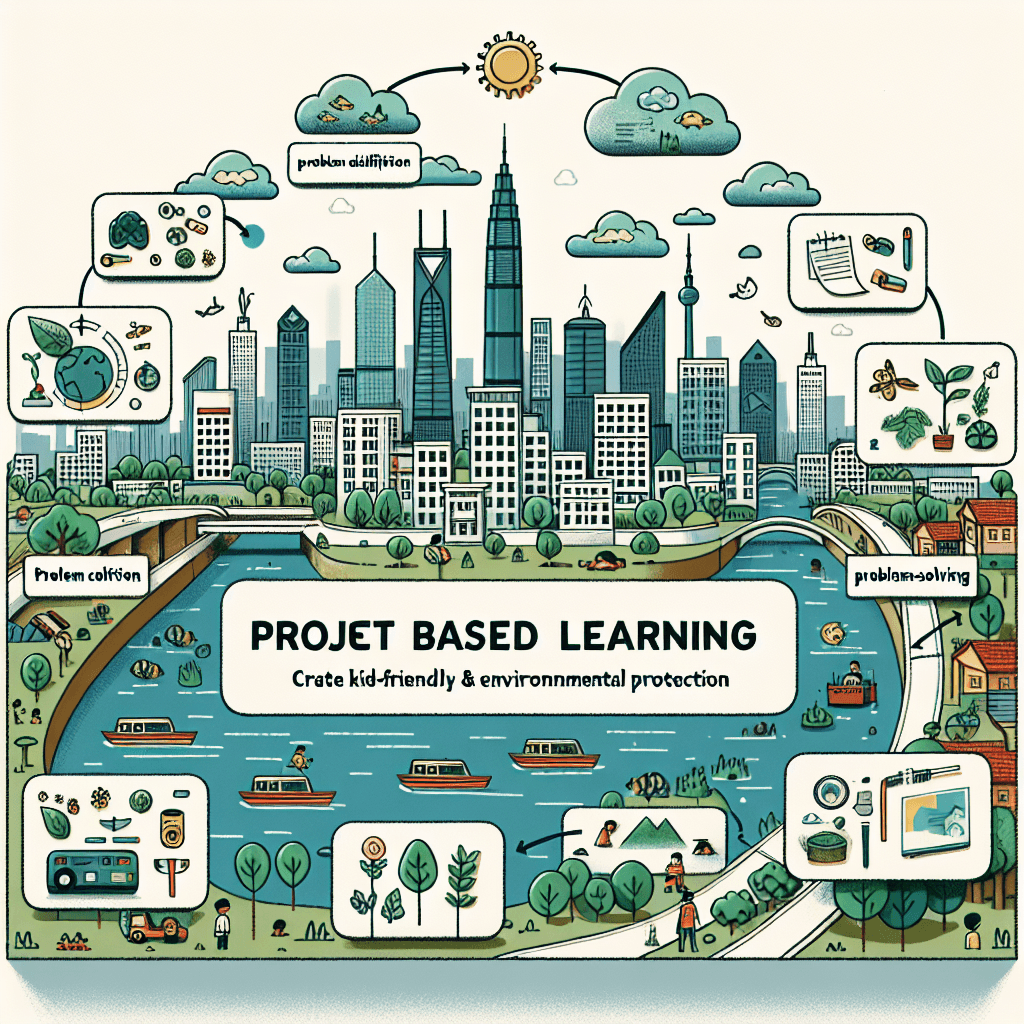
Nanjing Environmental Protectors: Spot, Solve, and Film!
Inquiry Framework
Question Framework
Driving Question
The overarching question that guides the entire project.How can we, as environmental protectors in Nanjing, use film to investigate, document, and propose solutions to local environmental challenges, considering the geographic and social factors at play?Essential Questions
Supporting questions that break down major concepts.- How can we as environmental protectors identify and address environmental issues in our local Nanjing community?
- What are the key environmental challenges facing specific locations in Nanjing, and how do they impact the community and ecosystem?
- How can we use film to effectively communicate environmental problems and propose solutions to a wider audience?
- What are the geographic and social factors that contribute to environmental issues in Nanjing?
- How can we collaborate as a team to research, document, and present our findings in a compelling and informative way?
Standards & Learning Goals
Learning Goals
By the end of this project, students will be able to:- Students will be able to identify and analyze environmental issues in Nanjing.
- Students will be able to develop and propose solutions to local environmental challenges.
- Students will be able to use film to document environmental problems and solutions.
- Students will be able to understand the geographic and social factors contributing to environmental issues in Nanjing.
- Students will be able to collaborate effectively in a team to research and present findings.
- Students will be able to present their findings in a compelling and informative way.
- Students will learn to take on the role of environmental protectors.
Entry Events
Events that will be used to introduce the project to studentsThe Mysterious Message
Students receive a cryptic video message from a local environmental organization (pretend). The video shows snippets of environmental issues around Nanjing but doesn't reveal the exact locations. Students must decipher the clues in the video to identify the affected spots and understand their mission as environmental protectors.Portfolio Activities
Portfolio Activities
These activities progressively build towards your learning goals, with each submission contributing to the student's final portfolio.Nanjing's Environmental Hotspots: Initial Research Brief
Students work in groups to select a specific location in Nanjing known for environmental concerns (e.g., Xuanwu Lake, Purple Mountain, Yangtze River). They will conduct initial research on the area's environmental history, current challenges, and geographic significance to prepare for a site visit.Steps
Here is some basic scaffolding to help students complete the activity.Final Product
What students will submit as the final product of the activityA detailed research brief outlining the location's environmental background, including historical context, current issues, and geographic importance. Each group will present their brief in class to share insights and receive feedback.Alignment
How this activity aligns with the learning objectives & standardsAddresses the learning goals of identifying environmental issues in Nanjing and understanding contributing geographic factors.Eyes on the Ground: Documenting Environmental Realities
Building on their research briefs, students plan and conduct a site visit to their chosen location. They will document visual evidence of environmental issues through photographs and videos, interview local residents or experts to gather firsthand perspectives, and observe social factors influencing the environmental situation.Steps
Here is some basic scaffolding to help students complete the activity.Final Product
What students will submit as the final product of the activityA multimedia documentation portfolio containing visual evidence (photos and videos) of environmental issues, interview transcripts or summaries, and observational notes on relevant social factors. This portfolio will serve as primary source material for the film project.Alignment
How this activity aligns with the learning objectives & standardsSupports learning goals related to documenting environmental problems, proposing solutions, and understanding social factors. Aligns with standards related to research and collaborative problem-solving.Solutions in Sight: Storyboarding for Change
Using their research and documentation, students brainstorm and develop potential solutions to the environmental issues they have identified. They will create a storyboard outlining the narrative structure of their film, incorporating visual evidence, interview excerpts, and proposed solutions to engage and inform the audience.Steps
Here is some basic scaffolding to help students complete the activity.Final Product
What students will submit as the final product of the activityA detailed storyboard outlining the film's narrative structure, including scene descriptions, visual elements, dialogue or narration, and proposed solutions. The storyboard should demonstrate a clear understanding of the environmental issues and a persuasive approach to advocating for change.Alignment
How this activity aligns with the learning objectives & standardsFocuses on the learning goal of developing solutions to local environmental challenges and presenting them in a compelling way. Aligns with standards related to persuasive communication and multimedia production.Lights, Camera, Action: Filming for a Greener Nanjing
Students bring their storyboards to life by filming and editing their environmental documentary. They will use their visual evidence, interview excerpts, and proposed solutions to create a compelling narrative that raises awareness and inspires action. The final film should reflect a deep understanding of the environmental issues, the geographic and social factors involved, and the potential for positive change.Steps
Here is some basic scaffolding to help students complete the activity.Final Product
What students will submit as the final product of the activityA polished environmental documentary that effectively communicates the environmental issues, proposes solutions, and engages the audience. The film should be visually appealing, informative, and persuasive, demonstrating the students' ability to research, document, and advocate for change.Alignment
How this activity aligns with the learning objectives & standardsAddresses all learning goals, particularly using film to document issues and solutions, and presenting findings effectively. Aligns with standards related to multimedia production, communication, and teamwork.Rubric & Reflection
Portfolio Rubric
Grading criteria for assessing the overall project portfolioEnvironmental Protector Project Rubric
Initial Research Brief
Assesses the quality of the initial research brief, focusing on the thoroughness of research, clarity of presentation, and effectiveness of communication.Thoroughness of Research
Extent to which the research brief accurately and thoroughly outlines the location's environmental background, including historical context, current issues, and geographic importance.
Exemplary
4 PointsThe research brief demonstrates a sophisticated understanding of the location's environmental background, providing extensive historical context, a comprehensive analysis of current issues, and insightful observations about its geographic importance. Research is exceptionally thorough and well-documented.
Proficient
3 PointsThe research brief demonstrates a thorough understanding of the location's environmental background, providing clear historical context, a comprehensive analysis of current issues, and relevant observations about its geographic importance. Research is thorough and well-documented.
Developing
2 PointsThe research brief shows an emerging understanding of the location's environmental background, providing some historical context, a basic analysis of current issues, and limited observations about its geographic importance. Research is partially complete and documented.
Beginning
1 PointsThe research brief shows a beginning understanding of the location's environmental background, with minimal historical context, a superficial analysis of current issues, and little to no observations about its geographic importance. Research is incomplete and poorly documented.
Clarity and Organization
Clarity and organization of the research brief, including the logical flow of information, the use of headings and subheadings, and the overall coherence of the document.
Exemplary
4 PointsThe research brief is exceptionally clear, concise, and well-organized, with a logical flow of information, effective use of headings and subheadings, and impeccable coherence. The brief is easy to follow and understand.
Proficient
3 PointsThe research brief is clear, concise, and well-organized, with a logical flow of information, appropriate use of headings and subheadings, and good coherence. The brief is generally easy to follow and understand.
Developing
2 PointsThe research brief is somewhat unclear and disorganized, with an inconsistent flow of information, limited use of headings and subheadings, and fair coherence. The brief may be difficult to follow and understand in places.
Beginning
1 PointsThe research brief is unclear, disorganized, and difficult to follow, with a lack of logical flow, minimal use of headings and subheadings, and poor coherence. The brief is confusing and hard to understand.
Presentation Effectiveness
Effectiveness of the presentation, including the clarity of the spoken presentation, the quality of visual aids, and the engagement of the audience.
Exemplary
4 PointsThe presentation is exceptionally clear, engaging, and informative, with polished delivery, high-quality visual aids, and enthusiastic audience engagement. The presentation captivates the audience and leaves a lasting impression.
Proficient
3 PointsThe presentation is clear, engaging, and informative, with confident delivery, appropriate visual aids, and good audience engagement. The presentation holds the audience's attention and conveys the key information effectively.
Developing
2 PointsThe presentation is somewhat unclear and disengaging, with hesitant delivery, basic visual aids, and limited audience engagement. The presentation may struggle to hold the audience's attention or convey the key information effectively.
Beginning
1 PointsThe presentation is unclear, disengaging, and uninformative, with poor delivery, inadequate visual aids, and minimal audience engagement. The presentation fails to hold the audience's attention or convey the key information effectively.
Multimedia Documentation Portfolio
Evaluates the multimedia documentation portfolio, assessing the quality of visual evidence, the depth of interview insights, and the thoroughness of observational notes.Visual Evidence
Quality and variety of visual evidence (photos and videos) documenting environmental issues at the chosen location.
Exemplary
4 PointsThe multimedia documentation portfolio contains an exceptional collection of high-quality photographs and videos that vividly capture the environmental issues at the chosen location from multiple perspectives. The visual evidence is compelling, informative, and creatively presented.
Proficient
3 PointsThe multimedia documentation portfolio contains a comprehensive collection of quality photographs and videos that clearly document the environmental issues at the chosen location. The visual evidence is well-organized and effectively presented.
Developing
2 PointsThe multimedia documentation portfolio contains a limited collection of adequate photographs and videos that partially document the environmental issues at the chosen location. The visual evidence is somewhat disorganized and inconsistently presented.
Beginning
1 PointsThe multimedia documentation portfolio contains a minimal collection of poor-quality photographs and videos that inadequately document the environmental issues at the chosen location. The visual evidence is disorganized and poorly presented.
Interview Insights
Depth and insightfulness of interview transcripts or summaries, capturing firsthand perspectives on environmental challenges and their impact on the community.
Exemplary
4 PointsThe interview transcripts or summaries are exceptionally insightful, providing a deep and nuanced understanding of the environmental challenges and their impact on the community. The interviews are conducted with sensitivity and skill, eliciting rich and compelling narratives.
Proficient
3 PointsThe interview transcripts or summaries are thorough and informative, providing a clear understanding of the environmental challenges and their impact on the community. The interviews are well-conducted and capture relevant perspectives.
Developing
2 PointsThe interview transcripts or summaries are basic and limited, providing a superficial understanding of the environmental challenges and their impact on the community. The interviews may lack depth or relevance.
Beginning
1 PointsThe interview transcripts or summaries are minimal and uninformative, providing little to no understanding of the environmental challenges or their impact on the community. The interviews are poorly conducted and lack relevance.
Social Context
Thoroughness and relevance of observational notes on social factors influencing the environmental situation, such as community involvement, local policies, and economic activities.
Exemplary
4 PointsThe observational notes are exceptionally thorough and insightful, providing a comprehensive analysis of the social factors influencing the environmental situation. The notes demonstrate a deep understanding of the complex interplay between community involvement, local policies, and economic activities.
Proficient
3 PointsThe observational notes are thorough and relevant, providing a clear analysis of the social factors influencing the environmental situation. The notes demonstrate a good understanding of the relationship between community involvement, local policies, and economic activities.
Developing
2 PointsThe observational notes are basic and limited, providing a superficial analysis of the social factors influencing the environmental situation. The notes may lack depth or relevance.
Beginning
1 PointsThe observational notes are minimal and irrelevant, providing little to no analysis of the social factors influencing the environmental situation. The notes are poorly developed and lack relevance.
Storyboard Quality
Assesses the quality of the storyboard, focusing on the clarity and feasibility of proposed solutions, the effectiveness of the narrative structure, and the persuasiveness of the approach to advocating for change.Solution Clarity and Feasibility
Clarity and feasibility of proposed solutions to the identified environmental issues, considering cost-effectiveness, community impact, and sustainability.
Exemplary
4 PointsThe proposed solutions are exceptionally clear, feasible, and innovative, demonstrating a deep understanding of the environmental issues and their potential remedies. The solutions are highly cost-effective, have a significant positive impact on the community, and are fully sustainable.
Proficient
3 PointsThe proposed solutions are clear, feasible, and practical, demonstrating a good understanding of the environmental issues and their potential remedies. The solutions are cost-effective, have a positive impact on the community, and are sustainable.
Developing
2 PointsThe proposed solutions are somewhat unclear, infeasible, or impractical, demonstrating a limited understanding of the environmental issues and their potential remedies. The solutions may have questionable cost-effectiveness, a minimal impact on the community, or limited sustainability.
Beginning
1 PointsThe proposed solutions are unclear, infeasible, and impractical, demonstrating a poor understanding of the environmental issues and their potential remedies. The solutions are likely to be cost-prohibitive, have a negative impact on the community, or be unsustainable.
Storyboard Effectiveness
Effectiveness of the storyboard in outlining the film's narrative structure, including scene descriptions, visual elements, dialogue or narration, and proposed solutions.
Exemplary
4 PointsThe storyboard is exceptionally well-developed, with clear and compelling scene descriptions, creative visual elements, engaging dialogue or narration, and persuasive presentation of proposed solutions. The storyboard effectively translates the research and documentation into a captivating narrative.
Proficient
3 PointsThe storyboard is well-developed, with clear scene descriptions, appropriate visual elements, informative dialogue or narration, and effective presentation of proposed solutions. The storyboard effectively outlines the film's narrative structure.
Developing
2 PointsThe storyboard is somewhat underdeveloped, with vague scene descriptions, limited visual elements, basic dialogue or narration, and inconsistent presentation of proposed solutions. The storyboard may lack clarity or coherence.
Beginning
1 PointsThe storyboard is poorly developed, with unclear scene descriptions, minimal visual elements, inadequate dialogue or narration, and ineffective presentation of proposed solutions. The storyboard fails to outline the film's narrative structure effectively.
Advocacy Persuasiveness
Persuasiveness of the approach to advocating for change, including the use of evidence, emotional appeals, and rhetorical devices.
Exemplary
4 PointsThe approach to advocating for change is exceptionally persuasive, using compelling evidence, powerful emotional appeals, and skillful rhetorical devices to create a highly impactful message. The storyboard inspires action and promotes positive change.
Proficient
3 PointsThe approach to advocating for change is persuasive, using relevant evidence, appropriate emotional appeals, and effective rhetorical devices to create a clear and compelling message. The storyboard encourages action and promotes positive change.
Developing
2 PointsThe approach to advocating for change is somewhat unpersuasive, using limited evidence, weak emotional appeals, and ineffective rhetorical devices to create a bland and unconvincing message. The storyboard may fail to inspire action or promote positive change.
Beginning
1 PointsThe approach to advocating for change is unpersuasive, using irrelevant evidence, inappropriate emotional appeals, and poor rhetorical devices to create a confusing and unconvincing message. The storyboard actively discourages action or promotes negative change.
Final Film Assessment
Evaluates the final film, assessing the technical quality, communication effectiveness, and demonstration of teamwork and collaboration.Technical Quality
Technical quality of the film, including audio and video clarity, editing, music, sound effects, and graphics.
Exemplary
4 PointsThe film exhibits exceptional technical quality, with crystal-clear audio and video, seamless editing, and perfectly integrated music, sound effects, and graphics that enhance the viewing experience.
Proficient
3 PointsThe film exhibits high technical quality, with clear audio and video, smooth editing, and well-integrated music, sound effects, and graphics that complement the narrative.
Developing
2 PointsThe film exhibits adequate technical quality, with acceptable audio and video, basic editing, and functional music, sound effects, and graphics that may be distracting or inconsistent.
Beginning
1 PointsThe film exhibits poor technical quality, with unclear audio and video, choppy editing, and distracting or absent music, sound effects, and graphics that detract from the viewing experience.
Communication Effectiveness
Effectiveness of the film in communicating the environmental issues, proposing solutions, and engaging the audience.
Exemplary
4 PointsThe film is exceptionally effective in communicating the environmental issues, proposing innovative solutions, and engaging the audience through a compelling narrative and powerful visual storytelling. The film leaves a lasting impression and inspires action.
Proficient
3 PointsThe film is highly effective in communicating the environmental issues, proposing practical solutions, and engaging the audience through a clear narrative and informative visual presentation. The film effectively raises awareness and encourages positive change.
Developing
2 PointsThe film is somewhat effective in communicating the environmental issues, proposing basic solutions, and engaging the audience through a simple narrative and adequate visual presentation. The film may lack clarity or impact.
Beginning
1 PointsThe film is ineffective in communicating the environmental issues, proposing unrealistic solutions, and engaging the audience through a confusing narrative and poor visual presentation. The film fails to raise awareness or encourage positive change.
Teamwork and Collaboration
Demonstration of teamwork and collaboration throughout the filmmaking process, including role assignment, communication, and problem-solving.
Exemplary
4 PointsThe film demonstrates exceptional teamwork and collaboration, with clear role assignments, open communication, and effective problem-solving throughout the filmmaking process. The group functions as a cohesive and highly productive unit.
Proficient
3 PointsThe film demonstrates strong teamwork and collaboration, with well-defined role assignments, clear communication, and efficient problem-solving throughout the filmmaking process. The group works effectively towards a common goal.
Developing
2 PointsThe film demonstrates adequate teamwork and collaboration, with some role confusion, inconsistent communication, and basic problem-solving skills. The group may experience some challenges in working together effectively.
Beginning
1 PointsThe film demonstrates poor teamwork and collaboration, with unclear role assignments, limited communication, and ineffective problem-solving skills. The group struggles to work together effectively and may experience significant conflict.