
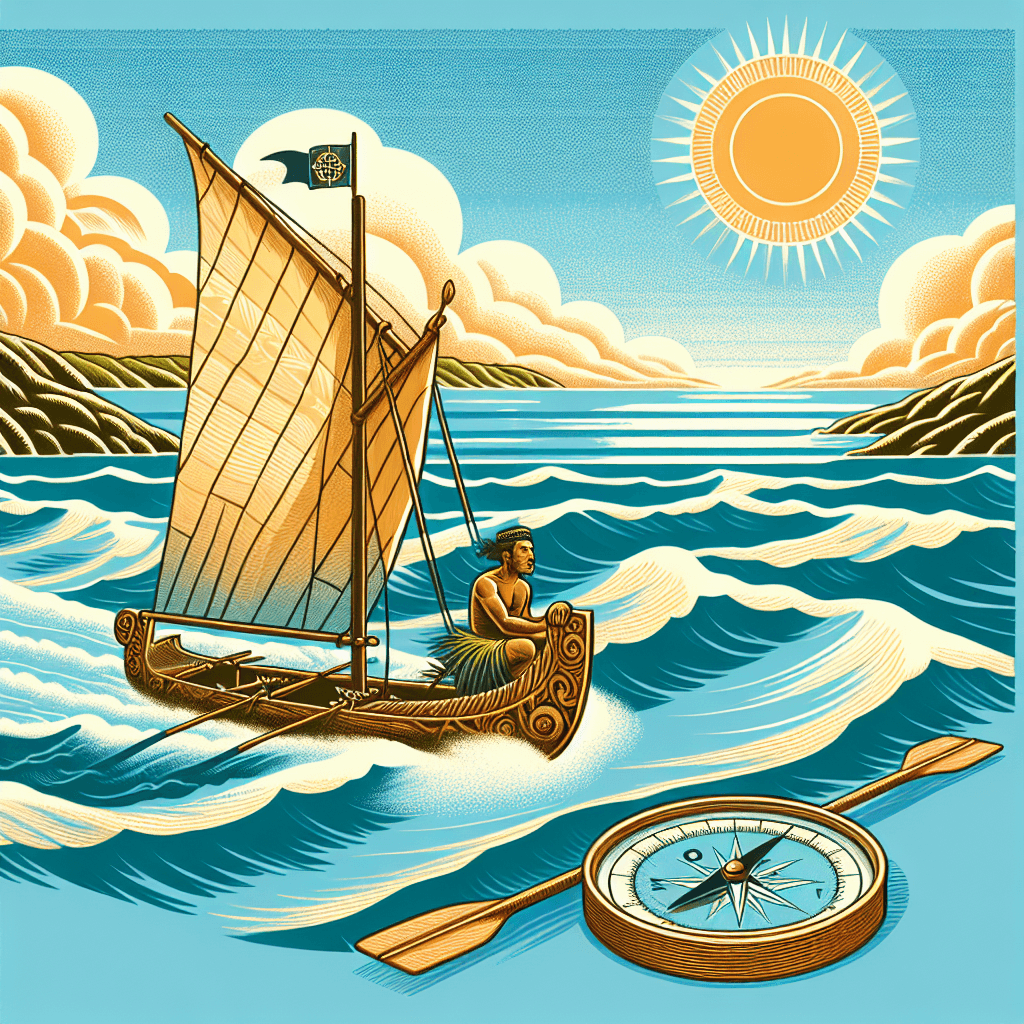
Navigating the Pacific: Polynesian Voyaging
Inquiry Framework
Question Framework
Driving Question
The overarching question that guides the entire project.How did the Polynesian explorers successfully navigate and adapt to the vast Pacific, and what lasting impact did their voyages have on the people and environments they encountered?Essential Questions
Supporting questions that break down major concepts.- How did Polynesian explorers navigate the vast Pacific Ocean?
- What motivated Polynesian exploration and expansion?
- What were the social, cultural, and religious beliefs of Polynesian societies?
- How did Polynesian exploration impact the environments they encountered?
- What role did power and authority play in Polynesian societies?
- Who were some significant individuals and groups in Polynesian exploration?
- How do historians interpret the achievements and legacy of Polynesian exploration?
Standards & Learning Goals
Learning Goals
By the end of this project, students will be able to:- Students will be able to explain the navigational techniques used by Polynesian explorers, including their understanding of stars, currents, and wave patterns.
- Students will be able to analyze the motivations behind Polynesian exploration, considering factors such as resource scarcity, population growth, and social dynamics.
- Students will be able to describe the social, cultural, and religious beliefs of Polynesian societies and their influence on exploration.
- Students will be able to evaluate the environmental impact of Polynesian exploration, both positive and negative, on the islands they settled.
- Students will be able to examine the role of power and authority within Polynesian societies and how it influenced exploration and leadership.
- Students will be able to identify significant individuals and groups involved in Polynesian exploration and their contributions.
- Students will be able to analyze different historical interpretations of Polynesian exploration and its legacy.
Australian Curriculum
Entry Events
Events that will be used to introduce the project to studentsCastaway Challenge
Imagine you are adrift in the vast Pacific with limited resources. Your mission: navigate to a new island using only traditional Polynesian navigation methods (stars, currents, wave patterns). This challenge introduces the ingenuity and resilience of Polynesian explorers.Drumbeat Decoder
Uncover a mysterious, coded message hidden within the rhythmic patterns of a traditional Polynesian drumbeat. Deciphering the message will reveal clues about ancient migration routes and cultural practices.Pacific Puzzle
Analyze a collection of primary source excerpts – ancient chants, archaeological findings, and European explorer journals – to piece together the story of Polynesian expansion across the Pacific. Students will grapple with conflicting perspectives and the complexities of historical interpretation.Virtual Voyage
Using a virtual reality simulation, students will experience a Hokulea voyage firsthand, making navigational decisions based on environmental factors and traditional knowledge. This immersive experience will explore the challenges and triumphs of Polynesian exploration.Canoe Crafters
Design and build a scale model of a Polynesian voyaging canoe, incorporating authentic design principles and materials. This hands-on activity will connect students to the ingenuity and craftsmanship of Polynesian navigators.Portfolio Activities
Portfolio Activities
These activities progressively build towards your learning goals, with each submission contributing to the student's final portfolio.Cultural Compass
Students will explore the social, religious, and cultural features of Polynesian societies by examining primary and secondary sources, such as ancient chants, creation myths, and archaeological findings. This activity will introduce students to the values, beliefs, and practices that shaped Polynesian exploration.Steps
Here is some basic scaffolding to help students complete the activity.Final Product
What students will submit as the final product of the activityA research journal summarizing the social, religious, and cultural features of Polynesian societies, with references to specific sources.Alignment
How this activity aligns with the learning objectives & standardsAC9HH8K12, AC9HH8S01Turning Tides: Polynesian Expansion
Students will analyze a significant turning point in Polynesian history – the expansion across the Pacific. They will develop historical arguments explaining how this expansion led to both continuity and change within Polynesian societies.Steps
Here is some basic scaffolding to help students complete the activity.Final Product
What students will submit as the final product of the activityA persuasive essay arguing for the significance of Polynesian expansion as a turning point in history.Alignment
How this activity aligns with the learning objectives & standardsAC9HH8K13, AC9HH8S08Navigating Power: Polynesian Social Hierarchy
Students will investigate the social hierarchy and power dynamics within Polynesian societies, exploring the roles of chiefs, navigators, and other key figures. They will analyze how power and authority influenced exploration decisions.Steps
Here is some basic scaffolding to help students complete the activity.Final Product
What students will submit as the final product of the activityA presentation examining the power dynamics within Polynesian societies and their connection to exploration decisions.Alignment
How this activity aligns with the learning objectives & standardsAC9HH8K14, AC9HH8S06Wayfinders: Polynesian Explorers
Students will research the achievements of significant individuals and groups in Polynesian exploration, such as skilled navigators, explorers, and settlers. They will analyze different historical interpretations of their contributions.Steps
Here is some basic scaffolding to help students complete the activity.Final Product
What students will submit as the final product of the activityA biographical profile of a significant individual or group involved in Polynesian exploration, including an analysis of their achievements and legacy.Alignment
How this activity aligns with the learning objectives & standardsAC9HH8K15, AC9HH8S07Interpreting the Past: Polynesian Voyages
Students will analyze various historical interpretations of Polynesian exploration, considering different perspectives on the explorers’ motivations, achievements, and impact. They will evaluate the accuracy and usefulness of different sources.Steps
Here is some basic scaffolding to help students complete the activity.Final Product
What students will submit as the final product of the activityA comparative analysis of different historical interpretations of Polynesian exploration.Alignment
How this activity aligns with the learning objectives & standardsAC9HH8K16, AC9HH8S03, AC9HH8S04Rubric & Reflection
Portfolio Rubric
Grading criteria for assessing the overall project portfolioPolynesian Exploration Mastery Rubric
Understanding Cultural Context
Assesses the depth of understanding of social, religious, and cultural features of Polynesian societies.Cultural Analysis
Evaluates the analysis of Polynesian cultural elements as reflected in primary and secondary sources.
Exemplary
4 PointsProvides a sophisticated analysis of Polynesian culture with comprehensive references to multiple primary and secondary sources, highlighting unique features and their historical significance.
Proficient
3 PointsOffers a thorough analysis of Polynesian culture with clear references to several primary and secondary sources, identifying key features and their relevance.
Developing
2 PointsGives a basic analysis of Polynesian culture with limited references to primary and secondary sources, recognizing some features.
Beginning
1 PointsPresents an incomplete analysis of Polynesian culture with minimal references to few sources, missing key features.
Historical Interpretation and Argumentation
Evaluates the ability to form historical interpretations and construct arguments regarding significant Polynesian events and figures.Argument Construction
Assesses the creation of persuasive historical arguments about Polynesian expansion and its significance.
Exemplary
4 PointsConstructs a compelling argument concerning Polynesian expansion, integrating exceptional evidence from a wide array of sources, and articulating the historical significance with clarity.
Proficient
3 PointsBuilds a clear argument about Polynesian expansion, using evidence from multiple sources to explain its historical importance.
Developing
2 PointsForms a basic argument about Polynesian expansion, with some evidence and explanation of its significance.
Beginning
1 PointsAttempts to construct an argument about Polynesian expansion with minimal evidence and unclear significance.
Source Analysis
Evaluates the ability to analyze the origin, context, and usefulness of primary and secondary sources.
Exemplary
4 PointsAnalyzes sources with exceptional insight, evaluating their origin, context, and usefulness thoroughly and drawing insightful conclusions.
Proficient
3 PointsEffectively analyzes sources, evaluating their origin, context, and utility with clarity and precision.
Developing
2 PointsAttempts basic source analysis, evaluating the origin and context with partial success.
Beginning
1 PointsShows limited ability to analyze sources, with little attention to their origin and context.
Collaboration and Presentation Skills
Assesses the ability to collaborate effectively and present findings in historical inquiry.Presentation Quality
Evaluates the organization, clarity, and engagement level of presentations on Polynesian exploration topics.
Exemplary
4 PointsDelivers an exceptionally clear and engaging presentation, demonstrating leadership in collaboration and effective use of visuals and storytelling.
Proficient
3 PointsPresents information clearly and effectively, engaging the audience and utilizing visuals to support content.
Developing
2 PointsPresents basic information with partial engagement and minimal visual support.
Beginning
1 PointsAttempts to present information with little clarity or engagement, relying heavily on support.