
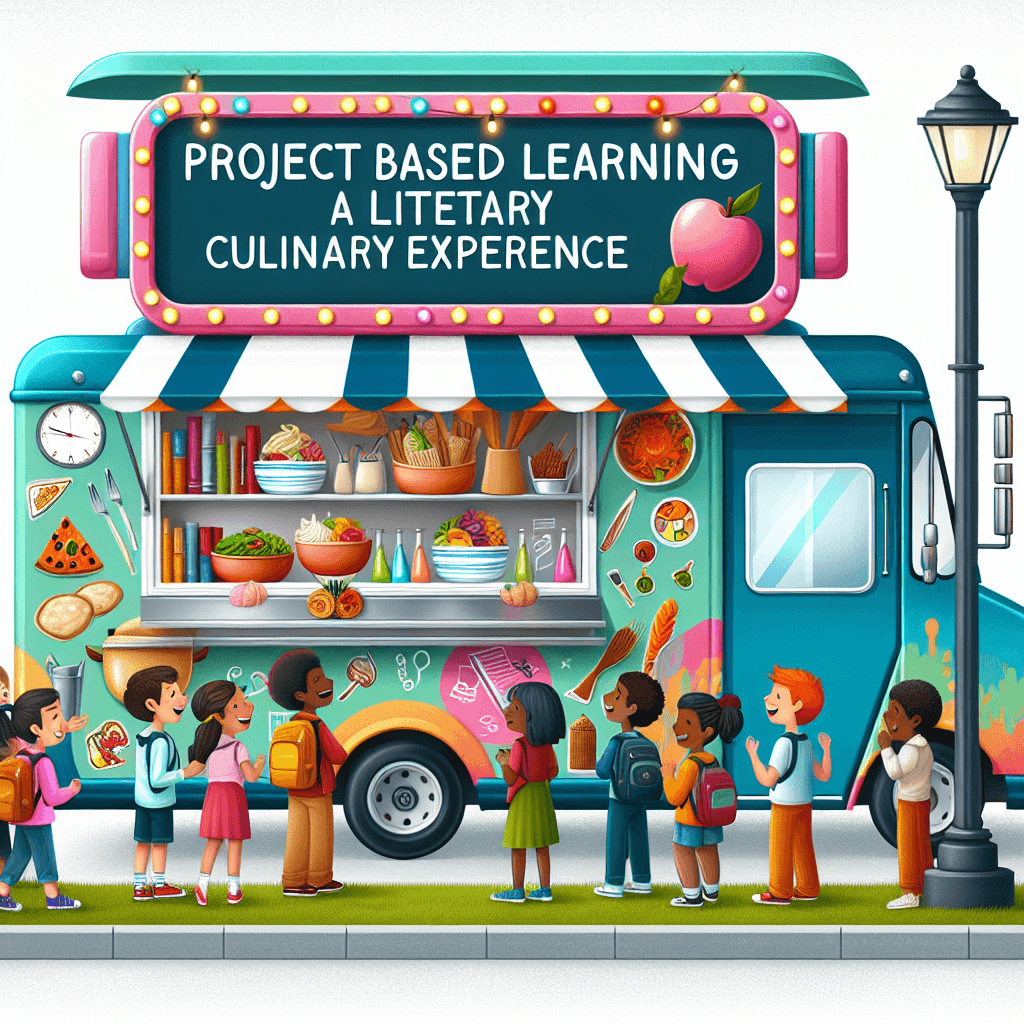
Novel Food Trucks: A Literary Culinary Experience
Inquiry Framework
Question Framework
Driving Question
The overarching question that guides the entire project.How can we design a food truck that brings a novel to life, using textual evidence to showcase its characters, themes, and symbols in a delicious and meaningful way?Essential Questions
Supporting questions that break down major concepts.- How can a food truck effectively represent the key elements of a novel, such as characters, themes, and symbols?
- In what ways does the design and menu of a food truck reflect a deep understanding of the novel's plot and character development?
- How can you use textual evidence from the novel to justify the choices made in the food truck's theme, design, and menu?
- What is the relationship between the food truck's concept and the author's purpose and message in the novel?
- How does creating a food truck based on a novel enhance your understanding and appreciation of literary analysis and interpretation?
Standards & Learning Goals
Learning Goals
By the end of this project, students will be able to:- Apply textual evidence to support interpretations of literary works
- Analyze literary elements such as character, theme, and symbolism
- Design a food truck concept that reflects key elements of a novel
- Demonstrate understanding of literary analysis through creative design
Common Core Standards
Entry Events
Events that will be used to introduce the project to studentsFood Truck Failures: A Cautionary Tale
The teacher presents a series of 'food truck fails' – examples of real or fabricated food trucks with terrible branding, confusing menus, or bizarre themes. Students analyze these failures and identify the key elements of a successful literary food truck, setting the stage for their own creative designs.Portfolio Activities
Portfolio Activities
These activities progressively build towards your learning goals, with each submission contributing to the student's final portfolio.Character Quote Mining
Students will create character profiles for the main characters in their chosen novel, focusing on direct quotes and paraphrased events that reveal their personalities and motivations.Steps
Here is some basic scaffolding to help students complete the activity.Final Product
What students will submit as the final product of the activityA detailed character profile for each main character, including textual evidence (quotes and paraphrases) with citations and brief analyses of how these excerpts reveal character traits.Alignment
How this activity aligns with the learning objectives & standardsCovers CCSS.ELA-Literacy.8.1: Drawing evidence from texts; CCSS.ELA-Literacy.8.5: Using evidence to demonstrate understanding; and CCSS.ELA-Literacy.8.5b: Analyzing character through dialogue and events. This activity sets the foundation for textual evidence analysis related to character.Theme Excavation
Students will explore the overarching themes of their chosen novel and how these themes are reflected in the characters and plot. They will identify textual evidence that supports their interpretation of these themes.Steps
Here is some basic scaffolding to help students complete the activity.Final Product
What students will submit as the final product of the activityA written analysis of the novel's main themes, supported by textual evidence (quotes and paraphrases) that connect the themes to specific characters, plot points, and/or settings.Alignment
How this activity aligns with the learning objectives & standardsCovers CCSS.ELA-Literacy.8.1: Drawing evidence from texts; CCSS.ELA-Literacy.8.5: Using evidence to demonstrate understanding; and CCSS.ELA-Literacy.8.5a: Explaining stated or implied themes. Builds on character analysis to connect themes to character development.Plot Blueprint
Students will map out the key plot points of their novel and analyze how each event leads to the next, contributing to the overall story arc. They will identify instances of foreshadowing and explain their significance.Steps
Here is some basic scaffolding to help students complete the activity.Final Product
What students will submit as the final product of the activityA visual plot diagram (e.g., a chart, storyboard, or mind map) that outlines the key events in the novel, including annotations that explain how each event influences the plot and identifies instances of foreshadowing.Alignment
How this activity aligns with the learning objectives & standardsCovers CCSS.ELA-Literacy.8.5 and CCSS.ELA-Literacy.8.5c: Focuses on understanding how plot structure advances the story. This activity helps students understand the cause-and-effect relationship of events in the novel.Concept Cuisine
Students will synthesize their character, theme, and plot analyses to develop a comprehensive concept for their literary food truck. This involves selecting a specific theme or character to highlight, choosing a name that reflects the novel's essence, and drafting an initial menu with food items related to specific events or symbols in the story.Steps
Here is some basic scaffolding to help students complete the activity.Final Product
What students will submit as the final product of the activityA detailed food truck concept proposal, including: 1. A chosen theme or character focus. 2. A creative and relevant food truck name. 3. A draft menu with at least 5 food items, each connected to a specific element (character, theme, plot point, symbol) from the novel, along with a brief explanation of the connection.Alignment
How this activity aligns with the learning objectives & standardsThis activity consolidates understanding and prepares for the food truck design. It directly aligns with Learning Goals: applying textual evidence, analyzing literary elements, and demonstrating literary analysis through creative design. It connects to all standards, with a focus on 8.1, 8.5, 8.5a, 8.5b, and 8.5c. This is the culmination of the previous activities, ensuring students have a deep understanding of the novel before designing their food truck.Rubric & Reflection
Portfolio Rubric
Grading criteria for assessing the overall project portfolioLiterary Food Truck Rubric
Character Quote Mining Analysis
Focuses on the depth of character analysis and the effective use of textual evidence.Textual Evidence - Character
The depth and relevance of textual evidence (quotes, paraphrases) chosen to represent the characters.
Exemplary
4 PointsDemonstrates exceptional insight in selecting textual evidence that vividly portrays character traits and motivations; evidence is seamlessly integrated and powerfully supports analysis.
Proficient
3 PointsSelects textual evidence that clearly portrays character traits and motivations; evidence is well-integrated and supports analysis.
Developing
2 PointsSelects some textual evidence, but relevance to character traits and motivations is not always clear; integration is superficial, and analysis is limited.
Beginning
1 PointsStruggles to select relevant textual evidence; evidence is missing or inappropriate, and no analysis is provided.
Character Analysis
The quality and depth of analysis connecting textual evidence to character traits and motivations.
Exemplary
4 PointsProvides insightful and nuanced analysis that reveals a deep understanding of character complexity and motivations; analysis is original and goes beyond the obvious.
Proficient
3 PointsProvides thorough analysis that demonstrates a clear understanding of character complexity and motivations; analysis is well-supported by textual evidence.
Developing
2 PointsProvides basic analysis that shows some understanding of character traits, but lacks depth and nuance; connection to textual evidence is superficial.
Beginning
1 PointsProvides minimal or no analysis, showing little to no understanding of character traits or motivations.
Citation Accuracy
Proper citation and use of textual evidence
Exemplary
4 PointsAll textual evidence is accurately cited, and sources are flawlessly integrated to support claims, demonstrating advanced understanding of academic integrity.
Proficient
3 PointsMost textual evidence is accurately cited, and sources are well-integrated to support claims, demonstrating strong understanding of academic integrity.
Developing
2 PointsSome textual evidence is cited, but there are inaccuracies or omissions; integration of sources is inconsistent, suggesting a basic understanding of academic integrity.
Beginning
1 PointsTextual evidence is missing or improperly cited, demonstrating a lack of understanding of academic integrity.
Theme Excavation Analysis
Focuses on the exploration of themes and the evidence to back it up.Textual Evidence - Theme
Selection of relevant textual evidence (quotes, paraphrases) that supports the identified themes.
Exemplary
4 PointsDemonstrates exceptional insight in selecting textual evidence that powerfully illustrates the themes; evidence is seamlessly integrated and elevates the analysis.
Proficient
3 PointsSelects textual evidence that clearly illustrates the themes; evidence is well-integrated and supports the analysis.
Developing
2 PointsSelects some textual evidence, but relevance to the identified themes is not always clear; integration is superficial, and the analysis is limited.
Beginning
1 PointsStruggles to select relevant textual evidence; evidence is missing or inappropriate, and no analysis is provided.
Theme Analysis
The quality and depth of analysis connecting textual evidence to the development of the themes throughout the novel.
Exemplary
4 PointsProvides insightful and nuanced analysis that reveals a deep understanding of the themes; analysis is original, insightful, and considers the author's purpose.
Proficient
3 PointsProvides thorough analysis that demonstrates a clear understanding of the themes; analysis is well-supported by textual evidence and considers the author's purpose.
Developing
2 PointsProvides basic analysis that shows some understanding of themes, but lacks depth and nuance; connection to textual evidence is superficial.
Beginning
1 PointsProvides minimal or no analysis, showing little to no understanding of the themes.
Theme Development
Explanation of theme's development.
Exemplary
4 PointsInsightfully explains how the theme evolves throughout the text, demonstrating an exceptional grasp of its significance and impact on the narrative.
Proficient
3 PointsClearly explains how the theme evolves throughout the text, demonstrating a strong grasp of its significance and impact on the narrative.
Developing
2 PointsProvides a limited explanation of how the theme evolves throughout the text, demonstrating a partial grasp of its significance and impact on the narrative.
Beginning
1 PointsFails to explain how the theme evolves throughout the text, demonstrating a lack of understanding of its significance and impact on the narrative.
Plot Blueprint Analysis
Focuses on the structure of plot, events that take place and foreshadowing within.Visual Plot Representation
Accuracy and clarity of the visual representation of the plot.
Exemplary
4 PointsCreates an exceptionally clear, accurate, and visually engaging representation of the plot, demonstrating a sophisticated understanding of narrative structure.
Proficient
3 PointsCreates a clear, accurate, and visually appealing representation of the plot, demonstrating a strong understanding of narrative structure.
Developing
2 PointsCreates a visual representation of the plot, but it may lack clarity, accuracy, or visual appeal; demonstrates a basic understanding of narrative structure.
Beginning
1 PointsFails to create a clear or accurate visual representation of the plot, demonstrating a limited understanding of narrative structure.
Event Explanation
Quality of explanations connecting each event to the overall story.
Exemplary
4 PointsProvides insightful, detailed, and nuanced explanations of how each event contributes to the overall story, demonstrating a profound understanding of plot development and cause-and-effect relationships.
Proficient
3 PointsProvides clear and thorough explanations of how each event contributes to the overall story, demonstrating a strong understanding of plot development and cause-and-effect relationships.
Developing
2 PointsProvides basic explanations of how each event contributes to the overall story, but lacks depth and detail; demonstrates a partial understanding of plot development and cause-and-effect relationships.
Beginning
1 PointsProvides minimal or no explanation of how each event contributes to the overall story, demonstrating a limited understanding of plot development and cause-and-effect relationships.
Foreshadowing Analysis
Identification and explanation of foreshadowing.
Exemplary
4 PointsIdentifies and insightfully explains the significance of foreshadowing, demonstrating an exceptional understanding of how it builds suspense and anticipation.
Proficient
3 PointsIdentifies and clearly explains the significance of foreshadowing, demonstrating a strong understanding of how it builds suspense and anticipation.
Developing
2 PointsIdentifies some instances of foreshadowing, but explanation of significance is limited; demonstrates a basic understanding of how it builds suspense and anticipation.
Beginning
1 PointsFails to identify foreshadowing or explain its significance, demonstrating a limited understanding of how it builds suspense and anticipation.
Concept Cuisine Analysis
Focuses on the ability to connect the book to the concept of the food truck.Theme/Character Focus
Clarity and relevance of the chosen theme or character focus.
Exemplary
4 PointsChooses an exceptionally relevant and focused theme or character to showcase in the food truck, demonstrating deep understanding of the novel's core elements.
Proficient
3 PointsChooses a relevant and focused theme or character to showcase in the food truck, demonstrating clear understanding of the novel's core elements.
Developing
2 PointsChooses a theme or character to showcase in the food truck, but relevance to the novel's core elements may be unclear or superficial.
Beginning
1 PointsFails to choose a relevant theme or character focus for the food truck, demonstrating a limited understanding of the novel's core elements.
Food Truck Name
Creativity and relevance of the food truck name.
Exemplary
4 PointsCreates an exceptionally creative and relevant food truck name that cleverly captures the novel's essence and intrigues potential customers.
Proficient
3 PointsCreates a creative and relevant food truck name that captures the novel's essence and appeals to potential customers.
Developing
2 PointsCreates a food truck name that is somewhat relevant to the novel, but lacks creativity or appeal.
Beginning
1 PointsCreates a food truck name that is irrelevant or inappropriate for the novel.
Menu Item Connection
Connection of each food item to specific elements (character, theme, plot point, symbol) from the novel.
Exemplary
4 PointsEvery food item is ingeniously linked to a specific element from the novel, and thoroughly explained and supported by textual evidence.
Proficient
3 PointsEach food item is clearly linked to a specific element from the novel, well explained and supported by textual evidence.
Developing
2 PointsAttempts to link food items to elements from the novel, but connections are weak or not supported by textual evidence.
Beginning
1 PointsFood items show no clear connection to the novel or its elements.