
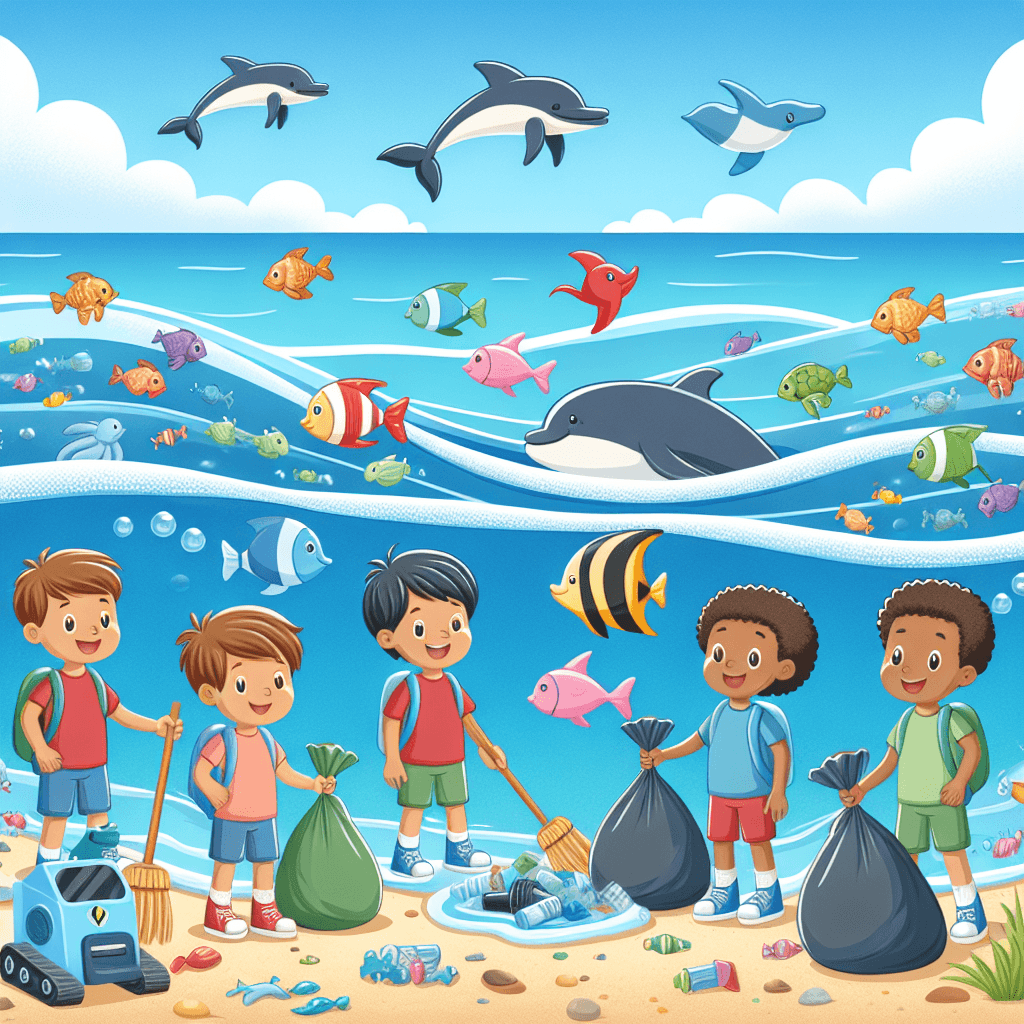
Ocean Pollution Solutions: A Grade 2 Project
Inquiry Framework
Question Framework
Driving Question
The overarching question that guides the entire project.How can we, as young environmental stewards, protect our ocean from the harmful effects of pollution and ensure a healthy home for marine life?Essential Questions
Supporting questions that break down major concepts.- What is ocean pollution and what causes it?
- What are the different types of pollution found in the ocean?
- How does ocean pollution affect marine life and ecosystems?
- What are some simple actions we can take to reduce ocean pollution in our daily lives?
- How can we work together as a community to protect the ocean from pollution?
Standards & Learning Goals
Learning Goals
By the end of this project, students will be able to:- Students will be able to define ocean pollution and identify its causes.
- Students will be able to describe the different types of pollution found in the ocean.
- Students will be able to explain how ocean pollution affects marine life and ecosystems.
- Students will be able to propose simple actions to reduce ocean pollution.
- Students will be able to collaborate with the community to protect the ocean.
Entry Events
Events that will be used to introduce the project to studentsOcean Pollution Mystery Box
Students receive a mystery box filled with items commonly found as ocean pollution. They must analyze the items and hypothesize their origins and impact on marine life, sparking curiosity about the sources and consequences of ocean pollution.Create an Anti-Pollution Superhero
Students brainstorm and design a superhero whose mission is to protect the ocean from pollution. This activity encourages creative thinking about solutions and connects the issue to their interests in characters and storytelling.Portfolio Activities
Portfolio Activities
These activities progressively build towards your learning goals, with each submission contributing to the student's final portfolio.My Ocean Pollution Observation Log
Students begin by observing and documenting different types of pollution they see around them or learn about in class. This activity sets the stage for understanding real-world examples of pollution and its impact.Steps
Here is some basic scaffolding to help students complete the activity.Final Product
What students will submit as the final product of the activityA completed observation log sheet with drawings and descriptions of different types of pollution.Alignment
How this activity aligns with the learning objectives & standardsAddresses the learning goal: Students will be able to define ocean pollution and identify its causes.Pollution Type Postcards
Students create postcards illustrating various types of ocean pollution and write a short message from the perspective of a marine animal affected by that pollution. This activity combines creative expression with learning about the effects of pollution.Steps
Here is some basic scaffolding to help students complete the activity.Final Product
What students will submit as the final product of the activityA set of postcards illustrating different types of ocean pollution with messages from affected marine animals.Alignment
How this activity aligns with the learning objectives & standardsAddresses the learning goals: Students will be able to describe the different types of pollution found in the ocean; Students will be able to explain how ocean pollution affects marine life and ecosystems.My 'Ocean Protector' Pledge
Students brainstorm and commit to simple actions they can take in their daily lives to reduce ocean pollution. This activity encourages personal responsibility and empowers students to make a difference.Steps
Here is some basic scaffolding to help students complete the activity.Final Product
What students will submit as the final product of the activityA decorated 'Ocean Protector' pledge outlining specific actions to reduce ocean pollution.Alignment
How this activity aligns with the learning objectives & standardsAddresses the learning goal: Students will be able to propose simple actions to reduce ocean pollution.Community Action Plan Brainstorm
Students work together to brainstorm ideas for a community project that can help protect the ocean from pollution. This activity fosters collaboration and encourages students to think about broader solutions.Steps
Here is some basic scaffolding to help students complete the activity.Final Product
What students will submit as the final product of the activityA list of potential community action projects to help protect the ocean from pollution.Alignment
How this activity aligns with the learning objectives & standardsAddresses the learning goal: Students will be able to collaborate with the community to protect the ocean.Rubric & Reflection
Portfolio Rubric
Grading criteria for assessing the overall project portfolioOcean Pollution Stewardship
Understanding Ocean Pollution
Assessment of student's comprehension of ocean pollution, its causes and types, as depicted in their observation logs and postcards.Identification of Pollution Types
Ability to identify and describe different types of ocean pollution based on observations and activity outputs.
Exemplary
4 PointsIdentifies and accurately describes multiple types of ocean pollution with detailed illustrations and descriptions. Connects observations to real-world sources.
Proficient
3 PointsAccurately identifies and describes different types of ocean pollution with clear illustrations and descriptions.
Developing
2 PointsIdentifies some types of ocean pollution but descriptions are incomplete or lacking detail.
Beginning
1 PointsStruggles to identify types of ocean pollution or provides minimal descriptions.
Impact on Marine Life
Understanding of how ocean pollution affects marine life and ecosystems, expressed creatively through activity outputs.
Exemplary
4 PointsDemonstrates a deep understanding of pollution's effects on marine life with insightful creativity in messages from marine perspectives.
Proficient
3 PointsConsistently demonstrates understanding of pollution's effects on marine life, with creative expression.
Developing
2 PointsShows basic awareness of pollution's effects but lacks depth or clarity in creative expression.
Beginning
1 PointsMinimal understanding of pollution’s impact on marine life, with limited creative input.
Action and Solutions
Evaluation of student's ability to propose and commit to actions reducing ocean pollution and collaborate on community solutions.Proposing Solutions
Ability to brainstorm and articulate simple actionable solutions to decrease ocean pollution, individually or community-based.
Exemplary
4 PointsProposes multiple innovative, feasible solutions and outlines clear and committed personal action plans.
Proficient
3 PointsProposes clear and feasible solutions with a committed personal action plan.
Developing
2 PointsSuggests some solutions but lacks commitment or clarity in action plans.
Beginning
1 PointsStruggles to suggest solutions or action plans are vague.
Community Collaboration
Assessment of student's collaborative efforts in developing a community action plan to protect the ocean.
Exemplary
4 PointsActively engages and shows leadership in collaborative discussions, contributing innovative ideas to community action plans.
Proficient
3 PointsEffectively participates in group discussions, contributing feasible ideas to community action plans.
Developing
2 PointsParticipates in group discussions but contributions lack depth or creativity.
Beginning
1 PointsMinimal participation or struggles to contribute ideas in group settings.