
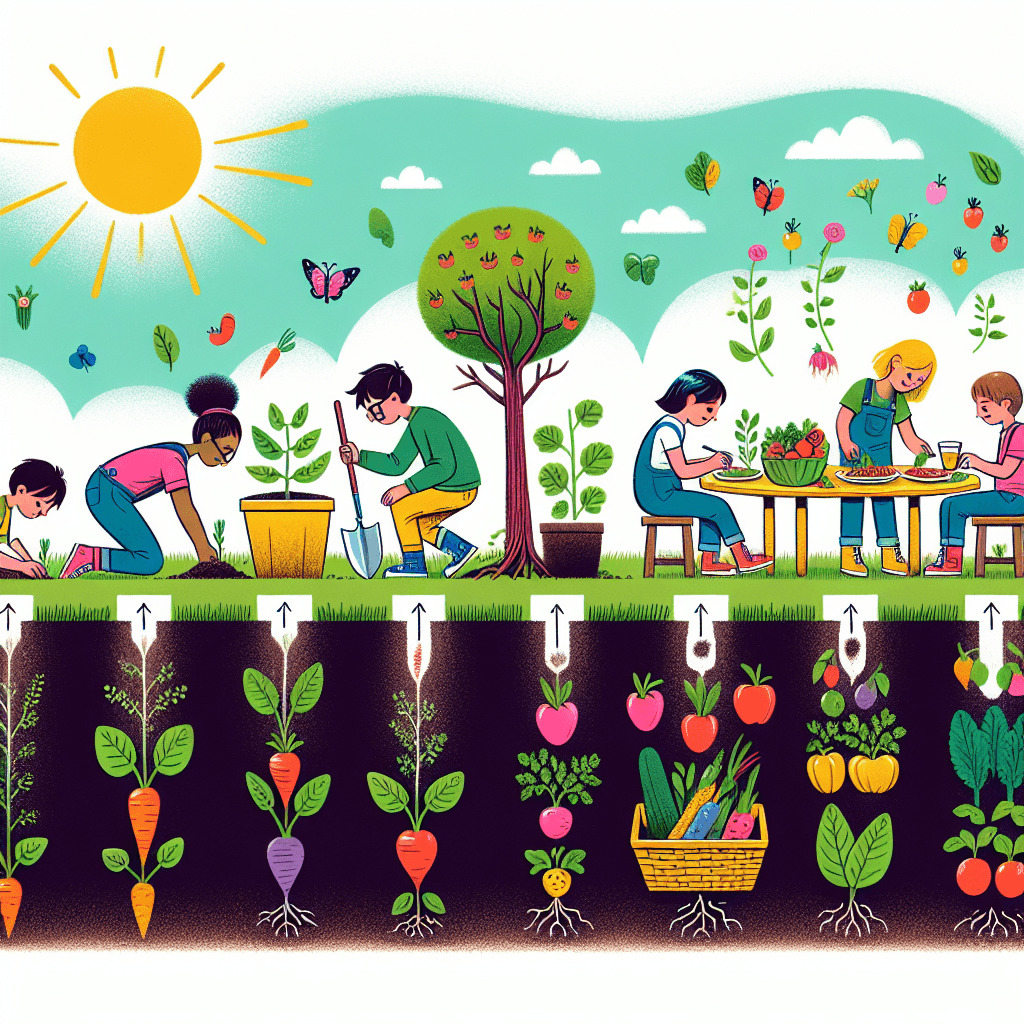
Organic Food Project: From Garden to Table
Inquiry Framework
Question Framework
Driving Question
The overarching question that guides the entire project.How can we design and cultivate a sustainable and affordable organic garden at our school, and how can we use our harvest to create organic products that demonstrate the true value and benefits of organic practices compared to conventional methods, considering production costs, environmental impacts, and geographical factors?Essential Questions
Supporting questions that break down major concepts.- What makes organic food different from non-organic food?
- How does the process of growing organic food affect its cost?
- Why are organic foods more expensive than non-organic foods?
- What are the benefits of organic food compared to non-organic food?
- How does the location of production affect the price of organic food?
- How can we create our own organic garden at school?
- What are the different ways we can make our own organic products?
Standards & Learning Goals
Learning Goals
By the end of this project, students will be able to:- Understand the differences between organic and non-organic food production.
- Analyze the factors that contribute to the cost of organic food.
- Evaluate the benefits of organic food in terms of health, environment, and economy.
- Design and cultivate a sustainable organic garden.
- Create organic products from the garden harvest.
- Compare the costs and benefits of organic vs. conventional practices.
Entry Events
Events that will be used to introduce the project to studentsOrganic vs. Conventional Taste Test Debate
Conduct a blind taste test comparing organic and conventional versions of common foods. Students analyze the sensory data, research the nutritional differences, and debate whether the perceived taste and health benefits justify the higher price of organic options.The School Garden Rescue
The school garden is in disrepair, and students are challenged to transform it into a thriving organic space. This hands-on experience requires them to learn about organic gardening techniques, soil health, and pest control, fostering a connection to sustainable food production.Design Your Own Organic Product
Challenge students to design and market their own organic product using ingredients they could grow in the school garden. This project integrates science, math, and English as they research ingredients, calculate costs, develop marketing strategies, and present their product to a "shark tank" panel.Portfolio Activities
Portfolio Activities
These activities progressively build towards your learning goals, with each submission contributing to the student's final portfolio.The Price of Organic: A Cost Analysis
Students investigate the pricing of organic foods versus conventional alternatives, analyzing factors such as production costs, transportation, and market demand.Steps
Here is some basic scaffolding to help students complete the activity.Final Product
What students will submit as the final product of the activityA price comparison table or graph with a written analysis of the factors influencing the cost of organic food.Alignment
How this activity aligns with the learning objectives & standardsAddresses the learning goal: Analyze the factors that contribute to the cost of organic food.Benefits Breakdown: Health, Environment, and Economy
Students research and present the benefits of organic food from three perspectives: health, environmental impact, and economic sustainability.Steps
Here is some basic scaffolding to help students complete the activity.Final Product
What students will submit as the final product of the activityA presentation outlining the health, environmental, and economic benefits of organic food.Alignment
How this activity aligns with the learning objectives & standardsAddresses the learning goal: Evaluate the benefits of organic food in terms of health, environment, and economy.School Garden Design Challenge
Students design an organic garden plan for the school, considering factors like sunlight, soil type, plant selection, and sustainability.Steps
Here is some basic scaffolding to help students complete the activity.Final Product
What students will submit as the final product of the activityA detailed organic garden design plan, including a map, plant list, and gardening strategies.Alignment
How this activity aligns with the learning objectives & standardsAddresses the learning goal: Design and cultivate a sustainable organic garden.From Garden to Table: Organic Product Creation
Students develop a recipe for an organic product using ingredients from their (or a hypothetical) garden, calculating costs and designing packaging.Steps
Here is some basic scaffolding to help students complete the activity.Final Product
What students will submit as the final product of the activityA recipe for an organic product, along with a cost analysis and packaging design.Alignment
How this activity aligns with the learning objectives & standardsAddresses the learning goal: Create organic products from the garden harvest.The Organic Advantage: A Comparative Report
Students write a report comparing the costs and benefits of organic versus conventional food production, synthesizing information from previous activities.Steps
Here is some basic scaffolding to help students complete the activity.Final Product
What students will submit as the final product of the activityA comprehensive report comparing the costs and benefits of organic versus conventional food production.Alignment
How this activity aligns with the learning objectives & standardsAddresses the learning goal: Compare the costs and benefits of organic vs. conventional practices.Rubric & Reflection
Portfolio Rubric
Grading criteria for assessing the overall project portfolioOrganic Food Portfolio Rubric
Cost Analysis
Evaluates the student's ability to analyze and present the cost differences between organic and conventional foods.Price Comparison
Accuracy and clarity in comparing the prices of organic and conventional food items.
Exemplary
4 PointsDemonstrates a comprehensive and accurate comparison of prices across multiple sources, including detailed explanations of price variations.
Proficient
3 PointsProvides a clear and accurate comparison of prices, identifying key differences between organic and conventional items.
Developing
2 PointsShows some understanding of price differences, but the comparison lacks detail or accuracy.
Beginning
1 PointsStruggles to accurately compare prices or identify the differences between organic and conventional items.
Factor Analysis
Depth of research and understanding of the factors influencing the cost of organic food.
Exemplary
4 PointsProvides an in-depth analysis of multiple factors (e.g., production costs, supply chain, demand) with supporting evidence and insightful observations.
Proficient
3 PointsIdentifies and explains the key factors influencing the cost of organic food, such as production methods and transportation.
Developing
2 PointsIdentifies some factors influencing cost, but the explanation is superficial or lacks supporting evidence.
Beginning
1 PointsShows limited understanding of the factors that contribute to the cost of organic food.
Benefits Evaluation
Assesses the student's ability to research and present the health, environmental, and economic benefits of organic food.Research Depth
Extent and quality of research on the benefits of organic food from different perspectives.
Exemplary
4 PointsConducts thorough research, presenting compelling evidence and nuanced perspectives on the health, environmental, and economic benefits of organic food.
Proficient
3 PointsPresents a clear and well-supported overview of the benefits of organic food in terms of health, environment, and economy.
Developing
2 PointsIdentifies some benefits of organic food, but the research is limited or lacks depth.
Beginning
1 PointsDemonstrates minimal research on the benefits of organic food, with little or no supporting evidence.
Presentation Clarity
Effectiveness in communicating the benefits through a presentation format.
Exemplary
4 PointsDelivers a highly engaging and informative presentation that effectively communicates the benefits of organic food using visuals, data, and compelling arguments.
Proficient
3 PointsPresents the benefits of organic food in a clear and organized manner, using appropriate visuals and supporting information.
Developing
2 PointsPresents some information on the benefits of organic food, but the presentation is disorganized or lacks clarity.
Beginning
1 PointsStruggles to present the benefits of organic food in a coherent or understandable way.
Garden Design
Evaluates the student's ability to design a sustainable organic garden plan.Design Feasibility
Practicality and suitability of the garden design for the school environment.
Exemplary
4 PointsCreates a highly detailed and feasible garden design that maximizes space, considers environmental conditions, and incorporates sustainable practices.
Proficient
3 PointsDevelops a realistic garden design that considers the available space, environmental factors, and basic sustainability principles.
Developing
2 PointsPresents a basic garden design, but it may lack detail or feasibility for the school environment.
Beginning
1 PointsStruggles to create a coherent garden design that is suitable for the school environment.
Rationale Justification
Clarity and justification of design choices based on research and environmental assessment.
Exemplary
4 PointsProvides a well-reasoned and thorough justification for all design choices, demonstrating a strong understanding of organic gardening principles and environmental considerations.
Proficient
3 PointsExplains the rationale behind the garden design, referencing research and environmental assessments.
Developing
2 PointsProvides some justification for the design choices, but the explanations are superficial or lack supporting evidence.
Beginning
1 PointsOffers minimal justification for the design choices, showing limited understanding of gardening principles.
Product Creation
Assesses the student's ability to develop a recipe, calculate costs, and design packaging for an organic product.Recipe Development
Creativity and practicality in developing a recipe for an organic product.
Exemplary
4 PointsDevelops a creative and practical recipe that effectively utilizes garden ingredients and demonstrates a deep understanding of organic food preparation.
Proficient
3 PointsCreates a viable recipe for an organic product, sourcing ingredients from the school garden plan or other organic sources.
Developing
2 PointsPresents a basic recipe idea, but it may lack detail or practicality.
Beginning
1 PointsStruggles to develop a coherent recipe for an organic product.
Cost Analysis and Packaging
Accuracy in calculating production costs and effectiveness in designing product packaging.
Exemplary
4 PointsAccurately calculates all production costs and designs innovative and appealing packaging that meets all labeling requirements.
Proficient
3 PointsCalculates the cost of production and designs appropriate packaging for the product, considering branding and labeling.
Developing
2 PointsProvides a basic cost analysis and packaging design, but they may lack accuracy or effectiveness.
Beginning
1 PointsStruggles to calculate production costs or design appropriate packaging.
Comparative Report
Evaluates the student's ability to synthesize information and write a report comparing organic and conventional food practices.Information Synthesis
Effectiveness in integrating information from previous activities and research.
Exemplary
4 PointsSynthesizes information from all previous activities and research to create a comprehensive and insightful report that demonstrates a deep understanding of the topic.
Proficient
3 PointsOrganizes information into a structured report, effectively integrating findings from previous activities and research.
Developing
2 PointsIncludes some information from previous activities, but the report lacks integration or coherence.
Beginning
1 PointsStruggles to integrate information from previous activities into a coherent report.
Balanced Perspective
Fairness and objectivity in presenting the costs and benefits of organic and conventional food.
Exemplary
4 PointsPresents a balanced and nuanced perspective, fairly considering the costs and benefits of both organic and conventional food practices, and supporting claims with evidence.
Proficient
3 PointsPresents a relatively balanced comparison of the costs and benefits, citing sources and considering different viewpoints.
Developing
2 PointsShows some awareness of different perspectives, but the report may be biased or lack sufficient evidence.
Beginning
1 PointsPresents a biased or incomplete comparison, failing to acknowledge different perspectives.