
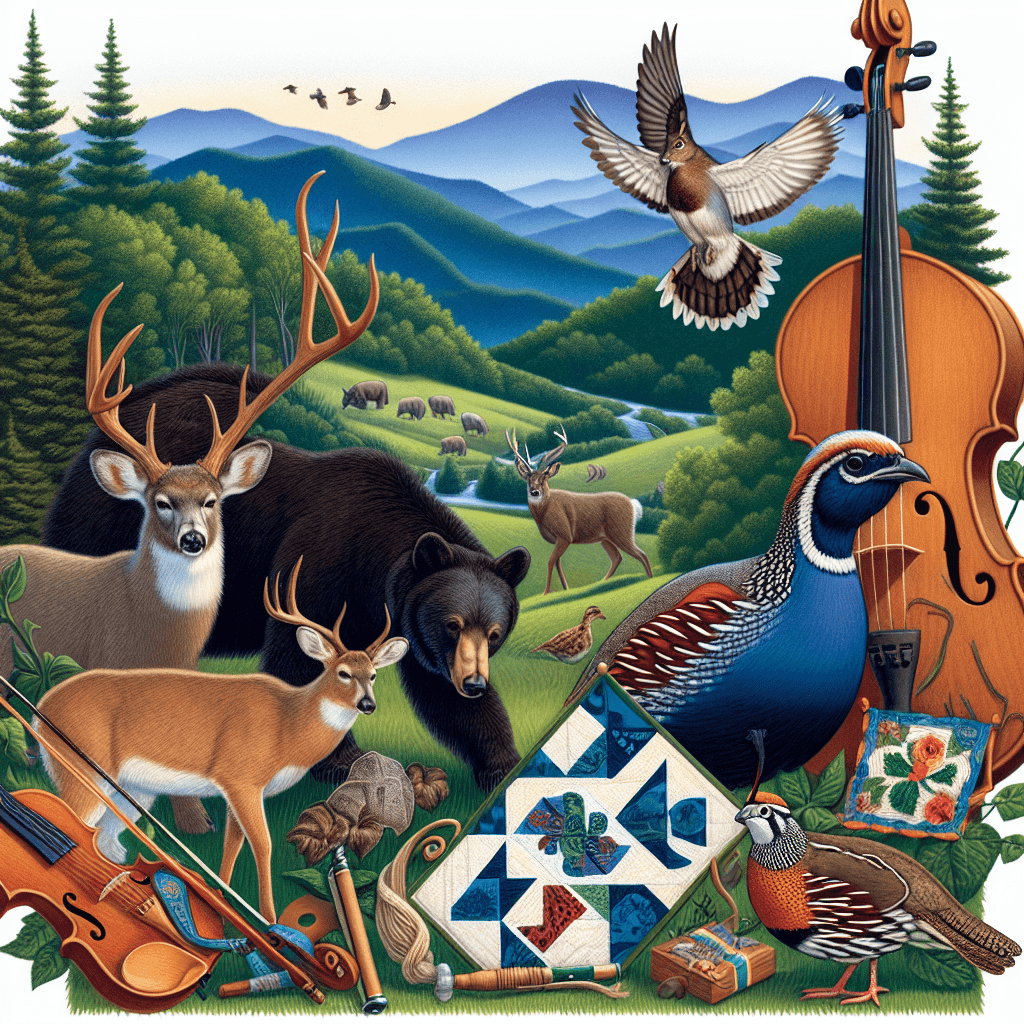
Ozark Heritage: Exploring Wildlife and Culture
Inquiry Framework
Question Framework
Driving Question
The overarching question that guides the entire project.How do the beliefs and values of Ozark culture interact with and influence the regional wildlife, and in what ways does this symbiosis reflect in cultural narratives, such as 'Where the Red Fern Grows', and shape both current and historical cultural and ecological landscapes?Essential Questions
Supporting questions that break down major concepts.- How do the beliefs and values of Ozark culture influence the regional wildlife and vice versa?
- In what ways does the novel 'Where the Red Fern Grows' depict the interplay between culture and nature in the Ozark Mountains?
- What historical events have shaped the cultural and ecological landscape of the Ozark region?
- How has the relationship between humans and wildlife in the Ozarks evolved over time?
- What are the cultural beliefs and traditions in the Ozarks, and how do they reflect the community's relationship with the natural environment?
- How do cultural diffusion and demographic changes impact the wildlife and culture of the Ozarks?
- In what ways do global connections influence the cultural and ecological aspects of the Ozarks today compared to the past?
- How can understanding Ozark culture and wildlife help in promoting global cooperation and resolving conflicts?
Standards & Learning Goals
Learning Goals
By the end of this project, students will be able to:- Analyze the interaction between Ozark culture and regional wildlife, and how this interaction influences each.
- Examine how 'Where the Red Fern Grows' depicts the relationship between culture and nature in the Ozarks.
- Identify historical events that have shaped the cultural and ecological landscape of the Ozark region.
- Understand the evolution of human and wildlife relationships in the Ozark region.
- Describe cultural beliefs and traditions in the Ozarks and their influence on the natural environment.
- Assess the impact of cultural diffusion and demographic changes on Ozark biodiversity and culture.
- Investigate global connections and their influences on Ozark culture and ecology, both historically and presently.
- Propose ways Ozark culture and wildlife understanding can foster global cooperation and conflict resolution.
NCSS Standards
Entry Events
Events that will be used to introduce the project to studentsWildlife and Culture Detective Agency
A mysterious case file arrives addressed to 'Ozark Detectives,' detailing strange locals' tales about how bears, wolves, and other Ozark wildlife have influenced local traditions and legends. The task: explore these stories, debunk myths, and document the factual connections between wildlife habits and cultural stories, offering multiple pathways for research and creative thinking.Portfolio Activities
Portfolio Activities
These activities progressively build towards your learning goals, with each submission contributing to the student's final portfolio.Global Ozark Connections Web
Students investigate global influences on Ozark culture and ecology, identifying both historical and present connections.Steps
Here is some basic scaffolding to help students complete the activity.Final Product
What students will submit as the final product of the activityA comprehensive web or digital presentation mapping historical and present global connections with the Ozarks.Alignment
How this activity aligns with the learning objectives & standardsNCSS.Global.1 - Global cultural and ecological influence investigations.Ozark Wildlife & Culture Puzzle
Students explore the interaction between Ozark culture and regional wildlife focusing on the integration of cultural narratives with ecological understanding.Steps
Here is some basic scaffolding to help students complete the activity.Final Product
What students will submit as the final product of the activityA visual concept map illustrating the relationships between Ozark culture and wildlife.Alignment
How this activity aligns with the learning objectives & standardsNCSS.Culture.1 - Understanding beliefs, values, and behavior integration.Cultural Stories: Wildlife Chronicles
Students document the historical impact of wildlife on cultural stories in the Ozark region, linking past to present.Steps
Here is some basic scaffolding to help students complete the activity.Final Product
What students will submit as the final product of the activityA timeline linking historical and contemporary narratives of Ozark wildlife and culture.Alignment
How this activity aligns with the learning objectives & standardsNCSS.Time.1 - Concepts of chronology, causality, and change.Rubric & Reflection
Portfolio Rubric
Grading criteria for assessing the overall project portfolioOzark Wildlife & Cultural Symbiosis Assessment
Understanding of Cultural and Wildlife Interactions
Evaluates the depth of understanding regarding how Ozark culture and wildlife influence each other, as well as how this reflects in cultural narratives and ecological understanding.Depth of Analysis
Measures the ability to critically analyze the relationship between Ozark culture and wildlife.
Exemplary
4 PointsDemonstrates a sophisticated analysis showing nuanced interactions between culture and wildlife with exceptional detail and insight.
Proficient
3 PointsProvides a thorough analysis showing clear interactions between culture and wildlife with significant detail and understanding.
Developing
2 PointsOffers a basic analysis of some interactions between culture and wildlife, somewhat lacking in depth.
Beginning
1 PointsAttempts to analyze interactions but struggles to articulate clear connections or depth.
Integration of Concepts
Assesses ability to integrate historical, cultural, and ecological concepts with proficiency.
Exemplary
4 PointsEffectively integrates multiple concepts with innovation, showing advanced understanding and application.
Proficient
3 PointsSuccessfully integrates concepts showing clear understanding and practical application.
Developing
2 PointsIntegrates some concepts adequately but lacks in comprehensive understanding.
Beginning
1 PointsStruggles to integrate concepts, showing limited understanding and application.
Use of Evidence
Evaluates the use of evidence and examples to support exploration and understanding.
Exemplary
4 PointsUtilizes a wide range of examples and evidence to support claims, demonstrating extensive research and understanding.
Proficient
3 PointsUses relevant examples and evidence to support claims, showing solid research and understanding.
Developing
2 PointsIncludes some examples and evidence, but may be limited or inconsistently applied.
Beginning
1 PointsAttempts to use examples and evidence, but lacks relevance or depth.
Creativity and Presentation
Assesses the creativity in the presentation of ideas and findings, and the overall quality and coherence of the final product.Creativity of Presentation
Measures the originality and creativity in presenting findings related to Ozark culture and wildlife.
Exemplary
4 PointsPresents findings in an exceptionally creative and original way that captivates and informs the audience.
Proficient
3 PointsPresents findings creatively and clearly to communicate information effectively.
Developing
2 PointsDisplays some creativity in presentation but lacks originality or engagement.
Beginning
1 PointsPresents findings with minimal creativity or originality, lacking engagement.
Coherence and Organization
Evaluates the organization and clarity of the final product, ensuring logical flow and understanding.
Exemplary
4 PointsStructured and organized layout that enhances understanding and delivery of content with exceptional clarity.
Proficient
3 PointsClear and logical organization that effectively communicates content and ideas.
Developing
2 PointsSomewhat organized but may lack clear flow or understanding in places.
Beginning
1 PointsUnorganized with unclear flow, making content difficult to understand.
Collaboration and Communication
Evaluates the student's ability to work collaboratively with peers and communicate ideas effectively.Collaboration
Measures the effectiveness of working in collaboration with peers to achieve project goals.
Exemplary
4 PointsLeads in collaborative settings, encouraging participation and developing ideas innovatively.
Proficient
3 PointsContributes effectively to team efforts, sharing ideas and supporting peers.
Developing
2 PointsParticipates in team efforts but contribution may be limited or inconsistent.
Beginning
1 PointsStruggles to collaborate, limited interaction or support in group settings.
Communication Skills
Assesses ability to communicate ideas and findings clearly and effectively to diverse audiences.
Exemplary
4 PointsCommunicates with exceptional clarity and fluency, adapting messages to the needs of the audience.
Proficient
3 PointsCommunicates clearly and effectively with an understanding of audience needs.
Developing
2 PointsCommunicates ideas but may lack clarity or adaptation to audience.
Beginning
1 PointsStruggles to communicate ideas clearly or adaptively.