
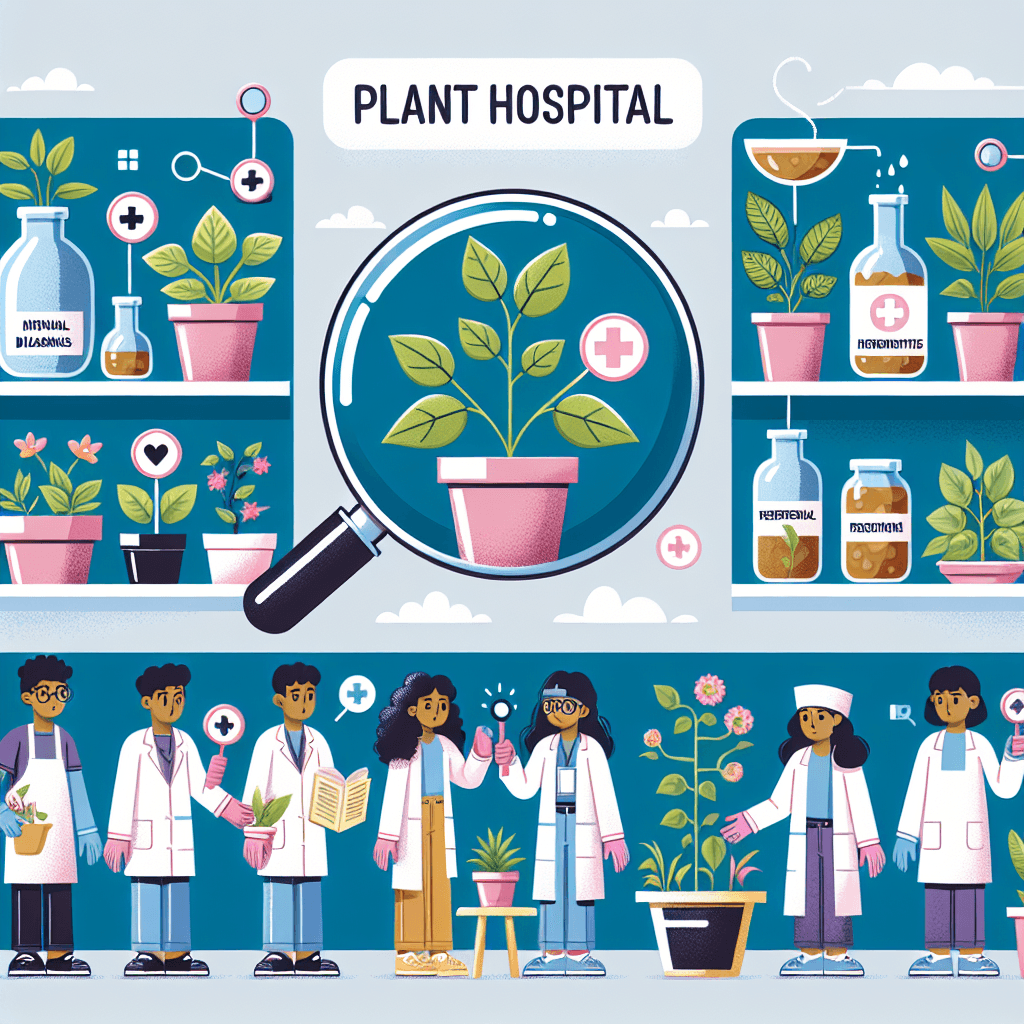
Plant Hospital: Diagnose and Treat Sick Plants
Inquiry Framework
Question Framework
Driving Question
The overarching question that guides the entire project.How can we, as plant doctors, diagnose and treat common plant illnesses to help our green patients thrive?Essential Questions
Supporting questions that break down major concepts.- What are the basic needs of plants?
- What are common plant diseases or problems?
- How do different plant structures contribute to their overall health?
- How can we diagnose plant problems?
- What treatments can we use to help sick plants?
Standards & Learning Goals
Learning Goals
By the end of this project, students will be able to:- Diagnose plant illnesses based on observable symptoms.
- Determine appropriate treatments for common plant diseases.
- Understand the basic needs of plants and how these relate to plant health.
- Describe the structures of plants and their functions.
- Explain how internal and external structures support plant survival, growth, and reproduction.
NGSS
Entry Events
Events that will be used to introduce the project to studentsMystery Plant Challenge
Present students with a series of mystery plants exhibiting different symptoms. Students must work collaboratively, using their knowledge of plant structures and functions, to identify the underlying causes of the plants' distress.Sick Plant Autopsy
Students dissect a non-living 'sick' plant to identify the problem. They will have to examine the roots, stem, and leaves closely to determine what went wrong. They will then have to write an autopsy report.Plant ER Simulation
Transform the classroom into a Plant Emergency Room. Students triage various 'sick' plants, using observation skills and diagnostic tools to determine the urgency of each case and prioritize treatment.The Case of the Droopy Leaves
A local gardener rushes in with a wilting plant, pleading for help. Students act as plant doctors, examining the evidence and interviewing the gardener to diagnose the plant's ailment and prescribe a treatment plan.Create a Plant Disease Infomercial
Divide the class into groups and assign each group a common plant disease or deficiency. Groups create a short infomercial educating their classmates on the causes, symptoms, and treatments of their assigned ailment.Portfolio Activities
Portfolio Activities
These activities progressively build towards your learning goals, with each submission contributing to the student's final portfolio.Plant Structure Explorers
Students investigate the different parts of a plant and their functions, creating labeled diagrams.Steps
Here is some basic scaffolding to help students complete the activity.Final Product
What students will submit as the final product of the activityA labeled diagram of a plant with descriptions of each part's function.Alignment
How this activity aligns with the learning objectives & standardsAddresses the learning goal: Describe the structures of plants and their functions. Aligns with standard 4 LS 1-1 by focusing on internal and external structures of plants.The Needs of Plants: A Survival Guide
Students research and present on the basic needs of plants (water, sunlight, nutrients, air) and how these needs relate to plant health.Steps
Here is some basic scaffolding to help students complete the activity.Final Product
What students will submit as the final product of the activityA presentation explaining the basic needs of plants and the consequences of deficiency.Alignment
How this activity aligns with the learning objectives & standardsAddresses the learning goal: Understand the basic needs of plants and how these relate to plant health. Aligns with standard 4 LS 1-1 by connecting plant needs to their survival and growth.Symptom Spotters: Diagnosing Plant Problems
Students learn to identify common plant diseases and problems by observing symptoms and matching them to possible causes.Steps
Here is some basic scaffolding to help students complete the activity.Final Product
What students will submit as the final product of the activityA chart or guide matching plant symptoms to possible diseases or deficiencies.Alignment
How this activity aligns with the learning objectives & standardsAddresses the learning goal: Diagnose plant illnesses based on observable symptoms. Aligns with standard 4 LS 1-1 by requiring students to analyze plant structures and their functions to identify problems.Treatment Time: Plant Doctor Prescriptions
Students determine appropriate treatments for common plant diseases based on their diagnoses, considering factors like proper watering, sunlight, and nutrient adjustments.Steps
Here is some basic scaffolding to help students complete the activity.Final Product
What students will submit as the final product of the activityA set of 'prescriptions' for sick plants, detailing recommended treatment plans.Alignment
How this activity aligns with the learning objectives & standardsAddresses the learning goal: Determine appropriate treatments for common plant diseases. Aligns with standard 4 LS 1-1 by focusing on how external factors (treatment) affect plant survival and growth.Plant Hospital: Case Studies
Students apply their knowledge to diagnose and treat real or simulated sick plants, documenting their findings and treatment processes in detailed case studies.Steps
Here is some basic scaffolding to help students complete the activity.Final Product
What students will submit as the final product of the activityA detailed case study documenting the diagnosis and treatment of a sick plant.Alignment
How this activity aligns with the learning objectives & standardsAddresses multiple learning goals: diagnosing plant illnesses, determining treatments, understanding plant needs, and describing plant structures. Directly aligns with standard 4 LS 1-1 by requiring students to understand the relationship between plant structures, functions, and their survival.Rubric & Reflection
Portfolio Rubric
Grading criteria for assessing the overall project portfolioPlant Hospital Portfolio Rubric
Plant Structure & Function
Understanding and accurate depiction of plant parts and their functions.Diagram Accuracy
Correctly identifies and labels plant parts (roots, stems, leaves, flowers) and accurately describes their functions.
Exemplary
4 PointsDiagram is detailed, accurate, and clearly labeled, with comprehensive explanations of each part's function. Demonstrates sophisticated understanding.
Proficient
3 PointsDiagram is accurate and labeled, with clear explanations of each part's function. Demonstrates thorough understanding.
Developing
2 PointsDiagram is mostly accurate but may have minor errors or omissions in labeling or explanations. Shows emerging understanding.
Beginning
1 PointsDiagram is incomplete, inaccurate, or lacks clear labels and explanations. Shows initial understanding.
Function Explanation
Provides thorough and accurate explanations of each plant part's role in supporting plant survival, growth, behavior, and reproduction.
Exemplary
4 PointsProvides insightful and comprehensive explanations of each plant part's function, demonstrating a deep understanding of their importance.
Proficient
3 PointsProvides clear and accurate explanations of each plant part's function, demonstrating a strong understanding of their importance.
Developing
2 PointsProvides basic explanations of each plant part's function, but may lack detail or accuracy. Shows emerging understanding.
Beginning
1 PointsStruggles to explain the function of plant parts or provides inaccurate information. Shows initial understanding.
Plant Needs & Deficiencies
Understanding of the basic needs of plants (water, sunlight, nutrients, air) and the consequences of deficiencies.Needs Identification
Accurately identifies and describes the four basic needs of plants: water, sunlight, nutrients, and air.
Exemplary
4 PointsThoroughly identifies and explains the four basic needs of plants, demonstrating a sophisticated understanding of their importance.
Proficient
3 PointsAccurately identifies and describes the four basic needs of plants, demonstrating a strong understanding of their importance.
Developing
2 PointsIdentifies most of the basic needs of plants, but may have minor errors or omissions in descriptions. Shows emerging understanding.
Beginning
1 PointsStruggles to identify the basic needs of plants or provides inaccurate information. Shows initial understanding.
Deficiency Explanation
Explains the consequences of deficiencies in each of the basic needs, demonstrating an understanding of how these deficiencies affect plant health.
Exemplary
4 PointsProvides detailed and insightful explanations of the consequences of deficiencies, demonstrating a deep understanding of the relationship between needs and health.
Proficient
3 PointsProvides clear and accurate explanations of the consequences of deficiencies, demonstrating a strong understanding of the relationship between needs and health.
Developing
2 PointsProvides basic explanations of the consequences of deficiencies, but may lack detail or accuracy. Shows emerging understanding.
Beginning
1 PointsStruggles to explain the consequences of deficiencies or provides inaccurate information. Shows initial understanding.
Diagnosis & Treatment
Ability to diagnose plant illnesses based on observable symptoms and determine appropriate treatments.Symptom Identification
Accurately identifies and describes observable symptoms of plant illnesses (e.g., yellow leaves, spots, wilting).
Exemplary
4 PointsThoroughly identifies and describes a wide range of symptoms, demonstrating a sophisticated understanding of plant health indicators.
Proficient
3 PointsAccurately identifies and describes common symptoms of plant illnesses, demonstrating a strong understanding of plant health indicators.
Developing
2 PointsIdentifies some symptoms of plant illnesses, but may have minor errors or omissions in descriptions. Shows emerging understanding.
Beginning
1 PointsStruggles to identify symptoms of plant illnesses or provides inaccurate information. Shows initial understanding.
Diagnosis Accuracy
Accurately diagnoses plant illnesses based on observed symptoms and research.
Exemplary
4 PointsConsistently and accurately diagnoses plant illnesses, providing well-reasoned justifications for each diagnosis. Demonstrates exceptional critical thinking.
Proficient
3 PointsAccurately diagnoses most plant illnesses, providing clear justifications for each diagnosis. Demonstrates effective critical thinking.
Developing
2 PointsDiagnoses some plant illnesses accurately, but may struggle with more complex cases or lack clear justifications. Demonstrates basic critical thinking.
Beginning
1 PointsStruggles to diagnose plant illnesses accurately or provides inaccurate diagnoses. Demonstrates minimal critical thinking.
Treatment Appropriateness
Recommends appropriate treatments for diagnosed plant illnesses, considering factors like proper watering, sunlight, and nutrient adjustments.
Exemplary
4 PointsRecommends highly effective and well-justified treatments for diagnosed plant illnesses, demonstrating a sophisticated understanding of plant care.
Proficient
3 PointsRecommends appropriate treatments for diagnosed plant illnesses, considering relevant factors and providing clear justifications.
Developing
2 PointsRecommends some appropriate treatments, but may lack justification or fail to consider relevant factors. Shows emerging understanding.
Beginning
1 PointsStruggles to recommend appropriate treatments or provides inaccurate or ineffective recommendations. Shows initial understanding.
Case Study Documentation
Thoroughness and accuracy of the case study documenting the diagnosis, treatment, and results of the 'sick' plant.Documentation Completeness
Provides a complete and detailed record of the entire process, including symptoms, diagnosis, treatment plan, and observed results.
Exemplary
4 PointsCase study is exceptionally detailed and comprehensive, providing a thorough and insightful record of the entire process.
Proficient
3 PointsCase study is complete and detailed, providing a clear and accurate record of the entire process.
Developing
2 PointsCase study is mostly complete, but may have minor omissions or lack detail in some areas. Shows emerging understanding.
Beginning
1 PointsCase study is incomplete, lacking essential information or detail. Shows initial understanding.
Analysis & Reflection
Demonstrates critical thinking through analysis of the plant's response to treatment and reflection on the learning process.
Exemplary
4 PointsProvides insightful analysis of the plant's response to treatment, demonstrating a deep understanding of plant physiology and a strong ability to reflect on the learning process.
Proficient
3 PointsProvides clear analysis of the plant's response to treatment, demonstrating a strong understanding of plant physiology and reflection on the learning process.
Developing
2 PointsProvides basic analysis of the plant's response to treatment, but may lack detail or insight. Shows emerging understanding.
Beginning
1 PointsStruggles to analyze the plant's response to treatment or reflect on the learning process. Shows initial understanding.