
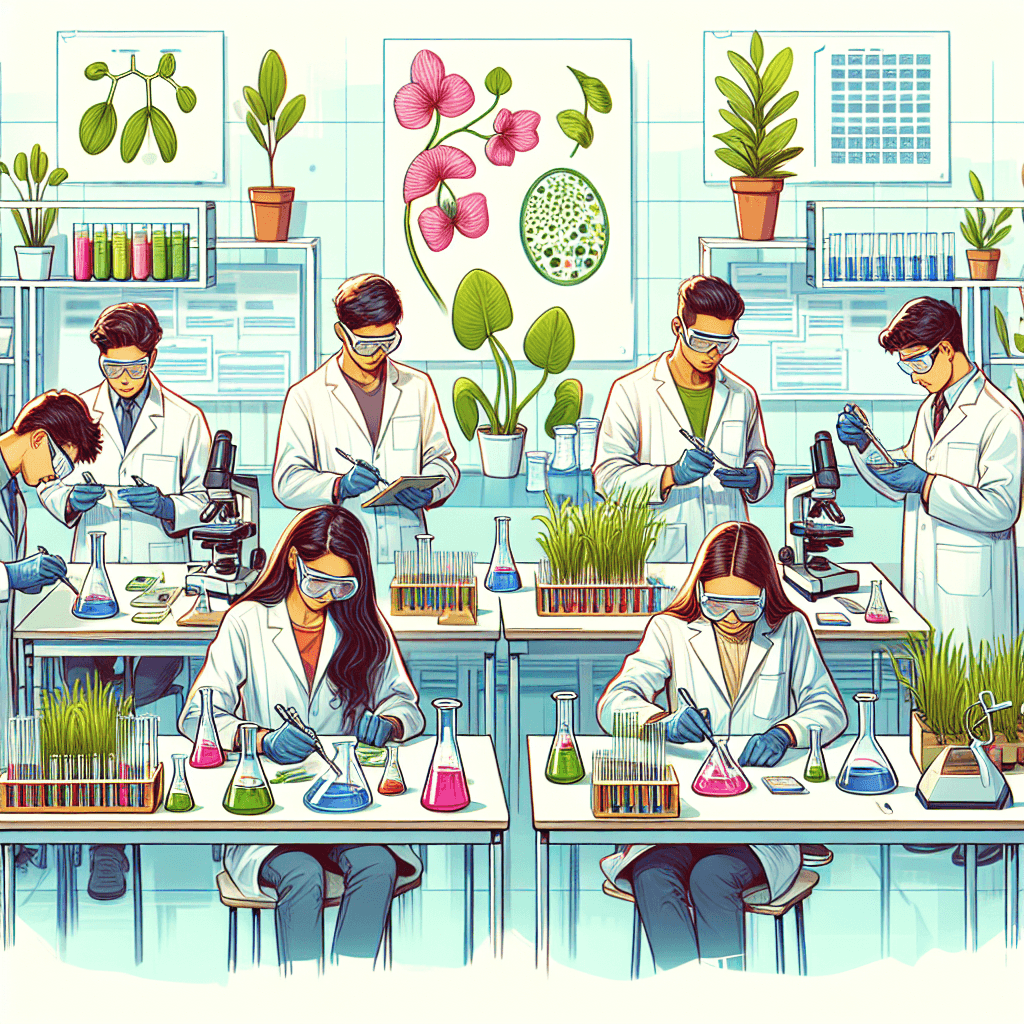
Plant Micropropagation Project
Inquiry Framework
Question Framework
Driving Question
The overarching question that guides the entire project.UTILIZZARE LA TECNICA DI MICROPROPAGAZIONE PER PRESERVARE LA CONSERVAZIONE EDEL GERMOPLASMA DELLE SPECIE VEGETALI E PER MOLTIPLICARE LE PIANTE IN POCO TEMPO E POCO SPAZIO.Essential Questions
Supporting questions that break down major concepts.- QUALI SONO LE BASI SCIENTIFICHE CHE CONSENTONO LA PROPAGAZIONE DELLE SPECIE VEGETALI?
- IN COSA CONSISTE IL FENOMENO DELLA TOTIPOTENZA?
- COME SI ATTUA LA TECNICA DELLA MICROPROPAGAZIONE?
- COME SI PREPARA IL MEZZO DI COLTURA ARTIFICIALE CHE SOSTITUISCE IL TERRENO?
- COME SI STERILIZZA IL MEZZO DI COLTURA E LA VETRERIA?
- COME SI LAVORA SOTTO CAPPA A FLUSSO LAMINARE?
- COSA SONO GLI ESPIANTI?
- QUALI TIPI DI ESPIANTI VEGETALI SONO FACILI DA PROPAGARE?
- COME SI STERILIZZANO GLI ESPIANTI?
- COME SI MICROPROPAGANO LE PIANTE ORNAMENTALI COME LA kALANCHOE BLOSFELDIANA?
- COME SI PRODUCONO LE BABY PLANTS?
Standards & Learning Goals
Learning Goals
By the end of this project, students will be able to:- Understand the principles of plant micropropagation.
- Compare micropropagation to traditional methods.
- Evaluate ethical implications of micropropagation.
- Apply micropropagation techniques to solve agricultural or conservation problems.
Entry Events
Events that will be used to introduce the project to studentsThe Last Hope: A Conservation Crisis
Students receive a mysterious package containing a rare plant cutting (e.g., an endangered orchid) and a note from a fictional conservation organization. The note explains that the plant is nearly extinct and that traditional propagation methods have failed. The organization is entrusting the students with using micropropagation to save the species.The Great Micropropagation Debate
Students participate in a debate centered around the ethical implications of using micropropagation to genetically modify crops. One side argues for its potential to address food security, while the other raises concerns about biodiversity and corporate control.The Corrupted Micropropagation Experiment
Students are shown a time-lapse video of a plant undergoing micropropagation, but the video is corrupted, with missing steps and unclear results. They must work together to reconstruct the process, identify potential errors, and predict the outcome, using their prior knowledge and research skills.Portfolio Activities
Portfolio Activities
These activities progressively build towards your learning goals, with each submission contributing to the student's final portfolio.Micropropagation Principles Unveiled
Students will create a detailed diagram explaining the scientific principles behind plant micropropagation. This includes concepts like totipotency, cellular differentiation, and hormone regulation. They will also write a paragraph explaining each principle in their own words.Steps
Here is some basic scaffolding to help students complete the activity.Final Product
What students will submit as the final product of the activityA labeled diagram of plant cells undergoing micropropagation with detailed explanations of the underlying scientific principles.Alignment
How this activity aligns with the learning objectives & standardsAddresses the learning goal: Understand the principles of plant micropropagation.Micro vs. Traditional Propagation: A Comparative Study
Students will conduct a comparative analysis of micropropagation and traditional plant propagation methods (e.g., cuttings, grafting, seed propagation). This analysis will include a table summarizing the advantages and disadvantages of each method, considering factors like time, space, cost, and genetic uniformity.Steps
Here is some basic scaffolding to help students complete the activity.Final Product
What students will submit as the final product of the activityA comparative table and a written report outlining the pros and cons of micropropagation versus traditional methods.Alignment
How this activity aligns with the learning objectives & standardsAddresses the learning goal: Compare micropropagation to traditional methods.The Ethics of Micropropagation: A Debate
Students will explore the ethical considerations surrounding plant micropropagation, particularly in the context of genetically modified crops and biodiversity. They will write an argumentative essay presenting different viewpoints on the ethical issues, such as the potential for monoculture, corporate control, and the impact on traditional farming practices.Steps
Here is some basic scaffolding to help students complete the activity.Final Product
What students will submit as the final product of the activityAn argumentative essay discussing the ethical implications of micropropagation.Alignment
How this activity aligns with the learning objectives & standardsAddresses the learning goal: Evaluate ethical implications of micropropagation.Micropropagation in Action: A Project Proposal
Students will develop a detailed proposal for using micropropagation to address a specific agricultural or conservation problem. This proposal will include a problem statement, a detailed micropropagation plan, a budget, and a timeline. They will also present their proposal to the class.Steps
Here is some basic scaffolding to help students complete the activity.Final Product
What students will submit as the final product of the activityA comprehensive micropropagation project proposal and an oral presentation.Alignment
How this activity aligns with the learning objectives & standardsAddresses the learning goal: Apply micropropagation techniques to solve agricultural or conservation problems.Rubric & Reflection
Portfolio Rubric
Grading criteria for assessing the overall project portfolioPlant Micropropagation Portfolio Rubric
Understanding Micropropagation Principles
Assessment of the student's understanding and explanation of the core scientific principles behind plant micropropagation.Scientific Understanding
Accuracy and depth of understanding of totipotency, cellular differentiation, and hormone regulation in plant micropropagation.
Exemplary
4 PointsDemonstrates a sophisticated and nuanced understanding of totipotency, cellular differentiation, and hormone regulation, applying these concepts innovatively to explain plant micropropagation. The diagram is exceptionally clear, detailed, and insightful, showing an advanced integration of scientific principles.
Proficient
3 PointsDemonstrates a thorough and accurate understanding of totipotency, cellular differentiation, and hormone regulation in the context of plant micropropagation. The diagram is clear and detailed, effectively illustrating the key principles.
Developing
2 PointsShows an emerging understanding of totipotency, cellular differentiation, and/or hormone regulation. The diagram has some inaccuracies or lacks detail, indicating a partial understanding of the principles.
Beginning
1 PointsShows a limited or inaccurate understanding of totipotency, cellular differentiation, and hormone regulation. The diagram is incomplete or lacks clarity, demonstrating minimal understanding of the underlying scientific principles.
Diagram Clarity
Clarity and effectiveness of the visual diagram in illustrating the scientific principles.
Exemplary
4 PointsThe diagram is exceptionally clear, visually appealing, and effectively communicates the scientific principles of micropropagation in an innovative way. It shows a high level of creativity and attention to detail.
Proficient
3 PointsThe diagram is clear, well-organized, and effectively illustrates the scientific principles of micropropagation. It is easy to understand and visually appealing.
Developing
2 PointsThe diagram is somewhat unclear or disorganized, making it difficult to fully understand the scientific principles of micropropagation. It lacks detail or visual appeal.
Beginning
1 PointsThe diagram is unclear, incomplete, and fails to effectively illustrate the scientific principles of micropropagation. It is difficult to understand and lacks visual appeal.
Explanation Quality
Quality and clarity of written explanations of totipotency, cellular differentiation, and hormone regulation.
Exemplary
4 PointsThe written explanations are exceptionally clear, concise, and insightful, demonstrating a deep understanding of the scientific principles. The explanations are written in simple terms that are easy to understand for a broad audience.
Proficient
3 PointsThe written explanations are clear, concise, and accurately describe the scientific principles of totipotency, cellular differentiation, and hormone regulation in simple terms.
Developing
2 PointsThe written explanations are somewhat unclear or incomplete, demonstrating a basic understanding of the scientific principles but lacking in detail or clarity. The explanations may contain some jargon or technical terms that are not adequately explained.
Beginning
1 PointsThe written explanations are unclear, inaccurate, or incomplete, demonstrating a limited understanding of the scientific principles. The explanations are difficult to understand and may contain significant errors.
Comparing Propagation Methods
Evaluation of the student's comparative analysis of micropropagation and traditional plant propagation methods.Research Depth
Thoroughness of research on traditional plant propagation methods (cuttings, grafting, seed propagation).
Exemplary
4 PointsDemonstrates exceptionally thorough and insightful research into traditional plant propagation methods, going beyond the basic requirements and exploring advanced techniques and historical context.
Proficient
3 PointsDemonstrates thorough research into traditional plant propagation methods, covering all the required methods (cuttings, grafting, seed propagation) with sufficient detail.
Developing
2 PointsDemonstrates some research into traditional plant propagation methods, but the coverage is incomplete or lacks depth. Some methods may be missing or only superficially addressed.
Beginning
1 PointsDemonstrates minimal research into traditional plant propagation methods. The coverage is very limited and lacks essential details.
Table Accuracy
Accuracy and completeness of the comparative table of micropropagation and traditional methods.
Exemplary
4 PointsThe comparative table is exceptionally accurate, complete, and insightful, providing a nuanced understanding of the advantages and disadvantages of each method. The table is well-organized and visually appealing, making it easy to compare the different methods.
Proficient
3 PointsThe comparative table is accurate and complete, effectively summarizing the advantages and disadvantages of micropropagation and traditional methods based on time, space, cost, and genetic uniformity.
Developing
2 PointsThe comparative table is somewhat incomplete or inaccurate, with some missing information or incorrect comparisons. The table may be poorly organized or difficult to understand.
Beginning
1 PointsThe comparative table is largely incomplete, inaccurate, or missing. It fails to provide a meaningful comparison of micropropagation and traditional methods.
Report Clarity
Clarity and insightfulness of the written report summarizing the advantages and disadvantages of each method.
Exemplary
4 PointsThe written report is exceptionally clear, concise, and insightful, providing a nuanced and well-supported analysis of the advantages and disadvantages of micropropagation and traditional methods. The report demonstrates excellent critical thinking and synthesis of information.
Proficient
3 PointsThe written report is clear, concise, and accurately summarizes the advantages and disadvantages of micropropagation and traditional methods. The report provides a balanced perspective and supports its claims with evidence.
Developing
2 PointsThe written report is somewhat unclear, incomplete, or superficial. It may lack depth of analysis or fail to adequately support its claims with evidence.
Beginning
1 PointsThe written report is unclear, inaccurate, or missing. It fails to provide a meaningful summary of the advantages and disadvantages of micropropagation and traditional methods.
Ethical Implications
Assessment of the student's exploration of the ethical considerations surrounding plant micropropagation.Ethical Research
Depth of research into the ethical issues related to micropropagation (genetic modification, biodiversity, corporate control).
Exemplary
4 PointsDemonstrates exceptionally deep and comprehensive research into the ethical issues, exploring a wide range of perspectives and delving into the complexities of genetic modification, biodiversity, and corporate control with insightful analysis.
Proficient
3 PointsDemonstrates thorough research into the ethical issues related to micropropagation, covering genetic modification, biodiversity, and corporate control with sufficient detail.
Developing
2 PointsDemonstrates some research into the ethical issues, but the coverage is incomplete or lacks depth. Some ethical considerations may be missing or only superficially addressed.
Beginning
1 PointsDemonstrates minimal research into the ethical issues. The coverage is very limited and lacks essential details.
Viewpoint Clarity
Clarity and objectivity in presenting different viewpoints on the ethical issues.
Exemplary
4 PointsPresents different viewpoints on the ethical issues with exceptional clarity, objectivity, and nuance, demonstrating a deep understanding of the complexities of the debate and avoiding biased or simplistic representations.
Proficient
3 PointsPresents different viewpoints on the ethical issues clearly and objectively, accurately representing the arguments of each side.
Developing
2 PointsPresents different viewpoints on the ethical issues with some bias or lack of clarity. The arguments may be misrepresented or oversimplified.
Beginning
1 PointsFails to present different viewpoints on the ethical issues clearly or objectively. The presentation is biased, inaccurate, or incomplete.
Essay Strength
Strength and persuasiveness of the argumentative essay, including the student's own informed opinion.
Exemplary
4 PointsThe argumentative essay is exceptionally well-reasoned, persuasive, and insightful, presenting a compelling and original argument supported by strong evidence and logical reasoning. The student's own informed opinion is clearly articulated and defended with conviction.
Proficient
3 PointsThe argumentative essay is well-reasoned and persuasive, presenting a clear and logical argument supported by evidence. The student's own informed opinion is clearly articulated and supported.
Developing
2 PointsThe argumentative essay is somewhat weak or unpersuasive, lacking strong evidence or logical reasoning. The student's own informed opinion may be unclear or unsupported.
Beginning
1 PointsThe argumentative essay is poorly reasoned, unpersuasive, and lacks a clear argument. The student's own informed opinion is missing or unsupported.
Micropropagation Application
Evaluation of the student's ability to apply micropropagation techniques to solve real-world problems.Problem Identification
Identification of a relevant agricultural or conservation problem that can be addressed using micropropagation.
Exemplary
4 PointsIdentifies an exceptionally relevant and impactful agricultural or conservation problem that can be effectively addressed using micropropagation. The problem is well-defined and the potential benefits of micropropagation are clearly articulated.
Proficient
3 PointsIdentifies a relevant agricultural or conservation problem that can be addressed using micropropagation. The problem is clearly defined and the potential benefits of micropropagation are identified.
Developing
2 PointsIdentifies a somewhat relevant agricultural or conservation problem, but the connection to micropropagation is weak or unclear. The problem may be poorly defined or the potential benefits of micropropagation are not clearly articulated.
Beginning
1 PointsFails to identify a relevant agricultural or conservation problem or the connection to micropropagation is tenuous. The problem is poorly defined and the potential benefits of micropropagation are not identified.
Plan Feasibility
Completeness and feasibility of the detailed micropropagation plan, including explant selection, sterilization, culture media preparation, and acclimatization.
Exemplary
4 PointsThe micropropagation plan is exceptionally complete, detailed, and feasible, demonstrating a thorough understanding of all the necessary steps and considerations. The plan is tailored to the specific problem and includes innovative solutions.
Proficient
3 PointsThe micropropagation plan is complete and feasible, covering all the necessary steps (explant selection, sterilization, culture media preparation, and acclimatization) with sufficient detail.
Developing
2 PointsThe micropropagation plan is somewhat incomplete or infeasible, with some missing steps or unrealistic assumptions. The plan may lack detail or fail to address important considerations.
Beginning
1 PointsThe micropropagation plan is largely incomplete, infeasible, or missing. It fails to address the essential steps and considerations for successful micropropagation.
Budget and Timeline
Realism and justification of the budget and timeline for the project.
Exemplary
4 PointsThe budget and timeline are exceptionally realistic, well-justified, and demonstrate a deep understanding of the resources and time required for the project. The budget is detailed and includes contingency planning, and the timeline is clearly articulated and achievable.
Proficient
3 PointsThe budget and timeline are realistic and well-justified, reflecting a good understanding of the resources and time required for the project.
Developing
2 PointsThe budget and/or timeline are somewhat unrealistic or poorly justified, with some questionable assumptions or missing details. The budget may be incomplete or the timeline may be overly optimistic.
Beginning
1 PointsThe budget and timeline are unrealistic, poorly justified, or missing. They fail to reflect a realistic understanding of the resources and time required for the project.
Proposal and Presentation
Clarity, completeness, and persuasiveness of the project proposal and oral presentation.
Exemplary
4 PointsThe project proposal and oral presentation are exceptionally clear, complete, and persuasive, demonstrating a deep understanding of the project and its potential impact. The presentation is engaging, well-organized, and effectively communicates the key information.
Proficient
3 PointsThe project proposal and oral presentation are clear, complete, and persuasive, effectively communicating the key aspects of the project.
Developing
2 PointsThe project proposal and/or oral presentation are somewhat unclear, incomplete, or unpersuasive. They may lack detail or fail to effectively communicate the key aspects of the project.
Beginning
1 PointsThe project proposal and oral presentation are unclear, incomplete, unpersuasive, or missing. They fail to effectively communicate the key aspects of the project.