
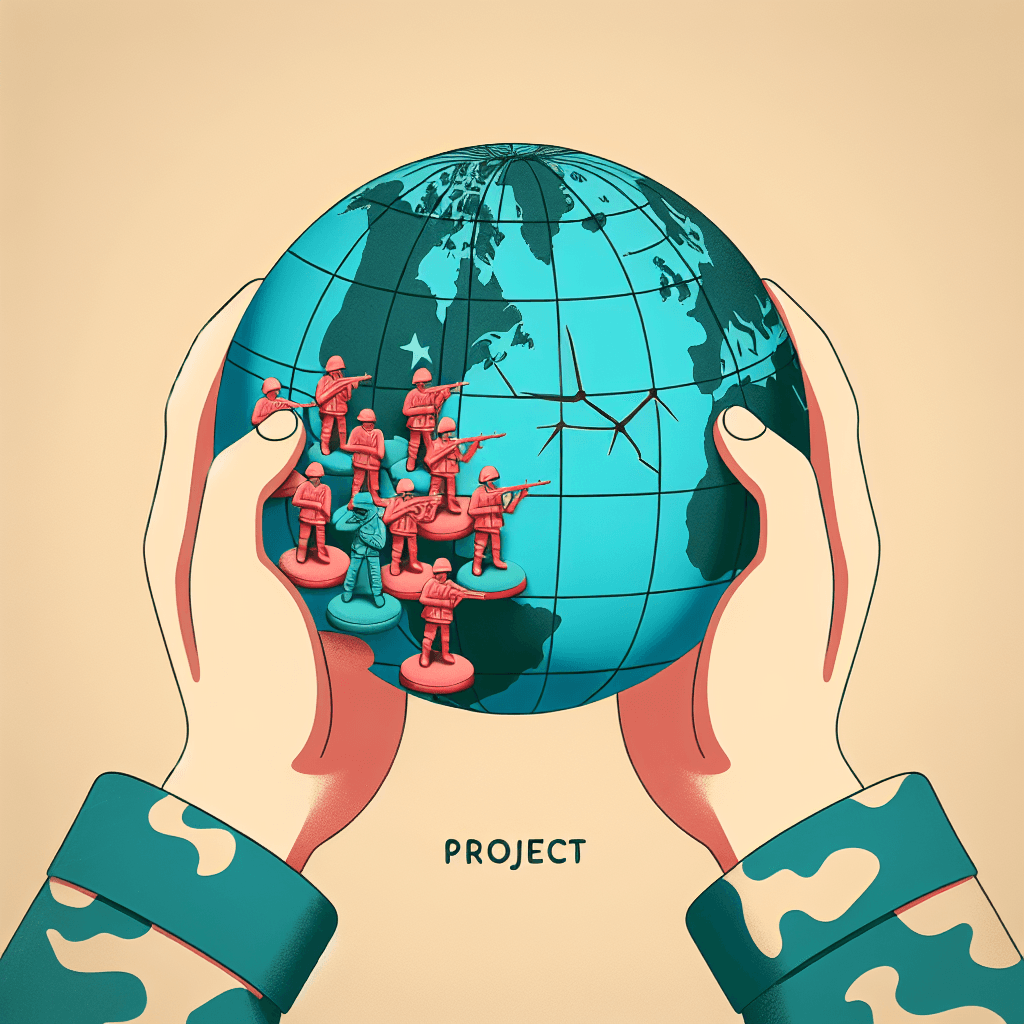
Political Fallout: Examining Post-War Consequences
Inquiry Framework
Question Framework
Driving Question
The overarching question that guides the entire project.How did the global upheaval of World War II, with its profound psychological, social, and economic consequences, reshape political alliances, power structures, and social justice movements, leaving a lasting impact on individuals and societies worldwide?Essential Questions
Supporting questions that break down major concepts.- How did WWII reshape global political alliances and power structures?
- In what ways did WWII contribute to social and cultural shifts in the postwar era?
- What psychological effects did WWII have on individuals and societies?
- How did WWII impact civil rights and social justice movements?
- What were the long-term economic consequences of WWII on nations and individuals?
Standards & Learning Goals
Learning Goals
By the end of this project, students will be able to:- Students will analyze the ways in which World War II reshaped global political alliances and power structures.
- Students will evaluate the social and cultural shifts that emerged in the postwar era due to World War II.
- Students will investigate the psychological effects of World War II on individuals and societies.
- Students will explore how World War II influenced civil rights and social justice movements.
- Students will assess the long-term economic consequences of World War II on nations and individuals.
National US Social Studies Standards
Entry Events
Events that will be used to introduce the project to students'Dystopian News Report'
Students watch a professionally produced, fictional news report detailing the grim realities of a society grappling with severe political fallout after a global war. The report highlights societal divisions, economic collapse, and psychological trauma, sparking discussion about the importance of understanding and preventing such outcomes.Portfolio Activities
Portfolio Activities
These activities progressively build towards your learning goals, with each submission contributing to the student's final portfolio.Mapping Political Shifts
Students will create a visual representation of the political changes that occurred as a result of World War II.Steps
Here is some basic scaffolding to help students complete the activity.Final Product
What students will submit as the final product of the activityA map or infographic showing the political changes resulting from WWII.Alignment
How this activity aligns with the learning objectives & standardsAddresses learning goal: Students will analyze the ways in which World War II reshaped global political alliances and power structures. Aligns with standard SS.9-12.USH.5.12.Post-War Social Impact Analysis
Students will analyze the social and cultural changes that occurred in the postwar era due to World War II.Steps
Here is some basic scaffolding to help students complete the activity.Final Product
What students will submit as the final product of the activityAn essay discussing the social and cultural shifts that emerged in the postwar era due to World War II.Alignment
How this activity aligns with the learning objectives & standardsAddresses learning goal: Students will evaluate the social and cultural shifts that emerged in the postwar era due to World War II. Aligns with standard SS.9-12.USH.6.1.Psychological Impact Case Studies
Students will investigate the psychological effects of World War II on individuals and societies through case studies.Steps
Here is some basic scaffolding to help students complete the activity.Final Product
What students will submit as the final product of the activityA report or presentation detailing the psychological impacts of WWII using specific case studies.Alignment
How this activity aligns with the learning objectives & standardsAddresses learning goal: Students will investigate the psychological effects of World War II on individuals and societies.Civil Rights and WWII
Students will explore how World War II influenced civil rights and social justice movements.Steps
Here is some basic scaffolding to help students complete the activity.Final Product
What students will submit as the final product of the activityA presentation or report explaining the influence of World War II on civil rights and social justice movements.Alignment
How this activity aligns with the learning objectives & standardsAddresses learning goal: Students will explore how World War II influenced civil rights and social justice movements. Aligns with standard SS.9-12.USH.6.1.Economic Consequences Timeline
Students will assess the long-term economic consequences of World War II on nations and individuals by creating a timeline.Steps
Here is some basic scaffolding to help students complete the activity.Final Product
What students will submit as the final product of the activityA timeline illustrating the long-term economic consequences of World War II on nations and individuals.Alignment
How this activity aligns with the learning objectives & standardsAddresses learning goal: Students will assess the long-term economic consequences of World War II on nations and individuals. Aligns with standard SS.9-12.USH.5.12.Rubric & Reflection
Portfolio Rubric
Grading criteria for assessing the overall project portfolioWorld War II Political Fallout Portfolio Rubric
Research & Analysis
Demonstrates depth and accuracy in researching and analyzing the impact of WWII.Information Gathering
Effectively gathers relevant and credible information from diverse sources to support analysis.
Exemplary
4 PointsGathers extensive, relevant, and credible information from a variety of sources, demonstrating excellent research skills.
Proficient
3 PointsGathers relevant and credible information from multiple sources, demonstrating strong research skills.
Developing
2 PointsGathers some relevant information from limited sources, demonstrating basic research skills.
Beginning
1 PointsGathers minimal and/or irrelevant information, demonstrating limited research skills.
Historical Accuracy
Presents accurate historical information and avoids factual errors.
Exemplary
4 PointsPresents information with exceptional historical accuracy and attention to detail.
Proficient
3 PointsPresents information with a high degree of historical accuracy.
Developing
2 PointsPresents information with some historical inaccuracies.
Beginning
1 PointsPresents information with significant historical inaccuracies.
Source Evaluation
Critically evaluates the credibility and bias of sources.
Exemplary
4 PointsDemonstrates sophisticated evaluation of sources, thoroughly assessing credibility and bias.
Proficient
3 PointsEffectively evaluates sources, assessing credibility and bias.
Developing
2 PointsShows some awareness of source credibility and bias, but evaluation is limited.
Beginning
1 PointsDemonstrates little to no awareness of source credibility and bias.
Critical Thinking & Synthesis
Demonstrates critical thinking skills by synthesizing information and drawing insightful conclusions.Analysis of Impact
Provides insightful analysis of the political, social, and/or economic impacts of WWII.
Exemplary
4 PointsOffers exceptionally insightful and nuanced analysis of the impacts of WWII.
Proficient
3 PointsProvides thorough and insightful analysis of the impacts of WWII.
Developing
2 PointsProvides basic analysis of the impacts of WWII, but lacks depth or nuance.
Beginning
1 PointsProvides minimal or superficial analysis of the impacts of WWII.
Connections & Synthesis
Connects different aspects of the war's consequences and synthesizes information effectively.
Exemplary
4 PointsDemonstrates exceptional ability to connect different aspects of the war's consequences and synthesize information seamlessly.
Proficient
3 PointsEffectively connects different aspects of the war's consequences and synthesizes information.
Developing
2 PointsAttempts to connect different aspects of the war's consequences, but synthesis is limited.
Beginning
1 PointsFails to connect different aspects of the war's consequences or synthesize information.
Conclusion & Insight
Draws well-supported and insightful conclusions based on research and analysis.
Exemplary
4 PointsDraws exceptionally insightful and well-supported conclusions that demonstrate a deep understanding of the topic.
Proficient
3 PointsDraws well-supported and insightful conclusions based on research and analysis.
Developing
2 PointsDraws conclusions that are partially supported by research and analysis.
Beginning
1 PointsDraws conclusions that are unsupported by research and analysis or are irrelevant.
Communication & Presentation
Effectively communicates research findings through clear and organized presentation.Clarity & Organization
Presents information in a clear, logical, and organized manner.
Exemplary
4 PointsPresents information with exceptional clarity, logical flow, and organization, enhancing understanding.
Proficient
3 PointsPresents information in a clear, logical, and organized manner.
Developing
2 PointsPresents information with some clarity and organization, but improvements are needed.
Beginning
1 PointsPresents information in a disorganized and unclear manner, hindering understanding.
Visual Aids (if applicable)
Uses visual aids (maps, infographics, timelines) effectively to enhance understanding.
Exemplary
4 PointsUses visual aids with exceptional skill and creativity to significantly enhance understanding and engagement.
Proficient
3 PointsUses visual aids effectively to enhance understanding.
Developing
2 PointsUses visual aids, but their effectiveness is limited.
Beginning
1 PointsUses visual aids ineffectively or inappropriately.
Grammar & Mechanics
Demonstrates strong command of grammar, mechanics, and style.
Exemplary
4 PointsDemonstrates exceptional command of grammar, mechanics, and style, enhancing the overall quality of the presentation.
Proficient
3 PointsDemonstrates strong command of grammar, mechanics, and style.
Developing
2 PointsContains some errors in grammar, mechanics, or style that may slightly detract from clarity.
Beginning
1 PointsContains numerous errors in grammar, mechanics, or style that significantly detract from clarity.