
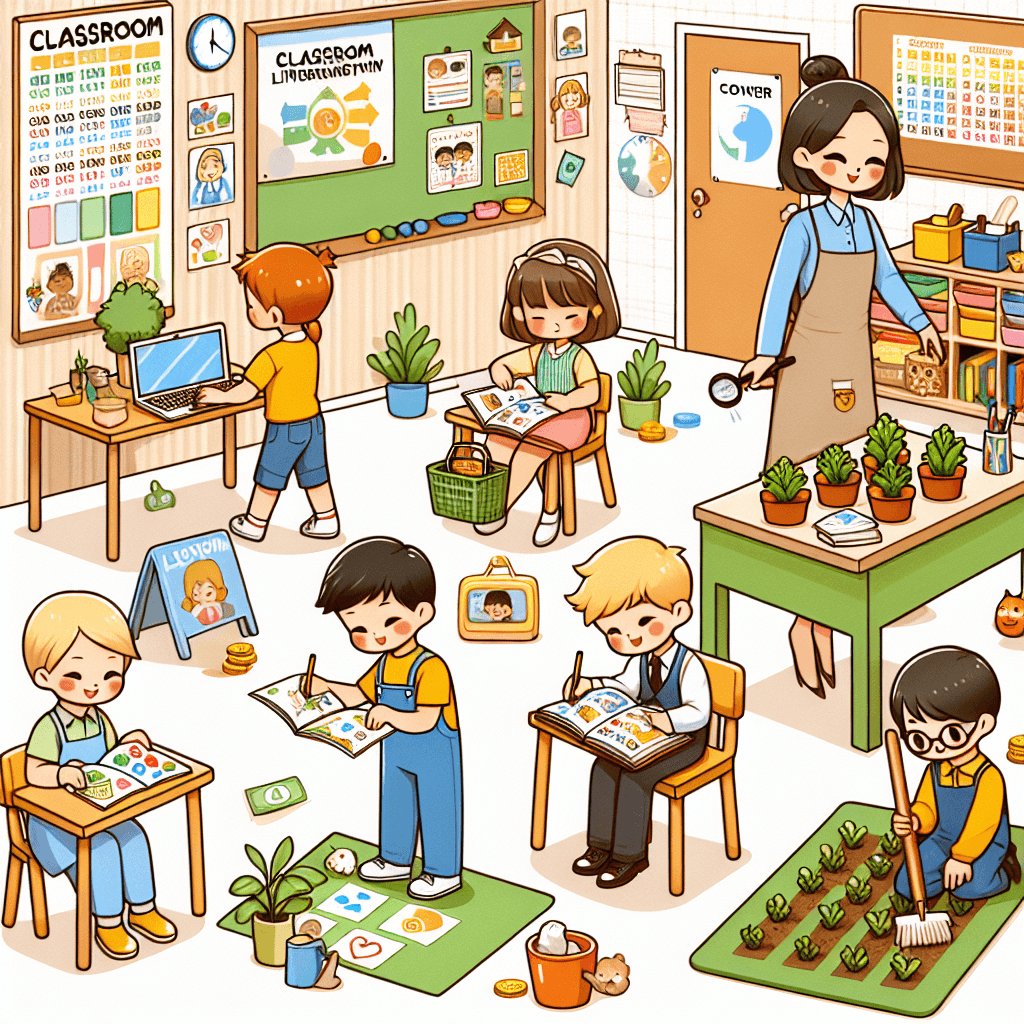
Practical Life Skills: Classroom Economy and Jobs
Inquiry Framework
Question Framework
Driving Question
The overarching question that guides the entire project.How can we create a thriving classroom community where we use practical life skills to become more independent, responsible, and prepared for the future?Essential Questions
Supporting questions that break down major concepts.- How can we apply practical life skills in our daily routines to increase independence and responsibility?
- What everyday skills are most valuable for personal and community success?
- How does understanding financial literacy impact our ability to make informed decisions within a classroom economy?
- In what ways does contributing to classroom jobs foster teamwork and a sense of community?
- How can mastering practical life skills boost confidence and prepare us for future challenges?
Standards & Learning Goals
Learning Goals
By the end of this project, students will be able to:- Students will identify and practice practical life skills to increase independence and responsibility.
- Students will propose and implement classroom jobs, understanding their roles in fostering teamwork and community.
- Students will develop and manage a classroom economy, applying financial literacy skills to make informed decisions.
- Students will evaluate the value of different everyday skills for personal and community success.
- Students will demonstrate increased confidence and preparedness for future challenges through the mastery of practical life skills.
Entry Events
Events that will be used to introduce the project to studentsThe Mystery Box Challenge
Students receive a mysterious package filled with everyday items (e.g., a button, a recipe card, a small bill). Their task is to reverse-engineer the skills needed to use these items effectively, sparking a discussion about essential life skills and prompting them to identify skills they want to master.Life Skills in Action: Video Spark
Students watch a series of short, engaging video clips showcasing individuals using practical life skills in unique or unexpected ways (e.g., a chef creating a dish, a carpenter building furniture). This ignites a discussion about the importance and versatility of these skills, inspiring them to brainstorm skills they'd like to acquire.Portfolio Activities
Portfolio Activities
These activities progressively build towards your learning goals, with each submission contributing to the student's final portfolio.My Life Skills Wishlist
Students brainstorm a list of practical life skills they want to learn and practice during the project. This activity encourages them to take ownership of their learning and identify areas where they want to develop new skills.Steps
Here is some basic scaffolding to help students complete the activity.Final Product
What students will submit as the final product of the activityA personal list of practical life skills to learn, ranked by interest.Alignment
How this activity aligns with the learning objectives & standardsLearning Goal: Students will identify and practice practical life skills to increase independence and responsibility.Life Skills Interviewer
Students interview family members or community members about the practical life skills they use most often and why they are valuable. This connects classroom learning to real-world experiences and highlights the importance of these skills in everyday life.Steps
Here is some basic scaffolding to help students complete the activity.Final Product
What students will submit as the final product of the activityA written report summarizing the interviews and analyzing the value of different practical life skills in personal and community contexts.Alignment
How this activity aligns with the learning objectives & standardsLearning Goal: Students will evaluate the value of different everyday skills for personal and community success.Life Skills Teacher
Students choose one of the practical life skills they have learned during the project and create a tutorial or demonstration to teach others. This reinforces their understanding of the skill and builds their confidence in applying it.Steps
Here is some basic scaffolding to help students complete the activity.Final Product
What students will submit as the final product of the activityA tutorial or demonstration (e.g., video, presentation, written guide) teaching others a practical life skill.Alignment
How this activity aligns with the learning objectives & standardsLearning Goal: Students will demonstrate increased confidence and preparedness for future challenges through the mastery of practical life skills.Rubric & Reflection
Portfolio Rubric
Grading criteria for assessing the overall project portfolioPractical Life Skills PBL Rubric
Life Skills Wishlist
This category assesses the clarity, relevance, depth of reflection, organization, and prioritization of the student's life skills wishlist. It encourages self-awareness and thoughtful planning for personal development.Skill Identification and Relevance
Clarity and Relevance of Skill List: Assesses how clearly and relevantly the student identifies practical life skills applicable to their daily life.
Beginning
1 PointsThe list of skills is unclear, lacks relevance to daily routines, and is poorly justified.
Developing
2 PointsThe list includes some relevant skills, but lacks clarity and justification.
Proficient
3 PointsThe list is clear, relevant, and generally well-justified with some connection to daily routines.
Exemplary
4 PointsThe list is exceptionally clear, highly relevant to daily routines, and thoroughly justified, demonstrating thoughtful reflection.
Depth of Reflection
Depth of Reflection: Evaluates the extent to which the student reflects on their skill wishlist, showing personal insight.
Beginning
1 PointsShows no reflection or personal insight on the skills listed.
Developing
2 PointsShows minimal reflection, with only superficial connections to personal experiences.
Proficient
3 PointsDemonstrates moderate reflection, linking skills to personal experiences and aspirations.
Exemplary
4 PointsDemonstrates deep and insightful reflection, connecting skills to personal experiences, aspirations, and future goals with clarity.
Organization and Prioritization
Organization and Prioritization: Assesses the logical organization and prioritization of the skills list.
Beginning
1 PointsThe list is disorganized and lacks clear prioritization.
Developing
2 PointsThe list shows some attempt at organization, but prioritization is unclear.
Proficient
3 PointsThe list is logically organized and shows clear prioritization based on interest.
Exemplary
4 PointsThe list is exceptionally well-organized, clearly prioritized, and reflects a strategic approach to skill development based on personal growth.
Life Skills Interviewer
This category focuses on the student's ability to gather and analyze information about practical life skills from interviews with family or community members, promoting critical thinking and communication skills.Quality of Interview Questions
Quality of Interview Questions: Assesses the depth and relevance of the questions designed to elicit meaningful insights from interviewees.
Beginning
1 PointsQuestions are superficial, irrelevant, and do not explore practical life skills effectively.
Developing
2 PointsQuestions are somewhat relevant but lack depth and fail to uncover significant insights.
Proficient
3 PointsQuestions are relevant, explore practical life skills effectively, and provide some meaningful insights.
Exemplary
4 PointsQuestions are insightful, highly relevant, and designed to elicit deep and meaningful reflections on practical life skills.
Interview Execution
Interview Execution: Evaluates the student's ability to conduct interviews effectively, listen attentively, and gather relevant information.
Beginning
1 PointsThe interview was poorly conducted, with minimal information gathered and little evidence of active listening.
Developing
2 PointsThe interview was conducted with some effort, but lacked focus and depth in gathering relevant information.
Proficient
3 PointsThe interview was conducted effectively, with relevant information gathered and active listening demonstrated.
Exemplary
4 PointsThe interview was expertly conducted, with a clear focus, insightful questions, and thorough collection of relevant information, demonstrating exceptional active listening skills.
Analysis and Synthesis
Analysis and Synthesis: Assesses the depth of analysis and the ability to synthesize interview findings into a coherent report.
Beginning
1 PointsThe report lacks analysis, fails to identify common themes, and provides a superficial summary of the interviews.
Developing
2 PointsThe report includes some analysis, but the identification of common themes is weak and lacks depth.
Proficient
3 PointsThe report provides a solid analysis of the interviews, identifies common themes, and effectively summarizes the findings.
Exemplary
4 PointsThe report presents a comprehensive and insightful analysis of the interviews, skillfully synthesizes findings, and provides a nuanced understanding of the value of practical life skills.
Life Skills Teacher
This category focuses on the student's ability to teach a practical life skill to others through a tutorial or demonstration, emphasizing clarity, engagement, and effective teaching strategies.Clarity and Accuracy of Content
Clarity and Accuracy of Content: Assesses how clearly and accurately the tutorial or demonstration explains the chosen practical life skill.
Beginning
1 PointsThe tutorial is unclear, inaccurate, and difficult to understand.
Developing
2 PointsThe tutorial is somewhat clear but contains inaccuracies or confusing elements.
Proficient
3 PointsThe tutorial is clear, accurate, and easy to follow.
Exemplary
4 PointsThe tutorial is exceptionally clear, accurate, and presented in a highly engaging and accessible manner.
Engagement and Creativity
Engagement and Creativity: Evaluates the level of creativity and engagement in the tutorial or demonstration, capturing the audience's interest and maintaining their attention.
Beginning
1 PointsThe tutorial lacks engagement and creativity, failing to capture the audience's interest.
Developing
2 PointsThe tutorial shows some attempt at engagement, but lacks creativity and originality.
Proficient
3 PointsThe tutorial is engaging and creative, effectively capturing the audience's interest.
Exemplary
4 PointsThe tutorial is highly engaging, innovative, and creative, captivating the audience and enhancing their learning experience.
Effectiveness of Teaching
Effectiveness of Teaching: Assesses the student's ability to effectively teach the practical life skill to others through their tutorial or demonstration.
Beginning
1 PointsThe tutorial fails to effectively teach the skill, leaving the audience confused and unable to replicate the process.
Developing
2 PointsThe tutorial provides some instruction, but lacks clarity and effectiveness in teaching the skill.
Proficient
3 PointsThe tutorial effectively teaches the skill, enabling the audience to understand and replicate the process.
Exemplary
4 PointsThe tutorial expertly teaches the skill, providing clear instructions, helpful tips, and fostering a deep understanding of the process, inspiring others to apply the skill with confidence.