
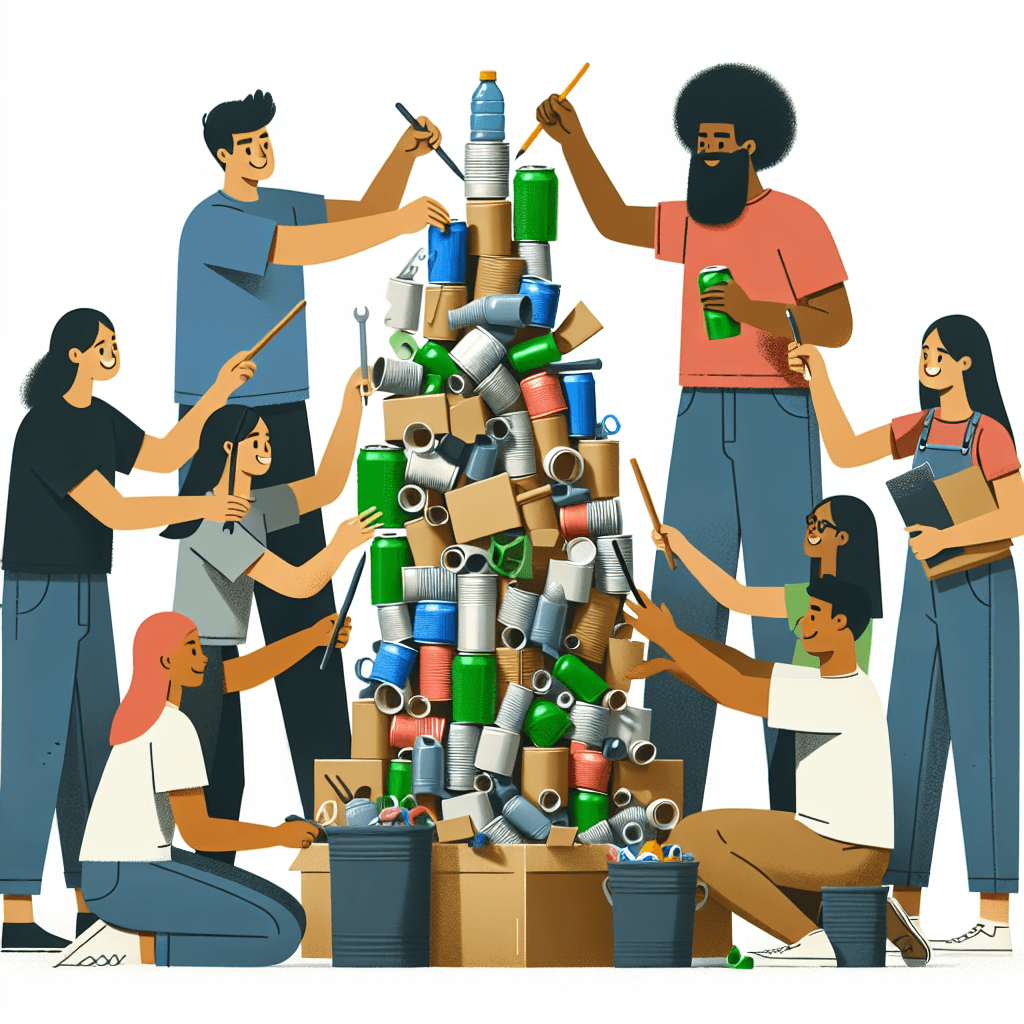
Recycled Art: Team Sculpture Challenge
Inquiry Framework
Question Framework
Driving Question
The overarching question that guides the entire project.How can we, as a team of young artists, creatively use recyclable materials to design a sculpture that effectively expresses an artistic message while considering elements and principles of design, teamwork, and sustainability?Essential Questions
Supporting questions that break down major concepts.- What makes a sculpture effective in terms of artistic expression and communication?
- How can recyclable materials be creatively transformed into art?
- What are the elements and principles of design that should be considered while creating a sculpture?
- How does collaboration and teamwork influence the creative process in art?
- Why is sustainability important in art and how can it be achieved through recyclable materials?
Standards & Learning Goals
Learning Goals
By the end of this project, students will be able to:- Students will collaboratively design and construct sculptures using recyclable materials, demonstrating effective teamwork and communication skills.
- Students will apply elements and principles of design to create sculptures that convey an artistic message.
- Students will explore sustainable practices in art by utilizing recyclable materials and understanding their impact on the environment.
- Students will develop presentation skills by explaining their artistic process, message, and design principles used in their sculpture creations.
Common Core Standards
Next Generation Science Standards
Entry Events
Events that will be used to introduce the project to studentsInteractive Recycled Art Gallery
Transform the classroom into an interactive gallery with sculptures created from recyclables. Students can walk through and interact, sparking ideas and questions about the connection between art and recycling.Trash to Treasure Workshop
Organize a workshop where students bring in recyclable materials and collaboratively re-imagine them as art pieces. This hands-on entry event promotes creativity and teamwork from the start.Portfolio Activities
Portfolio Activities
These activities progressively build towards your learning goals, with each submission contributing to the student's final portfolio.Recyclable Resources: Sculptures Concept Map
Students create a concept map to brainstorm design ideas and gather recyclable materials they will use for their team sculpture project. This activity focuses on initiating creative thoughts and planning collaboratively with team members.Steps
Here is some basic scaffolding to help students complete the activity.Final Product
What students will submit as the final product of the activityA detailed concept map of potential sculpture designs and recyclable materials.Alignment
How this activity aligns with the learning objectives & standardsAligns with CCSS.ELA-LITERACY.CCRA.SL.1 by encouraging effective team communication and collaborative planning.Design Dialogue: Principles Workshop
Students explore the elements and principles of design through a collaborative workshop. Emphasizing dialogue, they will learn to articulate and refine their artistic concepts.Steps
Here is some basic scaffolding to help students complete the activity.Final Product
What students will submit as the final product of the activityRefined sculpture concepts incorporating design principles, ready for the creation stage.Alignment
How this activity aligns with the learning objectives & standardsCovers both CCSS.ELA-LITERACY.CCRA.SL.1 and SL.4 by fostering collaboration and presentation of creative ideas.Green Construction: Building the Masterpiece
The hands-on creation phase where students work as a team to build their sculpture using the recyclable materials according to their planned design, emphasizing teamwork and sustainability.Steps
Here is some basic scaffolding to help students complete the activity.Final Product
What students will submit as the final product of the activityCompleted team sculpture using recyclable materials.Alignment
How this activity aligns with the learning objectives & standardsSupports NGSS.5-ESS3-1 by integrating sustainability practices in art and CCSS.ELA-LITERACY.CCRA.SL.1 for team collaboration.Artistic Reflections and Presentation
Students will reflect on their artistic process and prepare a presentation to explain their sculpture, its design elements, artistic message, and the sustainable practices used.Steps
Here is some basic scaffolding to help students complete the activity.Final Product
What students will submit as the final product of the activityA group presentation and verbal reflection on the artistic process and sustainability in their sculpture.Alignment
How this activity aligns with the learning objectives & standardsAligns with CCSS.ELA-LITERACY.CCRA.SL.4 by requiring students to present their artistic findings and explain their process clearly.Rubric & Reflection
Portfolio Rubric
Grading criteria for assessing the overall project portfolio5th Grade Team Sculpture Creations Rubric
Collaboration and Teamwork
Assess students' abilities to work collaboratively in a team, leveraging each member's strengths, contributing ideas, and resolving conflicts.Communication
Evaluate how well team members communicate their ideas, actively listen, and incorporate feedback.
Exemplary
4 PointsAll team members consistently communicated effectively, actively listened, and incorporated feedback, leading to a highly cohesive team dynamic.
Proficient
3 PointsMost team members communicated effectively and actively listened, contributing positively to team discussions and decisions.
Developing
2 PointsCommunication was inconsistent, with team members sometimes failing to listen actively or integrate feedback.
Beginning
1 PointsTeam members struggled with communication, rarely listening or incorporating feedback, which hindered team collaboration.
Role Fulfillment
Evaluate how well each team member fulfilled their assigned role and responsibilities.
Exemplary
4 PointsEach team member effectively fulfilled their role and went beyond in supporting others’ responsibilities.
Proficient
3 PointsMost team members met role expectations and occasionally supported peers.
Developing
2 PointsSome team members met role expectations, but there was an uneven distribution of effort and contribution.
Beginning
1 PointsFew team members met their roles, with minimal contribution to the team’s efforts.
Design and Creativity
Assess students' application of design principles, creativity in the use of materials, and the overall artistic expression in their sculptures.Application of Design Principles
Evaluate the use of design principles like balance, contrast, and unity in the sculptures.
Exemplary
4 PointsThe sculpture demonstrates an outstanding use of design principles, enhancing artistic expression and coherence.
Proficient
3 PointsThe sculpture employs design principles effectively, showing a good level of artistic expression.
Developing
2 PointsThe sculpture demonstrates basic application of design principles, with some evident inconsistencies.
Beginning
1 PointsLittle evidence of design principles used in the sculpture, leading to a lack of artistic coherence.
Creativity and Material Use
Evaluate creativity and innovation in using recyclable materials to create the sculpture.
Exemplary
4 PointsInnovative and creative use of recyclable materials maximized artistic value while communicating a clear message.
Proficient
3 PointsEffective use of recyclable materials demonstrated creativity and conveyed the artistic message.
Developing
2 PointsRecyclable materials were used with limited creativity, resulting in a less clear artistic message.
Beginning
1 PointsMinimal creative effort in material use, leading to a misunderstood or unclear artistic message.
Sustainability and Environmental Awareness
Assess understanding and integration of sustainability practices in the creation and presentation of sculptures.Sustainable Practices
Evaluate how well students incorporated sustainability practices in material choice and sculpture creation.
Exemplary
4 PointsSustainability was deeply integrated into material selection and artistic processes, showing advanced environmental consideration.
Proficient
3 PointsSustainable practices were effectively used, with recyclable materials carefully selected for environmental impact.
Developing
2 PointsSome sustainable practices were considered, but their integration was limited or inconsistent.
Beginning
1 PointsLimited consideration of sustainability, with minimal impact on material choice and artistic process.
Presentation and Reflection
Assess the effectiveness of group presentations, clarity of artistic message, and depth of reflection on the artistic process.Presentation Skills
Evaluate clarity, engagement, and organization in presenting the sculpture and its artistic concepts.
Exemplary
4 PointsThe presentation was highly engaging, well-organized, and delivered with exceptional clarity, convincingly conveying artistic concepts.
Proficient
3 PointsThe presentation was clear, well-structured, and effectively conveyed artistic concepts.
Developing
2 PointsThe presentation was somewhat clear but lacked organization and engagement in conveying concepts.
Beginning
1 PointsThe presentation lacked clarity and organization, failing to convey artistic concepts effectively.
Reflection on Artistic Process
Evaluate the depth of reflection on challenges faced, problem-solving strategies, and learning outcomes.
Exemplary
4 PointsReflections were insightful, thoroughly articulating challenges, solutions, and learning outcomes, demonstrating exceptional growth.
Proficient
3 PointsReflections clearly articulated challenges and solutions, showing thoughtful learning outcomes.
Developing
2 PointsReflections were surface-level, with limited articulation of challenges or solutions encountered.
Beginning
1 PointsReflections were minimal, lacking depth or insight into the artistic process.