
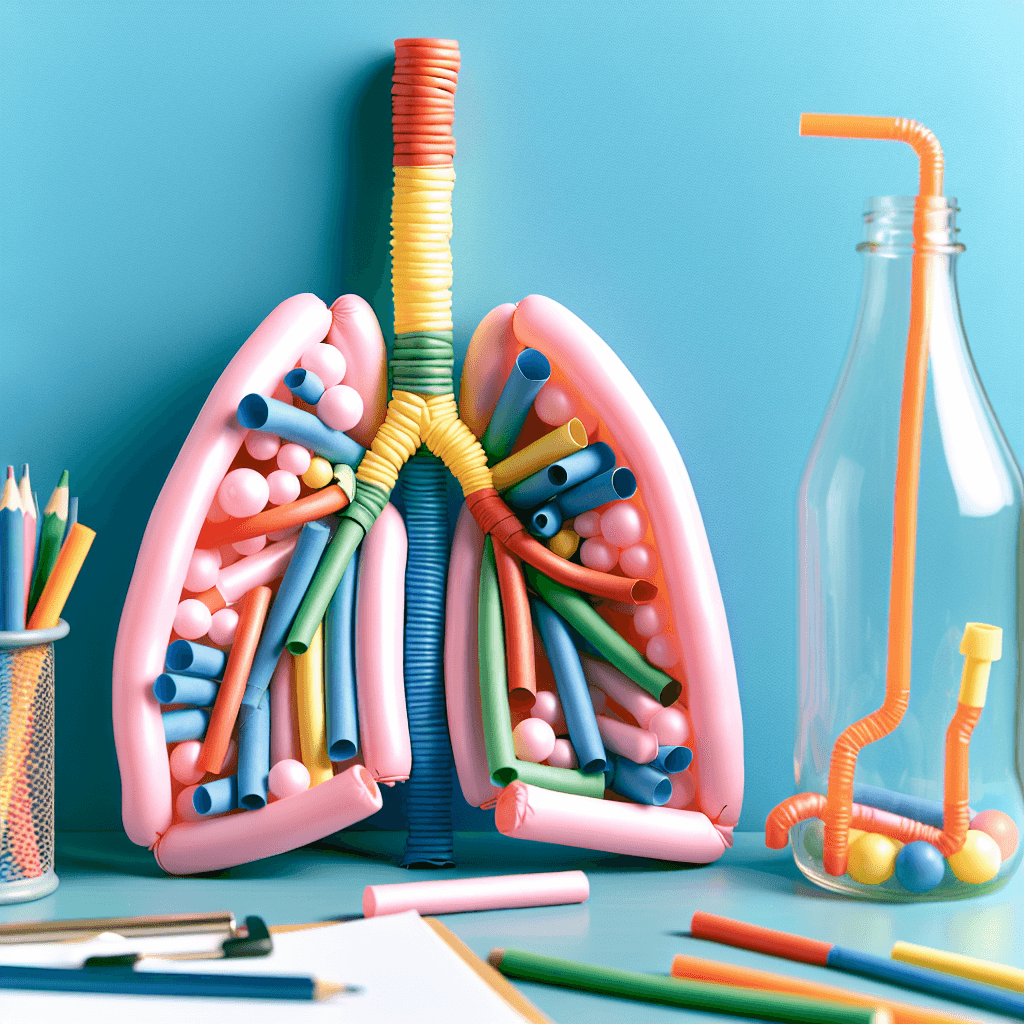
Respiratory System Model with Unconventional Materials
Inquiry Framework
Question Framework
Driving Question
The overarching question that guides the entire project.How can we creatively design and construct a model of the respiratory system that effectively demonstrates its structure and function using unconventional materials?Essential Questions
Supporting questions that break down major concepts.- How does the structure of the respiratory system facilitate its function?
- What materials can effectively represent different parts of the respiratory system, and why?
- What are the key components of the respiratory system and their roles?
- How do the respiratory and circulatory systems work together to support life?
Standards & Learning Goals
Learning Goals
By the end of this project, students will be able to:- Students will understand and be able to describe the structure and function of the respiratory system.
- Students will develop a physical model of the respiratory system using unconventional materials.
- Students will evaluate the effectiveness of different materials in representing components of the respiratory system.
- Students will explain how the respiratory system works with the circulatory system to support life.
NGSS
Common Core Standards
Entry Events
Events that will be used to introduce the project to studentsCrisis in the Lungs
Present a scenario where students are tasked with solving a mystery involving a sudden outbreak of a fictional respiratory illness. They'll research symptoms and the respiratory system to create a diagram of how the disease progresses, using this as a baseline for their model that demonstrates preventative measures or treatment.Portfolio Activities
Portfolio Activities
These activities progressively build towards your learning goals, with each submission contributing to the student's final portfolio.Respiratory System Blueprint
Students will begin by researching the respiratory system's structure and function, creating a detailed blueprint as a precursor to their model. This step supports understanding the purpose of each part.Steps
Here is some basic scaffolding to help students complete the activity.Final Product
What students will submit as the final product of the activityA labeled and annotated blueprint of the respiratory system.Alignment
How this activity aligns with the learning objectives & standardsAligns with MS-LS1-7 as it involves developing a model to describe the system's function.Material Selection Showdown
Students will explore a variety of unconventional materials to determine which best represent different parts of the respiratory system, considering factors like flexibility and texture.Steps
Here is some basic scaffolding to help students complete the activity.Final Product
What students will submit as the final product of the activityA list and justification of chosen materials mapped to each respiratory component.Alignment
How this activity aligns with the learning objectives & standardsSupports MS-LS1-3 by evaluating the use of materials to understand subsystem components.Unconventional Model Construction
Students construct a physical model of the respiratory system using their selected materials, focusing on illustrating structure and function.Steps
Here is some basic scaffolding to help students complete the activity.Final Product
What students will submit as the final product of the activityA completed model of the respiratory system using unconventional materials.Alignment
How this activity aligns with the learning objectives & standardsDirectly targets MS-LS1-7 by demonstrating the structure and function through a physical model creation.Systems-in-Action Presentation
In a collaborative setting, students present their models, explaining the respiratory system's function and its interaction with the circulatory system.Steps
Here is some basic scaffolding to help students complete the activity.Final Product
What students will submit as the final product of the activityAn oral presentation accompanied by the physical model, reinforcing understanding of system interactions.Alignment
How this activity aligns with the learning objectives & standardsAligns with CCSS.ELA-LITERACY.SL.8.1 through engagement in collaborative discussions and presentations.Rubric & Reflection
Portfolio Rubric
Grading criteria for assessing the overall project portfolio8th Grade Respiratory System Model Rubric
Research and Understanding
Assesses students' depth of understanding of the respiratory system's components and functions, including how these interact within the system.Component Identification
Identifies all main components of the respiratory system and their functions.
Exemplary
4 PointsIdentifies all components with accurate functions and detailed interconnections, showing in-depth understanding.
Proficient
3 PointsIdentifies most components with accurate functions and some interconnections, showing thorough understanding.
Developing
2 PointsIdentifies basic components with partially accurate functions, showing emerging understanding.
Beginning
1 PointsIdentifies few components with limited accuracy, showing initial understanding.
Diagram Clarity and Annotation
Quality and clarity of the labeled and annotated respiratory system diagram.
Exemplary
4 PointsProduces a clear, detailed, and accurately labeled diagram with insightful annotations.
Proficient
3 PointsProduces a mostly clear and accurately labeled diagram with relevant annotations.
Developing
2 PointsProduces a diagram with limited clarity and some accurate labels and annotations.
Beginning
1 PointsProduces an unclear diagram with few accurate labels or annotations.
Material Selection and Justification
Assesses the creativity and logic in selecting and justifying unconventional materials for model construction.Material Appropriateness
Selection of appropriate unconventional materials for each component of the respiratory system.
Exemplary
4 PointsSelects highly suitable materials showing creativity and deep understanding of material properties.
Proficient
3 PointsSelects suitable materials showing good understanding of material properties.
Developing
2 PointsSelects some suitable materials with basic understanding of their properties.
Beginning
1 PointsSelects few suitable materials with limited understanding of properties.
Justification of Choices
Ability to justify the choice of materials based on their properties and model requirements.
Exemplary
4 PointsProvides insightful and clear justifications for material choices, linking properties to functions.
Proficient
3 PointsProvides clear justifications for material choices with credible explanations.
Developing
2 PointsProvides limited justifications with basic explanations for material choices.
Beginning
1 PointsProvides minimal justification with little explanation.
Model Construction and Functionality
Evaluates the construction process and the final model's ability to accurately demonstrate the respiratory system's structure and function.Model Accuracy and Functionality
Construct a model that accurately represents the respiratory system structure and functions effectively.
Exemplary
4 PointsConstructs a highly accurate and functional model that effectively demonstrates the system's dynamics and interactions.
Proficient
3 PointsConstructs an accurate and mostly functional model demonstrating key aspects of the system.
Developing
2 PointsConstructs a model with basic accuracy and limited functionality.
Beginning
1 PointsConstructs a minimally accurate model with little functionality.
Communication and Presentation
Assesses students' ability to articulate their understanding and engage with peers during the presentation.Presentation Clarity and Engagement
The clarity and effectiveness of the presentation and the student's engagement with the audience.
Exemplary
4 PointsDelivers a clear, insightful presentation with strong engagement and effectively handles questions.
Proficient
3 PointsDelivers a clear presentation with good engagement and handles questions adequately.
Developing
2 PointsPresents basic information with limited engagement and question handling.
Beginning
1 PointsPresents vaguely with minimal engagement and struggles with questions.