
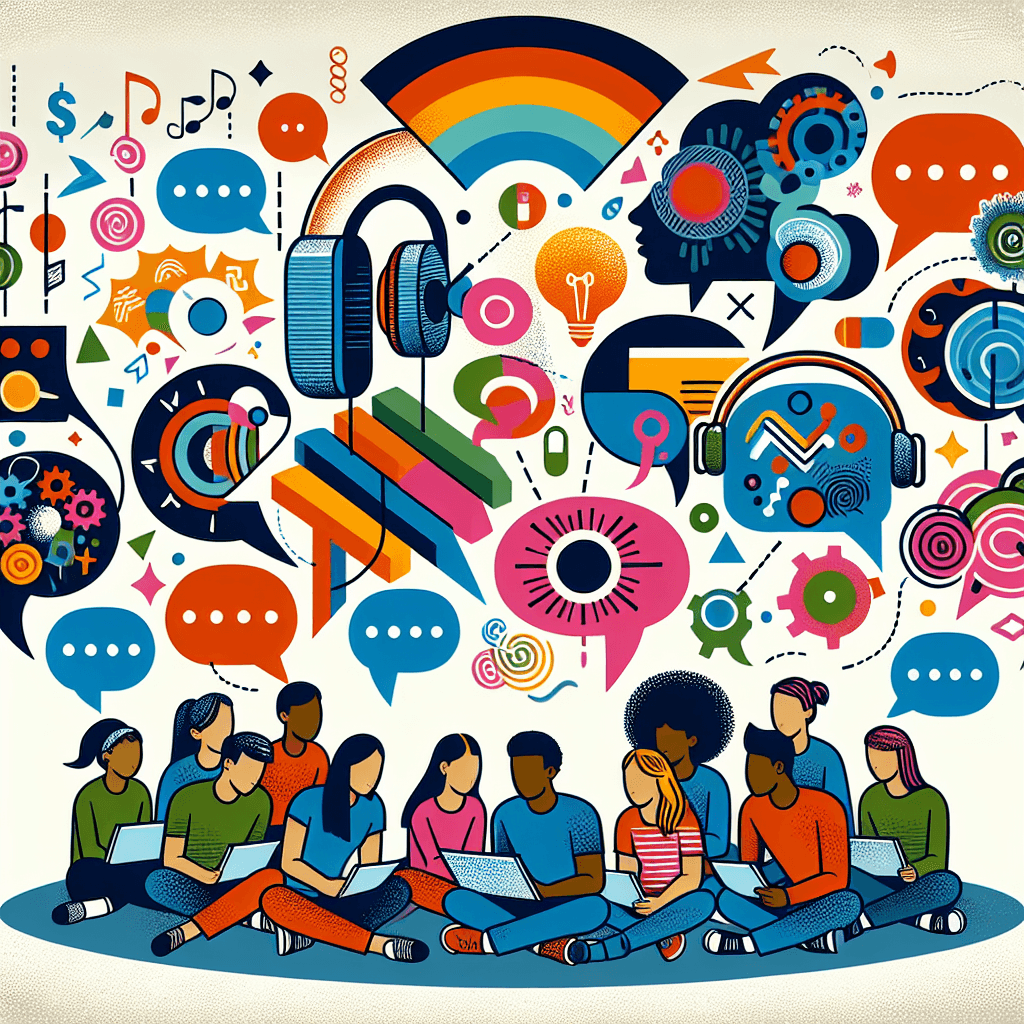
Rhetoric and Language: Influencing Readers and Listeners
Inquiry Framework
Question Framework
Driving Question
The overarching question that guides the entire project.In what ways does the strategic use of rhetoric and persuasive language influence audiences, and how can we critically analyze these techniques to understand the relationship between language and power in various texts and speeches?Essential Questions
Supporting questions that break down major concepts.- How do different rhetorical devices impact an audience?
- How does persuasive language shape opinions and beliefs?
- What is the relationship between language and power?
- How can we critically analyze persuasive techniques in various texts and speeches?
Standards & Learning Goals
Learning Goals
By the end of this project, students will be able to:- Students will be able to identify and analyze various rhetorical devices (e.g., ethos, pathos, logos) in texts and speeches.
- Students will be able to explain how persuasive language is used to shape opinions and beliefs.
- Students will be able to critically evaluate the relationship between language and power.
- Students will be able to create their own persuasive texts and speeches using rhetorical devices effectively.
Entry Events
Events that will be used to introduce the project to studentsPersuasive Speech Time Capsule
Imagine a future where rhetoric is outlawed. Students create 'time capsules' containing persuasive speeches designed to convince future generations of rhetoric's value. This encourages them to think deeply about the power and responsibility that comes with using language to influence others.Portfolio Activities
Portfolio Activities
These activities progressively build towards your learning goals, with each submission contributing to the student's final portfolio.Rhetorical Device Toolkit
Students will create a toolkit that defines and provides examples of ethos, pathos, logos, and other key rhetorical devices. This activity ensures students have a solid understanding of the foundational elements of rhetoric before analyzing complex texts.Steps
Here is some basic scaffolding to help students complete the activity.Final Product
What students will submit as the final product of the activityA comprehensive rhetorical device toolkit with definitions and examples.Alignment
How this activity aligns with the learning objectives & standardsLearning Goal: Students will be able to identify and analyze various rhetorical devices (e.g., ethos, pathos, logos) in texts and speeches.Persuasive Language Autopsy
Students will dissect a chosen persuasive speech or text, identifying and analyzing the rhetorical devices used and their impact on the audience. This activity encourages critical analysis and application of the rhetorical devices learned.Steps
Here is some basic scaffolding to help students complete the activity.Final Product
What students will submit as the final product of the activityA written analysis of a persuasive speech or text, identifying and evaluating the use of rhetorical devices.Alignment
How this activity aligns with the learning objectives & standardsLearning Goal: Students will be able to explain how persuasive language is used to shape opinions and beliefs.Rubric & Reflection
Portfolio Rubric
Grading criteria for assessing the overall project portfolioRhetorical Analysis Portfolio Rubric
Rhetorical Device Identification & Definition
Accuracy and completeness in identifying and defining rhetorical devices (ethos, pathos, logos, etc.).Accuracy of Definitions
How accurately and thoroughly the student defines key rhetorical devices.
Exemplary
4 PointsProvides accurate and comprehensive definitions of all key rhetorical devices, demonstrating a sophisticated understanding.
Proficient
3 PointsProvides mostly accurate definitions of key rhetorical devices, demonstrating a thorough understanding.
Developing
2 PointsProvides definitions of some rhetorical devices, but with inaccuracies or omissions, indicating an emerging understanding.
Beginning
1 PointsStruggles to define rhetorical devices accurately, demonstrating a limited understanding.
Completeness of Toolkit
How comprehensive the toolkit is in covering a range of rhetorical devices.
Exemplary
4 PointsToolkit includes a wide range of rhetorical devices with clear and well-chosen examples, demonstrating exceptional effort and understanding.
Proficient
3 PointsToolkit includes most key rhetorical devices with appropriate examples, demonstrating thorough coverage.
Developing
2 PointsToolkit includes some rhetorical devices, but with gaps in coverage or less effective examples, indicating partial effort.
Beginning
1 PointsToolkit is incomplete and lacks examples for many rhetorical devices, demonstrating minimal effort.
Rhetorical Analysis & Application
Ability to identify, analyze, and evaluate the effectiveness of rhetorical devices in persuasive texts/speeches.Identification of Rhetorical Devices
Ability to accurately identify instances of rhetorical devices in chosen texts/speeches.
Exemplary
4 PointsAccurately identifies and highlights a wide range of rhetorical devices in the text/speech, demonstrating a sophisticated understanding.
Proficient
3 PointsAccurately identifies most of the key rhetorical devices in the text/speech, demonstrating a thorough understanding.
Developing
2 PointsIdentifies some rhetorical devices, but misses others or misidentifies them, indicating an emerging understanding.
Beginning
1 PointsStruggles to identify rhetorical devices in the text/speech, demonstrating a limited understanding.
Analysis of Effectiveness
Quality and depth of analysis regarding the effectiveness of rhetorical devices on the audience.
Exemplary
4 PointsProvides insightful and nuanced analysis of how rhetorical devices impact the audience, demonstrating exceptional critical thinking.
Proficient
3 PointsProvides a clear and effective analysis of how rhetorical devices impact the audience, demonstrating thorough critical thinking.
Developing
2 PointsOffers a basic analysis of the impact of rhetorical devices, but lacks depth or nuance, indicating basic critical thinking.
Beginning
1 PointsStruggles to analyze the impact of rhetorical devices on the audience, demonstrating minimal critical thinking.
Clarity and Organization of Analysis
How well-written, organized, and coherent the analysis is.
Exemplary
4 PointsAnalysis is exceptionally well-written, logically organized, and clearly articulated, enhancing the overall impact.
Proficient
3 PointsAnalysis is well-written, logically organized, and clearly articulated.
Developing
2 PointsAnalysis is understandable but may lack clarity, organization, or coherence in some areas.
Beginning
1 PointsAnalysis is poorly written, disorganized, and difficult to understand.