
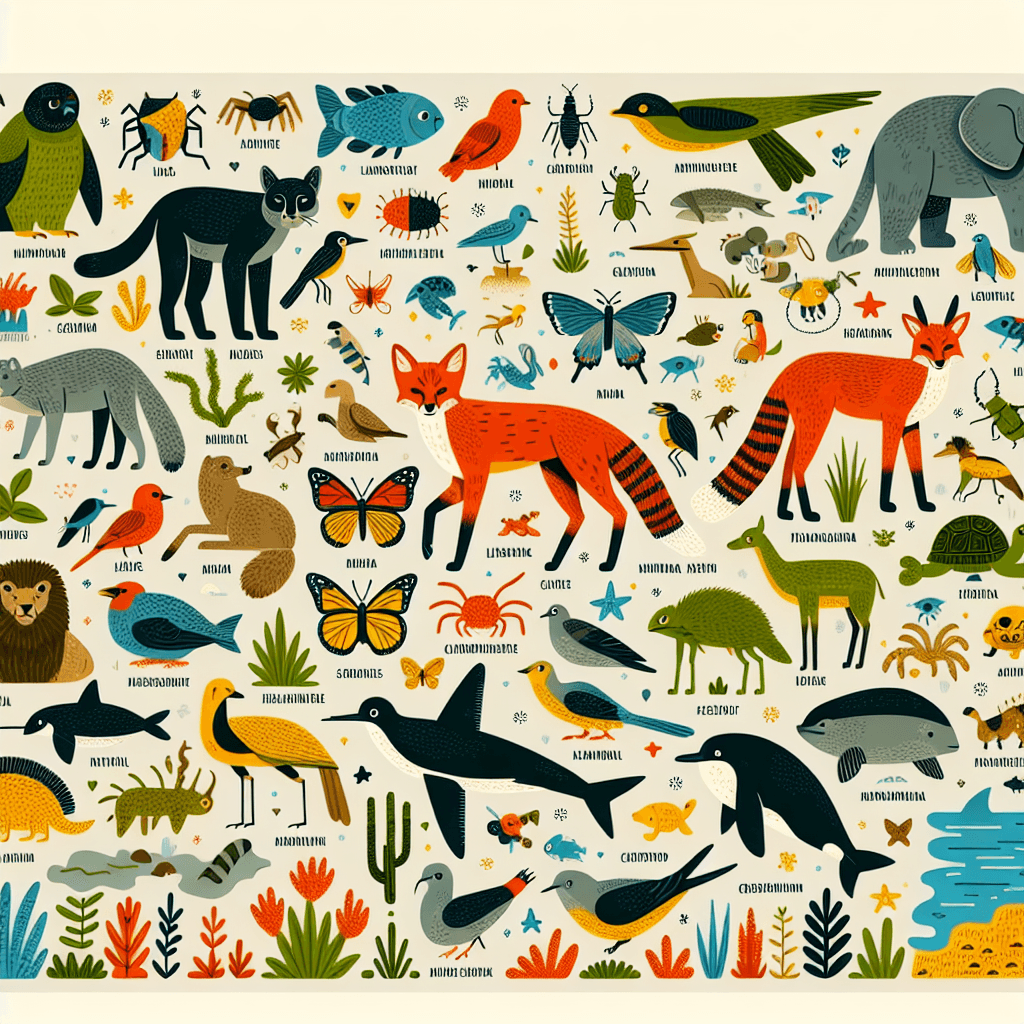
RI Wildlife: Traits and Habitats Exploration
Inquiry Framework
Question Framework
Driving Question
The overarching question that guides the entire project.How do Rhode Island's habitats shape the survival of its diverse wildlife through their unique traits?Essential Questions
Supporting questions that break down major concepts.- How do different animals survive in Rhode Island?
- What are the different habitats in Rhode Island?
- How do animals' traits help them survive in their habitats?
Standards & Learning Goals
Learning Goals
By the end of this project, students will be able to:- Identify and describe different habitats in Rhode Island.
- Explain how various animals survive in Rhode Island.
- Describe how animals' traits help them survive in their habitats.
- Collaborate in small groups to research and present information about a chosen animal.
Entry Events
Events that will be used to introduce the project to studentsWildlife Mystery Box
A local wildlife expert brings in skulls, tracks, and other artifacts, challenging students to match them to RI animals and predict where they live. This sparks curiosity about animal adaptations and habitats.Portfolio Activities
Portfolio Activities
These activities progressively build towards your learning goals, with each submission contributing to the student's final portfolio.Habitat Explorers
Students create a visual guide showcasing the diverse habitats found in Rhode Island.Steps
Here is some basic scaffolding to help students complete the activity.Final Product
What students will submit as the final product of the activityA labeled diorama or illustrated map displaying RI's main habitats (e.g., forest, wetlands, coastal areas).Alignment
How this activity aligns with the learning objectives & standardsLearning Goal: Identify and describe different habitats in Rhode Island.Survival Experts
Students investigate the survival strategies of RI animals, focusing on how they find food, water, and shelter.Steps
Here is some basic scaffolding to help students complete the activity.Final Product
What students will submit as the final product of the activityA presentation on an animal's survival strategies.Alignment
How this activity aligns with the learning objectives & standardsLearning Goal: Explain how various animals survive in Rhode Island.Traits for Survival
Students explore the unique traits of RI animals and how these traits enable them to thrive in their specific habitats.Steps
Here is some basic scaffolding to help students complete the activity.Final Product
What students will submit as the final product of the activityAn adaptation infographic.Alignment
How this activity aligns with the learning objectives & standardsLearning Goal: Describe how animals' traits help them survive in their habitats.Wildlife Research Teams
Collaborative groups research an animal, combining habitat, survival, and trait information to create a comprehensive poster.Steps
Here is some basic scaffolding to help students complete the activity.Final Product
What students will submit as the final product of the activityA group poster presenting research findings.Alignment
How this activity aligns with the learning objectives & standardsLearning Goal: Collaborate in small groups to research and present information about a chosen animal.Rubric & Reflection
Portfolio Rubric
Grading criteria for assessing the overall project portfolioRhode Island Wildlife Habitats and Traits Assessment
Understanding of Habitats
Assessing students' ability to identify and describe various habitats in Rhode Island.Identification of Habitats
Ability to accurately identify and visually represent different Rhode Island habitats.
Exemplary
4 PointsIdentifies and accurately depicts all key habitats in Rhode Island with detailed descriptions and distinguishing features.
Proficient
3 PointsIdentifies and depicts most key habitats in Rhode Island with clear descriptions.
Developing
2 PointsIdentifies some habitats but descriptions are incomplete or contain minor inaccuracies.
Beginning
1 PointsStruggles to identify and describe habitats, with significant inaccuracies or omissions.
Habitat Features Labeling
Correctly labeling key features like plants, water, and terrain in the habitat diorama or map.
Exemplary
4 PointsLabels all features accurately with clear, detailed information that enhances the understanding of each habitat.
Proficient
3 PointsLabels most features accurately; may lack minor details.
Developing
2 PointsLabels some features accurately, but several key features are missing or incorrect.
Beginning
1 PointsStruggles with labeling; many errors or missing features.
Understanding of Animal Survival Strategies
Evaluates students' research and presentation of how Rhode Island animals survive in their habitats.Animal Survival Research
Ability to gather information about animal survival strategies and present them clearly.
Exemplary
4 PointsPresents comprehensive and detailed survival strategies with strong supporting visuals.
Proficient
3 PointsPresents clear survival strategies supported with adequate visuals.
Developing
2 PointsPresents limited survival strategies; visuals may lack relevance or clarity.
Beginning
1 PointsStruggles to present survival strategies; lacks clarity and detail.
Visual Aid Creation
Creating effective visual aids such as drawings or diagrams illustrating survival strategies.
Exemplary
4 PointsVisual aids are highly effective, creative, and enhance understanding of the animal's survival strategies.
Proficient
3 PointsVisual aids are clear and support the information presented.
Developing
2 PointsVisual aids are basic and may not fully support the information presented.
Beginning
1 PointsLacks sufficient visual aids; existing visuals do not support understanding.
Understanding of Animal Traits for Survival
Assesses students' ability to connect an animal’s traits to its survival in the habitat.Traits and Survival Connection
Ability to connect animal traits to survival advantages within their habitats.
Exemplary
4 PointsProvides insightful connections between a wide range of traits and their survival advantages with strong examples.
Proficient
3 PointsConnects most traits to survival advantages accurately with relevant examples.
Developing
2 PointsMakes basic connections with some traits; missing key examples or accuracy.
Beginning
1 PointsStruggles to connect traits to survival; limited examples or inaccurate connections.
Infographic Design
Designing an infographic that connects animal traits to survival advantages.
Exemplary
4 PointsInfographic is well-organized, highly informative, and visually appealing, enhancing understanding.
Proficient
3 PointsInfographic is clear, informative, and supports the information well.
Developing
2 PointsInfographic conveys basic information but lacks organization or clarity.
Beginning
1 PointsInfographic is disorganized or lacks sufficient content to demonstrate understanding.
Collaboration and Presentation
Evaluates how effectively students work in groups and present their findings.Group Collaboration
Ability to work collaboratively in roles to contribute to the group project effectively.
Exemplary
4 PointsDemonstrates strong collaboration skills with effective role fulfillment and leadership in the group.
Proficient
3 PointsWorks well in group settings, fulfilling roles adequately and contributing effectively.
Developing
2 PointsParticipates in group work with some role fulfillment but requires guidance or reminders.
Beginning
1 PointsLimited participation in group work; struggles with role fulfillment.
Presentation Skills
Delivering a clear and cohesive presentation of the project findings.
Exemplary
4 PointsPresents information confidently and coherently with excellent audience engagement and clarity.
Proficient
3 PointsPresents information clearly with some audience engagement.
Developing
2 PointsPresentation is basic with limited engagement or clarity.
Beginning
1 PointsStruggles with clarity and engagement in presentation.