
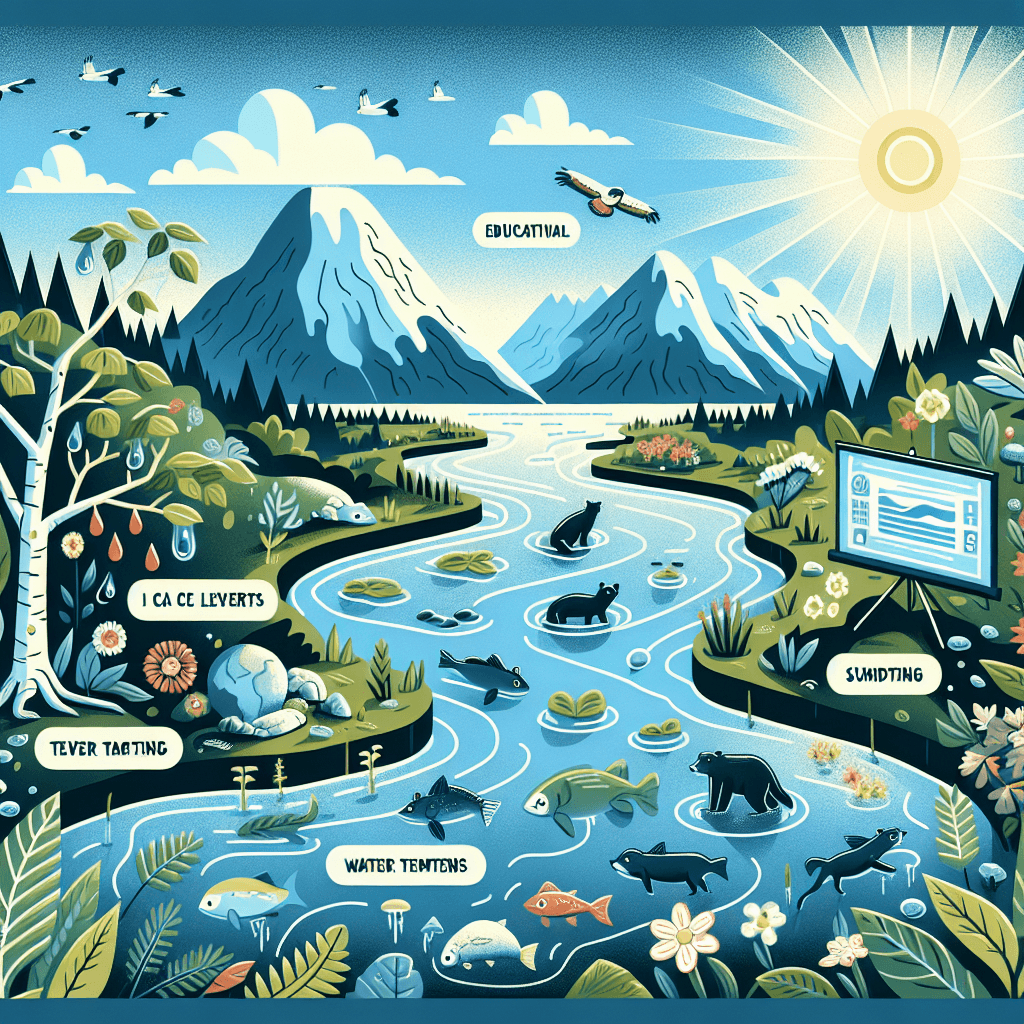
River in Crisis: Modeling Global Warming's Impact
Inquiry Framework
Question Framework
Driving Question
The overarching question that guides the entire project.How can we design a river model that demonstrates the impact of global warming and human activities on the diverse river systems of West Bengal and what solutions can we propose to mitigate these effects?Essential Questions
Supporting questions that break down major concepts.- How does global warming affect each of the river systems?
- How do urbanization, natural disasters, and man-made disasters exacerbate the effects of global warming on rivers?
- What are the probable solutions ?
Standards & Learning Goals
Learning Goals
By the end of this project, students will be able to:- Understand the impact of global warming on river systems in West Bengal, India.
- Design a model demonstrating the effects of global warming on rain-fed, snow-fed, and tidal rivers.
- Analyze the influence of urbanization and natural/man-made disasters on river quality and flow.
- Propose solutions to mitigate the negative impacts of global warming and human activities on rivers.
- Compare and contrast the characteristics of different types of rivers (rain-fed, snow-fed, tidal) and their vulnerability to global warming.
Entry Events
Events that will be used to introduce the project to studentsThe River's Secret
Students receive a mysterious package containing before-and-after photos of a local river, dramatically altered by pollution and climate change. They must analyze the images and brainstorm questions about the causes and potential solutions, sparking their initial investigation.Portfolio Activities
Portfolio Activities
These activities progressively build towards your learning goals, with each submission contributing to the student's final portfolio.River Types and Global Warming: A Comparative Study
Students will research the different types of rivers in West Bengal (rain-fed, snow-fed, and tidal) and how global warming affects each one. They will focus on how urbanization and disasters exacerbate these effects.Steps
Here is some basic scaffolding to help students complete the activity.Final Product
What students will submit as the final product of the activityA detailed research report comparing and contrasting the three types of rivers, including specific examples of the impact of global warming, urbanization, and disasters on each. The report should include visual aids such as maps and charts.Alignment
How this activity aligns with the learning objectives & standardsAddresses the learning goal: Understand the impact of global warming on river systems in West Bengal, India; and analyzes the influence of urbanization and natural/man-made disasters on river quality and flow.Designing a River in Crisis: Modeling Global Warming's Impact
Students will design a physical or digital model of a river system demonstrating the effects of global warming. This model should include representations of rain-fed, snow-fed, and tidal rivers, showcasing the specific impacts on each.Steps
Here is some basic scaffolding to help students complete the activity.Final Product
What students will submit as the final product of the activityA detailed model of a river system, either physical or digital, that clearly demonstrates the effects of global warming on different types of rivers. The model should be accompanied by a presentation explaining the different components and their significance.Alignment
How this activity aligns with the learning objectives & standardsAddresses the learning goal: Design a model demonstrating the effects of global warming on rain-fed, snow-fed, and tidal rivers. It also covers the standard concerning the impacts of global warming on the rivers of West Bengal.River Rescue: Proposing Solutions for a Sustainable Future
Students will research and propose solutions to mitigate the negative impacts of global warming and human activities on the rivers of West Bengal. They will focus on practical and sustainable solutions that can be implemented at the local level.Steps
Here is some basic scaffolding to help students complete the activity.Final Product
What students will submit as the final product of the activityA proposal outlining practical solutions to mitigate the negative impacts of global warming and human activities on the rivers of West Bengal. The proposal should include detailed action plans, cost estimates, and potential funding sources.Alignment
How this activity aligns with the learning objectives & standardsAddresses the learning goals: Propose solutions to mitigate the negative impacts of global warming and human activities on rivers; and analyze the influence of urbanization and natural/man-made disasters on river quality and flow.Rubric & Reflection
Portfolio Rubric
Grading criteria for assessing the overall project portfolioRiver in Crisis: Global Warming Rubric
Content Knowledge and Understanding
Focuses on the accuracy, clarity, and depth of understanding demonstrated in the research, model, and proposed solutions.Content Accuracy
Accuracy of information presented about river types, global warming effects, and impacts of urbanization/disasters.
Exemplary
4 PointsPresents highly accurate and detailed information, demonstrating a sophisticated understanding of the complex interactions between river systems, global warming, and human activities. Information is thoroughly researched and consistently supported by evidence.
Proficient
3 PointsPresents accurate information, demonstrating a thorough understanding of the key concepts related to river systems, global warming, and human activities. Research is evident, and information is generally supported by evidence.
Developing
2 PointsPresents mostly accurate information, but demonstrates an emerging understanding of the concepts. Some inaccuracies or omissions may be present. Limited research and evidence.
Beginning
1 PointsPresents inaccurate or incomplete information, demonstrating a limited understanding of the concepts. Significant gaps in knowledge are evident. Minimal research and little to no supporting evidence.
Model Effectiveness
Clarity and effectiveness of the model in demonstrating the effects of global warming on different river types.
Exemplary
4 PointsModel is exceptionally clear, creative, and effectively demonstrates the complex effects of global warming on rain-fed, snow-fed, and tidal rivers. The model is innovative and provides unique insights into the topic.
Proficient
3 PointsModel is clear and effectively demonstrates the effects of global warming on different river types. The model is well-constructed and easy to understand.
Developing
2 PointsModel demonstrates some of the effects of global warming on different river types, but clarity and effectiveness are limited. Some aspects of the model may be confusing or incomplete.
Beginning
1 PointsModel is unclear and ineffective in demonstrating the effects of global warming on different river types. The model is poorly constructed and difficult to understand.
Solution Feasibility and Impact
Feasibility and potential impact of proposed solutions for mitigating the negative effects of global warming and human activities on rivers.
Exemplary
4 PointsProposes highly innovative, feasible, and impactful solutions that demonstrate a deep understanding of the environmental challenges and potential for positive change. Solutions are thoroughly researched, well-justified, and consider long-term sustainability.
Proficient
3 PointsProposes feasible and potentially impactful solutions that demonstrate a good understanding of the environmental challenges. Solutions are supported by research and well-justified.
Developing
2 PointsProposes solutions that are somewhat feasible and may have some impact, but the understanding of the environmental challenges is limited. Solutions may lack sufficient research and justification.
Beginning
1 PointsProposes solutions that are not feasible or impactful, demonstrating a limited understanding of the environmental challenges. Solutions lack research and justification.
Presentation Quality
Quality and clarity of the final product (report, model, or proposal), including visual aids and presentation.
Exemplary
4 PointsFinal product is exceptionally well-organized, visually appealing, and clearly communicates complex information in an engaging manner. Visual aids are highly effective and enhance understanding.
Proficient
3 PointsFinal product is well-organized, visually appealing, and clearly communicates information. Visual aids are effective and contribute to understanding.
Developing
2 PointsFinal product is somewhat organized, but clarity and visual appeal are limited. Visual aids may be present, but their effectiveness is questionable.
Beginning
1 PointsFinal product is poorly organized, lacks visual appeal, and fails to communicate information effectively. Visual aids are missing or ineffective.
Skills and Processes
Focuses on the skills and processes used to complete the portfolio activities, including collaboration, critical thinking, and research.Collaboration and Teamwork
Effectiveness of collaboration, including teamwork, communication, and shared responsibility in completing the activities.
Exemplary
4 PointsDemonstrates outstanding teamwork and leadership skills, with all members actively contributing and communicating effectively. Responsibilities are clearly defined and shared equitably.
Proficient
3 PointsDemonstrates effective teamwork, with all members contributing and communicating well. Responsibilities are shared appropriately.
Developing
2 PointsDemonstrates some teamwork, but communication and contribution may be uneven. Responsibilities may not be clearly defined or shared equitably.
Beginning
1 PointsDemonstrates limited teamwork, with poor communication and unequal contribution. Responsibilities are not clearly defined or shared.
Critical Thinking
Application of critical thinking skills, including analysis, evaluation, and synthesis of information in addressing the driving and essential questions.
Exemplary
4 PointsDemonstrates exceptional critical thinking skills, providing insightful analysis, thorough evaluation, and creative synthesis of information to address the driving and essential questions in a comprehensive and innovative manner.
Proficient
3 PointsDemonstrates effective critical thinking skills, providing clear analysis, sound evaluation, and logical synthesis of information to address the driving and essential questions.
Developing
2 PointsDemonstrates basic critical thinking skills, but analysis, evaluation, and synthesis of information are limited. Understanding of the driving and essential questions may be superficial.
Beginning
1 PointsDemonstrates minimal critical thinking skills, with little to no analysis, evaluation, or synthesis of information. Fails to address the driving and essential questions effectively.
Research and Evidence
Use of research and evidence to support claims and arguments in the report, model, and proposal.
Exemplary
4 PointsConsistently uses credible and diverse sources to provide strong evidence and support all claims and arguments. Demonstrates a sophisticated understanding of research methodologies and ethical considerations.
Proficient
3 PointsUses credible sources to provide clear evidence and support most claims and arguments. Demonstrates a good understanding of research methodologies.
Developing
2 PointsUses limited or questionable sources to support some claims and arguments. Evidence may be weak or incomplete. Understanding of research methodologies is limited.
Beginning
1 PointsFails to use credible sources or provide evidence to support claims and arguments. Demonstrates a lack of understanding of research methodologies.