
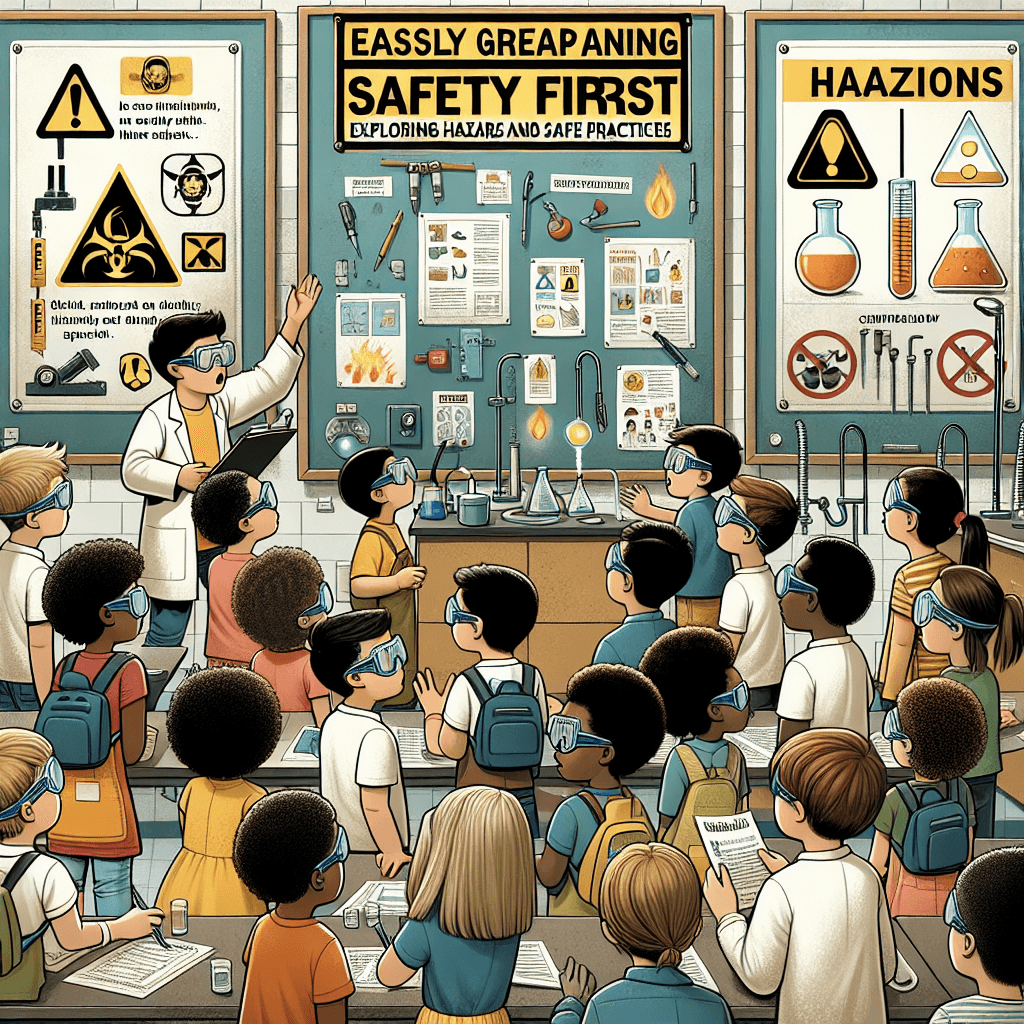
Safety First: Exploring Hazards and Safe Practices
Inquiry Framework
Question Framework
Driving Question
The overarching question that guides the entire project.How can we, as safety ambassadors, design a school-wide campaign to educate our peers about potential risks and promote safety measures related to electrical appliances, sharp objects, fire, strangers, water bodies, and animals, ensuring a safer learning environment for everyone?Essential Questions
Supporting questions that break down major concepts.- What are the potential risks and dangers associated with using electrical appliances, sharp objects, fire, interacting with strangers, being near water bodies, and interacting with animals?
- What safety measures should we practice when using electrical appliances?
- How can we identify and avoid dangerous situations related to electrical appliances, sharp objects, fire, strangers, water bodies, and animals?
- Why is it important to follow safety rules when using potentially dangerous items or being in potentially dangerous situations?
Standards & Learning Goals
Learning Goals
By the end of this project, students will be able to:- Students will be able to identify risks associated with electrical appliances, sharp objects, fire, strangers, water bodies, and animals.
- Students will be able to explain safety measures related to electrical appliances, sharp objects, fire, strangers, water bodies, and animals.
- Students will be able to design a school-wide safety campaign.
Teacher Specified
Entry Events
Events that will be used to introduce the project to studentsSafety Time Capsule: Messages to the Future
Students create a 'safety time capsule' filled with letters, drawings, and demonstrations explaining potential hazards and how to avoid them. They're writing to future third-graders, emphasizing the importance of safety and inspiring them to be responsible citizens.Portfolio Activities
Portfolio Activities
These activities progressively build towards your learning goals, with each submission contributing to the student's final portfolio.Risk Radar: Identifying Hazards
Students will begin by identifying potential hazards in various scenarios. They will focus on electrical appliances, sharp objects, fire, interactions with strangers, water bodies, and animals. This activity sets the stage for understanding the importance of safety measures.Steps
Here is some basic scaffolding to help students complete the activity.Final Product
What students will submit as the final product of the activityA visual guide showcasing identified hazards with brief descriptions of the potential risks.Alignment
How this activity aligns with the learning objectives & standardsAddresses standard SS-3-G-D-01 by explaining the risks and dangers associated with various hazards.Safety Superhero Training: Measure Up!
Students will delve into specific safety measures that should be practiced when using electrical appliances and other potentially dangerous items. They will learn the correct procedures and understand why these measures are crucial for preventing accidents.Steps
Here is some basic scaffolding to help students complete the activity.Final Product
What students will submit as the final product of the activityA detailed checklist of safety measures for electrical appliances, demonstrated through role-playing scenarios.Alignment
How this activity aligns with the learning objectives & standardsAddresses standard SS-3-G-D-02 by practicing safety measures while using electrical appliances.Campaign Creator: School Safety
Building on their knowledge of hazards and safety measures, students will design a school-wide safety campaign. This campaign will aim to educate their peers about potential risks and promote safety awareness.Steps
Here is some basic scaffolding to help students complete the activity.Final Product
What students will submit as the final product of the activityA comprehensive safety campaign including posters, slogans, and a presentation outline, all designed to educate peers about potential risks and promote safety measures.Alignment
How this activity aligns with the learning objectives & standardsIntegrates both SS-3-G-D-01 and SS-3-G-D-02 by explaining risks, practicing safety measures, and applying this knowledge to create a practical safety campaign.Rubric & Reflection
Portfolio Rubric
Grading criteria for assessing the overall project portfolioSafety Campaign Portfolio Rubric
Risk Identification
This category assesses students' ability to identify potential hazards related to electrical appliances, sharp objects, fire, strangers, water bodies, and animals.Hazard Identification
Accuracy and thoroughness in identifying potential hazards.
Exemplary
4 PointsIdentifies a comprehensive range of hazards with accurate and detailed descriptions of potential risks. Demonstrates sophisticated understanding of risk factors.
Proficient
3 PointsIdentifies most common hazards with clear descriptions of potential risks. Demonstrates thorough understanding of risk factors.
Developing
2 PointsIdentifies some hazards, but descriptions of potential risks may be incomplete or lack detail. Shows emerging understanding of risk factors.
Beginning
1 PointsStruggles to identify hazards and provides minimal or inaccurate descriptions of potential risks. Shows initial understanding of risk factors.
Visual Representation
Clarity and effectiveness of the visual representation of hazards.
Exemplary
4 PointsCreates a visually appealing and highly informative representation of hazards that effectively communicates potential risks. Demonstrates innovative use of visual elements.
Proficient
3 PointsCreates a clear and informative representation of hazards that effectively communicates potential risks. Demonstrates appropriate use of visual elements.
Developing
2 PointsCreates a visual representation of hazards, but clarity or effectiveness may be limited. Shows basic understanding of visual communication principles.
Beginning
1 PointsCreates a visual representation of hazards that is unclear or ineffective in communicating potential risks. Struggles with visual communication principles.
Safety Measures and Application
This category assesses students' ability to explain and demonstrate safety measures related to identified hazards.Explanation of Safety Measures
Clarity, accuracy, and completeness in explaining safety measures.
Exemplary
4 PointsProvides a comprehensive and accurate explanation of safety measures, demonstrating a sophisticated understanding of their importance and application. Includes innovative and insightful details.
Proficient
3 PointsProvides a clear and accurate explanation of safety measures, demonstrating a thorough understanding of their importance and application.
Developing
2 PointsProvides an explanation of some safety measures, but may lack clarity, accuracy, or completeness. Shows emerging understanding of their importance and application.
Beginning
1 PointsStruggles to explain safety measures and demonstrates limited understanding of their importance and application.
Role-Playing Scenarios
Effectiveness of role-playing scenarios in demonstrating safety measures.
Exemplary
4 PointsDemonstrates safety measures flawlessly through highly effective and engaging role-playing scenarios. Shows leadership and initiative in collaborative scenarios.
Proficient
3 PointsDemonstrates safety measures effectively through clear and well-executed role-playing scenarios. Contributes effectively to collaborative scenarios.
Developing
2 PointsDemonstrates some safety measures through role-playing scenarios, but may lack clarity or consistency. Participates in collaborative scenarios.
Beginning
1 PointsStruggles to demonstrate safety measures through role-playing scenarios and requires significant support. Requires support in collaborative scenarios.
Safety Checklist
Completeness and accuracy of safety checklist.
Exemplary
4 PointsDevelops a comprehensive, accurate, and easy-to-follow safety checklist. Demonstrates innovative integration of safety measures.
Proficient
3 PointsDevelops a complete and accurate safety checklist that is easy to follow.
Developing
2 PointsDevelops a safety checklist, but may be incomplete or contain inaccuracies. Requires some refinement.
Beginning
1 PointsStruggles to develop a safety checklist and requires significant support.
Safety Campaign Design
This category assesses students' ability to design a comprehensive school-wide safety campaign to educate their peers.Campaign Ideas
Creativity and relevance of ideas for the safety campaign.
Exemplary
4 PointsGenerates highly creative and relevant ideas for the safety campaign, demonstrating innovative approaches to peer education. Shows exceptional critical thinking.
Proficient
3 PointsGenerates creative and relevant ideas for the safety campaign, demonstrating effective approaches to peer education. Shows effective critical thinking.
Developing
2 PointsGenerates some ideas for the safety campaign, but may lack creativity or relevance. Demonstrates basic critical thinking.
Beginning
1 PointsStruggles to generate ideas for the safety campaign and requires significant support. Demonstrates minimal critical thinking.
Key Messages and Slogans
Clarity, impact, and memorability of key messages and slogans.
Exemplary
4 PointsDevelops exceptionally clear, impactful, and memorable key messages and slogans that effectively promote safety awareness. Integrates advanced persuasive techniques.
Proficient
3 PointsDevelops clear, impactful, and memorable key messages and slogans that effectively promote safety awareness.
Developing
2 PointsDevelops some key messages and slogans, but may lack clarity, impact, or memorability.
Beginning
1 PointsStruggles to develop key messages and slogans and requires significant support.
Visual Materials
Appeal, effectiveness, and quality of visual materials (posters, flyers).
Exemplary
4 PointsCreates visually stunning and highly effective materials that grab attention and clearly communicate safety information. Demonstrates advanced design skills.
Proficient
3 PointsCreates visually appealing and effective materials that grab attention and clearly communicate safety information.
Developing
2 PointsCreates visual materials, but may lack appeal or clarity in communicating safety information.
Beginning
1 PointsStruggles to create effective visual materials and requires significant support.
Presentation Outline
Organization and comprehensiveness of Presentation Outline
Exemplary
4 PointsCreates a well-organized, engaging, and comprehensive presentation outline that addresses all key safety aspects and is tailored to peer education.
Proficient
3 PointsCreates a comprehensive presentation outline that addresses all key safety aspects.
Developing
2 PointsCreates a presentation outline, but some key safety aspects may be missing.
Beginning
1 PointsStruggles to create a presentation outline and key safety aspects are missing