
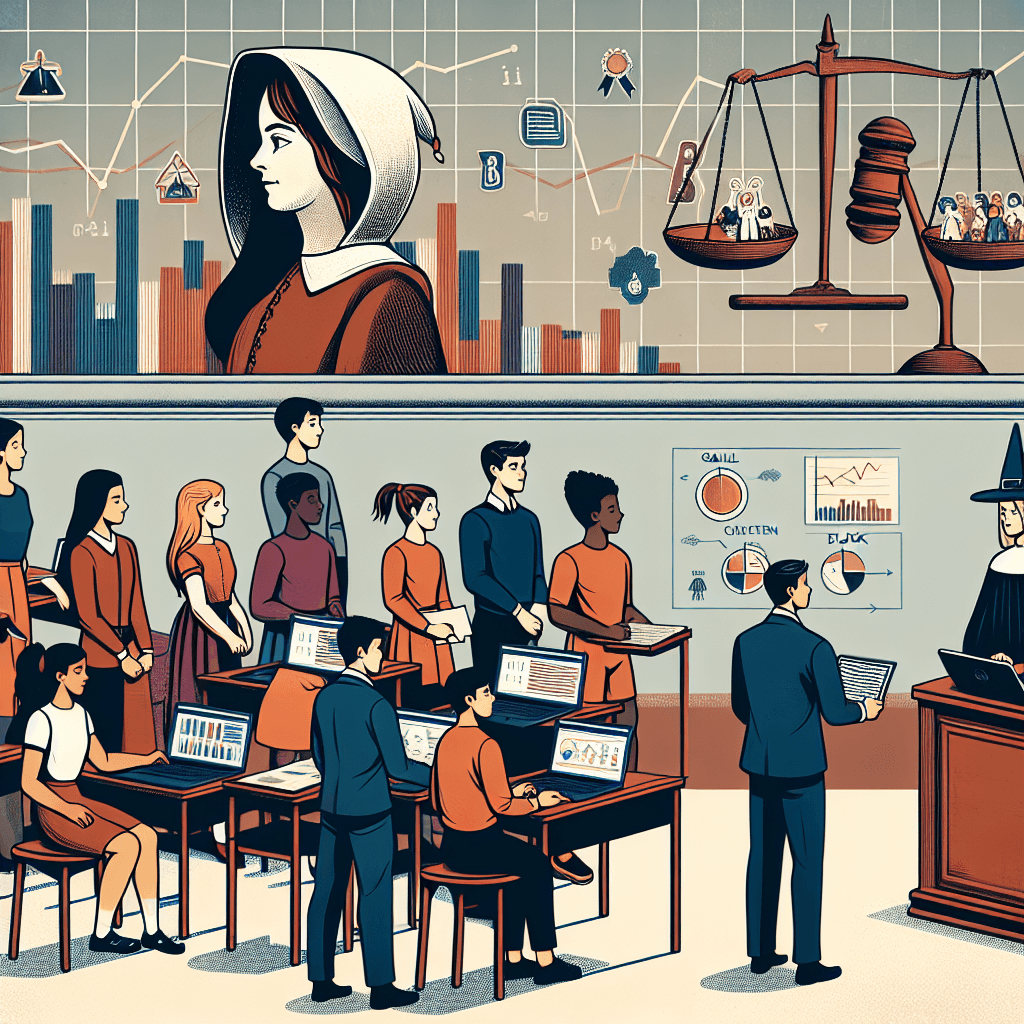
Salem Witch Trials: Unveiling Truth Through Data Science
Inquiry Framework
Question Framework
Driving Question
The overarching question that guides the entire project.How can we use AI and geographical data to uncover the key factors and social dynamics that led to the Salem Witch Trials?Essential Questions
Supporting questions that break down major concepts.- How can we use data to analyze historical events?
- What role did geography play in the Salem Witch Trials?
- How can dot distribution maps help us understand population density and its potential impact on social dynamics during the Salem Witch Trials?
- In what ways can AI and data science skills enhance our understanding of historical events?
- What were the key factors that contributed to the Salem Witch Trials, and how can data analysis help us weigh their significance?
Standards & Learning Goals
Learning Goals
By the end of this project, students will be able to:- Understand the key events, figures, and social context of the Salem Witch Trials.
- Develop skills in data collection, analysis, and visualization using AI tools.
- Learn to create and interpret dot distribution maps to represent geographical data.
- Analyze the geographical factors that may have influenced the events in Salem.
- Evaluate the role of data and AI in historical analysis and interpretation.
- Communicate findings effectively through presentations, reports, or interactive visualizations.
Entry Events
Events that will be used to introduce the project to studentsSalem Data Conspiracy
A mysterious dataset surfaces, containing fragmented records from the Salem Witch Trials. Students, acting as data scientists, must use AI to reconstruct the events, identify patterns, and challenge popular narratives. The event culminates in a mock trial where students present their AI-driven findings.Portfolio Activities
Portfolio Activities
These activities progressively build towards your learning goals, with each submission contributing to the student's final portfolio.Salem Witch Trials Timeline
Students will research and create a timeline of the key events and figures involved in the Salem Witch Trials. They will use primary and secondary sources to gather information and create a chronological sequence of events.Steps
Here is some basic scaffolding to help students complete the activity.Final Product
What students will submit as the final product of the activityA detailed timeline poster or digital presentation highlighting the key events, figures, and social context of the Salem Witch Trials.Alignment
How this activity aligns with the learning objectives & standardsLearning Goal: Understand the key events, figures, and social context of the Salem Witch Trials.AI-Driven Data Analysis of Salem
Students will learn to use AI tools to analyze historical data related to the Salem Witch Trials. They will collect data on accusations, demographics, and geographical locations and use AI to identify patterns and correlations.Steps
Here is some basic scaffolding to help students complete the activity.Final Product
What students will submit as the final product of the activityA data analysis report with visualizations (graphs, charts) created using AI tools, highlighting key patterns and correlations in the Salem Witch Trials data.Alignment
How this activity aligns with the learning objectives & standardsLearning Goal: Develop skills in data collection, analysis, and visualization using AI tools.Mapping the Accusations: Dot Distribution Analysis
Students will create dot distribution maps to visualize the geographical distribution of accusations and accusers during the Salem Witch Trials. They will analyze the maps to identify geographical patterns and potential correlations with social dynamics.Steps
Here is some basic scaffolding to help students complete the activity.Final Product
What students will submit as the final product of the activityA series of dot distribution maps showing the distribution of accusations and accusers, accompanied by a written analysis of the geographical patterns and their potential impact on the events.Alignment
How this activity aligns with the learning objectives & standardsLearning Goal: Learn to create and interpret dot distribution maps to represent geographical data. Analyze the geographical factors that may have influenced the events in Salem.Data and AI: Reinterpreting History
Students will evaluate the role of data and AI in understanding the Salem Witch Trials. They will discuss the benefits and limitations of using data-driven approaches to analyze historical events.Steps
Here is some basic scaffolding to help students complete the activity.Final Product
What students will submit as the final product of the activityAn evaluative essay or presentation discussing the role of data and AI in historical analysis, with specific examples from the Salem Witch Trials.Alignment
How this activity aligns with the learning objectives & standardsLearning Goal: Evaluate the role of data and AI in historical analysis and interpretation.The Salem Data Story: Final Presentation
Students will present their findings from the previous activities in a final presentation. They will use visuals, data, and historical context to support their analysis and conclusions.Steps
Here is some basic scaffolding to help students complete the activity.Final Product
What students will submit as the final product of the activityA final presentation that integrates the timeline, data analysis, dot distribution maps, and evaluative essay into a cohesive narrative about the Salem Witch Trials.Alignment
How this activity aligns with the learning objectives & standardsLearning Goal: Communicate findings effectively through presentations, reports, or interactive visualizations.Rubric & Reflection
Portfolio Rubric
Grading criteria for assessing the overall project portfolioSalem Witch Trials Portfolio Rubric
Timeline Content and Presentation
Assesses the accuracy, comprehensiveness, and presentation of the Salem Witch Trials timeline.Timeline Accuracy and Completeness
Accuracy and completeness of the timeline, including key events, figures, and dates.
Exemplary
4 PointsThe timeline is comprehensive, accurate, and includes all key events, figures, and dates with detailed explanations.
Proficient
3 PointsThe timeline is mostly accurate and includes most key events, figures, and dates with clear explanations.
Developing
2 PointsThe timeline is incomplete and contains some inaccuracies or omissions of key events, figures, or dates. Explanations are basic.
Beginning
1 PointsThe timeline is very incomplete, inaccurate, and lacks key events, figures, and dates. Explanations are missing or unclear.
Source Utilization
Use of primary and secondary sources to support the timeline content.
Exemplary
4 PointsDemonstrates extensive use of both primary and secondary sources, with proper citations and a clear indication of source credibility.
Proficient
3 PointsEffectively uses a mix of primary and secondary sources to support the timeline, with proper citations.
Developing
2 PointsUses some primary or secondary sources, but citations may be missing or incomplete.
Beginning
1 PointsLimited or no use of primary and secondary sources, and citations are absent.
Clarity and Organization
Clarity and organization of the timeline, including visual appeal and ease of understanding.
Exemplary
4 PointsThe timeline is exceptionally clear, well-organized, visually appealing, and easy to understand, enhancing the viewer's comprehension of the Salem Witch Trials.
Proficient
3 PointsThe timeline is clear, well-organized, and visually appealing, making it easy to understand the sequence of events.
Developing
2 PointsThe timeline is somewhat organized and understandable, but may lack visual appeal or clarity in certain areas.
Beginning
1 PointsThe timeline is disorganized, unclear, and lacks visual appeal, making it difficult to understand the sequence of events.
AI-Driven Data Analysis
Evaluates the student's ability to collect, analyze, and visualize historical data using AI tools.Data Collection
Effectiveness of data collection methods, including the range and relevance of data gathered on accusations, demographics, and geographical locations.
Exemplary
4 PointsDemonstrates meticulous data collection, gathering a comprehensive range of relevant data with precise attention to accusations, demographics, and geographical locations, ensuring data integrity and reliability.
Proficient
3 PointsDemonstrates effective data collection, gathering a relevant range of data on accusations, demographics, and geographical locations.
Developing
2 PointsData collection is adequate but may lack depth or relevance in some areas, with potential gaps in the range of data collected.
Beginning
1 PointsData collection is limited, with significant gaps in the range of data collected and potential irrelevance to the Salem Witch Trials.
AI Tool Proficiency
Proficiency in using AI tools to analyze historical data and identify patterns and correlations.
Exemplary
4 PointsExhibits expert proficiency in using AI tools to conduct advanced data analysis, uncovering intricate patterns and correlations with a high degree of accuracy and nuanced interpretation.
Proficient
3 PointsDemonstrates strong proficiency in using AI tools to analyze data and identify patterns and correlations effectively.
Developing
2 PointsShows basic proficiency in using AI tools, but struggles to identify complex patterns or correlations effectively.
Beginning
1 PointsLacks proficiency in using AI tools for data analysis, failing to identify patterns or correlations.
Data Analysis Report
Clarity, accuracy, and insightfulness of the data analysis report, including the interpretation of patterns and correlations.
Exemplary
4 PointsPresents an exceptionally clear, accurate, and insightful data analysis report, showcasing profound interpretation of patterns and correlations, with a deep understanding of the Salem Witch Trials context.
Proficient
3 PointsPresents a clear, accurate, and insightful data analysis report, effectively interpreting patterns and correlations.
Developing
2 PointsThe data analysis report is somewhat unclear, contains some inaccuracies, or lacks depth in interpreting patterns and correlations.
Beginning
1 PointsThe data analysis report is unclear, inaccurate, and lacks insightful interpretation of patterns and correlations.
Data Visualization
Quality and relevance of visualizations (graphs, charts) created using AI tools to represent the data.
Exemplary
4 PointsCreates visualizations of exceptional quality and relevance, expertly using AI tools to represent data, enhancing comprehension and conveying nuanced insights effectively.
Proficient
3 PointsCreates high-quality and relevant visualizations using AI tools to represent the data effectively.
Developing
2 PointsVisualizations are adequate but may lack clarity, relevance, or effective use of AI tools.
Beginning
1 PointsVisualizations are of poor quality, irrelevant, and do not effectively represent the data.
Dot Distribution Analysis
Assesses the student's ability to create and interpret dot distribution maps to analyze geographical influences on the Salem Witch Trials.Geographical Data Accuracy
Accuracy and relevance of geographical data collected on the locations of accusers and accused individuals.
Exemplary
4 PointsDemonstrates exceptional accuracy and relevance in geographical data collection, meticulously gathering comprehensive information on the locations of accusers and accused individuals with precise attention to detail.
Proficient
3 PointsDemonstrates accuracy and relevance in collecting geographical data on the locations of accusers and accused individuals.
Developing
2 PointsGeographical data collection is adequate but may contain some inaccuracies or omissions.
Beginning
1 PointsGeographical data collection is inaccurate and incomplete, with significant omissions.
Dot Distribution Mapping
Effectiveness in creating and interpreting dot distribution maps showing the distribution of accusers and accused.
Exemplary
4 PointsCreates and interprets dot distribution maps with exceptional effectiveness, showcasing a deep understanding of geographical patterns and their implications for the Salem Witch Trials.
Proficient
3 PointsEffectively creates and interprets dot distribution maps showing the distribution of accusers and accused.
Developing
2 PointsDot distribution maps are adequate but may lack clarity or accurate interpretation.
Beginning
1 PointsDot distribution maps are poorly created and misinterpreted, with little understanding of geographical patterns.
Geographical Analysis
Insightfulness of the analysis of geographical patterns and their potential impact on the Salem Witch Trials.
Exemplary
4 PointsProvides an exceptionally insightful analysis of geographical patterns, offering profound interpretations of their potential impact on the Salem Witch Trials with nuanced understanding and well-supported evidence.
Proficient
3 PointsProvides an insightful analysis of geographical patterns and their potential impact on the Salem Witch Trials.
Developing
2 PointsAnalysis of geographical patterns is superficial and lacks insightful interpretation of their potential impact.
Beginning
1 PointsAnalysis of geographical patterns is minimal and lacks any insightful interpretation of their potential impact.
Data and AI Evaluation
Evaluates the student's ability to critically assess the role of data and AI in historical analysis.Research Depth
Depth of research into the use of data and AI in historical analysis.
Exemplary
4 PointsDemonstrates exceptional depth in researching the use of data and AI in historical analysis, exploring diverse perspectives and methodologies with comprehensive understanding.
Proficient
3 PointsDemonstrates thorough research into the use of data and AI in historical analysis.
Developing
2 PointsResearch into the use of data and AI in historical analysis is limited and lacks depth.
Beginning
1 PointsResearch into the use of data and AI in historical analysis is minimal and superficial.
Critical Evaluation
Critical evaluation of the benefits and limitations of using data-driven approaches in historical analysis.
Exemplary
4 PointsPresents an exceptionally critical evaluation of the benefits and limitations of using data-driven approaches in historical analysis, demonstrating nuanced understanding and insightful perspectives.
Proficient
3 PointsPresents a critical evaluation of the benefits and limitations of using data-driven approaches in historical analysis.
Developing
2 PointsEvaluation of the benefits and limitations is basic and lacks critical insight.
Beginning
1 PointsEvaluation of the benefits and limitations is minimal and lacks any critical analysis.
Clarity and Persuasiveness
Clarity and persuasiveness of the essay or presentation summarizing the findings and evaluation.
Exemplary
4 PointsPresents an exceptionally clear and persuasive essay or presentation, effectively summarizing findings and evaluation with compelling arguments and nuanced insights.
Proficient
3 PointsPresents a clear and persuasive essay or presentation summarizing the findings and evaluation.
Developing
2 PointsThe essay or presentation is somewhat unclear and lacks persuasiveness in summarizing the findings and evaluation.
Beginning
1 PointsThe essay or presentation is unclear, unpersuasive, and fails to summarize the findings and evaluation effectively.
Final Presentation
Assesses the student's ability to synthesize and present their findings in a cohesive and compelling narrative.Findings Integration
Integration of findings from previous activities (timeline, data analysis, dot distribution maps, evaluative essay).
Exemplary
4 PointsSeamlessly integrates findings from all previous activities, creating a cohesive and compelling narrative that demonstrates a comprehensive understanding of the Salem Witch Trials.
Proficient
3 PointsEffectively integrates findings from previous activities to create a cohesive narrative.
Developing
2 PointsIntegration of findings is partial and lacks coherence in some areas.
Beginning
1 PointsIntegration of findings is minimal and lacks any meaningful connection between activities.
Presentation Support
Effectiveness of visual aids, data presentation, and historical context in supporting the analysis and conclusions.
Exemplary
4 PointsMasterfully uses visual aids, data presentation, and historical context to create a presentation that is both informative and engaging, enhancing the audience's understanding of the Salem Witch Trials.
Proficient
3 PointsEffectively uses visual aids, data presentation, and historical context to support the analysis and conclusions.
Developing
2 PointsVisual aids, data presentation, and historical context are adequate but may lack clarity or effectiveness.
Beginning
1 PointsVisual aids, data presentation, and historical context are poorly used and fail to support the analysis and conclusions.
Presentation Quality
Clarity, organization, and persuasiveness of the final presentation.
Exemplary
4 PointsDelivers an exceptionally clear, well-organized, and persuasive final presentation that captivates the audience and leaves a lasting impression.
Proficient
3 PointsDelivers a clear, well-organized, and persuasive final presentation.
Developing
2 PointsThe final presentation is somewhat unclear, disorganized, or lacks persuasiveness.
Beginning
1 PointsThe final presentation is unclear, disorganized, and unpersuasive.