
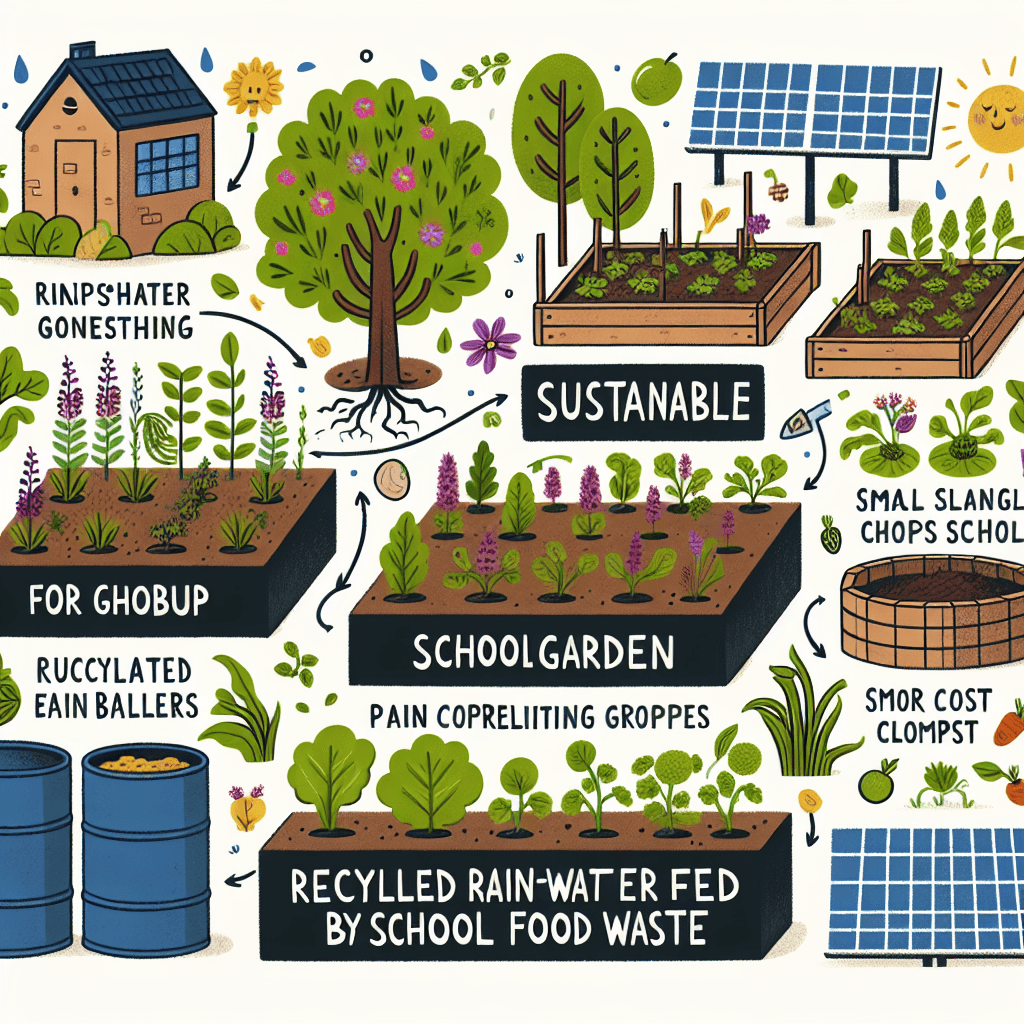
School Garden Design: Food, Environment, and Sustainability
Inquiry Framework
Question Framework
Driving Question
The overarching question that guides the entire project.How can we design a school garden that maximizes its positive impact on our school, community, and the environment, fostering sustainable development?Essential Questions
Supporting questions that break down major concepts.- How does our garden promote sustainable development?
- What impact does our garden have on the school and local community?
Standards & Learning Goals
Learning Goals
By the end of this project, students will be able to:- Students will understand the principles of sustainable development.
- Students will design a school garden layout.
- Students will analyze the impact of the garden on the school and local community.
- Students will learn about local food systems.
- Students will improve teamwork and collaboration skills.
Entry Events
Events that will be used to introduce the project to studentsMystery Seed Challenge
Mystery Seed Challenge: Students receive a variety of unknown seeds and must research their origins, growing conditions, and potential uses in the school garden. This sparks curiosity about plant diversity and the importance of local ecosystems.Portfolio Activities
Portfolio Activities
These activities progressively build towards your learning goals, with each submission contributing to the student's final portfolio.Sustainable Garden Designer
Students will research different sustainable gardening techniques and create a preliminary design of the school garden incorporating these techniques.Steps
Here is some basic scaffolding to help students complete the activity.Final Product
What students will submit as the final product of the activityA sketch of the garden design with labels identifying sustainable features (e.g., composting area, rainwater collection).Alignment
How this activity aligns with the learning objectives & standardsAddresses the learning goal of understanding the principles of sustainable development and designing a school garden layout.Local Food Systems Investigator
Students will investigate local food systems and determine which plants would best benefit the school and community, documenting their findings.Steps
Here is some basic scaffolding to help students complete the activity.Final Product
What students will submit as the final product of the activityA report detailing the chosen plants, their benefits, and their role in the local food system.Alignment
How this activity aligns with the learning objectives & standardsAddresses the learning goals of analyzing the impact of the garden on the school and local community and learning about local food systems.Garden Design Presentation and Refinement
Students will work in teams to present their garden designs and plant choices to the class, incorporating feedback to improve their final design.Steps
Here is some basic scaffolding to help students complete the activity.Final Product
What students will submit as the final product of the activityA final school garden design plan that incorporates feedback from peers and reflects an understanding of sustainable development and local food systems.Alignment
How this activity aligns with the learning objectives & standardsAddresses the learning goals of improving teamwork and collaboration skills and analyzing the impact of the garden on the school and local community.Rubric & Reflection
Portfolio Rubric
Grading criteria for assessing the overall project portfolioSchool Garden Design Portfolio Rubric
Sustainable Garden Design
Assesses the student's ability to research, design, and explain a sustainable garden.Sustainable Practices Research
Accuracy and depth of research on sustainable gardening practices (composting, water conservation, companion planting, etc.).
Exemplary
4 PointsDemonstrates extensive and accurate research on a wide range of sustainable gardening practices, going beyond the basics. Innovatively applies these practices to the garden design.
Proficient
3 PointsDemonstrates thorough and accurate research on several sustainable gardening practices, applying them effectively to the garden design.
Developing
2 PointsShows emerging understanding of a few sustainable gardening practices but may have inaccuracies or lack depth in research. Application to garden design is inconsistent.
Beginning
1 PointsDemonstrates minimal understanding of sustainable gardening practices, with significant inaccuracies or lack of research. Struggles to apply these practices to the garden design.
Garden Layout Design
Creativity and feasibility of the garden layout, considering sunlight, soil type, accessibility, and aesthetics.
Exemplary
4 PointsThe garden layout is exceptionally creative, aesthetically pleasing, and highly feasible, demonstrating innovative solutions to challenges related to sunlight, soil, and accessibility. The design enhances the school environment significantly.
Proficient
3 PointsThe garden layout is creative, aesthetically pleasing, and feasible, demonstrating effective solutions to challenges related to sunlight, soil, and accessibility. The design enhances the school environment.
Developing
2 PointsThe garden layout shows some creativity but may lack feasibility or aesthetic appeal. Demonstrates basic consideration of sunlight, soil, and accessibility, but solutions are not always effective.
Beginning
1 PointsThe garden layout lacks creativity, feasibility, and aesthetic appeal. Demonstrates minimal consideration of sunlight, soil, and accessibility, with no clear solutions.
Explanation of Sustainable Features
Clarity and accuracy of labeling and explanations of sustainable features and their contributions to sustainability.
Exemplary
4 PointsLabels are exceptionally clear, detailed, and accurate, providing a comprehensive explanation of how each feature innovatively contributes to sustainability. Demonstrates a deep understanding of interconnectedness.
Proficient
3 PointsLabels are clear, detailed, and accurate, providing a thorough explanation of how each feature contributes to sustainability. Demonstrates a strong understanding of the concepts.
Developing
2 PointsLabels are somewhat unclear or lack detail, and explanations of how features contribute to sustainability are basic or incomplete. Shows an emerging understanding of the concepts.
Beginning
1 PointsLabels are unclear, inaccurate, or missing, and explanations of how features contribute to sustainability are minimal or absent. Demonstrates limited understanding of the concepts.
Local Food Systems Investigation
Evaluates the student's investigation into local food systems and plant selection.Local Food Systems Research
Depth of research on local food systems and benefits of sourcing food locally.
Exemplary
4 PointsDemonstrates extensive research on local food systems, identifying a wide range of benefits of sourcing food locally, with innovative and insightful analysis.
Proficient
3 PointsDemonstrates thorough research on local food systems, identifying several key benefits of sourcing food locally, with clear and effective analysis.
Developing
2 PointsShows emerging understanding of local food systems, identifying a few basic benefits of sourcing food locally, but analysis may be limited or superficial.
Beginning
1 PointsDemonstrates minimal understanding of local food systems, with difficulty identifying benefits of sourcing food locally. Analysis is lacking or inaccurate.
Plant Selection and Rationale
Appropriateness and rationale for plant choices, considering native plants, climate suitability, and benefits to the school and community.
Exemplary
4 PointsPlant choices are exceptionally appropriate and well-justified, considering native plants, climate suitability, and providing innovative benefits to the school and community. Demonstrates a deep understanding of ecological relationships.
Proficient
3 PointsPlant choices are appropriate and well-justified, considering native plants, climate suitability, and providing clear benefits to the school and community. Demonstrates a strong understanding of plant needs.
Developing
2 PointsPlant choices are somewhat appropriate, but rationale may be weak or lack consideration of native plants, climate suitability, or benefits to the school and community. Shows an emerging understanding of plant selection.
Beginning
1 PointsPlant choices are inappropriate or poorly justified, with little consideration of native plants, climate suitability, or benefits to the school and community. Demonstrates limited understanding of plant selection.
Report Clarity and Completeness
Clarity and completeness of the report detailing plant benefits and their role in the local food system.
Exemplary
4 PointsThe report is exceptionally clear, comprehensive, and insightful, providing a detailed analysis of plant benefits and their innovative role in the local food system. Demonstrates exceptional writing and analytical skills.
Proficient
3 PointsThe report is clear, complete, and well-organized, providing a thorough analysis of plant benefits and their role in the local food system. Demonstrates strong writing and analytical skills.
Developing
2 PointsThe report is somewhat unclear, incomplete, or disorganized, with a basic analysis of plant benefits and their role in the local food system. Shows emerging writing and analytical skills.
Beginning
1 PointsThe report is unclear, incomplete, and disorganized, with minimal analysis of plant benefits and their role in the local food system. Demonstrates limited writing and analytical skills.
Presentation and Refinement
Assesses the student's ability to present, collaborate, and refine their garden design based on feedback.Presentation Effectiveness
Effectiveness and clarity of the presentation showcasing the garden design and plant choices.
Exemplary
4 PointsThe presentation is exceptionally engaging, clear, and persuasive, showcasing the garden design and plant choices with innovative visual aids and compelling arguments. Demonstrates exceptional presentation skills.
Proficient
3 PointsThe presentation is effective, clear, and well-organized, showcasing the garden design and plant choices with appropriate visual aids and logical arguments. Demonstrates strong presentation skills.
Developing
2 PointsThe presentation is somewhat unclear, disorganized, or unengaging, with basic visual aids and arguments. Shows emerging presentation skills.
Beginning
1 PointsThe presentation is unclear, disorganized, and unengaging, with minimal visual aids and weak arguments. Demonstrates limited presentation skills.
Feedback Incorporation
Quality and incorporation of feedback from classmates and teachers to revise the garden design.
Exemplary
4 PointsDemonstrates exceptional ability to gather, analyze, and innovatively incorporate feedback from classmates and teachers, resulting in significant improvements to the garden design that enhance sustainability and benefit the school and community.
Proficient
3 PointsDemonstrates strong ability to gather, analyze, and effectively incorporate feedback from classmates and teachers, resulting in improvements to the garden design that enhance sustainability and benefit the school and community.
Developing
2 PointsShows emerging ability to gather and incorporate feedback from classmates and teachers, but revisions to the garden design may be limited or superficial. Shows basic understanding of feedback.
Beginning
1 PointsDemonstrates limited ability to gather or incorporate feedback from classmates and teachers, with minimal revisions to the garden design. Struggles to understand and apply feedback.
Final Design Quality
Overall quality and completeness of the final school garden design plan, reflecting an understanding of sustainable development and local food systems.
Exemplary
4 PointsThe final school garden design plan is exceptionally high quality, comprehensive, and innovative, reflecting a deep understanding of sustainable development and local food systems. Demonstrates leadership and initiative.
Proficient
3 PointsThe final school garden design plan is high quality, complete, and well-organized, reflecting a thorough understanding of sustainable development and local food systems. Demonstrates strong understanding of the concepts.
Developing
2 PointsThe final school garden design plan is of varying quality, incomplete, or disorganized, reflecting a basic understanding of sustainable development and local food systems. Shows emerging understanding of the concepts.
Beginning
1 PointsThe final school garden design plan is of low quality, incomplete, and disorganized, reflecting a limited understanding of sustainable development and local food systems. Demonstrates limited understanding of the concepts.