
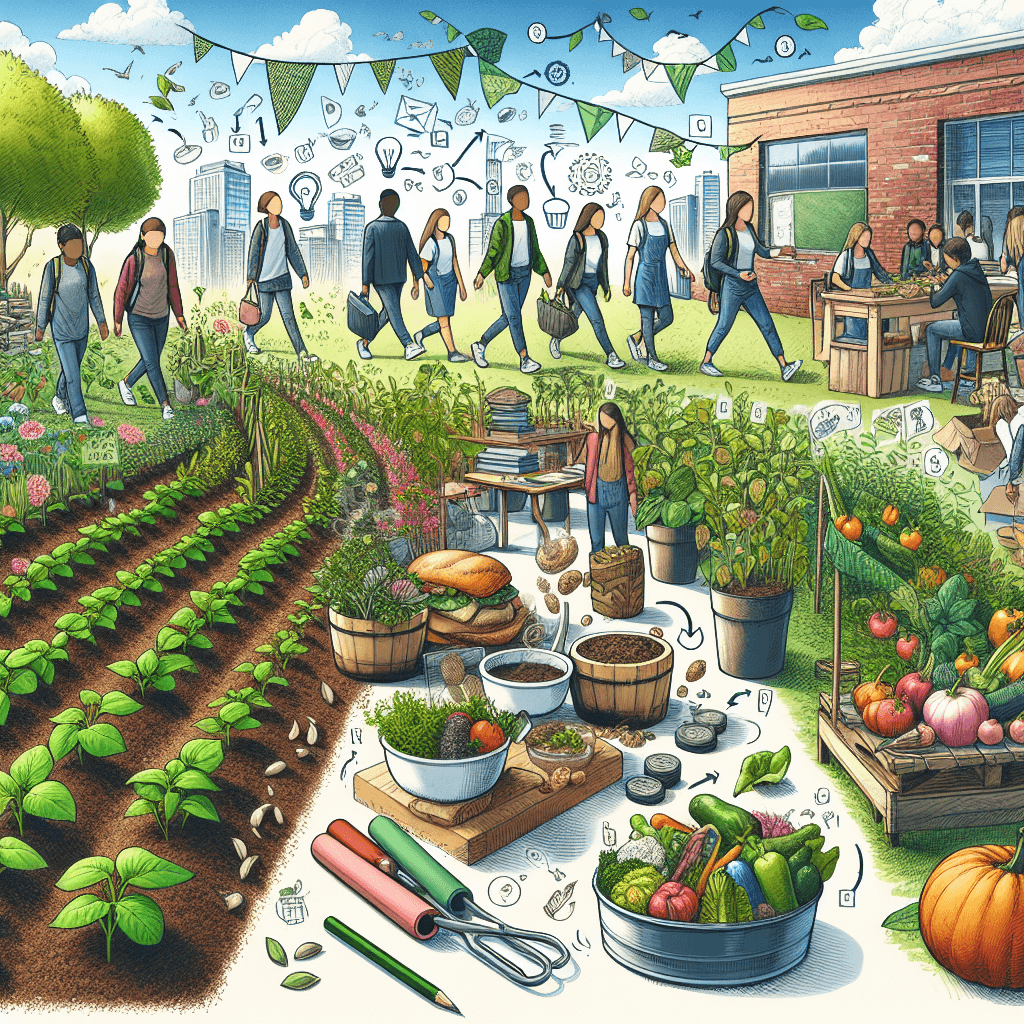
School Garden Design: From Seed to Table and Market
Inquiry Framework
Question Framework
Driving Question
The overarching question that guides the entire project.How can we design, cultivate, and manage a sustainable school garden that not only provides healthy produce but also integrates principles of science, math, economics, and effective communication to benefit our school community?Essential Questions
Supporting questions that break down major concepts.- What are the essential components of a thriving garden ecosystem, and how do they interact?
- How can we design a garden that maximizes yield while minimizing environmental impact?
- How can we use mathematical principles to optimize garden layout, planting schedules, and resource management?
- How can we effectively communicate our garden design, plans, and findings to different audiences?
- How can we apply economic principles to manage the garden as a small business, considering costs, revenue, and sustainability?
Standards & Learning Goals
Learning Goals
By the end of this project, students will be able to:- Students will be able to design a school garden.
- Students will learn about the components of a garden ecosystem.
- Students will be able to maximize the yield of a garden while minimizing environmental impact.
- Students will be able to use mathematical principles to optimize garden layout, planting schedules, and resource management.
- Students will be able to communicate their garden design, plans, and findings to different audiences.
- Students will be able to apply economic principles to manage the garden as a small business, considering costs, revenue, and sustainability.
Entry Events
Events that will be used to introduce the project to studentsCulinary Challenge
A local chef visits the classroom to discuss the importance of fresh, locally-sourced ingredients and challenges students to design a school garden that can supply the cafeteria with produce. The chef shares examples of dishes they create using garden-fresh ingredients, inspiring students to think about the culinary possibilities of their garden.Mystery Garden Package
Students receive a mysterious package containing seeds, gardening tools, and a letter from a fictional character who needs help designing a garden to solve a specific problem (e.g., a drought, lack of pollinators). This sparks curiosity and encourages students to research different garden designs and their environmental impact.Portfolio Activities
Portfolio Activities
These activities progressively build towards your learning goals, with each submission contributing to the student's final portfolio.Garden Design Brainstorm
Students will brainstorm and sketch initial garden designs based on the chef's challenge and the mystery garden package. They will consider factors like sunlight, water access, and available space.Steps
Here is some basic scaffolding to help students complete the activity.Final Product
What students will submit as the final product of the activityInitial garden design sketches with brief descriptions of key features.Alignment
How this activity aligns with the learning objectives & standardsLearning Goal: Students will be able to design a school garden.Ecosystem Explorers
Students will research the components of a healthy garden ecosystem, including soil composition, beneficial insects, pollinators, and plant relationships. They will create a diagram illustrating these components and their interactions.Steps
Here is some basic scaffolding to help students complete the activity.Final Product
What students will submit as the final product of the activityA detailed diagram of a garden ecosystem with labeled components and descriptions of their roles.Alignment
How this activity aligns with the learning objectives & standardsLearning Goal: Students will learn about the components of a garden ecosystem.Sustainability Superstars
Students will investigate sustainable gardening practices such as composting, crop rotation, and companion planting. They will develop a plan for incorporating these practices into their garden design.Steps
Here is some basic scaffolding to help students complete the activity.Final Product
What students will submit as the final product of the activityA sustainable gardening plan outlining specific practices and their benefits for maximizing yield and minimizing environmental impact.Alignment
How this activity aligns with the learning objectives & standardsLearning Goal: Students will be able to maximize the yield of a garden while minimizing environmental impact.Math in the Garden
Students will use mathematical principles to calculate garden area, determine optimal plant spacing, and create a planting schedule based on plant needs and growing seasons. They will present their calculations and justify their decisions.Steps
Here is some basic scaffolding to help students complete the activity.Final Product
What students will submit as the final product of the activityA mathematically optimized garden layout and planting schedule with calculations and justifications.Alignment
How this activity aligns with the learning objectives & standardsLearning Goal: Students will be able to use mathematical principles to optimize garden layout, planting schedules, and resource management.Garden Communicators
Students will create a presentation to communicate their garden design, sustainable practices, and mathematical optimizations to the school community. They will practice their presentation skills and incorporate visuals to engage their audience.Steps
Here is some basic scaffolding to help students complete the activity.Final Product
What students will submit as the final product of the activityA presentation showcasing the garden design, sustainable practices, and mathematical optimizations, delivered to the school community.Alignment
How this activity aligns with the learning objectives & standardsLearning Goal: Students will be able to communicate their garden design, plans, and findings to different audiences.Economic Entrepreneurs
Students will develop a business plan for their school garden, including a budget, pricing strategy for produce, and marketing plan. They will consider the costs of seeds, soil, tools, and water, as well as potential revenue from selling produce.Steps
Here is some basic scaffolding to help students complete the activity.Final Product
What students will submit as the final product of the activityA comprehensive business plan for the school garden, including a budget, pricing strategy, and marketing plan.Alignment
How this activity aligns with the learning objectives & standardsLearning Goal: Students will be able to apply economic principles to manage the garden as a small business, considering costs, revenue, and sustainability.Rubric & Reflection
Portfolio Rubric
Grading criteria for assessing the overall project portfolioSchool Garden Project Rubric
Garden Design Brainstorming
This category assesses the student's ability to generate creative and well-documented initial garden design ideas.Design Creativity
Demonstrates the ability to generate diverse and creative garden design ideas, considering various factors and constraints.
Exemplary
4 PointsGenerates multiple innovative garden design ideas, demonstrating a deep understanding of design principles and site constraints, and creatively integrates various elements.
Proficient
3 PointsGenerates several relevant garden design ideas, showing a good understanding of basic design principles and site constraints, and integrates multiple elements effectively.
Developing
2 PointsGenerates a few garden design ideas, showing a basic awareness of design principles and site constraints, but struggles to integrate elements effectively.
Beginning
1 PointsGenerates limited garden design ideas, showing minimal understanding of design principles or site constraints, and fails to integrate elements effectively.
Sketch Clarity and Description
Demonstrates the clarity and completeness of the garden design sketches and descriptions.
Exemplary
4 PointsPresents exceptionally clear and detailed garden design sketches with comprehensive descriptions that highlight all key features and benefits, demonstrating excellent attention to detail and visual communication skills.
Proficient
3 PointsPresents clear and detailed garden design sketches with thorough descriptions that highlight most key features and benefits, demonstrating good attention to detail and visual communication skills.
Developing
2 PointsPresents somewhat clear garden design sketches with basic descriptions that highlight some key features and benefits, demonstrating some attention to detail and visual communication skills.
Beginning
1 PointsPresents unclear or incomplete garden design sketches with minimal descriptions that fail to highlight key features and benefits, demonstrating limited attention to detail and visual communication skills.
Ecosystem Exploration
This category evaluates the student's understanding of garden ecosystem components and their relationships.Ecosystem Research
Demonstrates depth of research on the components of a garden ecosystem.
Exemplary
4 PointsDemonstrates exceptionally thorough research, identifying and describing all key components of a garden ecosystem with advanced understanding of their complex interrelationships.
Proficient
3 PointsDemonstrates thorough research, identifying and describing most key components of a garden ecosystem with clear understanding of their interrelationships.
Developing
2 PointsDemonstrates basic research, identifying and describing some components of a garden ecosystem with limited understanding of their interrelationships.
Beginning
1 PointsDemonstrates minimal research, identifying and describing few components of a garden ecosystem with little to no understanding of their interrelationships.
Diagram Illustration
Effectively illustrates the relationships between components in the ecosystem diagram.
Exemplary
4 PointsCreates an exceptionally detailed and accurate diagram that clearly and insightfully illustrates the complex relationships between all components of the garden ecosystem, using effective visual cues and labeling.
Proficient
3 PointsCreates a detailed and accurate diagram that clearly illustrates the relationships between most components of the garden ecosystem, using clear visual cues and labeling.
Developing
2 PointsCreates a basic diagram that illustrates some relationships between components of the garden ecosystem, using some visual cues and labeling.
Beginning
1 PointsCreates a rudimentary diagram that poorly illustrates the relationships between components of the garden ecosystem, with minimal visual cues and labeling.
Role Description
Provides comprehensive descriptions of each component's role within the ecosystem.
Exemplary
4 PointsProvides comprehensive and insightful descriptions of each component's role, demonstrating an advanced understanding of their ecological functions and contributions to the overall health and balance of the garden ecosystem.
Proficient
3 PointsProvides thorough and accurate descriptions of each component's role, demonstrating a clear understanding of their ecological functions and contributions to the garden ecosystem.
Developing
2 PointsProvides basic descriptions of each component's role, demonstrating some understanding of their ecological functions and contributions to the garden ecosystem.
Beginning
1 PointsProvides minimal or inaccurate descriptions of each component's role, demonstrating little understanding of their ecological functions or contributions to the garden ecosystem.
Sustainability Mastery
This category assesses the student's ability to incorporate sustainable practices into the garden design.Sustainability Research
Demonstrates thorough research and understanding of sustainable gardening practices.
Exemplary
4 PointsDemonstrates exceptionally thorough research, identifying and explaining a wide range of sustainable gardening practices with an advanced understanding of their environmental and economic benefits.
Proficient
3 PointsDemonstrates thorough research, identifying and explaining several sustainable gardening practices with a clear understanding of their environmental and economic benefits.
Developing
2 PointsDemonstrates basic research, identifying and explaining a few sustainable gardening practices with some understanding of their environmental and economic benefits.
Beginning
1 PointsDemonstrates minimal research, identifying and explaining very few sustainable gardening practices with little to no understanding of their environmental or economic benefits.
Practice Integration
Develops a comprehensive plan for incorporating sustainable practices into the garden design.
Exemplary
4 PointsDevelops an exceptionally comprehensive and innovative plan that seamlessly integrates multiple sustainable practices into the garden design, demonstrating a deep commitment to environmental stewardship and resource conservation.
Proficient
3 PointsDevelops a comprehensive plan that effectively integrates several sustainable practices into the garden design, demonstrating a strong commitment to environmental stewardship and resource conservation.
Developing
2 PointsDevelops a basic plan that integrates a few sustainable practices into the garden design, demonstrating some awareness of environmental stewardship and resource conservation.
Beginning
1 PointsDevelops a rudimentary plan that integrates very few sustainable practices into the garden design, demonstrating limited awareness of environmental stewardship or resource conservation.
Explanation of Benefits
Clearly explains how each practice maximizes yield and minimizes environmental impact.
Exemplary
4 PointsProvides exceptionally clear, insightful, and well-supported explanations of how each practice maximizes yield and minimizes environmental impact, demonstrating an advanced understanding of ecological principles and sustainable agriculture.
Proficient
3 PointsProvides clear and well-supported explanations of how each practice maximizes yield and minimizes environmental impact, demonstrating a strong understanding of ecological principles and sustainable agriculture.
Developing
2 PointsProvides basic explanations of how each practice maximizes yield and minimizes environmental impact, demonstrating some understanding of ecological principles and sustainable agriculture.
Beginning
1 PointsProvides minimal or unclear explanations of how each practice maximizes yield and minimizes environmental impact, demonstrating little understanding of ecological principles or sustainable agriculture.
Mathematical Optimization
This category evaluates the application of mathematical principles in optimizing the garden design.Calculation Accuracy
Accuracy and completeness of mathematical calculations related to garden area, plant spacing, and planting schedules.
Exemplary
4 PointsDemonstrates exceptional accuracy and completeness in all mathematical calculations, going above and beyond to optimize garden layout and resource utilization with innovative approaches.
Proficient
3 PointsDemonstrates strong accuracy and completeness in all mathematical calculations, effectively optimizing garden layout and resource utilization.
Developing
2 PointsDemonstrates basic accuracy in most mathematical calculations, with some minor errors that do not significantly impact the garden layout or resource utilization.
Beginning
1 PointsDemonstrates limited accuracy in mathematical calculations, with significant errors that negatively impact the garden layout and resource utilization.
Decision Justification
Justification of decisions related to plant spacing and planting schedules.
Exemplary
4 PointsProvides exceptionally clear, insightful, and well-reasoned justifications for all decisions, demonstrating an advanced understanding of plant needs, growing seasons, and environmental factors.
Proficient
3 PointsProvides clear, logical, and well-reasoned justifications for all decisions, demonstrating a strong understanding of plant needs, growing seasons, and environmental factors.
Developing
2 PointsProvides basic justifications for most decisions, demonstrating some understanding of plant needs, growing seasons, and environmental factors.
Beginning
1 PointsProvides minimal or unclear justifications for decisions, demonstrating limited understanding of plant needs, growing seasons, or environmental factors.
Layout Optimization
Effectiveness of the mathematically optimized garden layout and planting schedule.
Exemplary
4 PointsCreates an exceptionally effective and efficient garden layout and planting schedule that maximizes yield, minimizes waste, and optimizes resource utilization with innovative strategies.
Proficient
3 PointsCreates an effective and efficient garden layout and planting schedule that maximizes yield, minimizes waste, and optimizes resource utilization.
Developing
2 PointsCreates a functional garden layout and planting schedule that achieves some level of yield and resource optimization, but with potential for improvement.
Beginning
1 PointsCreates a poorly organized garden layout and planting schedule that fails to optimize yield or resource utilization, demonstrating a lack of planning and mathematical understanding.
Communication Effectiveness
This category evaluates the student's ability to communicate their garden design to the school community.Presentation Clarity
Clarity and engagement of the presentation.
Exemplary
4 PointsDelivers an exceptionally clear, engaging, and persuasive presentation that captivates the audience and effectively communicates the garden design, sustainable practices, and mathematical optimizations, leaving a lasting impression.
Proficient
3 PointsDelivers a clear and engaging presentation that effectively communicates the garden design, sustainable practices, and mathematical optimizations, holding the audience's attention throughout.
Developing
2 PointsDelivers a somewhat clear presentation that communicates some aspects of the garden design, sustainable practices, and mathematical optimizations, but struggles to maintain audience engagement.
Beginning
1 PointsDelivers an unclear and disengaging presentation that fails to effectively communicate the garden design, sustainable practices, or mathematical optimizations, losing the audience's attention quickly.
Visual Enhancement
Effective use of visuals to enhance the presentation.
Exemplary
4 PointsUses visuals exceptionally effectively to enhance the presentation, creating a visually stunning and informative experience that significantly improves audience understanding and engagement.
Proficient
3 PointsUses visuals effectively to enhance the presentation, providing clear and relevant information that supports the key messages and improves audience understanding.
Developing
2 PointsUses some visuals in the presentation, but their relevance and effectiveness are limited, and they do not significantly enhance audience understanding.
Beginning
1 PointsUses few or no visuals in the presentation, or the visuals used are irrelevant or distracting, detracting from the overall message and audience engagement.
Delivery Skills
Overall presentation skills and delivery.
Exemplary
4 PointsDemonstrates exceptional presentation skills, delivering a polished and professional presentation with confidence, enthusiasm, and a clear command of the subject matter, inspiring the audience to take action.
Proficient
3 PointsDemonstrates strong presentation skills, delivering a well-organized and confident presentation with a good command of the subject matter, effectively engaging the audience.
Developing
2 PointsDemonstrates basic presentation skills, delivering a somewhat organized presentation with some confidence, but may struggle to fully engage the audience or demonstrate a clear command of the subject matter.
Beginning
1 PointsDemonstrates weak presentation skills, delivering a disorganized and unconfident presentation with limited command of the subject matter, failing to engage the audience.
Economic Application
This category evaluates the student's ability to apply economic principles to manage the garden.Budget Accuracy
Completeness and accuracy of the garden budget.
Exemplary
4 PointsDevelops an exceptionally detailed and accurate garden budget that anticipates all potential costs and revenue streams, demonstrating a sophisticated understanding of financial planning and resource management.
Proficient
3 PointsDevelops a detailed and accurate garden budget that includes all major costs and revenue streams, demonstrating a strong understanding of financial planning and resource management.
Developing
2 PointsDevelops a basic garden budget that includes some major costs and revenue streams, demonstrating some understanding of financial planning and resource management.
Beginning
1 PointsDevelops an incomplete or inaccurate garden budget that misses many major costs and revenue streams, demonstrating limited understanding of financial planning or resource management.
Pricing Strategy
Effectiveness of the pricing strategy for produce.
Exemplary
4 PointsDevelops an exceptionally effective and innovative pricing strategy that maximizes revenue while remaining competitive and appealing to customers, demonstrating a deep understanding of market dynamics and consumer behavior.
Proficient
3 PointsDevelops an effective pricing strategy that maximizes revenue while remaining competitive and appealing to customers, demonstrating a strong understanding of market dynamics.
Developing
2 PointsDevelops a basic pricing strategy that attempts to balance revenue and competitiveness, but may not fully consider market dynamics or consumer behavior.
Beginning
1 PointsDevelops an ineffective pricing strategy that fails to maximize revenue or remain competitive, demonstrating limited understanding of market dynamics or consumer behavior.
Marketing Plan
Creativity and feasibility of the marketing plan.
Exemplary
4 PointsDevelops an exceptionally creative and feasible marketing plan that effectively promotes the garden and drives sales, demonstrating a deep understanding of marketing principles and target audience.
Proficient
3 PointsDevelops a creative and feasible marketing plan that effectively promotes the garden and drives sales, demonstrating a strong understanding of marketing principles.
Developing
2 PointsDevelops a basic marketing plan that attempts to promote the garden and drive sales, but may lack creativity or feasibility.
Beginning
1 PointsDevelops an ineffective marketing plan that fails to promote the garden or drive sales, demonstrating limited understanding of marketing principles or target audience.