
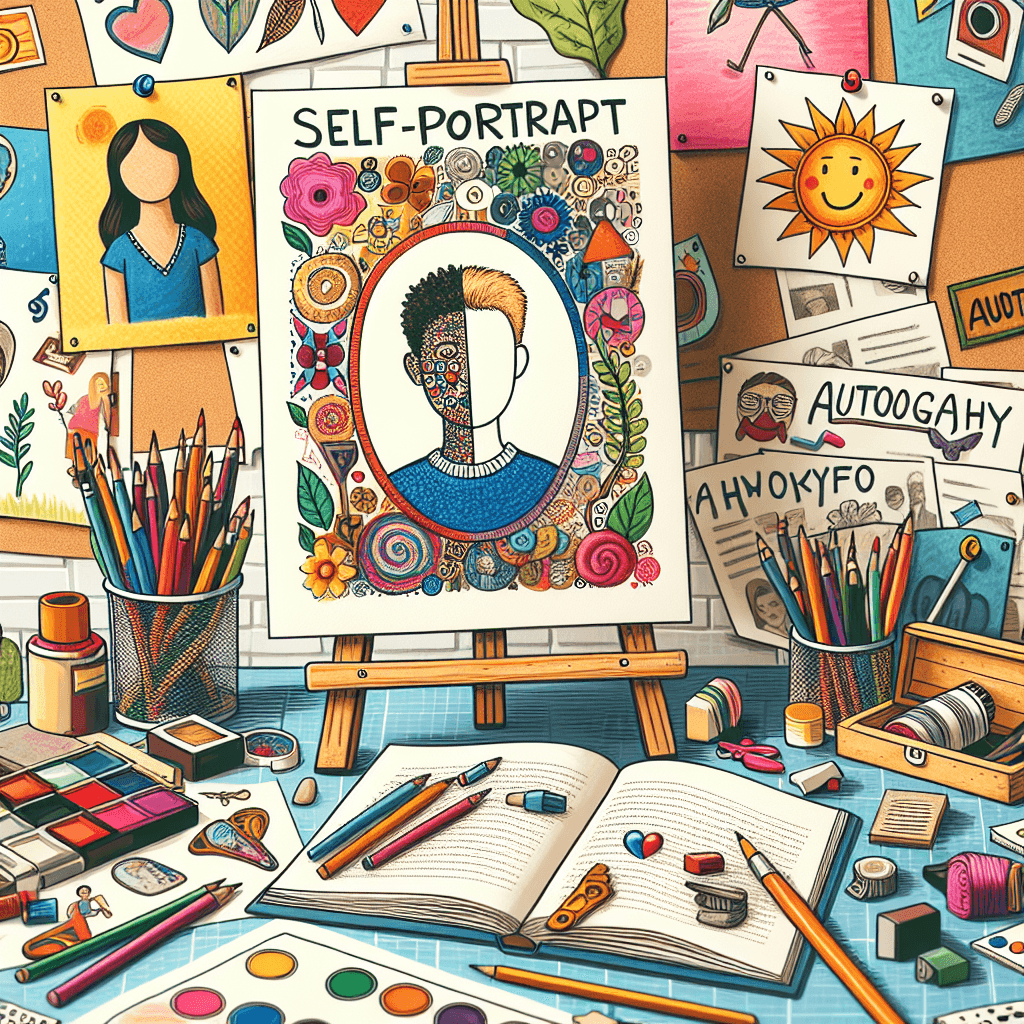
Self-Portrait and Autobiography Fusion
Inquiry Framework
Question Framework
Driving Question
The overarching question that guides the entire project.How can I combine my personal experiences and understanding of diverse art techniques to create and explain a self-portrait that uniquely represents who I am?Essential Questions
Supporting questions that break down major concepts.- How can I use artistic vocabulary to explain my choices in creating a self-portrait?
- What diverse methods can I investigate and explore to begin my self-portrait?
- In what ways can I combine my ideas about myself to create a unique self-portrait?
Standards & Learning Goals
Learning Goals
By the end of this project, students will be able to:- Students will create a self-portrait that reflects their personal identity and experiences.
- Students will articulate their artistic choices using appropriate art vocabulary in an artist statement.
- Students will explore and apply diverse art techniques as part of their creative process.
- Students will combine multiple ideas and personal experiences to create a unique piece of art.
Grade 5 Visual Arts
Common Core Standards
Entry Events
Events that will be used to introduce the project to studentsVirtual Reality Art Studio
Students are transported into a virtual reality world where they can explore different art studios and observe digital renditions of famous artists creating their self-portraits. This immersive experience challenges their understanding of traditional art-making, encouraging them to consider innovative methods for their project.Portfolio Activities
Portfolio Activities
These activities progressively build towards your learning goals, with each submission contributing to the student's final portfolio.Artistic Inspirations Journal
Students will explore and document various styles and techniques that can inspire their self-portrait. They will research artists known for self-portraits and reflect on how different methods and themes can be integrated into their own work.Steps
Here is some basic scaffolding to help students complete the activity.Final Product
What students will submit as the final product of the activityAn inspiration journal with artist studies, personal reflections, and preliminary sketches.Alignment
How this activity aligns with the learning objectives & standardsAligns with VA:Cr1.2.5 (a) by exploring and identifying diverse methods of artistic investigation.Identity Collage
Students will create a collage that represents their personal identity using a variety of materials and techniques. This will help them visualize themes and concepts they may wish to include in their self-portrait.Steps
Here is some basic scaffolding to help students complete the activity.Final Product
What students will submit as the final product of the activityA personal identity collage with an accompanying explanation.Alignment
How this activity aligns with the learning objectives & standardsAligns with VA:Cr1.1.5 (a) by combining ideas to generate an innovative concept for art-making.Drafting the Self-Portrait
Students will create an initial draft of their self-portrait incorporating ideas from their exploration and collage work. They'll focus on layout, composition, and the integration of their personal style.Steps
Here is some basic scaffolding to help students complete the activity.Final Product
What students will submit as the final product of the activityA refined draft of a self-portrait, representing the initial visualization of the final piece.Alignment
How this activity aligns with the learning objectives & standardsAligns with VA:Cr1.1.5 (a) and VA:Cr1.2.5 (a) by combining ideas and choosing an artistic approach.Final Self-Portrait Creation
Students will bring their draft to life by creating the final version of their self-portrait. They will apply various art techniques explored in previous activities and finalize their work.Steps
Here is some basic scaffolding to help students complete the activity.Final Product
What students will submit as the final product of the activityA finished self-portrait that reflects the student's personal identity and artistic exploration.Alignment
How this activity aligns with the learning objectives & standardsAligns with VA:Cr1.2.5 (a) and VA:Cr1.1.5 (a) by applying diverse techniques and finalizing an innovative idea.Artist Statement Showcase
Students will write an artist statement to accompany their self-portrait. The statement will articulate their choices, techniques, and personal reflections using appropriate art vocabulary.Steps
Here is some basic scaffolding to help students complete the activity.Final Product
What students will submit as the final product of the activityA polished artist statement that accompanies the self-portrait, explaining the artwork and personal choices.Alignment
How this activity aligns with the learning objectives & standardsAligns with VA:Cr3.1.5 (a) and CCSS.ELA-LITERACY.W.5.1 by creating artist statements that use art vocabulary and support personal choices with reasons.Gallery Walk and Presentation
Students will present their self-portrait and artist statement in a gallery-style setup. They will verbally explain their artistic process and choices using appropriate vocabulary, demonstrating their understanding of the project.Steps
Here is some basic scaffolding to help students complete the activity.Final Product
What students will submit as the final product of the activityA gallery presentation that includes a display and verbal explanation of the self-portrait and artist statement.Alignment
How this activity aligns with the learning objectives & standardsAligns with CCSS.ELA-LITERACY.SL.5.4 by presenting ideas clearly and logically with appropriate vocabulary.Rubric & Reflection
Portfolio Rubric
Grading criteria for assessing the overall project portfolioSelf-Portrait and Artist Statement Evaluation Rubric
Artistic Investigation and Technique
Assessment of the exploration and application of diverse artistic methods in self-portrait creation.Diverse Methods Exploration
Evaluate the student's ability to research and integrate various artistic methods in their work.
Exemplary
4 PointsStudent expertly explores and integrates a range of artistic methods, showcasing sophisticated understanding and application in their self-portrait.
Proficient
3 PointsStudent effectively explores different artistic methods, applying them appropriately in their self-portrait.
Developing
2 PointsStudent shows some exploration of artistic methods, but application is inconsistent or lacks depth.
Beginning
1 PointsStudent demonstrates minimal exploration and application of artistic methods, with limited understanding.
Technique Application
Evaluate how effectively students apply chosen techniques to create their self-portrait.
Exemplary
4 PointsStudent applies techniques innovatively and skillfully, resulting in a high-quality self-portrait that reflects personal identity.
Proficient
3 PointsStudent applies techniques skillfully, producing a quality self-portrait that reflects elements of personal identity.
Developing
2 PointsStudent applies techniques with basic skill, resulting in a self-portrait that lacks consistency or depth in reflecting personal identity.
Beginning
1 PointsStudent shows limited application of techniques, and the self-portrait does not clearly reflect personal identity.
Creative Expression and Identity Representation
Evaluation of creativity and the representation of personal identity in the self-portrait.Creative Integration
Assess the integration of personal experiences and innovative ideas in the artwork.
Exemplary
4 PointsArtwork uniquely integrates personal experiences and innovative ideas, providing a striking representation of personal identity.
Proficient
3 PointsArtwork reflects personal experiences and ideas effectively, clearly representing the student's identity.
Developing
2 PointsArtwork includes some elements of personal experiences but lacks a cohesive or imaginative representation of identity.
Beginning
1 PointsArtwork shows limited integration of personal experiences, with little representation of personal identity.
Identity Reflection
Evaluate how well the self-portrait captures and communicates the student's personal identity.
Exemplary
4 PointsSelf-portrait powerfully captures and communicates the complexity of the student's personal identity through skillful representation.
Proficient
3 PointsSelf-portrait communicates key aspects of the student's personal identity clearly.
Developing
2 PointsSelf-portrait captures minimal aspects of personal identity and lacks clarity in representation.
Beginning
1 PointsSelf-portrait shows insufficient reflection of personal identity, with an unclear message.
Articulating Artistic Choices
Assessment of the clarity and depth in written and verbal expression of artistic choices using appropriate vocabulary.Artist Statement Clarity
Evaluate the clarity and coherence of the artist statement in explaining artistic choices.
Exemplary
4 PointsArtist statement is exceptionally clear and coherent, effectively explaining artistic choices with precise vocabulary.
Proficient
3 PointsArtist statement is clear and coherent, effectively explaining artistic choices with appropriate vocabulary.
Developing
2 PointsArtist statement is somewhat clear, but lacks coherence or depth in explaining artistic choices.
Beginning
1 PointsArtist statement is unclear and lacks coherence, with minimal explanation of artistic choices.
Verbal Presentation and Engagement
Assess the effectiveness of verbal presentation and engagement during the gallery walk.
Exemplary
4 PointsStudent presents ideas clearly, logically, and confidently, effectively using art vocabulary during the gallery walk.
Proficient
3 PointsStudent presents ideas clearly and logically, using appropriate art vocabulary during the gallery walk.
Developing
2 PointsStudent presents ideas with basic clarity, lacking logical sequence or precise vocabulary during the gallery walk.
Beginning
1 PointsStudent struggles to present ideas clearly and logically, with minimal use of art vocabulary during the gallery walk.