
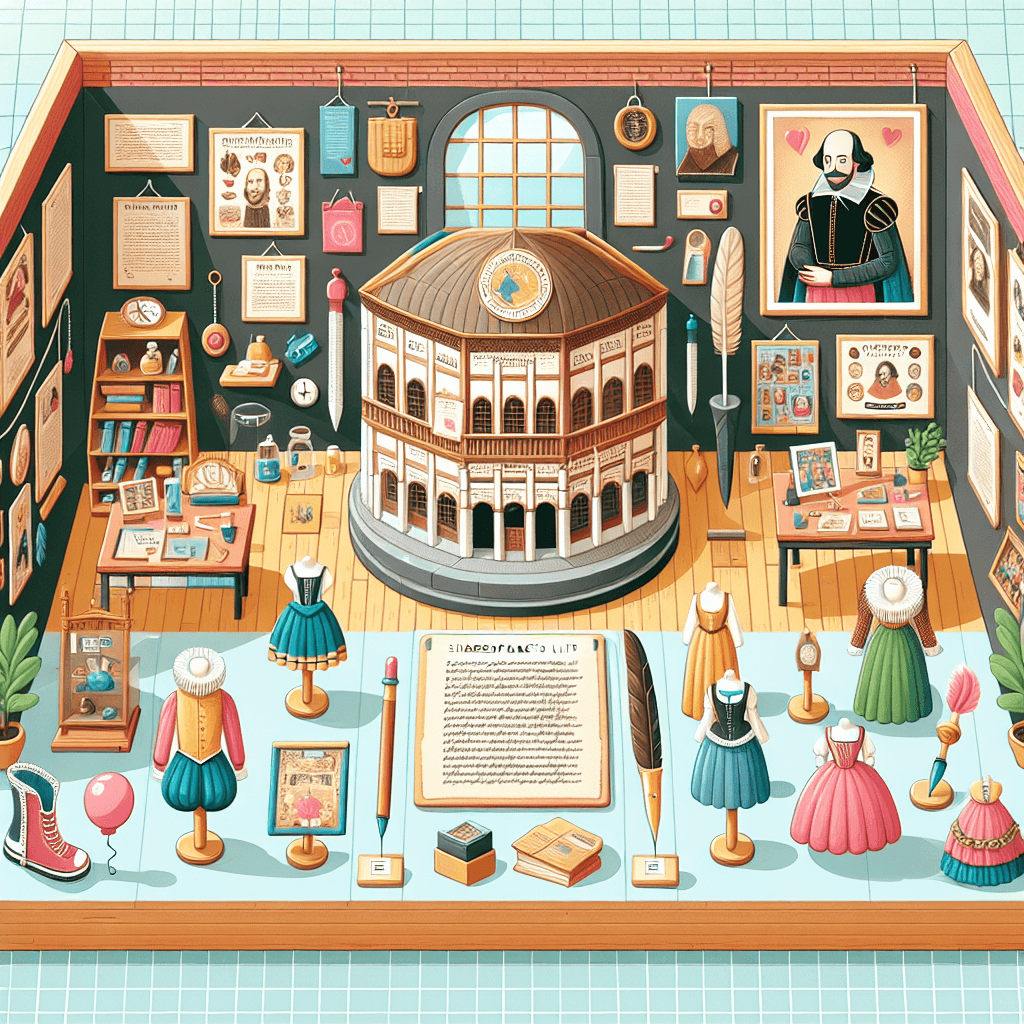
Shakespeare: A Life in Exhibits
Inquiry Framework
Question Framework
Driving Question
The overarching question that guides the entire project.How can we create a museum exhibit that accurately and engagingly portrays Shakespeare's life, works, and enduring legacy for a modern audience, while considering the historical context of his time and exploring the most impactful themes and motifs present in his plays and poems?Essential Questions
Supporting questions that break down major concepts.- How can we represent Shakespeare's life and works in a meaningful way?
- What aspects of his life and times should be highlighted in a museum exhibit?
- What artifacts or exhibits would best convey the essence of his work and impact?
- How can we engage visitors and make Shakespeare's story relevant to a modern audience?
- What kind of technology or interactive elements can enhance the visitor experience?
- How can we balance historical accuracy with creative interpretation in our exhibits?
- What were the major political and social events of Shakespeare's time, and how did they influence his work?
- How did Shakespeare's personal life and experiences shape his writing?
- What are the key themes and motifs found in his plays and poems?
- What is Shakespeare's lasting legacy, and why do his works continue to resonate with audiences today?
Standards & Learning Goals
Learning Goals
By the end of this project, students will be able to:- Students will be able to research and synthesize information about Shakespeare's life, times, and works.
- Students will be able to select and organize information to create a cohesive and engaging narrative for a museum exhibit.
- Students will be able to design and present exhibit materials, incorporating visual and textual elements to convey information effectively.
- Students will be able to analyze and interpret Shakespearean texts, identifying key themes and motifs.
- Students will be able to evaluate the historical context of Shakespeare's time and its influence on his works.
- Students will be able to collaborate effectively to develop and execute the exhibit project.
- Students will be able to communicate their understanding of Shakespeare's life and works to a modern audience.
Entry Events
Events that will be used to introduce the project to studentsShakespearean Time Travel
Imagine stepping into a time machine and landing in Shakespeare's era. What would you experience? This immersive activity challenges students to recreate Shakespeare's world through sensory details, sparking curiosity about his life and times.Portfolio Activities
Portfolio Activities
These activities progressively build towards your learning goals, with each submission contributing to the student's final portfolio.Shakespearean Scholar
Students will delve into the life and times of William Shakespeare, exploring his biography, the historical context of Elizabethan England, and the key events that shaped his world and influenced his writings.Steps
Here is some basic scaffolding to help students complete the activity.Final Product
What students will submit as the final product of the activityA comprehensive research portfolio containing biographical information, historical context, and key influences on Shakespeare's life.Alignment
How this activity aligns with the learning objectives & standardsStudents will be able to research and synthesize information about Shakespeare's life, times, and works.Bard Detective
Students will gain a deeper understanding of Shakespeare's works by analyzing selected plays and poems, identifying recurring themes, motifs, and literary devices.Steps
Here is some basic scaffolding to help students complete the activity.Final Product
What students will submit as the final product of the activityA thematic analysis portfolio containing close readings of selected Shakespearean texts, highlighting key themes, motifs, and literary devices.Alignment
How this activity aligns with the learning objectives & standardsStudents will be able to analyze and interpret Shakespearean texts, identifying key themes and motifs.Exhibit Architect
Students will transform their research and analyses into a compelling narrative for a virtual museum exhibit, focusing on key aspects of Shakespeare's life, works, and legacy.Steps
Here is some basic scaffolding to help students complete the activity.Final Product
What students will submit as the final product of the activityA virtual museum exhibit outline detailing the narrative flow, exhibit sections, key artifacts, and interactive elements.Alignment
How this activity aligns with the learning objectives & standardsStudents will be able to select and organize information to create a cohesive and engaging narrative for a museum exhibit.Digital Curator
Students will bring their virtual museum exhibit to life by designing and creating various exhibit materials, incorporating visual and textual elements to effectively convey information and engage a modern audience.Steps
Here is some basic scaffolding to help students complete the activity.Final Product
What students will submit as the final product of the activityA collection of completed exhibit materials, including text panels, image captions, interactive displays, and multimedia elements, ready for integration into the virtual exhibit.Alignment
How this activity aligns with the learning objectives & standardsStudents will be able to design and present exhibit materials, incorporating visual and textual elements to convey information effectively.Rubric & Reflection
Portfolio Rubric
Grading criteria for assessing the overall project portfolioShakespeare Exhibit Project Rubric
Research and Synthesis
Assesses students' ability to gather, evaluate, and synthesize information about Shakespeare's life and times.Comprehensive Research
Evaluates the depth and accuracy of students' research on Shakespeare's biography and historical context.
Exemplary
4 PointsResearch is thorough and accurate, covering all essential aspects of Shakespeare's life and the historical context of Elizabethan England. Multiple reputable sources are cited correctly.
Proficient
3 PointsResearch is complete and accurate, covering most aspects of Shakespeare's life and the historical context. Sources are reputable and cited correctly.
Developing
2 PointsResearch covers some key aspects but lacks depth and may contain inaccuracies. Limited sources are used, with some citation errors.
Beginning
1 PointsResearch is superficial, with significant gaps in coverage and accuracy. Few sources are used, with incorrect citations.
Synthesis and Organization
Assesses the ability to effectively organize information into a coherent narrative or display.
Exemplary
4 PointsInformation is skillfully synthesized and organized into a clear, cohesive narrative with logical flow between sections.
Proficient
3 PointsInformation is well-organized and presented in a cohesive narrative, though some transitions may lack clarity.
Developing
2 PointsInformation shows basic organization but lacks clarity and coherence in narrative transitions.
Beginning
1 PointsInformation is poorly organized, lacking coherence and logical flow.
Critical Analysis
Assesses students' ability to interpret and analyze Shakespearean texts and their understanding of themes and motifs.Thematic Analysis
Evaluates students' analysis of themes, symbols, and motifs in selected texts.
Exemplary
4 PointsProvides insightful interpretations of themes and motifs with strong textual evidence. Demonstrates sophisticated understanding of literary techniques.
Proficient
3 PointsOffers clear interpretations of themes and motifs supported by appropriate textual evidence.
Developing
2 PointsPresents basic interpretations with limited textual evidence. Analysis lacks depth.
Beginning
1 PointsOffers simplistic or inaccurate interpretations with minimal evidence.
Creative and Visual Presentation
Evaluates the creativity and effectiveness of the exhibit's visual and interactive components.Visual Design and Engagement
Assesses the effectiveness of visual and interactive elements in conveying information and engaging visitors.
Exemplary
4 PointsVisuals are highly effective and engaging, with interactive elements thoughtfully integrated to enhance the narrative and visitor experience.
Proficient
3 PointsVisuals effectively support the narrative, with some interactive elements enhancing engagement.
Developing
2 PointsVisuals support the narrative but lack creativity, with minimal interactive elements.
Beginning
1 PointsVisuals are poorly designed, lacking engagement and creativity. Few or no interactive elements are included.
Collaboration and Communication
Assesses students' ability to work collaboratively and communicate their ideas effectively.Team Collaboration
Evaluates students' effectiveness in working collaboratively to plan and execute the exhibit.
Exemplary
4 PointsDemonstrates exceptional collaboration, with team members working cohesively and contributing equally to project tasks.
Proficient
3 PointsWorks well within the team, contributing to planning and execution of tasks.
Developing
2 PointsParticipates in teamwork, though contributions are inconsistent or unequal.
Beginning
1 PointsRarely participates in teamwork, requiring frequent guidance to contribute.