
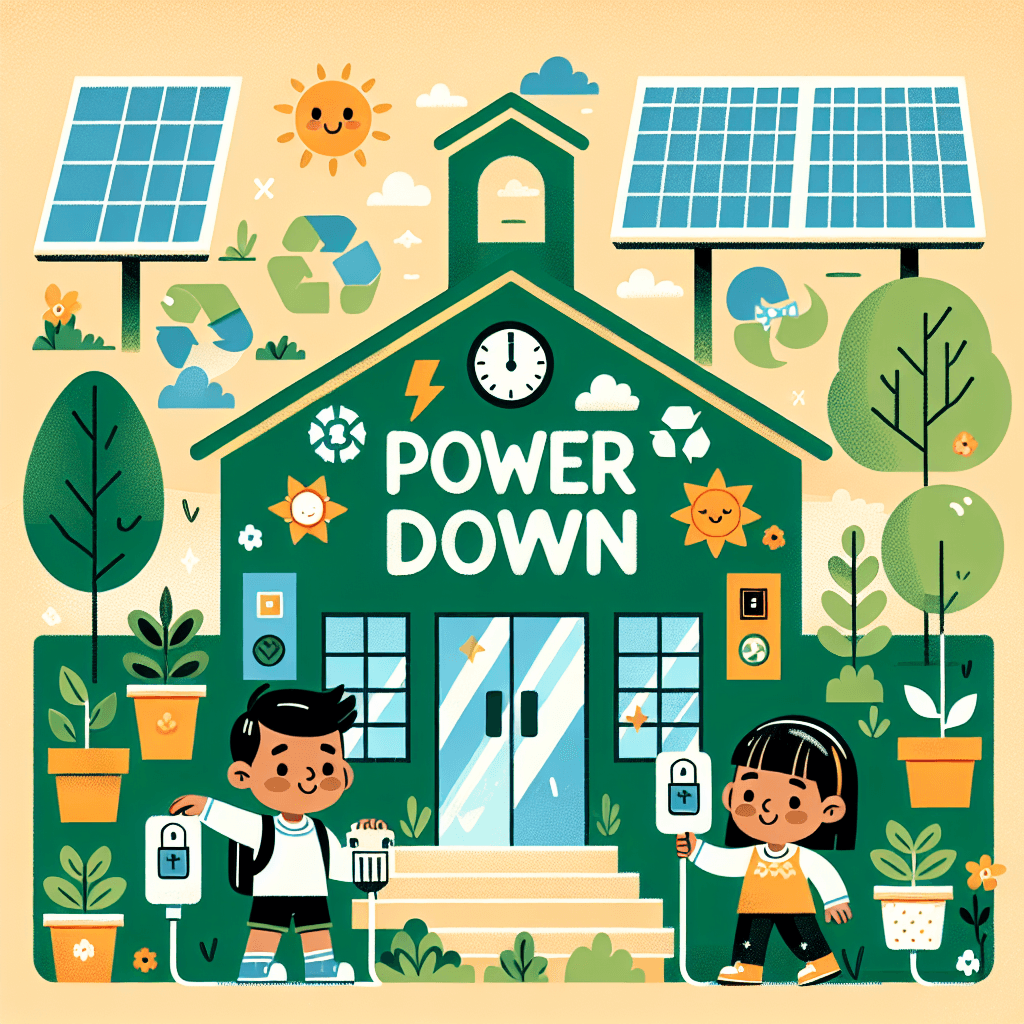
Smart School Energy Challenge: Powering Down for a Greener Future
Inquiry Framework
Question Framework
Driving Question
The overarching question that guides the entire project.How can we transform our school into a sustainable energy-efficient environment through smart technologies and mindful practices?Essential Questions
Supporting questions that break down major concepts.- How can we measure and monitor energy consumption in our school?
- What smart technologies can be implemented to reduce energy waste?
- How can we encourage behavioral changes to promote energy conservation among students and staff?
- What are the costs and benefits of implementing smart energy solutions in our school?
- How can we assess the effectiveness of our energy reduction strategies?
Standards & Learning Goals
Learning Goals
By the end of this project, students will be able to:- Students will be able to understand the principles of energy efficiency and sustainability.
- Students will learn to use energy monitoring tools and analyze consumption data.
- Students will identify and evaluate smart technologies for energy reduction.
- Students will design and implement strategies to promote behavioral changes for energy conservation.
- Students will assess the costs, benefits, and effectiveness of energy reduction strategies.
Entry Events
Events that will be used to introduce the project to studentsBlackout Challenge
Students participate in a 'blackout challenge,' experiencing a day without electricity in designated areas of the school, highlighting their reliance on energy and prompting them to brainstorm creative solutions.Portfolio Activities
Portfolio Activities
These activities progressively build towards your learning goals, with each submission contributing to the student's final portfolio.Energy Efficiency and Sustainability 101
Students will define key terms related to energy efficiency and sustainability and explain their importance in the context of the school's energy consumption.Steps
Here is some basic scaffolding to help students complete the activity.Final Product
What students will submit as the final product of the activityA glossary of terms and a short essay explaining the importance of energy efficiency and sustainability.Alignment
How this activity aligns with the learning objectives & standardsLearning Goal: Students will be able to understand the principles of energy efficiency and sustainability.Energy Detective: Monitoring and Analyzing School Energy Use
Students will use energy monitoring tools to collect data on energy consumption in different areas of the school, then analyze this data to identify patterns and areas of high energy use.Steps
Here is some basic scaffolding to help students complete the activity.Final Product
What students will submit as the final product of the activityA report with charts and graphs illustrating energy consumption patterns and identifying areas for improvement.Alignment
How this activity aligns with the learning objectives & standardsLearning Goal: Students will learn to use energy monitoring tools and analyze consumption data.Smart Tech Inventors: Evaluating Energy-Saving Technologies
Students will research and evaluate various smart technologies that can be implemented in the school to reduce energy consumption, considering their costs, benefits, and feasibility.Steps
Here is some basic scaffolding to help students complete the activity.Final Product
What students will submit as the final product of the activityA proposal outlining recommended smart technologies, their potential energy savings, and implementation costs.Alignment
How this activity aligns with the learning objectives & standardsLearning Goal: Students will identify and evaluate smart technologies for energy reduction.Energy Conservation Campaigners: Promoting Behavioral Change
Students will design and implement strategies to encourage behavioral changes among students and staff to promote energy conservation.Steps
Here is some basic scaffolding to help students complete the activity.Final Product
What students will submit as the final product of the activityA campaign plan with specific actions and communication strategies to promote energy conservation behaviors.Alignment
How this activity aligns with the learning objectives & standardsLearning Goal: Students will design and implement strategies to promote behavioral changes for energy conservation.Impact Assessors: Measuring Success and Planning for the Future
Students will assess the costs, benefits, and effectiveness of the implemented energy reduction strategies, using data collected before and after implementation.Steps
Here is some basic scaffolding to help students complete the activity.Final Product
What students will submit as the final product of the activityA final report summarizing the project's impact on energy consumption, its costs and benefits, and recommendations for future improvements.Alignment
How this activity aligns with the learning objectives & standardsLearning Goal: Students will assess the costs, benefits, and effectiveness of energy reduction strategies.Rubric & Reflection
Portfolio Rubric
Grading criteria for assessing the overall project portfolioEnergy Efficiency and Sustainability 101 Rubric
Conceptual Understanding
This category assesses the student's understanding of fundamental concepts related to energy efficiency and sustainability.Understanding of Key Terms
Explanation of key terms related to energy efficiency and sustainability.
Exemplary
4 PointsDemonstrates a sophisticated understanding of key terms related to energy efficiency and sustainability, providing clear, accurate, and insightful definitions with relevant examples.
Proficient
3 PointsDemonstrates a thorough understanding of key terms related to energy efficiency and sustainability, providing accurate definitions and relevant examples.
Developing
2 PointsShows an emerging understanding of key terms related to energy efficiency and sustainability, providing basic definitions with some inaccuracies or omissions.
Beginning
1 PointsShows a beginning understanding of key terms related to energy efficiency and sustainability, struggling to provide accurate definitions or relevant examples.
Explanation of Importance
Essay explaining the importance of energy efficiency and sustainability for the school and the environment.
Exemplary
4 PointsPresents a compelling and insightful essay that demonstrates a sophisticated understanding of the importance of energy efficiency and sustainability, offering innovative perspectives and solutions tailored to the school and environmental context.
Proficient
3 PointsPresents a well-reasoned essay that demonstrates a thorough understanding of the importance of energy efficiency and sustainability, providing clear explanations relevant to the school and the environment.
Developing
2 PointsPresents an essay that shows an emerging understanding of the importance of energy efficiency and sustainability, with some explanations relevant to the school and the environment but lacking depth.
Beginning
1 PointsPresents an essay that shows a beginning understanding of the importance of energy efficiency and sustainability, struggling to connect the concepts to the school or the environment.