
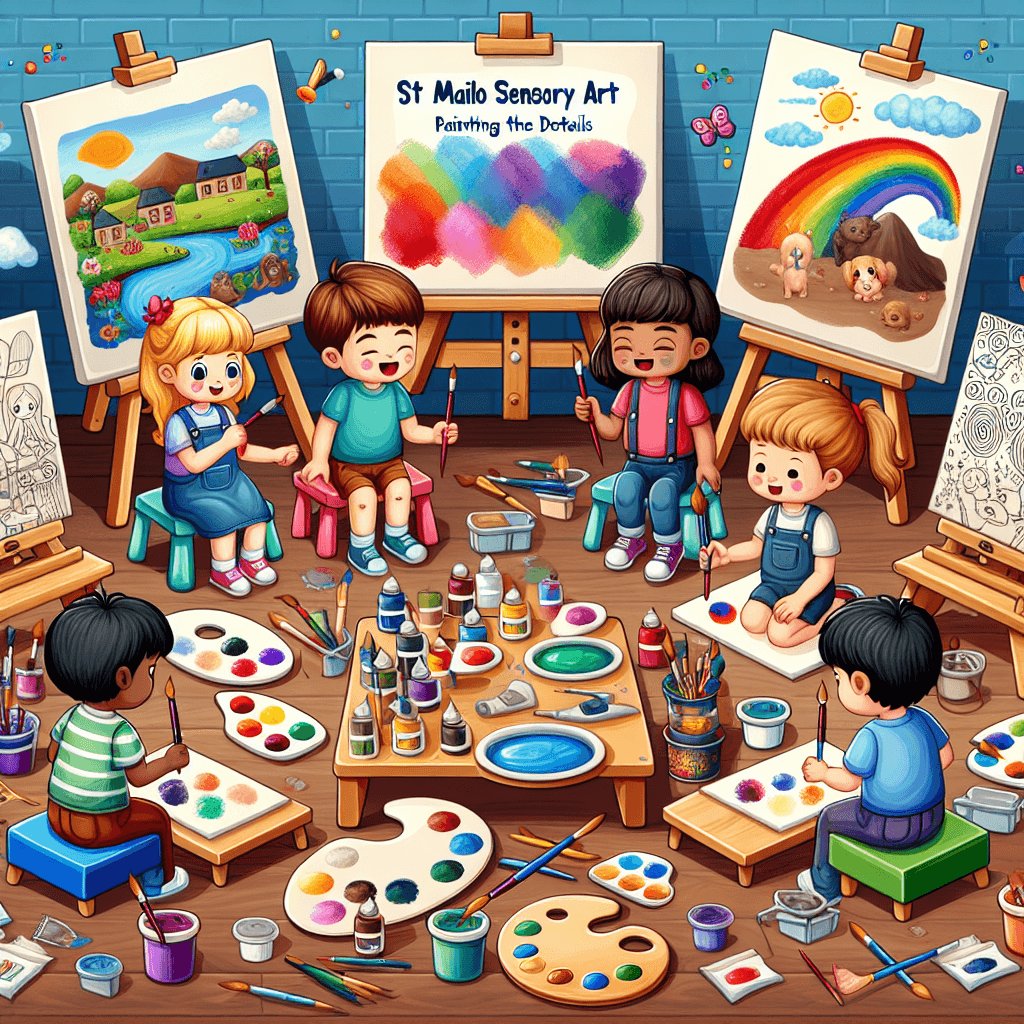
St Mailo Sensory Art: Painting the Details
Inquiry Framework
Question Framework
Driving Question
The overarching question that guides the entire project.How does mindful attention to details influence our appreciation of art and the environment?Essential Questions
Supporting questions that break down major concepts.- In what ways can we translate sensory experiences into artistic expressions?
- How does mindful attention to details influence our appreciation of art and the environment?
Standards & Learning Goals
Learning Goals
By the end of this project, students will be able to:- Students will be able to translate sensory experiences into artistic expressions.
- Students will be able to identify and appreciate the unique characteristics of a location through sensory observation.
- Students will be able to use music to enhance their perception of a place.
- Students will be able to create a visual art piece that reflects the essence of St. Mailo.
Entry Events
Events that will be used to introduce the project to studentsSensory City Walk
Students embark on a sensory walk through St. Mailo, meticulously noting visual, auditory, olfactory, and tactile details of the cityscape. They capture these observations through sketches, notes, and photos, focusing on elements that evoke emotional responses and reflect the city's unique character. They take off their headphones and share their experience. It should be interesting to see what details called the attention of the other peersPortfolio Activities
Portfolio Activities
These activities progressively build towards your learning goals, with each submission contributing to the student's final portfolio.Olfactory Portrait: Describing the Scents of St. Mailo
Students write a descriptive paragraph detailing the olfactory landscape of St. Mailo, focusing on specific scents and their emotional impact. This activity develops their ability to articulate sensory experiences in written form.Steps
Here is some basic scaffolding to help students complete the activity.Final Product
What students will submit as the final product of the activityA written paragraph that vividly describes the scents of St. Mailo, including specific details and emotional associations.Alignment
How this activity aligns with the learning objectives & standardsLearning Goal: Students will be able to identify and appreciate the unique characteristics of a location through sensory observation.Synesthetic Landscape: Painting Sensory Music
Students select a piece of music that resonates with their sensory experiences in St. Mailo and create an abstract painting inspired by the music and their sensory memories. This activity integrates auditory and visual elements, encouraging synesthetic expression.Steps
Here is some basic scaffolding to help students complete the activity.Final Product
What students will submit as the final product of the activityAn abstract painting that visually represents the student's sensory experiences of St. Mailo, influenced by a chosen piece of music. The painting should incorporate colors, textures, and forms that evoke the sounds and feelings associated with the location.Alignment
How this activity aligns with the learning objectives & standardsLearning Goal: Students will be able to use music to enhance their perception of a place; Students will be able to translate sensory experiences into artistic expressions.Sensory Sketchbook: Capturing Immediate Impressions
Students create a series of quick sketches capturing the dominant colors, textures, and forms they observed during the sensory walk in St. Mailo. This activity emphasizes translating immediate sensory impressions into visual notes.Steps
Here is some basic scaffolding to help students complete the activity.Final Product
What students will submit as the final product of the activityA sketchbook page filled with thumbnail sketches, color swatches, and texture rubbings representing sensory observations from the walk.Alignment
How this activity aligns with the learning objectives & standardsLearning Goal: Students will be able to translate sensory experiences into artistic expressions.Rubric & Reflection
Portfolio Rubric
Grading criteria for assessing the overall project portfolioSensory St. Mailo Art Rubric
Sensory Experience & Place
This category assesses the student's ability to translate sensory experiences into art and connect personally with St. Mailo.Sensory Translation
The degree to which the student effectively translates sensory experiences (visual, auditory, olfactory, tactile) into artistic form.
Exemplary
4 PointsMasterfully translates sensory experiences into an innovative and compelling artistic form, demonstrating a profound understanding of sensory details and their expressive potential. The artwork deeply captures the essence of St. Mailo.
Proficient
3 PointsSuccessfully translates sensory experiences into a cohesive artistic form, demonstrating a clear understanding of sensory details and their expressive potential. The artwork effectively captures the atmosphere of St. Mailo.
Developing
2 PointsDemonstrates an emerging ability to translate sensory experiences into artistic form, showing some understanding of sensory details but lacking consistency or depth in expression. The artwork partially captures the sensory environment of St. Mailo.
Beginning
1 PointsStruggles to translate sensory experiences into artistic form, showing limited understanding of sensory details or their expressive potential. The artwork does not effectively capture the sensory environment of St. Mailo.
Place Connection
The extent to which the student's artwork reflects a personal connection to St. Mailo and demonstrates an understanding of its unique characteristics through sensory observation.
Exemplary
4 PointsThe artwork embodies a deep and personal connection to St. Mailo, showcasing a nuanced understanding of its unique characteristics through profound sensory observation and insightful interpretation.
Proficient
3 PointsThe artwork reflects a clear connection to St. Mailo, demonstrating a solid understanding of its unique characteristics through effective sensory observation and thoughtful interpretation.
Developing
2 PointsThe artwork shows some connection to St. Mailo, but the understanding of its unique characteristics through sensory observation is emerging and not fully developed.
Beginning
1 PointsThe artwork shows minimal connection to St. Mailo, lacking a clear understanding of its unique characteristics or sensory environment.
Artistic Execution & Innovation
This category evaluates the student's use of artistic techniques and their ability to express creativity and originality.Artistic Techniques
The student's proficiency in using artistic techniques to convey sensory information and emotional responses.
Exemplary
4 PointsDemonstrates masterful command of artistic techniques to create compelling sensory experiences and evoke profound emotional responses, pushing the boundaries of artistic expression with innovative approaches.
Proficient
3 PointsDemonstrates proficient use of artistic techniques to create clear sensory experiences and evoke appropriate emotional responses, effectively communicating the intended message.
Developing
2 PointsShows emerging use of artistic techniques to convey sensory information and emotional responses, but the techniques are not always consistent or effective.
Beginning
1 PointsStruggles to use artistic techniques to convey sensory information or emotional responses, demonstrating limited skill or understanding of relevant techniques.
Creativity & Expression
The degree to which the student demonstrates creativity, originality, and personal expression in their artwork, moving beyond mere representation to offer a unique interpretation.
Exemplary
4 PointsThe artwork demonstrates exceptional creativity, originality, and personal expression, offering a highly unique and insightful interpretation that transcends conventional approaches and redefines the project's objectives.
Proficient
3 PointsThe artwork demonstrates strong creativity, originality, and personal expression, offering a fresh and engaging interpretation that goes beyond simple replication.
Developing
2 PointsThe artwork demonstrates some creativity, originality, and personal expression, but the interpretation is somewhat predictable or derivative.
Beginning
1 PointsThe artwork lacks creativity, originality, and personal expression, relying heavily on imitation without offering a unique interpretation.