
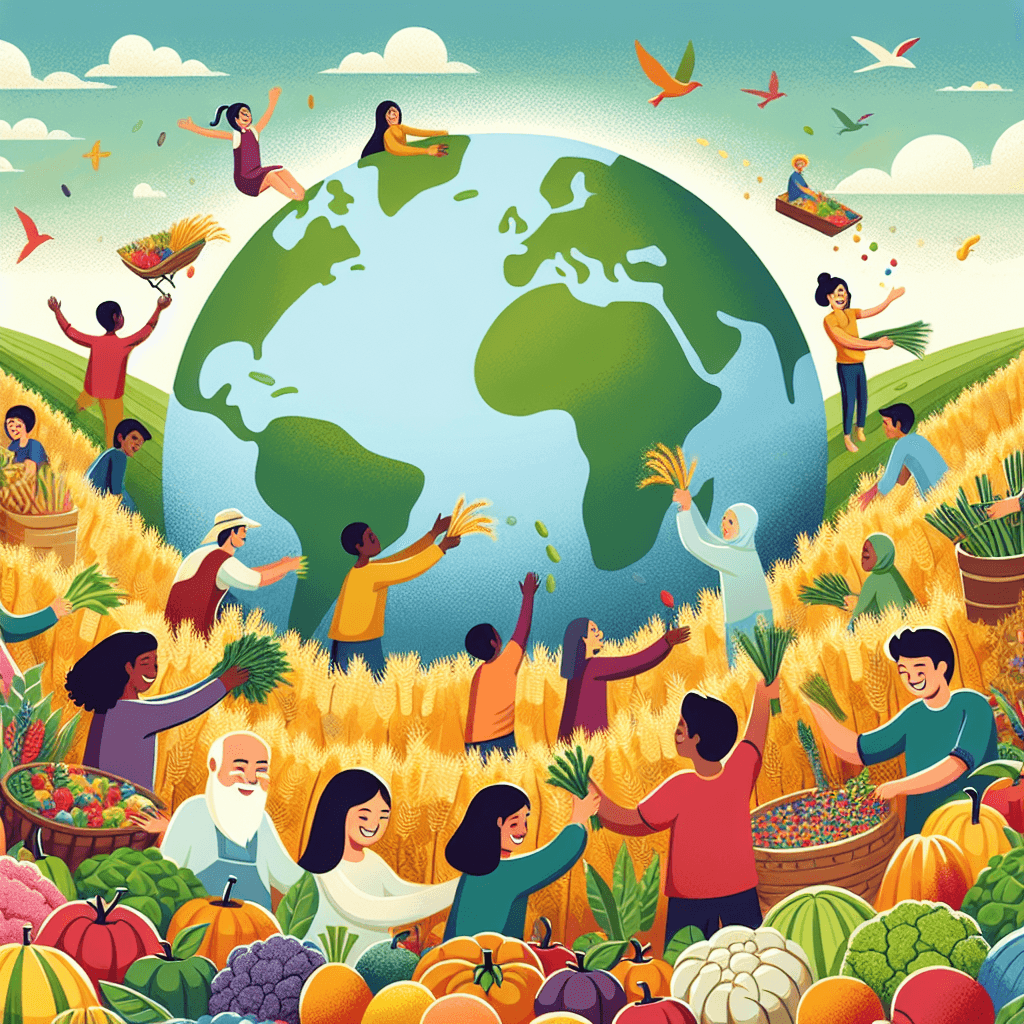
Storybook about a World Without Hunger
Inquiry Framework
Question Framework
Driving Question
The overarching question that guides the entire project.How can we create a storybook that teaches young children about hunger around the world, its causes, and simple solutions to help, inspiring them to take action?Essential Questions
Supporting questions that break down major concepts.- What does it mean to be hungry?
- Where in the world do people struggle with hunger?
- What are the main reasons people go hungry?
- What are some simple things we can do to help people who are hungry?
- How can we teach others about the importance of ending hunger?
Standards & Learning Goals
Learning Goals
By the end of this project, students will be able to:- Students will be able to define hunger and identify its global impact.
- Students will be able to identify causes of hunger.
- Students will be able to propose solutions to address hunger.
- Students will be able to create a storybook to teach young children about hunger and inspire action.
Entry Events
Events that will be used to introduce the project to students"'If You Give a Mouse a Cookie' - Hunger Edition"
Read aloud 'If You Give a Mouse a Cookie,' then lead a class brainstorm about how the story would change if the mouse was chronically hungry and resources were scarce. This activity encourages empathy and helps students consider the complex, cascading effects of food insecurity, inspiring them to explore solutions in their own storybooks."'Food Waste Investigation' Mission"
Conduct a classroom audit of food waste for one week, tracking what gets thrown away and discussing the reasons behind it. Connect this localized issue to the broader problem of food waste on a global scale, prompting students to brainstorm ways to reduce waste and promote sustainable food practices, which they can then incorporate into their storybook narratives.Portfolio Activities
Portfolio Activities
These activities progressively build towards your learning goals, with each submission contributing to the student's final portfolio.Solution Seekers Unite
Students brainstorm and propose solutions to address hunger, focusing on simple actions and strategies.Steps
Here is some basic scaffolding to help students complete the activity.Final Product
What students will submit as the final product of the activityA comprehensive class action plan outlining simple solutions to address hunger.Alignment
How this activity aligns with the learning objectives & standardsAddresses the learning goal: Students will be able to propose solutions to address hunger.Storyboard Creation Station
Students create a storyboard outlining their storybook, including characters, setting, plot, and solutions to hunger.Steps
Here is some basic scaffolding to help students complete the activity.Final Product
What students will submit as the final product of the activityA detailed storyboard outlining the plot, characters, and settings of their storybook, with a focus on solutions to hunger.Alignment
How this activity aligns with the learning objectives & standardsAddresses the learning goal: Students will be able to create a storybook to teach young children about hunger and inspire action.Rubric & Reflection
Portfolio Rubric
Grading criteria for assessing the overall project portfolioStorybook about a World Without Hunger Rubric
Understanding of Hunger
This category assesses the student's comprehension of hunger, its causes, and its impact on individuals and communities.Definition and Impact
Clarity and accuracy in defining hunger and explaining its impact.
Exemplary
4 PointsClearly defines hunger and comprehensively explains its global impact with specific examples and insightful connections.
Proficient
3 PointsAccurately defines hunger and explains its impact with relevant examples.
Developing
2 PointsProvides a basic definition of hunger and mentions some of its impacts, but lacks detail and clarity.
Beginning
1 PointsStruggles to define hunger and provides limited or inaccurate information about its impact.
Causes of Hunger
Identification and explanation of the causes of hunger presented in the storybook.
Exemplary
4 PointsIdentifies and thoroughly explains multiple causes of hunger, demonstrating a deep understanding of the complexities involved.
Proficient
3 PointsIdentifies and explains several causes of hunger with reasonable accuracy.
Developing
2 PointsIdentifies some causes of hunger, but explanations are incomplete or superficial.
Beginning
1 PointsStruggles to identify the causes of hunger or provides inaccurate information.
Proposed Solutions
This category evaluates the feasibility, creativity, and clarity of the solutions proposed in the storybook to address hunger.Solution Feasibility
Realism and practicality of the solutions presented in the storybook.
Exemplary
4 PointsPresents highly feasible and practical solutions that can be easily implemented by children and communities.
Proficient
3 PointsPresents feasible solutions that are generally practical and could be implemented.
Developing
2 PointsPresents solutions that are somewhat feasible but may lack practicality or clarity.
Beginning
1 PointsPresents solutions that are unrealistic or impractical.
Solution Creativity
Originality and innovation in the proposed solutions.
Exemplary
4 PointsOffers exceptionally creative and innovative solutions that inspire unique approaches to addressing hunger.
Proficient
3 PointsOffers creative solutions that demonstrate original thinking.
Developing
2 PointsOffers some creative solutions, but they may be somewhat generic or uninspired.
Beginning
1 PointsOffers unoriginal or unimaginative solutions.
Action Plan Clarity
Clarity and organization of the solutions into a class action plan.
Exemplary
4 PointsPresents solutions in a extraordinarily clear, concise, and well-organized action plan that is easy to follow and implement.
Proficient
3 PointsPresents solutions in a clear and organized action plan.
Developing
2 PointsPresents solutions in an action plan that lacks clarity and organization.
Beginning
1 PointsPresents solutions without any organization or clarity.
Storybook Quality
This category assesses the overall quality of the storybook, including its narrative structure, illustrations, and effectiveness in conveying its message.Narrative Structure
Organization and coherence of the story.
Exemplary
4 PointsThe story has a compelling narrative structure with a clear beginning, engaging middle, and satisfying resolution.
Proficient
3 PointsThe story has a clear narrative structure with a beginning, middle, and end.
Developing
2 PointsThe story has a recognizable narrative structure, but some elements may be unclear or disjointed.
Beginning
1 PointsThe story lacks a clear narrative structure and is difficult to follow.
Illustrations
Quality and relevance of the illustrations in enhancing the story.
Exemplary
4 PointsIllustrations are exceptionally detailed, creative, and effectively enhance the story, conveying emotions and ideas with precision.
Proficient
3 PointsIllustrations are well-done, relevant, and contribute to the overall quality of the story.
Developing
2 PointsIllustrations are basic and somewhat relevant, but may lack detail or clarity.
Beginning
1 PointsIllustrations are minimal, irrelevant, or poorly executed.
Message Delivery
Effectiveness in conveying the message about hunger and inspiring action.
Exemplary
4 PointsThe story powerfully conveys its message about hunger and effectively inspires readers to take meaningful action.
Proficient
3 PointsThe story effectively conveys its message about hunger and inspires readers to consider taking action.
Developing
2 PointsThe story conveys its message about hunger, but the call to action is weak or unclear.
Beginning
1 PointsThe story fails to effectively convey its message about hunger or inspire action.