
Sustainability and You: Evaluating Consumption and Waste Impact
Created byPhil Osborne
1 views0 downloads

Sustainability and You: Evaluating Consumption and Waste Impact

Grade 2ScienceSocial Studies15 days
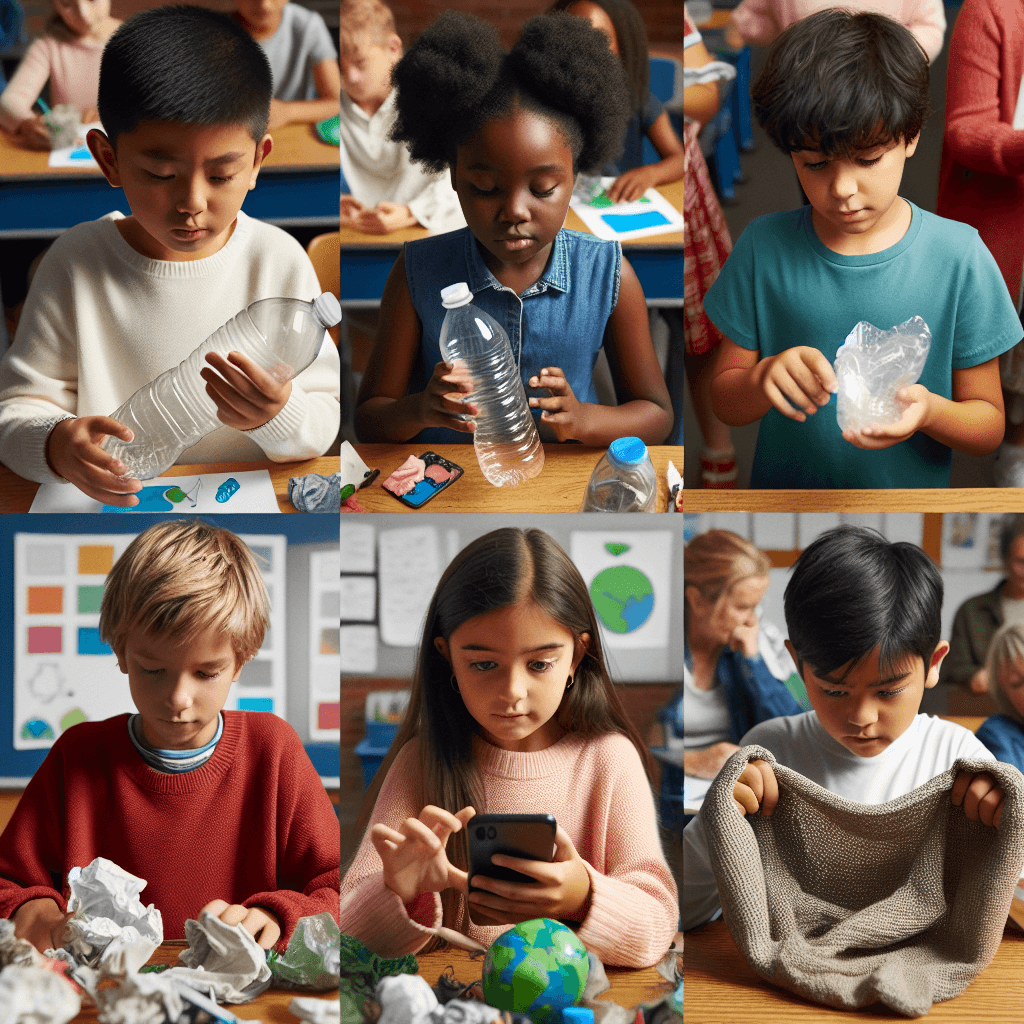
The 'Sustainability and You: Evaluating Consumption and Waste Impact' project for 2nd graders engages students in understanding their impact on the environment through their consumption habits and waste production. Throughout the project, students participate in activities that involve reflecting on their daily use of products, classifying waste materials, and creating actionable plans to reduce waste in their school or community. By repurposing waste items, students learn to innovate and think critically about sustainable solutions, with the goal of fostering a lifelong commitment to environmental stewardship. The project aligns with science and social studies standards to communicate, classify, and develop solutions that minimize human impact on the environment.
SustainabilityWaste ReductionEnvironmental ImpactInnovationConsumption HabitsRepurposingEco-Action Plan
Want to create your own PBL Recipe?Use our AI-powered tools to design engaging project-based learning experiences for your students.
📝

Inquiry Framework

Question Framework

Driving Question

The overarching question that guides the entire project.What is our impact on the planet?

Essential Questions

Supporting questions that break down major concepts.
  • What issues does waste lead to?
  • What are the long-term effects of overconsumption on the planet?
  • How can we reduce the environmental impact of non-biodegradable waste?
  • Why do governments have policies like plastic bans?
  • What action can schools or communities take to reduce waste? Is it possible to reduce waste without changing our lifestyles?
  • What challenges might people face when trying to repurpose items? Why is repurposing not more common?

Standards & Learning Goals

Learning Goals

By the end of this project, students will be able to:
  • Students will understand the impact of their daily choices on the environment and explore sustainable solutions.
  • Students will investigate the types of waste they produce and what happens to them.
  • Students will develop innovative ideas and articulate possible solutions to reduce waste and promote sustainability.

Next Generation Science Standards

K-ESS3-3
Primary
Communicate solutions that will reduce the impact of humans on the land, water, air, and/or other living things in the local environment.Reason: Students evaluate their consumption habits and assess the impact of their actions on the environment, aligning with solutions to reduce human impact.
2-PS1-1
Secondary
Plan and conduct an investigation to describe and classify different kinds of materials by their observable properties.Reason: As students explore materials related to waste, they can classify and understand their properties to find better ways of disposal or reduction.
2-ESS2-1
Supporting
Compare multiple solutions designed to slow or prevent wind or water from changing the shape of the land.Reason: Relates to the investigation of how human actions and natural elements like waste management affect the environment.

C3 Framework for Social Studies

D2.Civ.14.K-2
Primary
Illustrate historical and contemporary means of changing society.Reason: Students propose innovative ideas to change societal habits regarding waste, aligning with this standard.
D2.Eco.1.K-2
Secondary
Describe the relationship between goods produced and consumed, and how this relates to the environment.Reason: The project explores consumer habits and their impact on the environment, supporting this standard.

Entry Events

Events that will be used to introduce the project to students

Mystery Waste Challenge

Introduce a sealed "mystery box" filled with anonymized trash items commonplace in students' daily lives (like empty juice boxes or candy wrappers). Challenge students to guess what's inside, brainstorm where these items come from and where they end up, sparking curiosity about waste pathways and sustainability. Use the mystery to jumpstart a discussion on consumption habits and their impacts.
📚

Portfolio Activities

Portfolio Activities

These activities progressively build towards your learning goals, with each submission contributing to the student's final portfolio.
Activity 1

Consumption Reflection Journal

In this activity, students will reflect on their daily consumption habits by keeping a journal. The goal is for them to become aware of their contributions to waste and consider sustainable alternatives.

Steps

Here is some basic scaffolding to help students complete the activity.
1. Introduce students to the concept of consumption by discussing what they buy and use regularly and its potential impact on the environment.
2. Have students set up a simple daily journal. Instruct them to log all the products they use and dispose of over a week.
3. At the end of the week, ask students to review their logs and categorize items in terms of necessity and impact (e.g., reusable, recyclable, single-use).
4. Guide students to reflect on alternatives for single-use items, thinking of more sustainable options like reusable containers or fewer purchases.

Final Product

What students will submit as the final product of the activityA completed journal with reflections and a list of sustainable alternatives for commonly used items.

Alignment

How this activity aligns with the learning objectives & standardsAligns with standard K-ESS3-3 by making students evaluate the impact of their actions and consider solutions to reduce human impact.
Activity 2

Waste Identification and Classification

Students will learn about different waste types and their properties. They will identify what materials are commonly found in waste, leading to discussions on better disposal methods.

Steps

Here is some basic scaffolding to help students complete the activity.
1. Begin with a lesson on different types of waste materials, their properties, and how they are recycled or decomposed (e.g., plastic, paper, metal).
2. Present various waste items to the class and discuss their properties. Include common items like paper, plastic bottles, and food wrappers.
3. Have students work in small groups to sort different materials, classifying them based on their properties (like texture, flexibility, durability).
4. Each group presents their classification, discussing why items were sorted a certain way and suggesting better disposal practices.

Final Product

What students will submit as the final product of the activityA class presentation and chart categorizing types of waste and their properties.

Alignment

How this activity aligns with the learning objectives & standardsAligns with standard 2-PS1-1 as students describe and classify materials by their observable properties.
Activity 3

Eco-Action Planning

In this activity, students will design and propose an innovative plan to address waste issues within their school or community.

Steps

Here is some basic scaffolding to help students complete the activity.
1. Introduce the concept of an 'Eco-Action Plan' and discuss examples of successful initiatives like recycling programs or waste-free lunches.
2. Have students brainstorm waste issues they observe in their school or community.
3. Guide small groups to choose one issue and collaboratively develop ideas for an action plan. Ensure they consider feasibility and sustainability.
4. Each group creates a poster detailing their action plan, with steps on implementation and the benefits it presents to the environment.
5. Host a class 'Eco-Fair' where students present their plans and educate others on environmental impact reduction.

Final Product

What students will submit as the final product of the activityPosters of Eco-Action Plans presented at a class Eco-Fair.

Alignment

How this activity aligns with the learning objectives & standardsAligns with standards K-ESS3-3, D2.Civ.14.K-2, and D2.Eco.1.K-2 by guiding students to propose solutions and envision societal change.
Activity 4

Innovative Repurposing Workshop

Students will engage in hands-on creative thinking by repurposing waste materials into new, useful products, reflecting on the potential and challenges of repurposing.

Steps

Here is some basic scaffolding to help students complete the activity.
1. Provide an overview of repurposing and show examples of items made from recycled materials (like tire planters or carton pencil holders).
2. Invite students to collect materials from home or prepare a set of materials for class use (like jars, boxes, and fabric scraps).
3. In small groups, encourage students to choose a waste material and brainstorm potential new uses for it.
4. Assist students as they construct their new products, ensuring safety and creativity.
5. Conclude with a showcase where students present their products, discussing the process and challenges faced.

Final Product

What students will submit as the final product of the activityRepurposed products and a presentation on their creation process.

Alignment

How this activity aligns with the learning objectives & standardsAligns with standards 2-ESS2-1 and D2.Civ.14.K-2 by fostering innovation in waste repurposing and addressing environmental change.
🏆

Rubric & Reflection

Portfolio Rubric

Grading criteria for assessing the overall project portfolio

Sustainability and Waste Impact Assessment Rubric

Category 1

Innovative Repurposing Workshop

Assesses student creativity and problem-solving in transforming waste into useful products.
Criterion 1

Product Creativity

Innovation and uniqueness of the repurposed products created by students.

Exemplary
4 Points

Student produces a highly creative and original product showing exceptional innovative thinking.

Proficient
3 Points

Student creates a creative repurposed product with clear innovative elements.

Developing
2 Points

Student demonstrates some creativity, with products lacking full innovation or uniqueness.

Beginning
1 Points

Student attempts basic repurposing with limited creativity or uniqueness.

Criterion 2

Presentation and Discussion

Effectiveness of presentation and ability to articulate the repurposing process and challenges.

Exemplary
4 Points

Student delivers an engaging and insightful presentation, clearly articulating the process and challenges encountered in the project.

Proficient
3 Points

Student presents a clear and informative discussion on the process and challenges of repurposing.

Developing
2 Points

Student provides a basic presentation with some details about the process, though lacks depth or clarity.

Beginning
1 Points

Student offers minimal explanation of the process and challenges, showing limited presentation skills.

Reflection Prompts

End-of-project reflection questions to get students to think about their learning
Question 1

Reflect on how your daily choices impact the environment and describe at least two changes you plan to make to reduce your environmental footprint.

Text
Required
Question 2

On a scale of 1 to 5, how confident are you in your ability to identify different types of waste and suggest appropriate disposal methods?

Scale
Required
Question 3

Which portfolio activity did you find most engaging and why?

Multiple choice
Required
Options
Consumption Reflection Journal
Waste Identification and Classification
Eco-Action Planning
Innovative Repurposing Workshop
Question 4

Reflect on the Eco-Action Plan your group developed. What do you think was the strongest aspect of your plan, and what would you improve if given more time?

Text
Optional
Question 5

How likely are you to continue applying what you have learned about sustainability and waste reduction in your daily life?

Scale
Required