
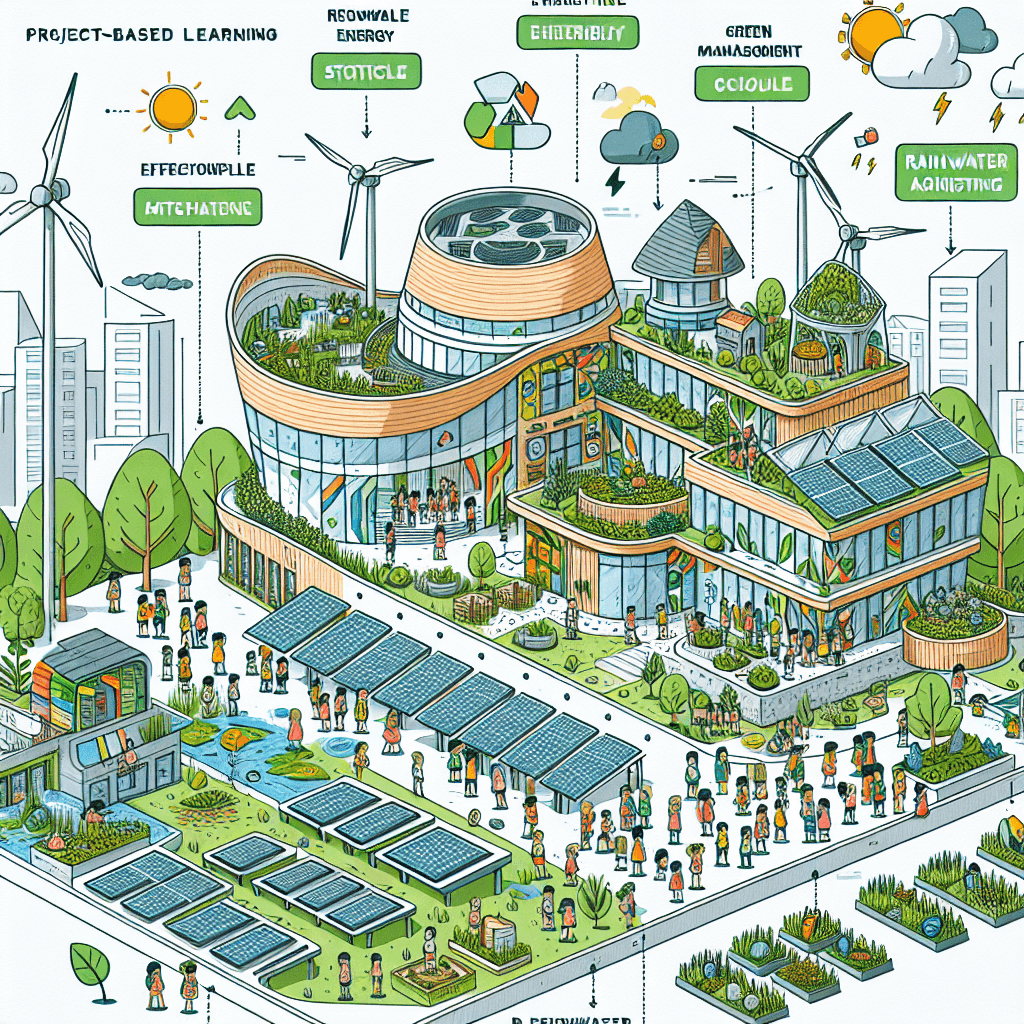
Sustainable City Exhibit: Design a Resource-Wise Museum!
Inquiry Framework
Question Framework
Driving Question
The overarching question that guides the entire project.How can we design an interactive museum exhibit that demonstrates the impact of our choices on natural resource availability and promotes sustainable practices in urban environments?Essential Questions
Supporting questions that break down major concepts.- How do our choices impact the availability of natural resources?
- What are the key components of a sustainable city?
- How can we design exhibits to effectively communicate complex information about sustainability?
- How can technology be used to promote sustainability in urban environments?
- What are the benefits and drawbacks of different energy sources?
Standards & Learning Goals
Learning Goals
By the end of this project, students will be able to:- Understand the impact of urban choices on natural resource availability.
- Design an interactive exhibit showcasing sustainable practices.
- Communicate complex information about sustainability effectively.
- Evaluate benefits and drawbacks of different energy sources.
- Apply technology to promote sustainability in urban environments.
- Identify the key components of a sustainable city.
NGSS
Entry Events
Events that will be used to introduce the project to studentsResourceopoly: The City-Building Game
**'Resourceopoly' Game:** Engage students in a modified Monopoly-style game where they develop a city, making resource-related decisions.Portfolio Activities
Portfolio Activities
These activities progressively build towards your learning goals, with each submission contributing to the student's final portfolio.Resource Detectives: Uncovering Urban Resources
Students will brainstorm and research different types of natural resources (water, energy, land, minerals) and how they are used in cities. They will then create a visual inventory of these resources, detailing their sources, uses, and potential for depletion.Steps
Here is some basic scaffolding to help students complete the activity.Final Product
What students will submit as the final product of the activityA detailed inventory report with visuals (charts, diagrams) showcasing the natural resources used in cities, their sources, uses, and potential for depletion.Alignment
How this activity aligns with the learning objectives & standardsAligns with MS-ESS3-1 by focusing on how human actions (design choices in the exhibit) impact the availability of natural resources.Sustainability Sleuths: Investigating Green Practices
Students will investigate various sustainable practices related to resource use in urban environments (e.g., renewable energy, water conservation, waste management). They will analyze the pros and cons of each practice and select the most effective ones to incorporate into their exhibit design.Steps
Here is some basic scaffolding to help students complete the activity.Final Product
What students will submit as the final product of the activityA comparative analysis report outlining different sustainable practices, their pros and cons, and a justification for the chosen practices in their exhibit.Alignment
How this activity aligns with the learning objectives & standardsFocuses on MS-ESS3-1 by requiring students to analyze and propose solutions for sustainable resource management in their exhibit designs.Exhibit Architects: Designing for Sustainability
Students will create a detailed design plan for their interactive museum exhibit, including a model or prototype. The exhibit should showcase the impact of urban choices on natural resources and highlight sustainable practices.Steps
Here is some basic scaffolding to help students complete the activity.Final Product
What students will submit as the final product of the activityA comprehensive exhibit design plan, including a model or prototype, demonstrating the impact of urban choices on natural resources and promoting sustainable practices.Alignment
How this activity aligns with the learning objectives & standardsDirectly supports MS-ESS3-1 by having students design an exhibit that demonstrates how human choices impact natural resource availability and promotes sustainable practices.Sustainability Storytellers: Presenting the Exhibit
Students will prepare a presentation to showcase their exhibit design, explaining the impact of urban choices on natural resources and highlighting the sustainable practices featured in their exhibit.Steps
Here is some basic scaffolding to help students complete the activity.Final Product
What students will submit as the final product of the activityA well-prepared presentation, including visuals and explanations, showcasing the exhibit design and its connection to sustainable resource management.Alignment
How this activity aligns with the learning objectives & standardsReinforces MS-ESS3-1 by requiring students to effectively communicate complex information about sustainability through their exhibit and presentation.Rubric & Reflection
Portfolio Rubric
Grading criteria for assessing the overall project portfolioSustainable City Exhibit Rubric
Urban Resource Inventory
This category assesses the student's ability to identify, research, and visually represent the natural resources used in cities.Resource Research Depth
The depth and breadth of the research conducted on urban resources.
Exemplary
4 PointsDemonstrates comprehensive research, covering a wide range of resources with detailed information on their sources, uses, and potential depletion.
Proficient
3 PointsDemonstrates thorough research, covering a range of resources with clear information on their sources, uses, and potential depletion.
Developing
2 PointsShows emerging research, covering some resources with basic information on their sources, uses, and potential depletion.
Beginning
1 PointsShows limited research, covering few resources with minimal information on their sources, uses, and potential depletion.
Visual Inventory Clarity
The clarity and effectiveness of the visual inventory report in showcasing urban resources.
Exemplary
4 PointsPresents a visually appealing and highly informative inventory report with clear, accurate, and insightful charts and diagrams.
Proficient
3 PointsPresents a clear and informative inventory report with accurate charts and diagrams.
Developing
2 PointsPresents an inventory report with some charts and diagrams, but clarity and accuracy may be inconsistent.
Beginning
1 PointsPresents an incomplete or unclear inventory report with minimal or inaccurate charts and diagrams.
Sustainable Practice Analysis
This category evaluates the student's research and analysis of sustainable practices related to resource use in urban environments.Sustainability Investigation
The depth of the investigation into sustainable practices and the quality of the comparative analysis.
Exemplary
4 PointsDemonstrates in-depth investigation, providing a comprehensive comparative analysis of sustainable practices with insightful pros and cons.
Proficient
3 PointsDemonstrates thorough investigation, providing a clear comparative analysis of sustainable practices with relevant pros and cons.
Developing
2 PointsShows emerging investigation, providing a basic comparative analysis of some sustainable practices with limited pros and cons.
Beginning
1 PointsShows limited investigation, providing a minimal comparative analysis of few sustainable practices with insufficient pros and cons.
Justification of Practices
The strength and reasoning behind the justification for chosen sustainable practices in the exhibit design.
Exemplary
4 PointsProvides a compelling and well-reasoned justification for the chosen sustainable practices, demonstrating a deep understanding of their effectiveness and impact.
Proficient
3 PointsProvides a clear and logical justification for the chosen sustainable practices, demonstrating a good understanding of their effectiveness and impact.
Developing
2 PointsProvides a basic justification for the chosen sustainable practices, but the reasoning may be weak or incomplete.
Beginning
1 PointsProvides a minimal or unclear justification for the chosen sustainable practices, lacking sufficient reasoning or understanding.
Exhibit Design and Impact
This category assesses the student's ability to design an interactive museum exhibit that demonstrates the impact of our choices on natural resource availability and promotes sustainable practices in urban environments.Exhibit Design Quality
The level of detail and creativity in the exhibit design plan and prototype.
Exemplary
4 PointsPresents a highly detailed and innovative exhibit design plan with a well-developed and creative prototype.
Proficient
3 PointsPresents a detailed exhibit design plan with a well-developed prototype.
Developing
2 PointsPresents an exhibit design plan with some details and a basic prototype.
Beginning
1 PointsPresents an incomplete exhibit design plan with a minimal or underdeveloped prototype.
Exhibit Impact
The effectiveness of the exhibit in showcasing the impact of urban choices on natural resources and promoting sustainable practices.
Exemplary
4 PointsThe exhibit effectively and innovatively showcases the impact of urban choices on natural resources and strongly promotes sustainable practices in an engaging way.
Proficient
3 PointsThe exhibit clearly showcases the impact of urban choices on natural resources and promotes sustainable practices effectively.
Developing
2 PointsThe exhibit shows some connection between urban choices, natural resources, and sustainable practices, but may lack clarity or depth.
Beginning
1 PointsThe exhibit demonstrates a limited connection between urban choices, natural resources, and sustainable practices.
Presentation and Communication
This category assesses the student's ability to effectively communicate complex information about sustainability through their exhibit and presentation.Presentation Clarity
The clarity and effectiveness of the presentation in showcasing the exhibit design and its connection to sustainability.
Exemplary
4 PointsDelivers a highly engaging and informative presentation with clear, concise explanations and compelling visuals that showcase the exhibit design and its profound connection to sustainability.
Proficient
3 PointsDelivers a clear and informative presentation with effective visuals that showcase the exhibit design and its connection to sustainability.
Developing
2 PointsDelivers a presentation with some visuals, but clarity and effectiveness may be inconsistent, and the connection to sustainability may be unclear.
Beginning
1 PointsDelivers an incomplete or unclear presentation with minimal visuals and a weak connection to sustainability.
Understanding of Sustainability
The student's ability to explain the impact of urban choices on natural resources and highlight the sustainable practices featured in the exhibit.
Exemplary
4 PointsDemonstrates a sophisticated understanding of the impact of urban choices on natural resources and articulates the sustainable practices featured in the exhibit with clarity and insight.
Proficient
3 PointsDemonstrates a thorough understanding of the impact of urban choices on natural resources and clearly articulates the sustainable practices featured in the exhibit.
Developing
2 PointsShows emerging understanding of the impact of urban choices on natural resources and identifies some sustainable practices featured in the exhibit.
Beginning
1 PointsShows limited understanding of the impact of urban choices on natural resources and struggles to identify the sustainable practices featured in the exhibit.