
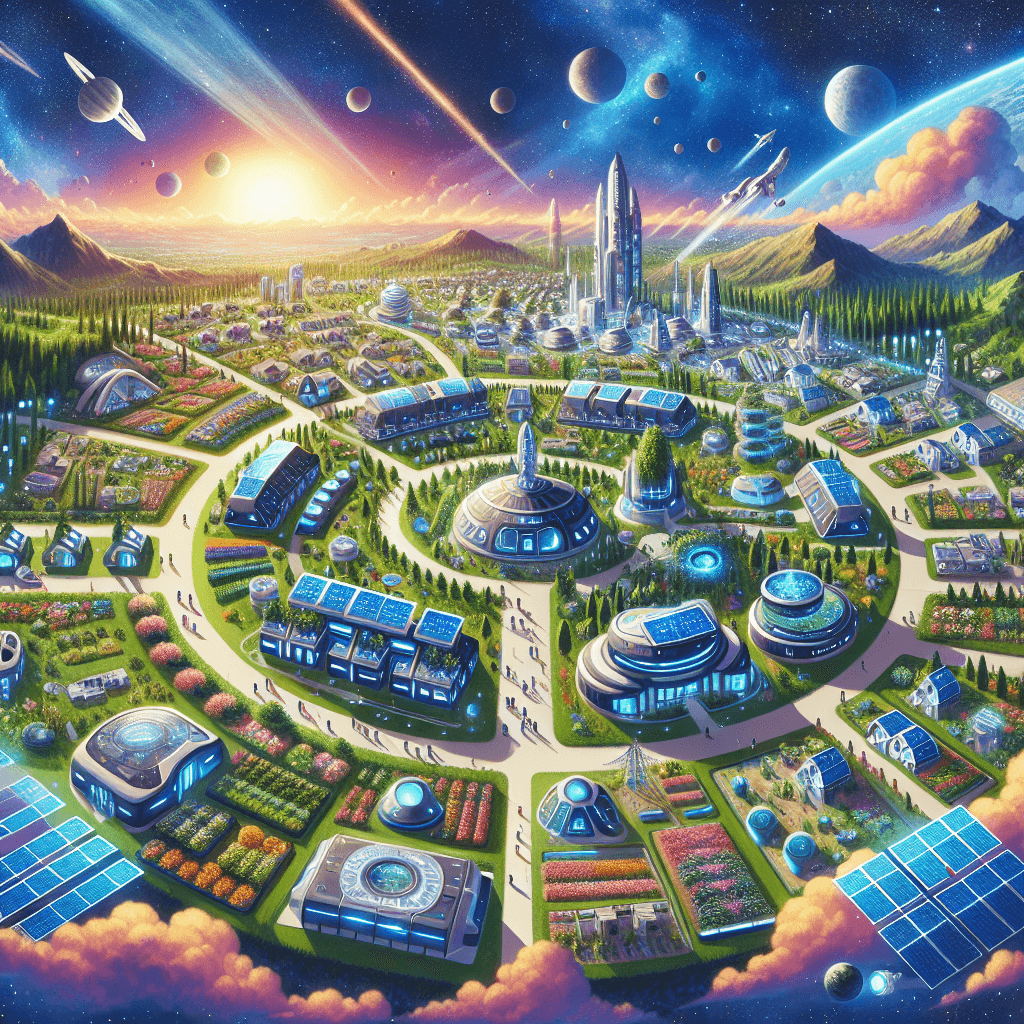
Sustainable Space Colony: Design for the Future
Inquiry Framework
Question Framework
Driving Question
The overarching question that guides the entire project.How can we design a space colony that uses Earth, Moon, and Sun movements and limited resources to be sustainable for people now and in the future?Essential Questions
Supporting questions that break down major concepts.- How can we create a sustainable space colony that meets the needs of its inhabitants?
- What are the challenges and benefits of using solar energy in space?
- How do the Earth's cycles influence resource management in a space colony?
- How can we balance the needs and wants of the colony's inhabitants with the limited resources available?
- How does the movement of the Earth, Moon and Sun impact the space colony and its energy production?
- What are the different types of resources (natural, human, capital) needed to build and maintain a space colony?
- How can the principles of sustainability on Earth be applied to a space colony?
- How do the choices we make about resource use today affect future generations in the space colony?
Standards & Learning Goals
Learning Goals
By the end of this project, students will be able to:- Design a space colony that utilizes solar energy as a primary power source.
- Explain how the movements of the Earth, Moon, and Sun can be harnessed for energy production and resource management in a space colony.
- Apply principles of sustainability to the design of a space colony, balancing resource use and minimizing environmental impact.
- Classify and manage different types of resources (natural, human, capital) needed for the space colony.
- Make informed decisions about resource allocation to meet the needs and wants of present and future generations in the space colony.
- Describe the movement of the Earth, and other planets, relative to the Sun.
- Describe the movement of the moon relative to the earth.
- Explain influences on consumer choices and methods that can be used to help make informed personal consumer and financial choices.
- Explain why we have different seasons in reference to the tilt of the earth and its movement around the Sun.
- Recognise the difference between needs and wants and why choices need to be made about how limited resources are used
Science
Social Studies
Entry Events
Events that will be used to introduce the project to studentsDistress Signal from Space
Simulate a 'critical incident' where students receive an urgent transmission from a failing prototype space colony. The colonists report life support malfunctions and dwindling resources, challenging students to urgently propose sustainable solutions to save the colony and its inhabitants.Portfolio Activities
Portfolio Activities
These activities progressively build towards your learning goals, with each submission contributing to the student's final portfolio.Colony Needs and Wants Assessment
Students research the basic needs of humans in a space colony (air, water, food, shelter) and how the movements of the Earth, Moon, and Sun could impact the availability of resources. They will also identify 'wants' that would improve the quality of life in the colony.Steps
Here is some basic scaffolding to help students complete the activity.Final Product
What students will submit as the final product of the activityA detailed list of needs and wants for the space colony, prioritized based on their impact on survival and quality of life. Explanation of how Earth, Moon, and Sun movements might affect resource availability.Alignment
How this activity aligns with the learning objectives & standardsAligns with Science Standard 5ES102 (Earth, Moon, Sun movements), Social Studies Standard 5EB101 (Needs vs. Wants), and Learning Goals related to solar energy use and Earth's movements.Resource Allocation and Solar Power Design
Students will classify resources into natural, human, and capital resources needed to build and maintain the space colony. They will then design a system for harnessing solar energy, considering the colony's location and the Sun's movements.Steps
Here is some basic scaffolding to help students complete the activity.Final Product
What students will submit as the final product of the activityA detailed resource classification chart and a schematic diagram of a solar energy collection and distribution system for the space colony.Alignment
How this activity aligns with the learning objectives & standardsAligns with Science Standard (Solar System), Social Studies Standard 5EB102 (Resource Classification), and Learning Goals related to classifying resources and using solar energy.Sustainability Blueprint
Students will create a resource management plan for the space colony, focusing on sustainable practices. This plan should address waste recycling, food production, and water conservation. They will also explore how the principles of sustainability on Earth can be applied to a space colony, including how the tilt of the Earth and its seasons might be mimicked to promote growth.Steps
Here is some basic scaffolding to help students complete the activity.Final Product
What students will submit as the final product of the activityA comprehensive resource management plan that includes strategies for waste recycling, food production, and water conservation. A presentation explaining how Earth's sustainability principles can be applied in the space colony, including the creation of artificial seasons.Alignment
How this activity aligns with the learning objectives & standardsAligns with Social Studies Standard (Consumer Choices), Science Standard 5ES102 (Seasons), and Learning Goals related to sustainability and resource management.Rubric & Reflection
Portfolio Rubric
Grading criteria for assessing the overall project portfolioSustainable Space Colony Design Rubric
Needs and Wants Assessment
Assessment of the student's ability to identify, prioritize, and justify essential needs and wants for a space colony, considering environmental factors.Understanding of Needs and Environmental Impact
Demonstrates understanding of essential human needs (air, water, food, shelter) in a space colony and how the Earth, Moon, and Sun's movements impact resource availability.
Exemplary
4 PointsDemonstrates a sophisticated understanding of human needs and provides insightful analysis of how Earth, Moon, and Sun movements affect resource availability, going beyond the basics.
Proficient
3 PointsDemonstrates a thorough understanding of human needs and clearly explains how Earth, Moon, and Sun movements affect resource availability.
Developing
2 PointsShows an emerging understanding of human needs and attempts to explain how Earth, Moon, and Sun movements affect resource availability, but may have some gaps in understanding.
Beginning
1 PointsShows a beginning understanding of human needs and struggles to explain how Earth, Moon, and Sun movements affect resource availability.
Prioritization and Justification
Effectively prioritizes needs and wants based on their impact on survival and quality of life, providing clear justifications.
Exemplary
4 PointsPrioritization is exceptionally well-reasoned, demonstrating advanced critical thinking about the colony's long-term survival and quality of life with creative and insightful justifications.
Proficient
3 PointsPrioritization is well-reasoned, demonstrating effective critical thinking about the colony's survival and quality of life with clear justifications.
Developing
2 PointsPrioritization shows some reasoning but may lack depth, with basic justifications for the choices made.
Beginning
1 PointsPrioritization is unclear or poorly justified, with minimal reasoning provided.
Resource Allocation and Solar Power
Assessment of the student's ability to classify resources and design a solar energy system for the space colony.Resource Classification
Demonstrates a comprehensive understanding of natural, human, and capital resources required for a space colony.
Exemplary
4 PointsDemonstrates a sophisticated and insightful understanding of resource classification, going beyond basic identification to analyze complex interdependencies.
Proficient
3 PointsDemonstrates a thorough understanding of resource classification and clearly explains the importance of each resource type.
Developing
2 PointsShows an emerging understanding of resource classification but may have some gaps in knowledge or explanations.
Beginning
1 PointsShows a beginning understanding of resource classification and struggles to explain the importance of each resource type.
Solar Energy System Design
Designs a solar energy collection and distribution system that is practical, efficient, and considers the colony's location and the Sun's movements.
Exemplary
4 PointsThe solar energy system design is innovative, highly efficient, and demonstrates advanced understanding of the colony's location and the Sun's movements.
Proficient
3 PointsThe solar energy system design is practical, efficient, and clearly considers the colony's location and the Sun's movements.
Developing
2 PointsThe solar energy system design is somewhat practical but may have inefficiencies or lack consideration of the colony's location and the Sun's movements.
Beginning
1 PointsThe solar energy system design is impractical, inefficient, and shows little consideration of the colony's location and the Sun's movements.
Sustainability Blueprint
Assessment of the student's ability to create a resource management plan based on sustainable practices and apply Earth's sustainability principles to a space colony.Resource Management Plan
Develops a comprehensive resource management plan that effectively addresses waste recycling, food production, and water conservation.
Exemplary
4 PointsThe resource management plan is exceptionally comprehensive, innovative, and demonstrates a deep understanding of sustainable practices in a space colony environment.
Proficient
3 PointsThe resource management plan is comprehensive and effectively addresses waste recycling, food production, and water conservation.
Developing
2 PointsThe resource management plan addresses some aspects of waste recycling, food production, and water conservation but may lack depth or completeness.
Beginning
1 PointsThe resource management plan is incomplete and lacks a clear strategy for waste recycling, food production, and water conservation.
Application of Sustainability Principles
Clearly explains how Earth's sustainability principles can be applied in the space colony, including the creation of artificial seasons.
Exemplary
4 PointsProvides an exceptionally clear and insightful explanation of how Earth's sustainability principles can be applied in the space colony, demonstrating advanced understanding of the challenges and opportunities.
Proficient
3 PointsClearly explains how Earth's sustainability principles can be applied in the space colony, including a discussion of artificial seasons.
Developing
2 PointsAttempts to explain how Earth's sustainability principles can be applied in the space colony but may lack clarity or depth.
Beginning
1 PointsStruggles to explain how Earth's sustainability principles can be applied in the space colony.