
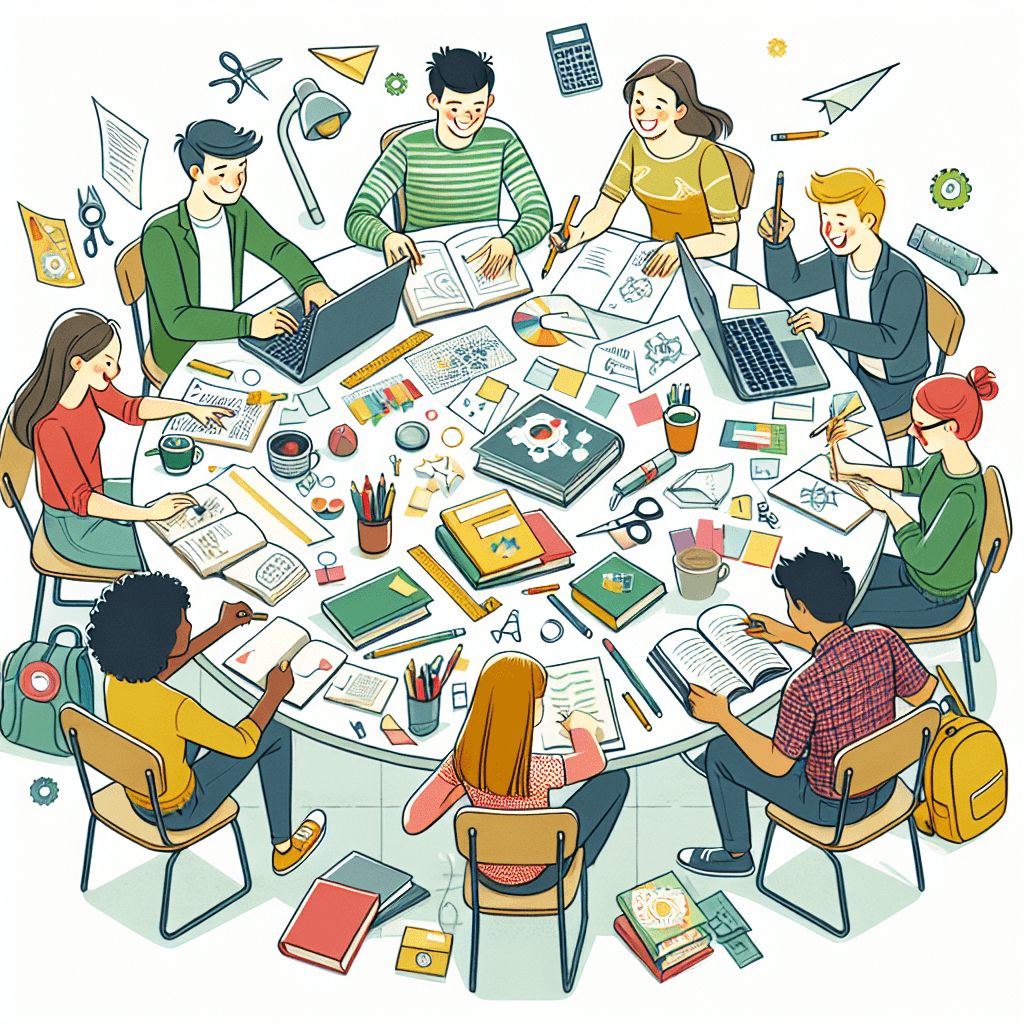
Teamwork Makes the Dream Work
Inquiry Framework
Question Framework
Driving Question
The overarching question that guides the entire project.How can we, as a team, effectively communicate, leverage our strengths, and resolve conflicts to achieve a shared goal and prepare for real-world scenarios?Essential Questions
Supporting questions that break down major concepts.- How can effective communication enhance teamwork and collaboration?
- What strategies can improve team dynamics and conflict resolution?
- How can individual strengths and weaknesses be leveraged within a team setting?
- What are the essential elements of successful team leadership?
- How can team members effectively contribute to shared goals?
- In what ways can teamwork skills be applied in real-world scenarios?
- How can we assess and evaluate the effectiveness of teamwork?
Standards & Learning Goals
Learning Goals
By the end of this project, students will be able to:- Students will be able to identify and articulate their individual strengths and weaknesses.
- Students will be able to demonstrate effective communication and collaboration skills within a team setting.
- Students will be able to apply problem-solving and conflict-resolution strategies in group activities.
- Students will be able to analyze and evaluate team performance and identify areas for improvement.
- Students will be able to describe the importance of teamwork in achieving shared goals.
- Students will be able to connect teamwork principles to real-world scenarios and future career paths.
- Students will be able to lead and participate effectively in team discussions and decision-making processes.
- Students will be able to adapt their teamwork strategies to diverse situations and challenges.
- Students will be able to give and receive constructive feedback within a team context.
- Students will be able to demonstrate respect for diverse perspectives and contributions within a team.
Entry Events
Events that will be used to introduce the project to studentsIsland Survival Challenge
Imagine you're stranded on a deserted island with your classmates. You have limited resources and need to work together to survive. This challenge will test your collaboration skills and problem-solving abilities under pressure.Portfolio Activities
Portfolio Activities
These activities progressively build towards your learning goals, with each submission contributing to the student's final portfolio.Team Challenge Course
This activity challenges students to collaborate and communicate effectively to solve a series of simulated real-world team challenges. Each challenge will present a unique problem that requires teamwork, communication, and problem-solving skills to overcome.Steps
Here is some basic scaffolding to help students complete the activity.Final Product
What students will submit as the final product of the activityDocumented solutions for each challenge, including a reflection on the team's communication and problem-solving processes. A team performance self-assessment based on pre-determined criteria.Alignment
How this activity aligns with the learning objectives & standardsStudents will be able to demonstrate effective communication and collaboration skills within a team setting. Students will be able to apply problem-solving and conflict-resolution strategies in group activities.Feedback Frenzy
This activity encourages students to provide and receive constructive feedback on team performance. It provides a safe environment to practice communication, express appreciation, and identify improvement areas. This is crucial for continuous growth and improved teamwork in future projects.Steps
Here is some basic scaffolding to help students complete the activity.Final Product
What students will submit as the final product of the activityWritten feedback forms for each team member. Revised team performance self-assessment.Alignment
How this activity aligns with the learning objectives & standardsStudents will be able to analyze and evaluate team performance and identify areas for improvement. Students will be able to give and receive constructive feedback within a team context.Teamwork in Action
Students research and present real-world examples of teamwork in various professional settings. This activity emphasizes the importance of teamwork in different careers and how the skills they are developing are relevant to their future.Steps
Here is some basic scaffolding to help students complete the activity.Final Product
What students will submit as the final product of the activityPresentation on a chosen career, highlighting the role of teamwork and how their developed skills apply.Alignment
How this activity aligns with the learning objectives & standardsStudents will be able to describe the importance of teamwork in achieving shared goals. Students will be able to connect teamwork principles to real-world scenarios and future career paths.Strengths & Weaknesses Inventory
This activity focuses on helping students understand their individual strengths and weaknesses as team members. They will use a self-assessment tool to identify their strengths and areas for improvement, and then discuss their findings within small groups to promote communication and collaboration.Steps
Here is some basic scaffolding to help students complete the activity.Final Product
What students will submit as the final product of the activityCompleted self-assessment worksheets, small group discussion notes, individual reflection paragraphs on how their strengths and weaknesses can contribute to a team.Alignment
How this activity aligns with the learning objectives & standardsStudents will be able to identify and articulate their individual strengths and weaknesses. Students will be able to demonstrate effective communication and collaboration skills within a team setting.Rubric & Reflection
Portfolio Rubric
Grading criteria for assessing the overall project portfolioTeam Building Skills Rubric
Communication and Collaboration
Evaluates the effectiveness of students' communication and collaboration within team settings, including their ability to express ideas clearly, listen actively, and contribute to group goals.Communication Clarity
Measures the clarity and effectiveness of student's verbal and non-verbal communication skills.
Exemplary
4 PointsConsistently expresses ideas clearly and concisely, uses appropriate tone and body language, and actively listens to others.
Proficient
3 PointsGenerally expresses ideas clearly with appropriate tone and body language, and listens to others most of the time.
Developing
2 PointsSometimes expresses ideas unclearly or abruptly, and may not consistently use effective listening strategies.
Beginning
1 PointsOften struggles to express ideas clearly and may not use appropriate tone or body language.
Collaboration
Assesses the student's ability to work effectively with team members towards a common goal.
Exemplary
4 PointsActively contributes to the team, facilitates group discussions, and collaborates efficiently towards shared goals.
Proficient
3 PointsParticipates in team activities, contributes ideas, and works cooperatively with team members.
Developing
2 PointsInconsistently contributes to team activities and may occasionally work independently rather than collaboratively.
Beginning
1 PointsRarely participates in team activities and often works independently of the group.
Problem-Solving and Conflict Resolution
Assesses the student's ability to engage in problem-solving activities and manage conflicts within the team.Problem-Solving
Evaluates the ability to identify problems, propose solutions, and work with the team to implement those solutions.
Exemplary
4 PointsConsistently identifies problems accurately, proposes innovative solutions, and collaborates to implement them effectively.
Proficient
3 PointsAccurately identifies problems, proposes viable solutions, and collaborates to implement them.
Developing
2 PointsSometimes identifies problems and solutions but may struggle with implementation.
Beginning
1 PointsOften requires assistance to identify problems and develop solutions.
Conflict Resolution
Assesses the ability to manage and resolve conflicts constructively within the team.
Exemplary
4 PointsEffectively mediates conflicts, proposes fair solutions, and maintains a positive team environment.
Proficient
3 PointsAddresses conflicts directly, proposes fair solutions, and promotes a positive team atmosphere.
Developing
2 PointsSometimes struggles to address conflicts and requires guidance to reach a resolution.
Beginning
1 PointsOften avoids conflicts or struggles to propose solutions, needing significant guidance.
Feedback and Self-Assessment
Evaluates the ability to provide and receive constructive feedback and self-assess performance within a team context.Constructive Feedback
Measures the ability to give and receive feedback objectively and constructively.
Exemplary
4 PointsProvides insightful, constructive feedback regularly and welcomes critiques to improve performance.
Proficient
3 PointsProvides constructive feedback most of the time and is open to receiving it from others.
Developing
2 PointsOccasionally provides feedback but may struggle with delivering or accepting it constructively.
Beginning
1 PointsRarely provides feedback or is resistant to receiving it, needing significant guidance.
Self-Assessment
Assesses the ability to reflect on personal performance and identify areas for improvement.
Exemplary
4 PointsAccurately self-assesses performance, identifies areas for growth, and implements improvement strategies consistently.
Proficient
3 PointsUsually self-assesses accurately, identifies areas for improvement, and applies feedback to enhance performance.
Developing
2 PointsOccasionally requires assistance to accurately assess performance and identify areas for improvement.
Beginning
1 PointsOften struggles with self-assessment and identifying areas for improvement, needing significant guidance.