
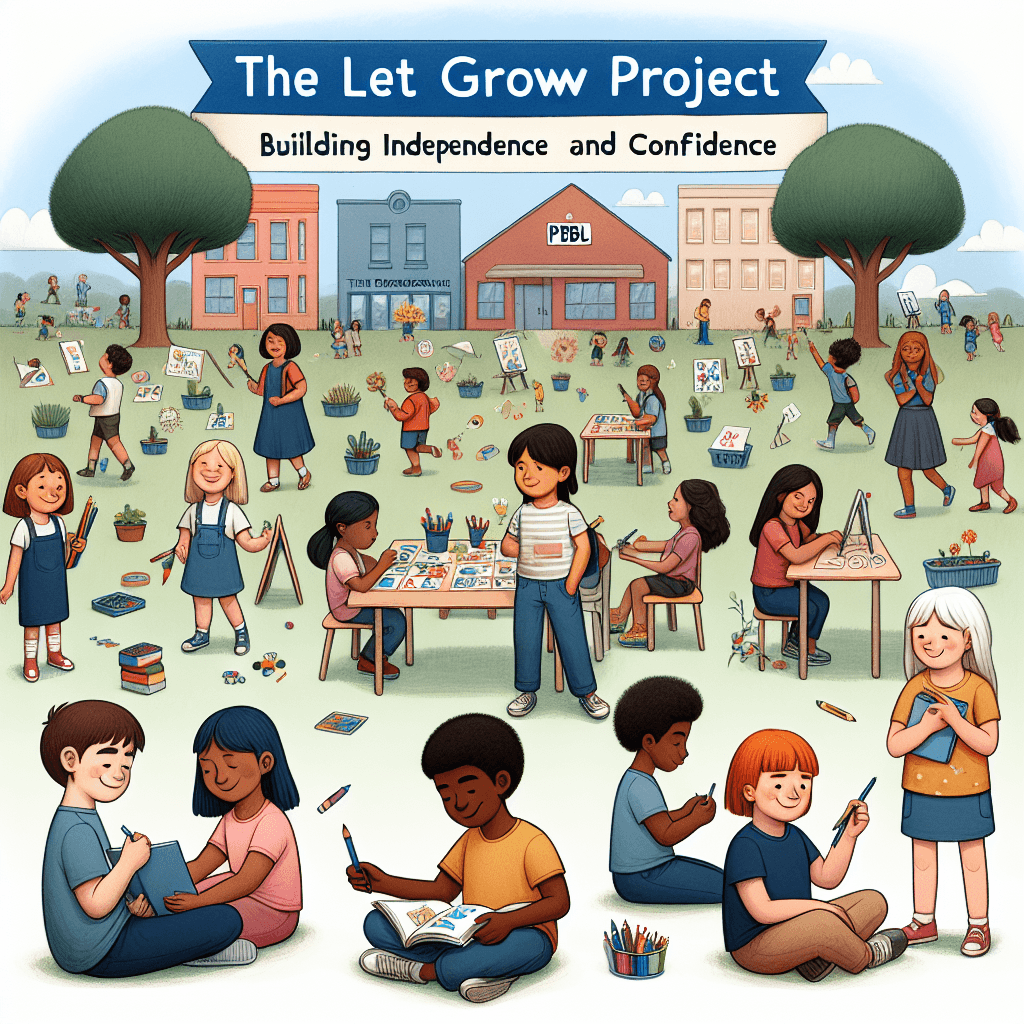
The Let Grow Project: Building Independence and Confidence
Inquiry Framework
Question Framework
Driving Question
The overarching question that guides the entire project.How can we, as 6th graders, redefine our independence and build trust with the adults in our lives by successfully navigating personal "Let Grow" challenges?Essential Questions
Supporting questions that break down major concepts.- What does it mean to be truly independent, and how does that definition change as we grow up?
- How does taking calculated risks and solving problems on our own build confidence and resilience?
- In what ways do the perceptions of 'safety' in our community differ from the actual risks we face?
- How can we communicate with the adults in our lives to build trust and earn more freedom?
- What is the relationship between independence and personal happiness during childhood?
- How does overcoming a fear or trying something new alone change the way we view our own capabilities?
Standards & Learning Goals
Learning Goals
By the end of this project, students will be able to:- Students will design and execute a 'Let Grow' challenge that requires planning, risk assessment, and independent action without direct adult supervision.
- Students will practice effective communication and negotiation skills to build trust and reach agreements with parents/guardians regarding personal autonomy.
- Students will analyze the difference between perceived societal risks and actual data-driven safety to develop a realistic understanding of their community environment.
- Students will reflect on personal growth by documenting how overcoming challenges independently influences their self-confidence and resilience.
- Students will collaborate with peers to share experiences and problem-solve obstacles encountered during their independence challenges.
CASEL (Social Emotional Learning)
Common Core State Standards (ELA)
National Health Education Standards (NHES)
Entry Events
Events that will be used to introduce the project to studentsThe Great Independence Audit
Students are handed a 'Secret Auditor' badge and a checklist to secretly observe their own lives for 24 hours. They must document every time an adult does something for them—like making a sandwich, packing a bag, or solving a social conflict—that they are actually capable of doing themselves, creating a visual 'Dependency Map.'Portfolio Activities
Portfolio Activities
These activities progressively build towards your learning goals, with each submission contributing to the student's final portfolio.The Independence Manifesto: Redefining Capability
To conclude the project, students will synthesize their experiences into a 'Manifesto' for independence. They will share their growth with their peers in a symposium style, celebrating the trust they’ve built and the skills they’ve gained.Steps
Here is some basic scaffolding to help students complete the activity.Final Product
What students will submit as the final product of the activityA 'Freedom Manifesto' multimedia presentation (video, speech, or digital story) that answers the driving question: 'How have I redefined my independence?'Alignment
How this activity aligns with the learning objectives & standardsAligns with CCSS.ELA-LITERACY.SL.6.1 (collaborative discussions) and CASEL.Responsible-Decision-Making.6 (reflecting on personal behavior and social interactions).From Dependency to Autonomy: The Personal Roadmap
Building on the 'Great Independence Audit' entry event, students will analyze their dependency maps to identify areas where they can take more initiative. They will then transition from observing their lack of independence to setting a specific, manageable goal for growth.Steps
Here is some basic scaffolding to help students complete the activity.Final Product
What students will submit as the final product of the activityA visual 'Independence Roadmap' poster or digital slide that identifies one specific dependency to eliminate and the steps required to achieve autonomy in that area.Alignment
How this activity aligns with the learning objectives & standardsAligns with CASEL.Self-Management.6 (setting goals and taking initiative) and CCSS.ELA-LITERACY.W.6.10 (writing for reflection).The Great Independence Pitch & Contract
Students will draft a formal proposal for their 'Let Grow' challenge—a specific activity they will do solo (e.g., walking to a store, cooking a meal, taking a bus). They will then use professional communication and negotiation strategies to present this to their parents or guardians.Steps
Here is some basic scaffolding to help students complete the activity.Final Product
What students will submit as the final product of the activityA signed 'Independence Contract' that outlines the specific challenge, safety protocols, and the agreement reached between the student and their adult.Alignment
How this activity aligns with the learning objectives & standardsAligns with NHES.4.8.1 (interpersonal communication skills to reduce health risks) and CCSS.ELA-LITERACY.SL.6.1 (collaborative discussions and expressing ideas clearly).The Hero’s Journey: Challenge & Reflection Logs
Over the course of two weeks, students will execute their Let Grow challenges. They will keep a detailed log of their experiences, focusing on the emotions they felt before, during, and after, and how they handled any unexpected 'pivots' or problems.Steps
Here is some basic scaffolding to help students complete the activity.Final Product
What students will submit as the final product of the activityA multi-entry 'Hero’s Journey Journal' (digital or physical) documenting at least three independent experiences or attempts.Alignment
How this activity aligns with the learning objectives & standardsAligns with CCSS.ELA-LITERACY.W.6.10 (writing routinely over extended time frames) and CASEL.Self-Management.6 (taking initiative and building resilience).Rubric & Reflection
Portfolio Rubric
Grading criteria for assessing the overall project portfolioLet Grow: Redefining Independence Rubric
Autonomy & Self-Management
Focuses on the student's ability to transition from passive dependency to active self-management.Goal Setting & Roadmap Development
Measures the student's ability to analyze their current dependency, identify a growth area, and create a concrete, multi-step plan for autonomy.
Exemplary
4 PointsThe student identifies a highly relevant dependency and outlines a sophisticated, three-step action plan with clear timelines and potential obstacle mitigation strategies.
Proficient
3 PointsThe student identifies a dependency and outlines three specific action steps required to master the task independently.
Developing
2 PointsThe student identifies a dependency but the action steps are vague or incomplete, showing only a partial roadmap to autonomy.
Beginning
1 PointsThe student struggles to identify a clear dependency or provides an unrealistic plan for independence without specific steps.
Collaborative Communication
Focuses on the interpersonal communication skills required to earn autonomy and reduce perceived risks.Negotiation & Trust Building
Evaluates the student's ability to use data, safety protocols, and professional tone to negotiate for increased freedom with adults.
Exemplary
4 PointsDemonstrates exceptional negotiation skills; presents a data-driven safety plan that anticipates concerns and builds significant trust with adults.
Proficient
3 PointsUses effective communication to present a clear safety plan and negotiate the details of the independence contract successfully.
Developing
2 PointsPresents a basic proposal but struggles to articulate safety data or negotiate calmly when faced with adult concerns.
Beginning
1 PointsCommunication is unclear or confrontational; the proposal lacks a viable safety plan or fails to address adult perspectives.
Responsible Decision-Making
Focuses on the practical application of safety plans and independent problem-solving in real-world settings.Risk Management & Execution
Assesses how well the student manages the physical challenge, including following safety protocols and solving unexpected problems (pivoting).
Exemplary
4 PointsSuccessfully navigates the challenge and demonstrates sophisticated problem-solving when obstacles arise; safety protocols are followed perfectly.
Proficient
3 PointsExecutes the challenge independently and follows the agreed-upon safety plan; handles minor issues with confidence.
Developing
2 PointsAttempts the challenge but requires significant adult intervention or fails to follow key safety protocols during the process.
Beginning
1 PointsFails to attempt the challenge or disregards safety protocols, resulting in an unsafe or incomplete experience.
Growth Mindset & Reflection
Focuses on the student's ability to document and learn from their experiences over time.Metacognition & Resilience Reflection
Evaluates the depth of self-analysis regarding fear, pride, and personal growth documented throughout the Hero's Journey entries.
Exemplary
4 PointsJournal entries provide a sophisticated analysis of emotional shifts and a deep understanding of how overcoming fear builds resilience.
Proficient
3 PointsRoutinely documents experiences with clear 'Emotion Spectrum' data and thoughtful reflections on personal capabilities.
Developing
2 PointsEntries are inconsistent or surface-level, providing only basic descriptions of activities without emotional or growth analysis.
Beginning
1 PointsReflections are incomplete or missing; shows little to no attempt to connect experiences to personal growth or resilience.
Independence Manifesto
Focuses on the final communication of learning and the redefinition of personal capability.Synthesis & Creative Presentation
Measures the ability to synthesize the entire 30-day experience into a clear, creative, and impactful statement of independence.
Exemplary
4 PointsProduces an innovative multimedia manifesto that articulates a profound redefinition of independence and offers visionary advice to others.
Proficient
3 PointsClearly answers the driving question through a well-organized multimedia presentation with specific evidence of personal growth.
Developing
2 PointsThe manifesto is presented but lacks a clear connection to the driving question or provides limited evidence of growth.
Beginning
1 PointsThe final product is incomplete or fails to reflect on the experience of independence and trust-building in a meaningful way.