
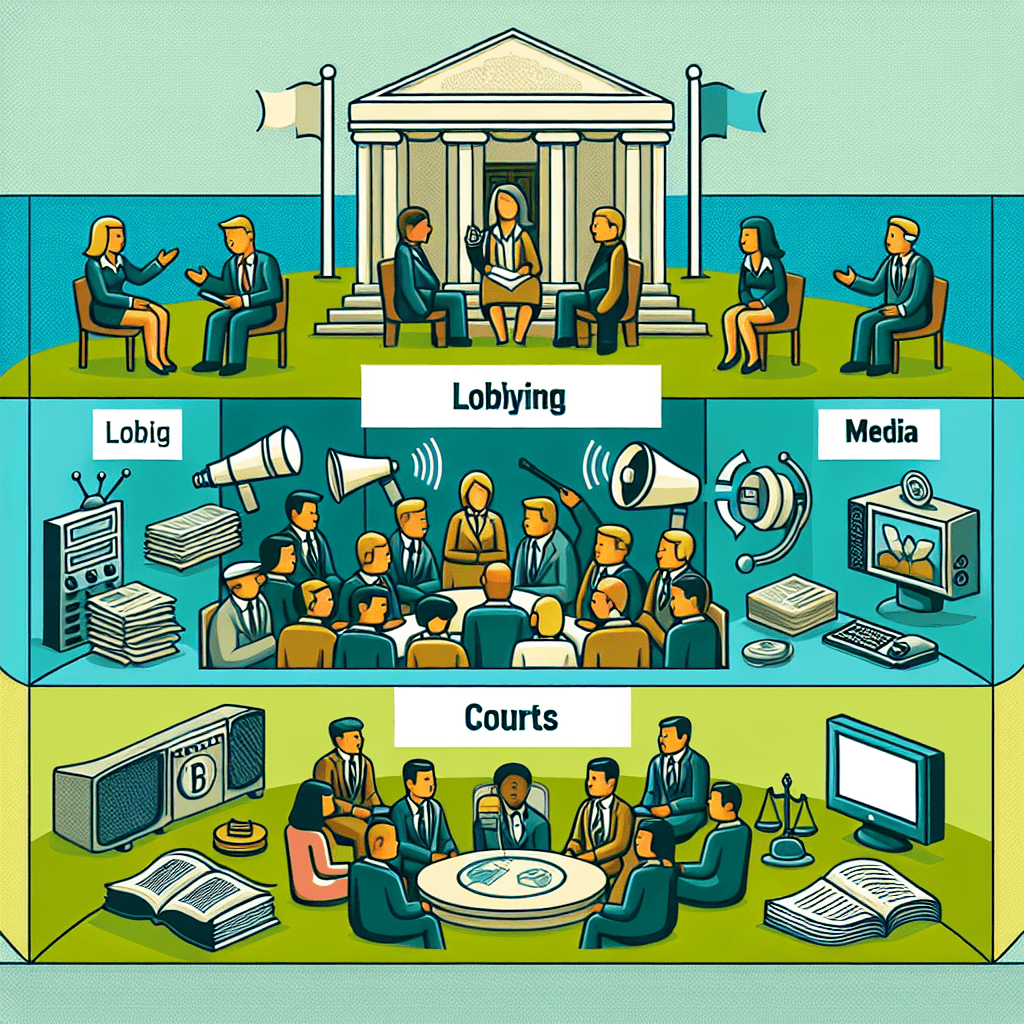
Three Levels of Law: Lobbying, Media, and Courts
Inquiry Framework
Question Framework
Driving Question
The overarching question that guides the entire project.How can we, as informed citizens, navigate and influence the interconnected legal systems at the federal, state, and local levels to address pressing issues in our community?Essential Questions
Supporting questions that break down major concepts.- How do federal, state, and local laws affect our daily lives?
- What role do lobbying and media play in shaping laws at different government levels?
- How do the federal, state, and local court systems interact and differ in jurisdiction?
- How can individuals influence the lawmaking process at each level of government?
Standards & Learning Goals
Learning Goals
By the end of this project, students will be able to:- Students will be able to compare and contrast the lawmaking processes at the federal, state, and local levels.
- Students will be able to explain the influence of lobbying and media on lawmaking at different government levels.
- Students will be able to identify the organization and jurisdiction of federal, state, and local courts and their interrelationships.
- Students will be able to analyze how individuals can influence the lawmaking process at each level of government.
Entry Events
Events that will be used to introduce the project to students'A Day in the Life' Simulation
Students participate in a day-long simulation where they role-play as legislators, lobbyists, and journalists at the federal, state, and local levels, dealing with a mock bill. This immersive experience will expose students to the real-world challenges and dynamics of lawmaking, lobbying, and media influence, sparking inquiry into the complexities of each governmental level.Portfolio Activities
Portfolio Activities
These activities progressively build towards your learning goals, with each submission contributing to the student's final portfolio.Level Up: Government Lawmaking 101
Students create an informational guide comparing the basics of lawmaking at the federal, state, and local levels.Steps
Here is some basic scaffolding to help students complete the activity.Final Product
What students will submit as the final product of the activityA detailed comparative guide to lawmaking at the federal, state, and local levels, including a chart and summaries.Alignment
How this activity aligns with the learning objectives & standardsAddresses the learning goal of comparing and contrasting the lawmaking processes at different levels.Lobbying & Media Influence: Unveiling the Truth
Students will investigate and present on the impact of lobbying and media on lawmaking at each level of government.Steps
Here is some basic scaffolding to help students complete the activity.Final Product
What students will submit as the final product of the activityA presentation analyzing the impact of lobbying and media on a specific piece of legislation at one or more levels of government.Alignment
How this activity aligns with the learning objectives & standardsAddresses the learning goal of explaining the influence of lobbying and media on lawmaking at different government levels.Courts in Action: Jurisdiction Junction
Students will map out the organization and jurisdiction of federal, state, and local courts and their interrelationships.Steps
Here is some basic scaffolding to help students complete the activity.Final Product
What students will submit as the final product of the activityVisual maps of the federal and state court systems, along with an essay explaining their jurisdictions and interrelationships.Alignment
How this activity aligns with the learning objectives & standardsAddresses the learning goal of identifying the organization and jurisdiction of courts and their interrelationships.Citizen Power: Influencing the System
Students will develop a plan to influence a lawmaking process at one of the three levels of government.Steps
Here is some basic scaffolding to help students complete the activity.Final Product
What students will submit as the final product of the activityA detailed plan to influence a specific lawmaking process, including goals, strategies, and potential impact.Alignment
How this activity aligns with the learning objectives & standardsAddresses the learning goal of analyzing how individuals can influence the lawmaking process at each level of government.Rubric & Reflection
Portfolio Rubric
Grading criteria for assessing the overall project portfolioLawmaking and Governance Portfolio Rubric
Understanding Lawmaking Processes
Demonstrates knowledge of the structure and processes of lawmaking at federal, state, and local levels.Comparison of Lawmaking Processes
Accurately compares and contrasts the lawmaking processes at the federal, state, and local levels, identifying key steps and differences.
Exemplary
4 PointsDemonstrates a sophisticated understanding of lawmaking processes at all three levels, providing insightful comparisons and identifying nuanced differences. The comparison is exceptionally detailed and accurate.
Proficient
3 PointsDemonstrates a thorough understanding of lawmaking processes at all three levels, providing accurate comparisons and contrasts. The comparison is detailed and well-organized.
Developing
2 PointsShows an emerging understanding of lawmaking processes, with some inaccuracies or omissions in the comparison. The comparison lacks detail and organization.
Beginning
1 PointsShows a limited understanding of lawmaking processes, with significant inaccuracies and omissions. The comparison is minimal or absent.
Analysis of Lobbying and Media Influence
Evaluates the impact of lobbying and media on lawmaking at different levels of government.Impact of Lobbying and Media
Analyzes the influence of lobbying and media on specific legislation, identifying involved groups, arguments, framing, and biases.
Exemplary
4 PointsProvides a comprehensive and insightful analysis of the influence of lobbying and media, demonstrating a nuanced understanding of their impact on the legislative outcome. Analysis includes identification of multiple perspectives and biases.
Proficient
3 PointsProvides a thorough analysis of the influence of lobbying and media, demonstrating a clear understanding of their impact on the legislative outcome. Analysis includes identification of key groups and arguments.
Developing
2 PointsShows an emerging understanding of the influence of lobbying and media, with some omissions or inaccuracies in the analysis. Analysis may lack depth and detail.
Beginning
1 PointsShows a limited understanding of the influence of lobbying and media, with significant inaccuracies and omissions. Analysis is minimal or absent.
Understanding Court Systems
Demonstrates knowledge of the organization, jurisdiction, and interrelationships of federal, state, and local court systems.Organization and Jurisdiction of Courts
Accurately maps out the organization and jurisdiction of federal and state court systems, explaining their interrelationships and overlaps.
Exemplary
4 PointsDemonstrates a sophisticated understanding of the organization and jurisdiction of court systems, providing a clear and insightful explanation of their interrelationships and overlaps. Maps are exceptionally detailed and accurate.
Proficient
3 PointsDemonstrates a thorough understanding of the organization and jurisdiction of court systems, providing an accurate explanation of their interrelationships and overlaps. Maps are detailed and well-organized.
Developing
2 PointsShows an emerging understanding of the organization and jurisdiction of court systems, with some inaccuracies or omissions in the explanation. Maps lack detail and organization.
Beginning
1 PointsShows a limited understanding of the organization and jurisdiction of court systems, with significant inaccuracies and omissions. Maps are minimal or absent.
Citizen Engagement and Influence
Develops a plan to influence a lawmaking process, demonstrating understanding of civic engagement strategies.Plan for Influencing Lawmaking
Develops a detailed and realistic plan to influence a specific lawmaking process, including clear goals, strategies, and potential impact.
Exemplary
4 PointsPresents an innovative and highly effective plan to influence a lawmaking process, demonstrating a sophisticated understanding of civic engagement strategies and potential impact. Plan is exceptionally detailed, realistic, and well-justified.
Proficient
3 PointsPresents a well-developed and realistic plan to influence a lawmaking process, demonstrating a clear understanding of civic engagement strategies and potential impact. Plan is detailed, realistic, and well-justified.
Developing
2 PointsPresents an emerging plan to influence a lawmaking process, with some omissions or unrealistic strategies. Plan lacks detail and justification.
Beginning
1 PointsPresents a minimal or unrealistic plan to influence a lawmaking process, demonstrating a limited understanding of civic engagement strategies. Plan is vague and lacks justification.