
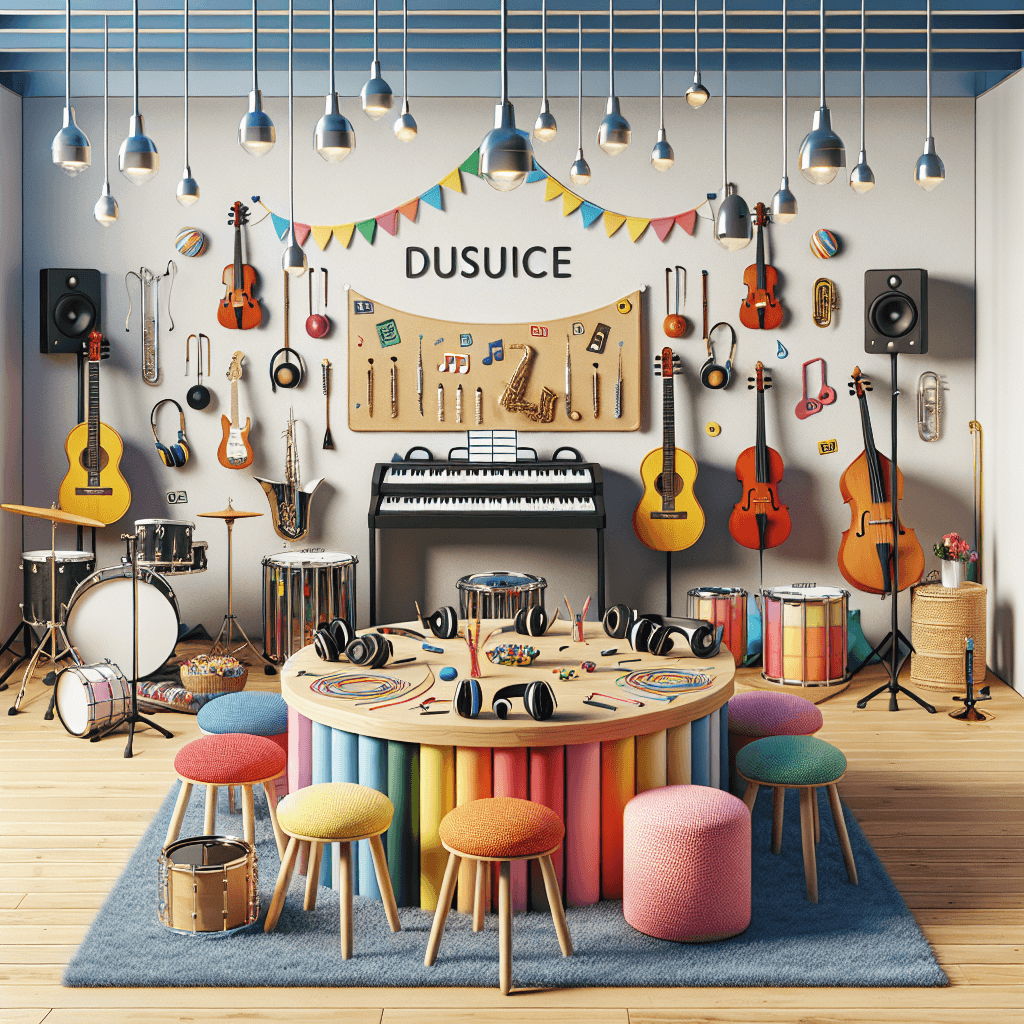
time machine studio: produce music across the decades
Inquiry Framework
Question Framework
Driving Question
The overarching question that guides the entire project.How can we, as modern musicians, create original music that reflects historical and cultural influences while using music theory and critical analysis to make meaningful social commentary?Essential Questions
Supporting questions that break down major concepts.- How do historical and cultural contexts shape musical expression?
- In what ways can music serve as a form of social commentary or protest?
- How can understanding music theory enhance creative music production?
- What constitutes effective musical criticism, and how can it inform artistic choices?
- How do different genres of music reflect and influence societal values?
- How can the study of music history, theory, and criticism contribute to personal artistic growth and identity?
- How does technology impact music production and consumption?
- What is the role of originality and authenticity in music creation?
- How can musicians navigate the business aspects of the music industry while maintaining artistic integrity?
Standards & Learning Goals
Learning Goals
By the end of this project, students will be able to:- Create original music productions spanning multiple genres and historical influences.
- Analyze professional music tracks from different eras and genres.
- Understand the historical and theoretical foundations behind various musical works.
- Apply music theory concepts in original music compositions.
- Critique music using professional analytical frameworks.
- Develop technical music production skills.
- Improve active listening skills and musical appreciation.
- Understand the cultural and social significance of music.
- Enhance portfolio with written critical analyses and artist statements.
- Develop skills in arrangement, mixing, and sound design
Entry Events
Events that will be used to introduce the project to studentsThe Mystery MP3
Students receive an anonymous MP3 file containing a mashup of seemingly disparate musical styles and eras (e.g., Beethoven's 5th mashed with Kendrick Lamar). They must collaboratively analyze the track, identify its components, and hypothesize the creator's intent, sparking curiosity about the course's breadth.Deconstructing a Hit
The instructor plays a popular, current hit song but abruptly stops it every 15 seconds to ask 'Why?' Why did the artist choose that chord? Why that rhythm? This challenges students to think critically about production choices and foreshadows the course's analytical approach.Musical Time Machine
The classroom is transformed into a 'musical time machine' with different stations representing musical eras (e.g., Classical, Blues, Electronic). Students rotate through the stations, experiencing brief immersive activities (listening, playing instruments, analyzing scores) that highlight key characteristics and foreshadow the course's historical journey.Soundtrack of Our Lives
Students create a collaborative playlist of songs that are personally meaningful to them. Each student shares why they chose their song and how it connects to their life. This activity establishes personal relevance and highlights the diverse musical tastes within the group, setting the stage for exploring different genres.The Producer's Challenge
Students are given a very basic, unproduced musical idea (a simple melody or drum loop) and challenged to transform it into a complete track within a limited time (e.g., 20 minutes) using provided software. This hands-on activity immediately engages their creativity and introduces them to the production process.Portfolio Activities
Portfolio Activities
These activities progressively build towards your learning goals, with each submission contributing to the student's final portfolio.Timeline of Musical Eras
Students will create a visual timeline that maps significant musical eras, movements, and their key characteristics. This activity will lay the groundwork for understanding the historical context of different genres and musical styles explored throughout the course.Steps
Here is some basic scaffolding to help students complete the activity.Final Product
What students will submit as the final product of the activityA detailed visual timeline of music history, showcasing major eras, characteristics, and representative works.Alignment
How this activity aligns with the learning objectives & standardsAddresses the learning goal of understanding the historical foundations behind various musical works. Aligns with understanding cultural and social significance of music and genre development.Elements of Music Analysis Chart
Students will develop a chart for analyzing the elements of music (melody, harmony, rhythm, timbre, texture, form) in professional tracks. This tool will be used throughout the course to dissect and understand the theoretical underpinnings of different songs.Steps
Here is some basic scaffolding to help students complete the activity.Final Product
What students will submit as the final product of the activityA comprehensive analysis chart for dissecting and understanding the elements of music in various tracks.Alignment
How this activity aligns with the learning objectives & standardsAddresses the learning goals of analyzing professional music tracks and understanding the theoretical foundations behind musical works. Aligns with understanding music theory, active listening, and musical appreciation.Soundtrap Basics Tutorial
Students will complete a series of guided tutorials to learn the basics of Soundtrap (or their chosen DAW). This activity ensures all students have a foundational understanding of the software before embarking on more complex production tasks.Steps
Here is some basic scaffolding to help students complete the activity.Final Product
What students will submit as the final product of the activityA demo track demonstrating proficiency in basic Soundtrap functions.Alignment
How this activity aligns with the learning objectives & standardsAddresses the learning goal of developing technical music production skills.My Musical DNA
Students create a presentation outlining their musical influences, favorite artists, and genres they enjoy. They will explore reasons behind these choices and discuss if they have preference regarding lyrics, tempo, instruments, emotional connection, or personal history.Steps
Here is some basic scaffolding to help students complete the activity.Final Product
What students will submit as the final product of the activityA presentation outlining students musical influences, favorite artists and genres, including reasoning for choices.Alignment
How this activity aligns with the learning objectives & standardsAddresses the learning goal of musical appreciation and understanding cultural and social significance of music.Genre Exploration Report
Students will research one specific genre in depth, tracing its origins, evolution, key artists, and cultural impact. This assignment fosters research skills and provides a deeper understanding of music history.Steps
Here is some basic scaffolding to help students complete the activity.Final Product
What students will submit as the final product of the activityA detailed research report on a specific music genre, including its history, key artists, and cultural impact.Alignment
How this activity aligns with the learning objectives & standardsAddresses the learning goals of understanding the historical and theoretical foundations behind various musical works, and understanding the cultural and social significance of music.Beat Breakdown Challenge
Students recreate a simple beat from a well-known song using Soundtrap. They will identify individual sound layers and recreate them with similar or identical components.Steps
Here is some basic scaffolding to help students complete the activity.Final Product
What students will submit as the final product of the activityA recreated beat in Soundtrap that closely replicates a beat from a known song.Alignment
How this activity aligns with the learning objectives & standardsAddresses the learning goals of developing technical music production skills, improving active listening skills, and applying music theory concepts in original music compositions.Rubric & Reflection
Portfolio Rubric
Grading criteria for assessing the overall project portfolioTimeline of Musical Eras Rubric
Content Accuracy and Comprehensiveness
This category assesses the accuracy and depth of information presented on the timeline, including key characteristics, composers/artists, and historical context for each musical era.Historical Accuracy
The degree to which the timeline accurately represents the historical context and key developments of each musical era.
Exemplary
4 PointsPresents a timeline with impeccable historical accuracy, demonstrating a deep understanding of each era's context and developments. Demonstrates meticulous research and attention to detail.
Proficient
3 PointsPresents a timeline with generally accurate historical information, with only minor inaccuracies or omissions. Shows a solid understanding of the major developments in each era.
Developing
2 PointsPresents a timeline with some historical inaccuracies or omissions, indicating a need for further research and a more thorough understanding of the historical context.
Beginning
1 PointsPresents a timeline with significant historical inaccuracies or omissions, demonstrating a lack of understanding of the historical context of the musical eras.
Comprehensiveness
The extent to which the timeline covers a wide range of musical eras and includes detailed information about each.
Exemplary
4 PointsCovers a broad range of musical eras with exceptional detail, including key figures, movements, and significant developments. Provides a holistic view of music history.
Proficient
3 PointsCovers a good range of musical eras with sufficient detail, including most key figures and movements. Provides a clear overview of music history.
Developing
2 PointsCovers a limited range of musical eras with some missing details, indicating a need for more comprehensive research.
Beginning
1 PointsCovers a very limited range of musical eras with minimal detail, demonstrating a lack of comprehensive understanding of music history.
Visual Design and Organization
This category assesses the visual appeal, clarity, and organization of the timeline, including the effective use of images, text, and layout to convey information.Visual Appeal
The aesthetic quality of the timeline, including the use of color, images, and overall design.
Exemplary
4 PointsThe timeline is visually stunning and engaging, with a sophisticated use of color, images, and design elements that enhance the overall presentation and create a memorable experience.
Proficient
3 PointsThe timeline is visually appealing and well-designed, with a clear and effective use of color, images, and design elements that make the information accessible and engaging.
Developing
2 PointsThe timeline has some visual appeal, but the use of color, images, or design elements could be improved to enhance the presentation and make it more engaging.
Beginning
1 PointsThe timeline lacks visual appeal and is poorly designed, with ineffective use of color, images, or design elements that detract from the overall presentation.
Organization and Clarity
The logical structure and clarity of the timeline, making it easy to follow and understand the progression of musical eras.
Exemplary
4 PointsThe timeline is exceptionally well-organized and clear, with a logical structure that makes it easy to follow the progression of musical eras and understand the relationships between them.
Proficient
3 PointsThe timeline is well-organized and clear, with a logical structure that allows the viewer to easily follow the progression of musical eras.
Developing
2 PointsThe timeline's organization could be improved to enhance clarity and make it easier to follow the progression of musical eras. Some elements may be confusing or disorganized.
Beginning
1 PointsThe timeline is poorly organized and lacks clarity, making it difficult to follow the progression of musical eras and understand the relationships between them.
Presentation and Communication
This category assesses the student's ability to effectively present the timeline to the class, highlighting key connections between historical events and musical developments. It emphasizes clarity, engagement, and thoughtful insights.Clarity and Articulation
The clarity and precision with which the student presents the timeline information.
Exemplary
4 PointsPresents the timeline information with exceptional clarity and articulation, using precise language and demonstrating a deep understanding of the material. Effectively communicates complex ideas in an accessible manner.
Proficient
3 PointsPresents the timeline information clearly and articulately, using appropriate language and demonstrating a solid understanding of the material.
Developing
2 PointsPresents the timeline information with some lack of clarity or articulation, indicating a need for improved communication skills and a more thorough understanding of the material.
Beginning
1 PointsPresents the timeline information with significant lack of clarity and articulation, demonstrating poor communication skills and a limited understanding of the material.
Engagement and Insight
The student's ability to engage the audience and provide thoughtful insights into the connections between historical events and musical developments.
Exemplary
4 PointsCaptivates the audience with an engaging presentation that provides profound insights into the connections between historical events and musical developments. Demonstrates a remarkable ability to connect music to broader cultural and social contexts.
Proficient
3 PointsEngages the audience with a thoughtful presentation that provides clear insights into the connections between historical events and musical developments.
Developing
2 PointsPresents the information with limited audience engagement, offering few insights into the connections between historical events and musical developments. Shows a basic understanding of the relationships but lacks depth.
Beginning
1 PointsFails to engage the audience and provides no insights into the connections between historical events and musical developments. Demonstrates a superficial understanding of the material.