
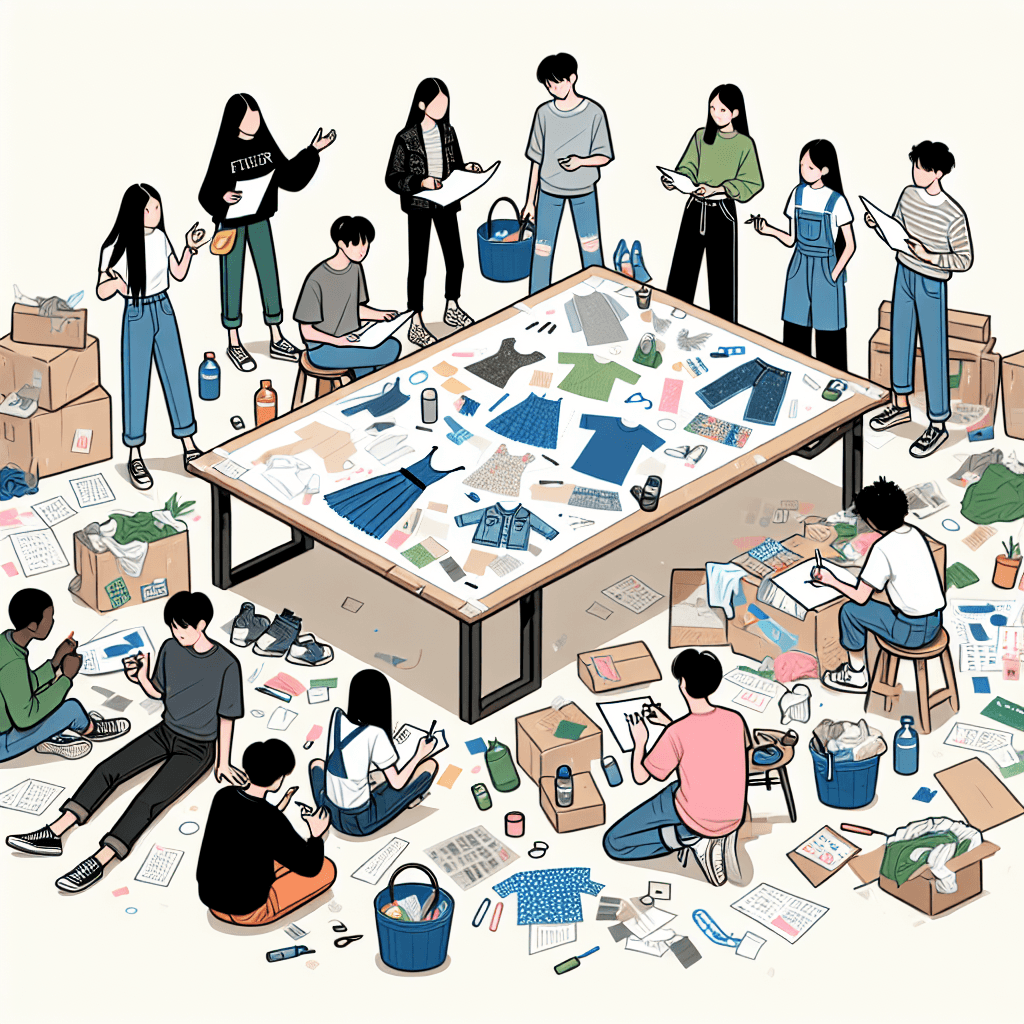
Trash to Runway: Sustainable Fashion Design Challenge
Inquiry Framework
Question Framework
Driving Question
The overarching question that guides the entire project.How can we, as eco-conscious designers, transform discarded materials into wearable art that challenges consumerism and promotes sustainable fashion practices?Essential Questions
Supporting questions that break down major concepts.- How can discarded materials be transformed into wearable art?
- What design principles can be applied to create aesthetically pleasing garments from trash?
- How does the fashion industry contribute to pollution, and what are sustainable alternatives?
- What role does consumerism play in waste generation, and how can we promote more responsible consumption habits?
- How can art be used to raise awareness about environmental issues and inspire social change?
Standards & Learning Goals
Learning Goals
By the end of this project, students will be able to:- Students will learn about the environmental impact of the fashion industry.
- Students will learn about sustainable design practices.
- Students will learn about consumerism and its impact on waste generation.
- Students will learn how to transform discarded materials into wearable art.
- Students will apply design principles to create aesthetically pleasing garments from trash.
- Students will use art to raise awareness about environmental issues and inspire social change.
Entry Events
Events that will be used to introduce the project to students"Trash Runway Challenge"
Students are shown a video montage of high-fashion runway shows, but with a twist – all the garments are made from recycled materials. The challenge is then presented: each student must create a sketch of a dress design using only trash, sparking initial ideas and discussions around feasibility and aesthetics.Portfolio Activities
Portfolio Activities
These activities progressively build towards your learning goals, with each submission contributing to the student's final portfolio.Trash Transformation Brainstorm
Students brainstorm the possibilities of turning trash into fashionable garments. This activity encourages creative thinking and problem-solving as students consider the properties of different waste materials and how they can be manipulated to create wearable art.Steps
Here is some basic scaffolding to help students complete the activity.Final Product
What students will submit as the final product of the activityA detailed list of trash items and their potential uses in garment construction, accompanied by initial design sketches.Alignment
How this activity aligns with the learning objectives & standardsAddresses the learning goal of transforming discarded materials into wearable art.Fashion Industry Footprint Research
Students conduct research on the environmental impact of the fashion industry. They will investigate issues such as water pollution, textile waste, and carbon emissions, gaining a deeper understanding of the need for sustainable practices.Steps
Here is some basic scaffolding to help students complete the activity.Final Product
What students will submit as the final product of the activityA report or presentation summarizing the environmental impact of the fashion industry, with cited sources.Alignment
How this activity aligns with the learning objectives & standardsAddresses the learning goal of understanding the environmental impact of the fashion industry.Sustainable Design Principles Exploration
Students explore sustainable design principles and practices that can be applied to fashion. This includes learning about eco-friendly materials, zero-waste design techniques, and ethical production methods.Steps
Here is some basic scaffolding to help students complete the activity.Final Product
What students will submit as the final product of the activityA written analysis of sustainable design principles and how they can be incorporated into the trash fashion project.Alignment
How this activity aligns with the learning objectives & standardsAddresses the learning goal of learning about sustainable design practices.Consumerism Critique: Waste Generation Analysis
Students analyze the role of consumerism in waste generation. They will investigate how consumer culture contributes to the problem of waste and explore ways to promote more responsible consumption habits.Steps
Here is some basic scaffolding to help students complete the activity.Final Product
What students will submit as the final product of the activityAn essay or presentation critiquing consumerism and proposing solutions for reducing waste generation.Alignment
How this activity aligns with the learning objectives & standardsAddresses the learning goal of understanding consumerism and its impact on waste generation.Wearable Art Creation: Trash to Treasure
Students begin the process of transforming their design sketches into actual wearable art. They will collect and clean trash materials, experiment with different construction techniques, and assemble their garments.Steps
Here is some basic scaffolding to help students complete the activity.Final Product
What students will submit as the final product of the activityA partially completed wearable art garment made from trash materials.Alignment
How this activity aligns with the learning objectives & standardsAddresses the learning goal of transforming discarded materials into wearable art and applying design principles.Aesthetic Appeal: Design Principle Application
Students learn about design principles (e.g., balance, proportion, color, texture) and apply them to their trash garments to enhance their aesthetic appeal. They will experiment with different techniques to create visually pleasing designs.Steps
Here is some basic scaffolding to help students complete the activity.Final Product
What students will submit as the final product of the activityA revised garment design incorporating design principles, along with a written explanation of the design choices.Alignment
How this activity aligns with the learning objectives & standardsAddresses the learning goal of applying design principles to create aesthetically pleasing garments from trash.Art for Awareness: Social Change Statement
Students craft an artist's statement explaining how their wearable art raises awareness about environmental issues and inspires social change. They will articulate the message they want to convey through their designs and discuss how art can be used as a tool for advocacy.Steps
Here is some basic scaffolding to help students complete the activity.Final Product
What students will submit as the final product of the activityA well-crafted artist's statement articulating the social and environmental message of their wearable art.Alignment
How this activity aligns with the learning objectives & standardsAddresses the learning goal of using art to raise awareness about environmental issues and inspire social change.Trash Runway Showcase: Exhibition and Reflection
Students showcase their completed wearable art garments in a "Trash Runway" exhibition. They will present their designs to an audience, share their artist's statements, and reflect on the learning process.Steps
Here is some basic scaffolding to help students complete the activity.Final Product
What students will submit as the final product of the activityA completed wearable art garment, participation in the "Trash Runway" exhibition, and a reflection paper on the learning experience.Alignment
How this activity aligns with the learning objectives & standardsAddresses all learning goals, including environmental impact, sustainable design, consumerism, wearable art creation, design principles, and social change.Rubric & Reflection
Portfolio Rubric
Grading criteria for assessing the overall project portfolioTrash Runway Showcase: Exhibition and Reflection Rubric
Garment Craftsmanship & Design
Focuses on the quality of construction, use of materials, and overall design effectiveness of the wearable art.Construction Quality
Assesses the durability, neatness, and skill demonstrated in constructing the garment from trash materials.
Exemplary
4 PointsGarment is expertly constructed with meticulous attention to detail; construction is durable and visually seamless.
Proficient
3 PointsGarment is well-constructed with attention to detail; construction is mostly durable and visually appealing.
Developing
2 PointsGarment construction shows some effort, but may have noticeable flaws or areas of weakness.
Beginning
1 PointsGarment construction is rudimentary and unstable; significant flaws are present.
Material Use & Innovation
Evaluates the creative and effective use of trash materials in the garment design.
Exemplary
4 PointsMaterials are used in highly innovative and unexpected ways, demonstrating a deep understanding of their properties and potential.
Proficient
3 PointsMaterials are used effectively and creatively to achieve the design goals.
Developing
2 PointsMaterials are used in a somewhat predictable manner; some potential is realized.
Beginning
1 PointsMaterials are used in a basic and unimaginative way.
Aesthetic Appeal & Design Principles
Assesses how well the garment applies design principles (balance, proportion, color, texture) to create an aesthetically pleasing and visually engaging piece.
Exemplary
4 PointsGarment demonstrates a sophisticated understanding of design principles, resulting in a visually stunning and impactful piece of wearable art.
Proficient
3 PointsGarment effectively applies design principles to create an aesthetically pleasing and visually engaging piece.
Developing
2 PointsGarment shows some awareness of design principles, but application is inconsistent.
Beginning
1 PointsGarment demonstrates little to no understanding of design principles.
Artist's Statement & Social Commentary
Focuses on the clarity, depth, and impact of the artist's statement in conveying the social and environmental message of the wearable art.Clarity of Message
Assesses how clearly and effectively the artist's statement articulates the social and environmental message of the wearable art.
Exemplary
4 PointsArtist's statement is exceptionally clear, concise, and powerfully conveys the intended message.
Proficient
3 PointsArtist's statement is clear and effectively conveys the intended message.
Developing
2 PointsArtist's statement is somewhat unclear and could be more focused in its message.
Beginning
1 PointsArtist's statement is unclear and fails to effectively convey the intended message.
Depth of Reflection
Evaluates the depth of reflection on the environmental issues and the connection to the art piece.
Exemplary
4 PointsStatement demonstrates a deep and insightful understanding of the environmental issues and a clear connection to the art piece.
Proficient
3 PointsStatement demonstrates a good understanding of the environmental issues and a clear connection to the art piece.
Developing
2 PointsStatement demonstrates some understanding of the environmental issues, but the connection to the art piece could be stronger.
Beginning
1 PointsStatement demonstrates a limited understanding of the environmental issues and a weak connection to the art piece.
Impact & Social Commentary
Assesses the potential impact of the artist's statement in raising awareness and inspiring social change.
Exemplary
4 PointsArtist's statement is highly impactful and thought-provoking, demonstrating a strong understanding of social commentary and advocacy.
Proficient
3 PointsArtist's statement is impactful and raises awareness about relevant social and environmental issues.
Developing
2 PointsArtist's statement attempts to address social and environmental issues, but the impact is limited.
Beginning
1 PointsArtist's statement lacks a clear social or environmental message and has little impact.
Reflection Paper & Learning Experience
Focuses on the depth of reflection on the learning experience, challenges faced, and key takeaways from the project.Insightful Reflection
Assesses the depth and insightfulness of the reflection on the overall learning experience.
Exemplary
4 PointsReflection paper demonstrates a profound and insightful understanding of the learning experience, challenges faced, and key takeaways.
Proficient
3 PointsReflection paper demonstrates a thoughtful and comprehensive understanding of the learning experience.
Developing
2 PointsReflection paper provides a basic overview of the learning experience, but lacks depth and insight.
Beginning
1 PointsReflection paper is superficial and fails to adequately address the learning experience.
Articulation of Challenges
Evaluates how well the student articulates the challenges faced during the project and the strategies used to overcome them.
Exemplary
4 PointsReflection paper clearly and thoughtfully articulates the challenges faced and the innovative strategies used to overcome them.
Proficient
3 PointsReflection paper clearly articulates the challenges faced and the strategies used to overcome them.
Developing
2 PointsReflection paper identifies some challenges, but the articulation of strategies is weak.
Beginning
1 PointsReflection paper fails to adequately identify or articulate the challenges faced.
Key Takeaways & Future Application
Assesses the student's ability to identify key takeaways from the project and how they can be applied in the future.
Exemplary
4 PointsReflection paper demonstrates a clear understanding of key takeaways and articulates how they can be applied to future endeavors and promotes sustainable practices.
Proficient
3 PointsReflection paper identifies key takeaways and suggests potential future applications.
Developing
2 PointsReflection paper identifies some takeaways, but the connection to future applications is weak.
Beginning
1 PointsReflection paper fails to identify meaningful takeaways or future applications.