
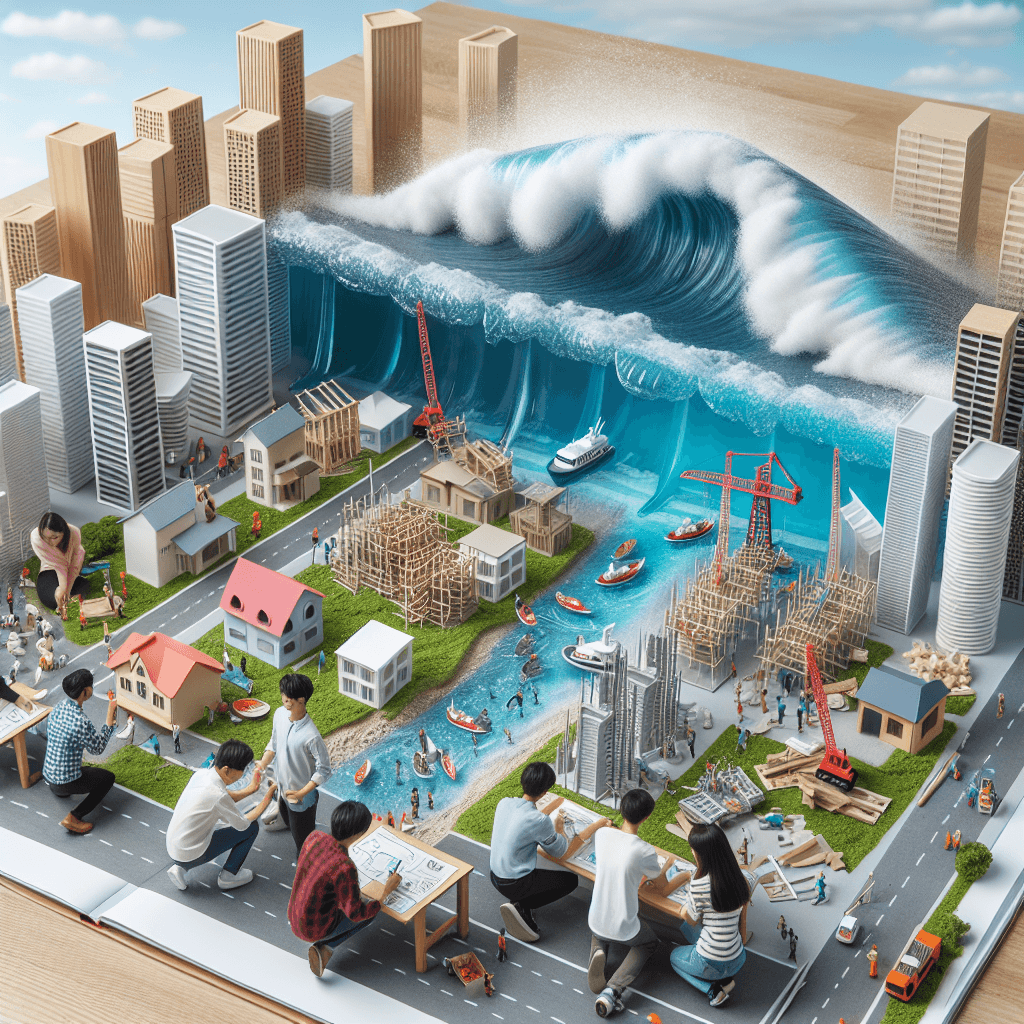
Tsunami Defense: Designing Efficient Protection Systems
Inquiry Framework
Question Framework
Driving Question
The overarching question that guides the entire project.How can we design an efficient and innovative tsunami defense system by understanding the geological causes, impacts, and forces within the Earth's crust?Essential Questions
Supporting questions that break down major concepts.- What are the geological causes and impacts of tsunamis on society and the environment?
- How have historical tsunami events shaped our understanding of geological forces?
- What current technologies or systems are in place to reduce the impact of tsunamis?
- How can understanding the movement and forces within the Earth's crust help in designing tsunami defense systems?
Standards & Learning Goals
Learning Goals
By the end of this project, students will be able to:- Understand the geological causes of tsunamis and their impacts on the environment and society.
- Analyze historical tsunami events to gain insights into Earth's geological forces.
- Research and evaluate current technologies for tsunami defense to inform innovative design.
- Design a tsunami defense system leveraging knowledge of Earth's crust movements and forces.
Provided Teacher Standard
Next Generation Science Standards
Entry Events
Events that will be used to introduce the project to studentsVirtual Reality Tsunami Experience
Students enter a virtual reality simulation of a tsunami, witnessing its powerful impact on human settlements. This immersive entry allows them to feel the urgency of devising protection systems, sparking curiosity to explore scientific principles behind tsunamis.Portfolio Activities
Portfolio Activities
These activities progressively build towards your learning goals, with each submission contributing to the student's final portfolio.Tsunami Timeline Tracker
Students create a detailed timeline of historical tsunami events to understand societal and environmental impacts as well as geological causes.Steps
Here is some basic scaffolding to help students complete the activity.Final Product
What students will submit as the final product of the activityA comprehensive digital timeline with annotated explanations of each tsunami event.Alignment
How this activity aligns with the learning objectives & standardsAligns with EC7.1 by analyzing societal and environmental impacts of historical geological events.Geological Detective: Forces and Movements
Students investigate and present on how geological forces and movements within Earth's crust contribute to tsunamis.Steps
Here is some basic scaffolding to help students complete the activity.Final Product
What students will submit as the final product of the activityAn in-class presentation explaining the connection between geological forces/movements and tsunamis.Alignment
How this activity aligns with the learning objectives & standardsFulfills part of EC7.1 by focusing on scientific understanding of movements and forces within Earth's crust.Techno Shield Innovations
Students explore current technologies and innovate on designs for tsunami defense systems, grounding their ideas in scientific data.Steps
Here is some basic scaffolding to help students complete the activity.Final Product
What students will submit as the final product of the activityA detailed innovation report and a prototype or blueprint of an improved tsunami defense system.Alignment
How this activity aligns with the learning objectives & standardsMatches MS-ESS3-2 and EC7.1 by developing technologies to mitigate tsunami effects and understanding geological impacts.Rubric & Reflection
Portfolio Rubric
Grading criteria for assessing the overall project portfolioTsunami Defense Systems Portfolio Evaluation
Understanding of Geological Causes and Impacts
Evaluation of students' comprehension regarding the geological causes of tsunamis and their societal and environmental impacts.Historical Tsunami Events Analysis
Assesses student's ability to analyze historical tsunami events and their societal and environmental impacts.
Exemplary
4 PointsProvides a comprehensive analysis of multiple historical tsunami events with detailed insights into their causes and impacts, showcasing advanced understanding and integration of scientific principles.
Proficient
3 PointsOffers a thorough analysis of several historical tsunami events, clearly explaining their causes and impacts with appropriate scientific reasoning.
Developing
2 PointsAnalyzes a limited number of tsunami events with basic explanations of causes and impacts, showing emerging understanding.
Beginning
1 PointsProvides a minimal analysis of few tsunami events with unclear or insufficient explanations of causes and impacts.
Geological Forces and Movements Comprehension
Assesses understanding of the geological forces and movements leading to tsunamis.
Exemplary
4 PointsDemonstrates an advanced understanding of geological forces, employing scientific evidence to thoroughly explain their connection to tsunamis.
Proficient
3 PointsShows a solid understanding of geological forces with clear explanations, supported by scientific evidence.
Developing
2 PointsProvides basic explanations of geological forces with minimal scientific support, indicating partial understanding.
Beginning
1 PointsDisplays limited understanding of geological forces, with unclear or unsupported explanations.
Innovation in Tsunami Defense Design
Measures student innovation and application of scientific principles in designing tsunami defense systems.Research and Analysis of Existing Technologies
Evaluates how well students research, analyze, and critique existing tsunami defense technologies.
Exemplary
4 PointsConducts in-depth research and provides a critical analysis of multiple existing technologies, highlighting strengths and weaknesses with advanced insights.
Proficient
3 PointsCarries out thorough research and analysis, identifying key strengths and weaknesses of existing technologies.
Developing
2 PointsCompletes basic research and analysis, offering limited critique of existing technologies.
Beginning
1 PointsProvides minimal research and analysis, with insufficient critique of existing technologies.
Design and Innovation of Tsunami Defense
Assesses the creativity and scientific basis of the student's proposed tsunami defense design.
Exemplary
4 PointsPresents an innovative and well-reasoned defense design, thoroughly supported by scientific data and principles, showing exceptional creativity and feasibility.
Proficient
3 PointsDelivers a scientifically sound defense design, well-supported by research with clear innovation.
Developing
2 PointsOffers a basic defense design with some innovative elements, partially supported by scientific rationale.
Beginning
1 PointsProposes an incomplete or poorly reasoned defense design, with minimal scientific support or innovation.
Presentation and Communication
Evaluates the effectiveness of student presentations and their ability to communicate complex ideas clearly and persuasively.Clarity and Organization
Assesses how clearly and logically students organize and present their ideas and findings.
Exemplary
4 PointsPresents information in a highly organized and articulate manner, displaying exceptional clarity and logical flow.
Proficient
3 PointsCommunicates ideas clearly with precise organization and logical flow.
Developing
2 PointsPresents information with some organizational issues and moments of unclear communication.
Beginning
1 PointsDisplays significant organizational problems and unclear communication throughout the presentation.
Engagement and Use of Evidence
Measures the ability to engage the audience effectively and support ideas with evidence.
Exemplary
4 PointsEngages the audience effectively using strong evidence to support claims, with dynamic and persuasive delivery.
Proficient
3 PointsEngages the audience using adequate evidence, with clear and persuasive delivery.
Developing
2 PointsAttempts to engage the audience with some evidence, though delivery lacks persuasiveness.
Beginning
1 PointsFails to engage the audience, with minimal evidence and an unengaging delivery.