
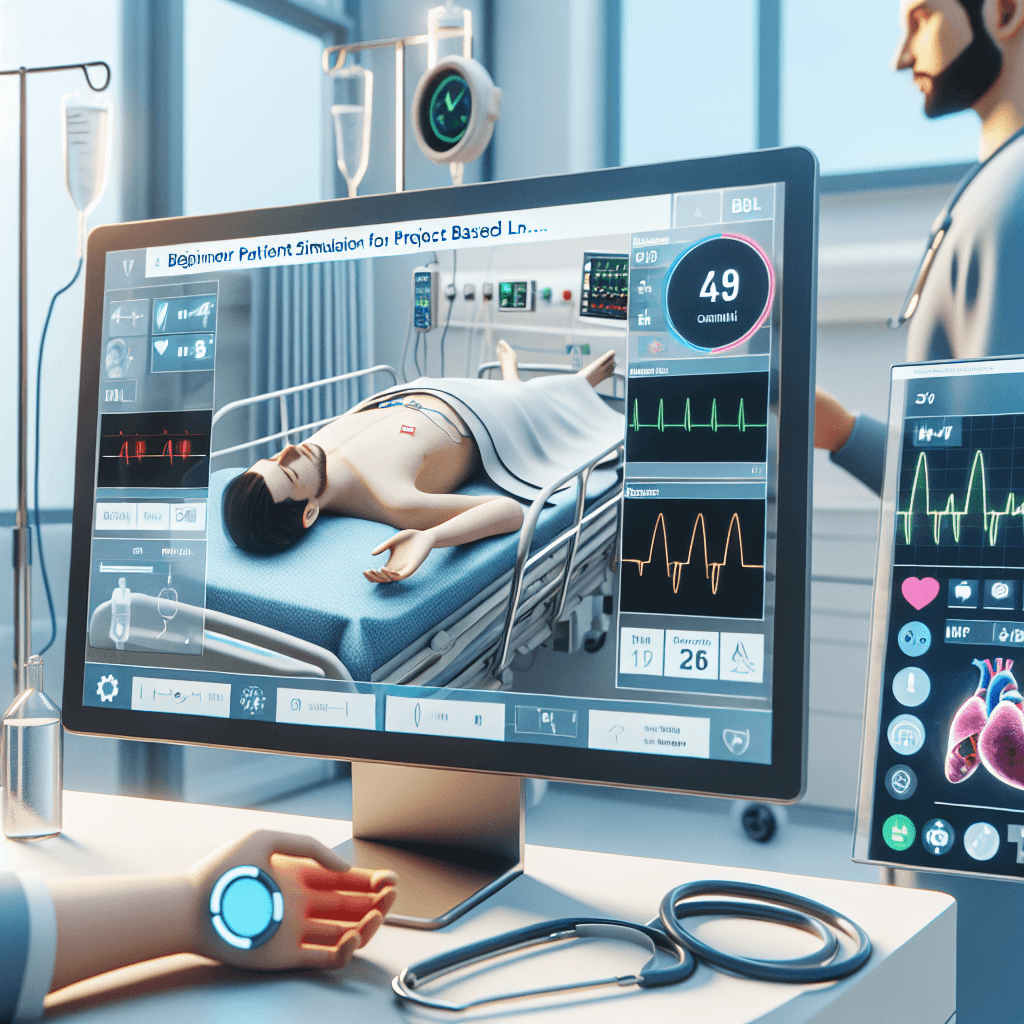
Virtual Patient Simulation: Shortness of Breath Case
Inquiry Framework
Question Framework
Driving Question
The overarching question that guides the entire project.How can we, as primary nurses, leverage AI-driven simulations to develop and implement evidence-based care plans for adult patients experiencing worsening shortness of breath and multiple comorbidities, and how do we evaluate the effectiveness of our interventions to improve patient outcomes?Essential Questions
Supporting questions that break down major concepts.- How can AI simulations enhance clinical reasoning skills in nursing students?
- What are the key nursing assessments and interventions for a patient experiencing acute shortness of breath?
- How do comorbidities impact the nursing care plan for a patient with respiratory distress?
- What evidence-based practices should guide the nursing care of a patient with worsening shortness of breath?
- How can nursing students effectively evaluate the outcomes of nursing interventions in a simulated clinical setting?
Standards & Learning Goals
Learning Goals
By the end of this project, students will be able to:- Develop clinical reasoning skills through AI-driven simulations.
- Accurately assess and interpret patient data related to respiratory distress and comorbidities.
- Formulate evidence-based nursing care plans for patients with worsening shortness of breath.
- Evaluate the effectiveness of nursing interventions in a simulated clinical setting.
- Apply critical thinking and problem-solving skills to manage complex patient cases.
- Utilize AI tools to support clinical decision-making and enhance patient outcomes.
Course Learning Outcomes
National League for Nursing Standards
American Association of Colleges of Nursing Competencies
Entry Events
Events that will be used to introduce the project to students'Code Blue' Simulation
A simulated 'code blue' scenario involving the patient kicks off the project. Students must immediately respond, assessing the patient and utilizing initial data to understand the urgency and complexity of the case, prompting immediate engagement and highlighting the critical thinking required.Portfolio Activities
Portfolio Activities
These activities progressively build towards your learning goals, with each submission contributing to the student's final portfolio.Nursing Diagnosis Navigator
Using the data collected in the first activity, students formulate potential nursing diagnoses relevant to the patient's condition. They prioritize these diagnoses based on the urgency and potential impact on the patient's health, justifying their choices with evidence from the patient data.Steps
Here is some basic scaffolding to help students complete the activity.Final Product
What students will submit as the final product of the activityA prioritized list of nursing diagnoses with supporting evidence and rationale for each diagnosis.Alignment
How this activity aligns with the learning objectives & standardsAddresses NURS-2 (Formulate appropriate nursing diagnoses based on patient data) by requiring students to identify and prioritize patient problems based on the information available.Evidence-Based Intervention Architect
Students research and select evidence-based interventions to address the prioritized nursing diagnoses. They develop a detailed nursing care plan, including specific actions, monitoring parameters, and expected outcomes, referencing the evidence supporting their choices.Steps
Here is some basic scaffolding to help students complete the activity.Final Product
What students will submit as the final product of the activityA comprehensive nursing care plan with evidence-based interventions, monitoring parameters, expected outcomes, and supporting citations.Alignment
How this activity aligns with the learning objectives & standardsAddresses NURS-3 (Plan and implement nursing care using evidence-based practice) by emphasizing the application of research and best practices in the development of a patient care plan.Intervention Effectiveness Evaluator
After implementing the nursing care plan in the AI simulation, students evaluate the effectiveness of their interventions by monitoring patient outcomes and comparing them to the expected outcomes outlined in the care plan. They analyze any discrepancies and revise the care plan as needed to improve patient outcomes.Steps
Here is some basic scaffolding to help students complete the activity.Final Product
What students will submit as the final product of the activityAn evaluation report summarizing the effectiveness of the nursing interventions, identifying areas for improvement, and outlining revisions to the care plan.Alignment
How this activity aligns with the learning objectives & standardsAddresses NURS-4 (Evaluate the effectiveness of nursing interventions and revise care plans as needed) by focusing on the continuous monitoring and adjustment of care strategies based on patient outcomes.Patient Data Detective
Students begin by reviewing the patient's initial clinical data provided by the AI, including vital signs, medical history, and lab results, to identify key health indicators and potential issues.Steps
Here is some basic scaffolding to help students complete the activity.Final Product
What students will submit as the final product of the activityA completed patient assessment form with documented observations, identified abnormalities, and initial concerns.Alignment
How this activity aligns with the learning objectives & standardsAddresses NURS-1 (Assess patient data accurately and comprehensively) by focusing on the initial evaluation and interpretation of patient information.Rubric & Reflection
Portfolio Rubric
Grading criteria for assessing the overall project portfolioAI-Enhanced Clinical Reasoning Rubric
Patient Assessment & Data Interpretation
Evaluates the student's ability to accurately assess and interpret patient data from the AI simulation to identify key health indicators and potential issues.Data Collection
Accuracy and comprehensiveness of data collected from the AI simulation (vital signs, history, lab results).
Exemplary
4 PointsCollects all relevant patient data with exceptional accuracy and detail, demonstrating a thorough understanding of the patient's medical history and current symptoms. Identifies subtle cues and patterns in the data.
Proficient
3 PointsCollects most relevant patient data with good accuracy and detail, demonstrating a solid understanding of the patient's medical history and current symptoms.
Developing
2 PointsCollects some relevant patient data with acceptable accuracy and detail, demonstrating a basic understanding of the patient's medical history and current symptoms. Misses some important information.
Beginning
1 PointsCollects minimal patient data with limited accuracy and detail, demonstrating a poor understanding of the patient's medical history and current symptoms. Major omissions are evident.
Data Interpretation
Ability to analyze and interpret patient data to identify abnormalities and potential health issues.
Exemplary
4 PointsAccurately interprets all relevant patient data, identifying abnormalities and potential health issues with insightful analysis and clear connections to underlying pathophysiology. Prioritizes concerns effectively.
Proficient
3 PointsAccurately interprets most relevant patient data, identifying abnormalities and potential health issues with sound analysis.
Developing
2 PointsInterprets some patient data with reasonable accuracy, identifying some abnormalities and potential health issues. Demonstrates a basic understanding of the data.
Beginning
1 PointsStruggles to interpret patient data, missing key abnormalities and potential health issues. Demonstrates a limited understanding of the data.
Documentation
Clarity and completeness of documenting initial observations, identified abnormalities, and immediate concerns.
Exemplary
4 PointsDocuments all initial observations, identified abnormalities, and immediate concerns with exceptional clarity, detail, and organization. Uses precise medical terminology and provides a comprehensive overview of the patient's condition.
Proficient
3 PointsDocuments initial observations, identified abnormalities, and immediate concerns with good clarity, detail, and organization.
Developing
2 PointsDocuments some initial observations, identified abnormalities, and immediate concerns with acceptable clarity and detail. Documentation lacks completeness.
Beginning
1 PointsDocumentation is incomplete, unclear, and lacks essential details. Significant information is missing.
Nursing Diagnosis Formulation
Evaluates the student's ability to formulate and prioritize nursing diagnoses based on the patient's data and relevant nursing knowledge.Diagnosis Identification
Identification of relevant and accurate nursing diagnoses based on patient data.
Exemplary
4 PointsIdentifies all relevant and accurate nursing diagnoses with exceptional insight and clarity, demonstrating a comprehensive understanding of the patient's condition and related nursing concepts.
Proficient
3 PointsIdentifies most relevant and accurate nursing diagnoses with good understanding of the patient's condition.
Developing
2 PointsIdentifies some relevant nursing diagnoses with reasonable accuracy. Some diagnoses may be missing or inaccurate.
Beginning
1 PointsStruggles to identify relevant nursing diagnoses. Many diagnoses are missing or inaccurate.
Diagnosis Prioritization
Prioritization of nursing diagnoses based on urgency and impact on the patient's health.
Exemplary
4 PointsPrioritizes nursing diagnoses with exceptional accuracy and justification, demonstrating a deep understanding of the urgency and potential impact on the patient's health. Explains rationale clearly.
Proficient
3 PointsPrioritizes nursing diagnoses with good accuracy and justification, considering the urgency and potential impact on the patient's health.
Developing
2 PointsPrioritizes nursing diagnoses with some accuracy. Justification is limited and may not fully consider the urgency and potential impact on the patient's health.
Beginning
1 PointsStruggles to prioritize nursing diagnoses appropriately. Justification is lacking or inaccurate.
Evidence-Based Justification
Use of specific evidence from patient data and nursing knowledge to justify each diagnosis.
Exemplary
4 PointsProvides comprehensive and compelling evidence from patient data and nursing knowledge to justify each diagnosis, demonstrating a sophisticated understanding of the underlying rationale.
Proficient
3 PointsProvides clear and relevant evidence from patient data and nursing knowledge to justify each diagnosis.
Developing
2 PointsProvides some evidence from patient data and nursing knowledge to justify each diagnosis, but the evidence may be limited or not fully relevant.
Beginning
1 PointsProvides minimal or irrelevant evidence to justify nursing diagnoses.
Evidence-Based Care Planning
Evaluates the student's ability to research and develop a nursing care plan with evidence-based interventions to address the prioritized nursing diagnoses.Intervention Selection
Selection of appropriate and evidence-based interventions for each prioritized nursing diagnosis.
Exemplary
4 PointsSelects the most appropriate and evidence-based interventions for each nursing diagnosis, demonstrating a sophisticated understanding of current research and best practices. Interventions are highly tailored to the patient's specific needs.
Proficient
3 PointsSelects appropriate and evidence-based interventions for each nursing diagnosis.
Developing
2 PointsSelects some evidence-based interventions, but some choices may be less appropriate or lack strong evidence.
Beginning
1 PointsSelects interventions that are not evidence-based or are inappropriate for the nursing diagnoses.
Care Plan Development
Development of a detailed nursing care plan including specific actions, monitoring parameters, and expected outcomes.
Exemplary
4 PointsDevelops a comprehensive and detailed nursing care plan with specific actions, monitoring parameters, and measurable expected outcomes. The plan is logically organized, clearly articulated, and addresses all aspects of the patient's needs.
Proficient
3 PointsDevelops a detailed nursing care plan with specific actions, monitoring parameters, and expected outcomes.
Developing
2 PointsDevelops a nursing care plan with some specific actions, monitoring parameters, and expected outcomes, but the plan may lack detail or completeness.
Beginning
1 PointsDevelops an incomplete or poorly defined nursing care plan with minimal detail.
Evidence Citation
Citing evidence to support each intervention and explaining how it is expected to improve patient outcomes.
Exemplary
4 PointsProvides thorough and accurate citations to support each intervention, clearly explaining how the evidence supports the intervention and how it is expected to improve patient outcomes. Demonstrates a sophisticated understanding of the research and its implications for patient care.
Proficient
3 PointsCites relevant evidence to support each intervention and explains how it is expected to improve patient outcomes.
Developing
2 PointsCites some evidence to support interventions, but the citations may be incomplete or the explanation of how the evidence supports the intervention is unclear.
Beginning
1 PointsFails to cite evidence or provide a rationale for the interventions.
Intervention Evaluation & Care Plan Revision
Evaluates the student's ability to monitor patient outcomes, compare them to expected outcomes, and revise the care plan based on the evaluation.Outcome Monitoring
Accuracy and thoroughness of monitoring patient outcomes in the AI simulation.
Exemplary
4 PointsMonitors patient outcomes in the AI simulation with exceptional accuracy and thoroughness, identifying subtle changes and trends that provide valuable insights into the effectiveness of the interventions.
Proficient
3 PointsMonitors patient outcomes in the AI simulation with good accuracy and thoroughness.
Developing
2 PointsMonitors patient outcomes in the AI simulation with reasonable accuracy, but may miss some important changes or trends.
Beginning
1 PointsFails to adequately monitor patient outcomes in the AI simulation.
Outcome Comparison
Comparison of actual patient outcomes to expected outcomes outlined in the care plan.
Exemplary
4 PointsProvides a detailed and insightful comparison of actual patient outcomes to expected outcomes, identifying discrepancies and patterns that inform the evaluation of the interventions.
Proficient
3 PointsCompares actual patient outcomes to expected outcomes effectively.
Developing
2 PointsCompares actual patient outcomes to expected outcomes, but the comparison may lack detail or insight.
Beginning
1 PointsFails to compare actual patient outcomes to expected outcomes.
Care Plan Revision
Analysis of discrepancies and revision of the care plan to improve patient outcomes.
Exemplary
4 PointsAnalyzes discrepancies between actual and expected outcomes with exceptional insight and clarity, proposing revisions to the care plan that are well-justified and likely to significantly improve patient outcomes. Demonstrates adaptability.
Proficient
3 PointsAnalyzes discrepancies and revises the care plan effectively to improve patient outcomes.
Developing
2 PointsIdentifies some discrepancies and proposes some revisions to the care plan, but the analysis and revisions may lack depth or effectiveness.
Beginning
1 PointsFails to analyze discrepancies or revise the care plan appropriately.