
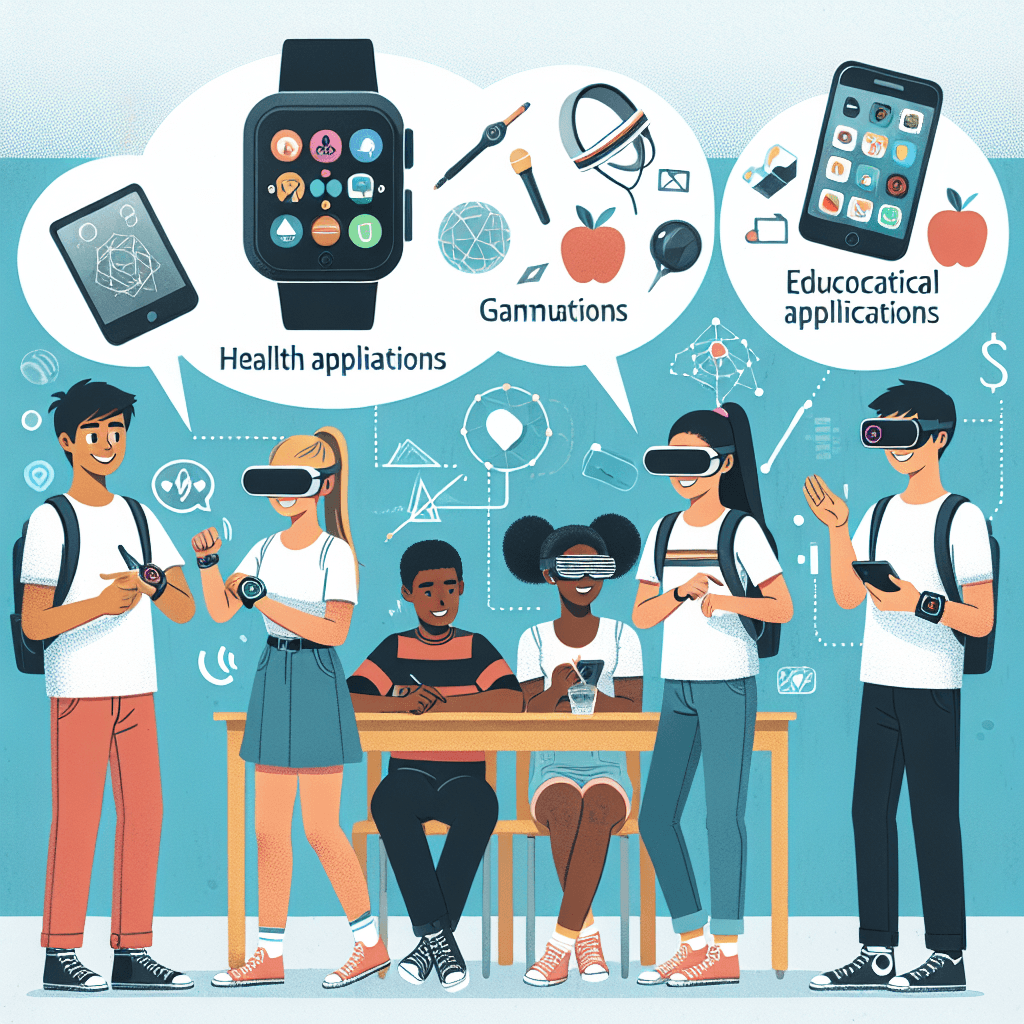
Wearable Technology: Contemporary Innovations and Applications
Inquiry Framework
Question Framework
Driving Question
The overarching question that guides the entire project.How can wearable technology shape the future of our daily lives and global society?Essential Questions
Supporting questions that break down major concepts.- What is wearable technology and how has it evolved over time?
- How does wearable technology impact our daily lives and society as a whole?
- What are the potential future developments in wearable technology?
- In what ways can wearable technology contribute to advancements in health and wellness?
- How do cultural differences influence the adoption and use of wearable technology around the world?
Standards & Learning Goals
Learning Goals
By the end of this project, students will be able to:- Identify and articulate the key features and history of wearable technology.
- Analyze the impact of wearable technology on society and individuals.
- Explore and discuss potential future developments in wearable technology.
- Enhance vocabulary related to technology and wearable devices through reading and discussion.
- Develop speaking and listening skills through group discussion and presentation of findings.
- Demonstrate writing skills by crafting descriptive texts about wearable technology and its applications.
Common Core Standards
ACTFL Standards
Entry Events
Events that will be used to introduce the project to studentsInnovation Tour
Arrange a virtual tour of cutting-edge laboratories or companies specializing in wearable tech. Use VR or AR tools to make the experience immersive, and follow up with a discussion on how these innovations can be integrated into everyday life, opening up pathways for inquiry on current and emerging technologies.Tech Fashion Show
Kick off the project with a runway show featuring real-life and futuristic wearable technologies. Invite local designers and innovators to showcase their creations and discuss the intersection of fashion and technology, stimulating interest and discussion among students about where wearable tech is headed.Scientist and Designer in Residence
Host a session with a guest speaker – a scientist or designer specialized in wearable technology. They will present breakthroughs and challenges in the field, inviting students to think up their own solutions to current industry problems, linking scientific inquiry with creativity and design.Wearable Tech Tinker Lab
Transform the classroom into a hands-on lab where students can explore and create basic prototypes of wearable technology. With access to simple materials and technology, encourage peer collaboration to spark interest in engineering and design solutions, connecting their personal interests with technical skills.Interactive Case Study
Present students with intriguing case studies of how wearable technology has solved real-world problems. Use an interactive platform where students can simulate decisions and see the outcomes, fostering a deeper understanding of the societal impacts of these technologies and the innovation required to implement them effectively.Portfolio Activities
Portfolio Activities
These activities progressively build towards your learning goals, with each submission contributing to the student's final portfolio.Wearable Wordsmiths
Students will expand their technology-related vocabulary. This foundational activity helps them understand and articulate key features of wearable technology in subsequent activities.Steps
Here is some basic scaffolding to help students complete the activity.Final Product
What students will submit as the final product of the activityA set of flashcards with definitions, contexts, and examples for wearable technology vocabulary.Alignment
How this activity aligns with the learning objectives & standardsCCSS.ELA-LITERACY.L.11-12.6 - Expanding domain-specific vocabulary related to technology.Tech Time Travel
Students dive into the history and evolution of wearable technology. This activity builds reading comprehension and sets a foundation for understanding future developments.Steps
Here is some basic scaffolding to help students complete the activity.Final Product
What students will submit as the final product of the activityAn oral presentation summarizing a key historical milestone in wearable technology.Alignment
How this activity aligns with the learning objectives & standardsACTFL Interpretive Communication - Enhancing understanding through reading and analyzing historical developments.Impact Investigators
Students analyze the societal and personal impacts of wearable technology. This activity hones critical thinking and discussion skills.Steps
Here is some basic scaffolding to help students complete the activity.Final Product
What students will submit as the final product of the activityA reflective piece articulating personal and societal impacts of wearable technology, presented in a group discussion.Alignment
How this activity aligns with the learning objectives & standardsCCSS.ELA-LITERACY.SL.11-12.1 - Participation in collaborative discussions on societal issues.Future Fashion Designers
In this creative activity, students envision future developments in wearable technology, stimulating innovative thinking and descriptive writing.Steps
Here is some basic scaffolding to help students complete the activity.Final Product
What students will submit as the final product of the activityA descriptive text and visual representation of a proposed future wearable technology innovation.Alignment
How this activity aligns with the learning objectives & standardsCCSS.ELA-LITERACY.W.11-12.2 - Developing descriptive writing skills through conceptual innovation.Presentation Polishing
Students prepare and refine their final presentations on wearable technology, synthesizing all they've learned in previous activities.Steps
Here is some basic scaffolding to help students complete the activity.Final Product
What students will submit as the final product of the activityA polished presentation on wearable technology, ready to be delivered to an audience.Alignment
How this activity aligns with the learning objectives & standardsCCSS.ELA-LITERACY.SL.11-12.4 - Presenting information clearly with a distinct perspective and addressing different viewpoints.Rubric & Reflection
Portfolio Rubric
Grading criteria for assessing the overall project portfolioWearable Technology Presentation Evaluation
Content Knowledge
Measures the understanding and articulation of wearable technology topics, including vocabulary, historical development, and societal impacts.Vocabulary Usage
Assesses the accurate use of domain-specific vocabulary related to wearable technology.
Exemplary
4 PointsUses a wide range of domain-specific vocabulary accurately and in a contextually appropriate manner throughout the presentation.
Proficient
3 PointsUses domain-specific vocabulary mostly accurately with minor errors that do not impede understanding.
Developing
2 PointsUses some domain-specific vocabulary but with noticeable errors or omissions that occasionally affect comprehension.
Beginning
1 PointsUses limited or incorrect domain-specific vocabulary, resulting in unclear communication of key ideas.
Historical and Societal Context
Evaluates the understanding of the evolution of wearable technology and its societal impacts.
Exemplary
4 PointsProvides a comprehensive analysis of historical milestones and societal impacts with insightful connections.
Proficient
3 PointsDescribes historical milestones and societal impacts accurately with some analytical depth.
Developing
2 PointsOffers a basic description of historical milestones and societal impacts with limited analysis.
Beginning
1 PointsDemonstrates minimal understanding of historical milestones and societal impacts, with significant gaps in analysis.
Innovative Thinking
Assesses the creativity and feasibility of proposed future developments in wearable technology.Vision and Innovation
Measures the originality and depth of thought in proposing future wearable technology innovations.
Exemplary
4 PointsProposes highly original, feasible, and well-justified innovations that reflect advanced creative thinking.
Proficient
3 PointsProposes original and mostly feasible innovations with some justification.
Developing
2 PointsProposes basic innovations with limited originality or feasibility.
Beginning
1 PointsStruggles to propose innovative ideas, lacking originality and feasibility.
Presentation Skills
Evaluates the effectiveness of information presentation, including clarity, organization, and engagement with the audience.Clarity and Organization
Assesses how clearly and logically the presentation content is organized and delivered.
Exemplary
4 PointsThe presentation is extremely well-organized and clear, with a logical flow that engages the audience and effectively addresses opposing perspectives.
Proficient
3 PointsThe presentation is clear and logically organized, effectively engaging the audience with minor areas for improvement.
Developing
2 PointsThe presentation has some organizational issues, with parts that are unclear, leading to a less engaged audience.
Beginning
1 PointsThe presentation lacks clarity and organization, making it difficult for the audience to follow and engage.
Engagement and Delivery
Measures the ability to engage with the audience and deliver the presentation with confidence and competence.
Exemplary
4 PointsEngages the audience expertly, delivering the presentation with poise and confidence, using media and visual aids effectively.
Proficient
3 PointsEngages the audience well, delivering the presentation confidently, with effective use of media and visual aids.
Developing
2 PointsShows limited audience engagement and delivery confidence, with some effective use of media and visual aids.
Beginning
1 PointsStruggles to engage the audience and show confidence, with ineffective or absent use of media and visual aids.