
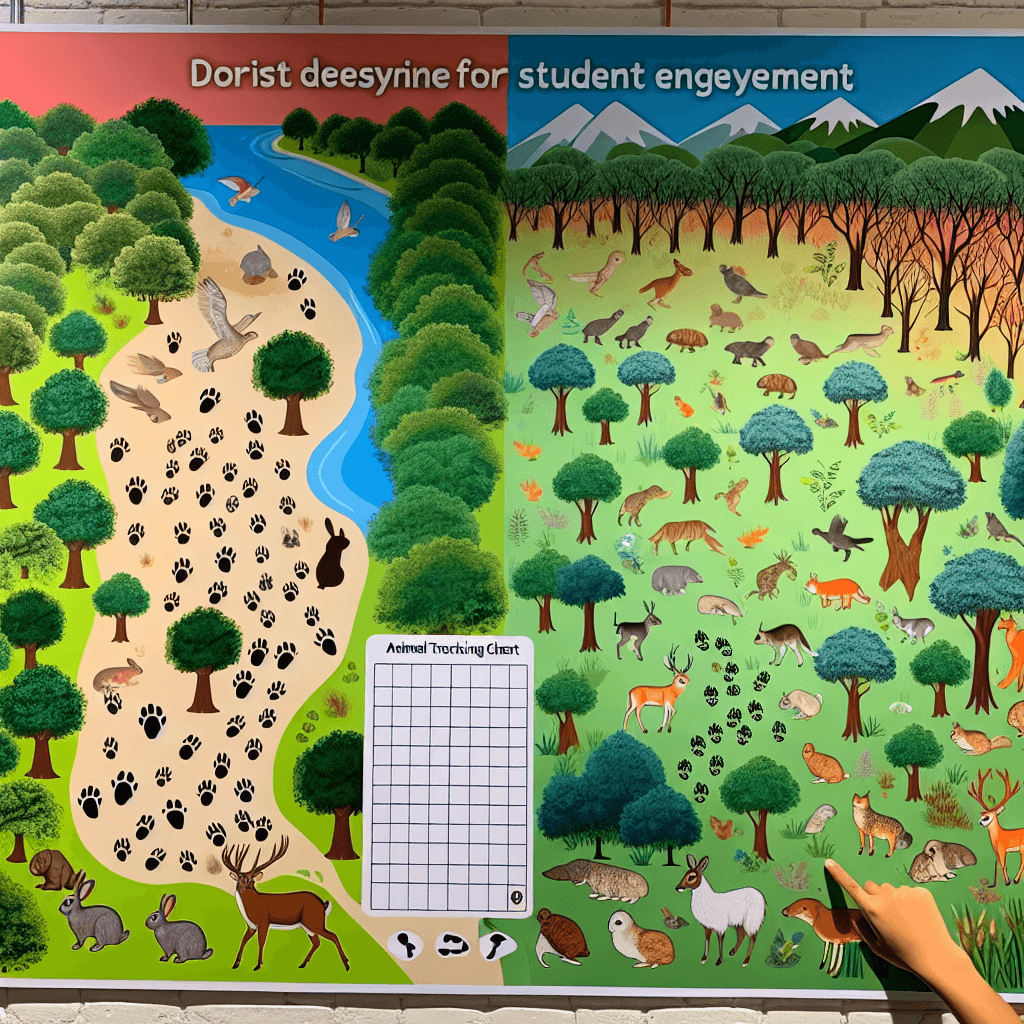
Wildlife and Forest Management: A Habitat Impact Study
Inquiry Framework
Question Framework
Driving Question
The overarching question that guides the entire project.How can we strategically manage our forests to meet human needs while also protecting the diverse wildlife habitats within them?Essential Questions
Supporting questions that break down major concepts.- How do different forest management practices affect wildlife habitats?
- What are the specific needs of local wildlife species?
- How can we balance human needs and wildlife conservation in forest management?
Standards & Learning Goals
Learning Goals
By the end of this project, students will be able to:- Students will be able to explain various forest management practices.
- Students will be able to investigate the impact of different forest management on local wildlife habitats.
- Students will be able to describe specific needs of local wildlife species.
- Students will be able to evaluate forest management plans.
Entry Events
Events that will be used to introduce the project to studentsWildlife Case File
A local wildlife expert presents a 'case file' of an animal impacted by habitat loss due to a specific forest management practice. Students examine evidence (photos, data, maps) and brainstorm possible causes and solutions, sparking initial questions about forest management.Portfolio Activities
Portfolio Activities
These activities progressively build towards your learning goals, with each submission contributing to the student's final portfolio.Forest Management 101: Expert Posters
Students will research and create informational posters about different forest management practices, such as prescribed burns, wildfires, clear-cutting, thinning, and reforestation. Each poster should detail the process, benefits, and potential drawbacks of the practice.Steps
Here is some basic scaffolding to help students complete the activity.Final Product
What students will submit as the final product of the activityA series of informational posters displayed in the classroom or school, each detailing a different forest management practice.Alignment
How this activity aligns with the learning objectives & standardsExplains various forest management practices.Wildlife Impact Investigators: Species Survival Reports
Students will choose a local wildlife species and investigate how different forest management practices impact its habitat. They will create a presentation detailing the species' needs and how these practices either support or threaten its survival.Steps
Here is some basic scaffolding to help students complete the activity.Final Product
What students will submit as the final product of the activityA presentation (e.g., slideshow, video) that details a local wildlife species' needs and the impact of various forest management practices on its habitat.Alignment
How this activity aligns with the learning objectives & standardsInvestigates the impact of different forest management on local wildlife habitats; Describes specific needs of local wildlife species.Forest Plan Evaluators: Balancing Act Assessments
Students will analyze existing forest management plans for a local forest or park, evaluating their effectiveness in balancing human needs and wildlife conservation. They will write a report that summarizes the plan, identifies its strengths and weaknesses, and proposes recommendations for improvement.Steps
Here is some basic scaffolding to help students complete the activity.Final Product
What students will submit as the final product of the activityA written report that evaluates a local forest management plan, including strengths, weaknesses, and recommendations for improvement.Alignment
How this activity aligns with the learning objectives & standardsEvaluates forest management plans.Rubric & Reflection
Portfolio Rubric
Grading criteria for assessing the overall project portfolioForest Management & Wildlife Impact Rubric
Forest Management Practices
Focuses on the student's ability to research, synthesize, and present information about different forest management practices.Research Quality
Accuracy and thoroughness of research on assigned forest management practice.
Exemplary
4 PointsDemonstrates comprehensive and accurate understanding of the forest management practice, including its process, benefits, and drawbacks. Research is exceptionally thorough and goes beyond basic requirements.
Proficient
3 PointsDemonstrates a thorough and accurate understanding of the forest management practice, including its process, benefits, and drawbacks. Research is comprehensive and meets all requirements.
Developing
2 PointsDemonstrates a basic understanding of the forest management practice, but may have some inaccuracies or omissions. Research is adequate but may lack depth.
Beginning
1 PointsDemonstrates a limited understanding of the forest management practice, with significant inaccuracies or omissions. Research is minimal and insufficient.
Poster Clarity
Clarity and organization of the informational poster.
Exemplary
4 PointsPoster is exceptionally clear, well-organized, and visually appealing. Information is presented in a logical and easy-to-understand manner, using visuals effectively.
Proficient
3 PointsPoster is clear, well-organized, and visually appealing. Information is presented in a logical and easy-to-understand manner.
Developing
2 PointsPoster is somewhat clear and organized, but may have some areas that are confusing or difficult to follow. Visuals are present but may not be used effectively.
Beginning
1 PointsPoster is unclear, disorganized, and lacks visual appeal. Information is presented in a confusing and difficult-to-follow manner.
Presentation Effectiveness
Effectiveness of the presentation in explaining the forest management practice.
Exemplary
4 PointsPresentation is highly engaging and effectively explains the key aspects of the forest management practice with exceptional clarity and insight. Demonstrates a deep understanding of the topic.
Proficient
3 PointsPresentation is engaging and effectively explains the key aspects of the forest management practice with clarity. Demonstrates a good understanding of the topic.
Developing
2 PointsPresentation is somewhat engaging and explains some aspects of the forest management practice, but may lack clarity or depth. Demonstrates a basic understanding of the topic.
Beginning
1 PointsPresentation is unengaging and fails to adequately explain the forest management practice. Demonstrates a limited understanding of the topic.
Wildlife Impact Investigation
Focuses on the student's ability to investigate the impact of forest management practices on local wildlife species and effectively communicate their findings.Species Needs Research
Depth of research into the selected wildlife species' habitat needs.
Exemplary
4 PointsDemonstrates exceptionally thorough research and a deep understanding of the species' habitat needs (food, shelter, water, space), going beyond basic requirements and showing insightful connections.
Proficient
3 PointsDemonstrates thorough research and a clear understanding of the species' habitat needs (food, shelter, water, space), meeting all requirements.
Developing
2 PointsDemonstrates adequate research and a basic understanding of the species' habitat needs, but may have some gaps or omissions.
Beginning
1 PointsDemonstrates limited research and a poor understanding of the species' habitat needs, with significant gaps and omissions.
Habitat Impact Analysis
Analysis of the impact of forest management practices on the selected species' habitat.
Exemplary
4 PointsProvides an insightful and comprehensive analysis of how different forest management practices significantly impact the species' habitat, demonstrating a sophisticated understanding of ecological relationships.
Proficient
3 PointsProvides a clear and thorough analysis of how different forest management practices impact the species' habitat, demonstrating a good understanding of ecological relationships.
Developing
2 PointsProvides a basic analysis of how different forest management practices may impact the species' habitat, but may lack depth or specific examples.
Beginning
1 PointsProvides a limited and superficial analysis of the impact of forest management practices on the species' habitat.
Presentation Quality
Clarity and persuasiveness of the presentation.
Exemplary
4 PointsPresentation is exceptionally clear, engaging, and persuasive, effectively communicating the species' needs and the impact of forest management practices with compelling visuals and data.
Proficient
3 PointsPresentation is clear, engaging, and effectively communicates the species' needs and the impact of forest management practices with appropriate visuals and data.
Developing
2 PointsPresentation is somewhat clear and communicates some of the species' needs and the impact of forest management practices, but may lack engagement or persuasive elements.
Beginning
1 PointsPresentation is unclear, unengaging, and fails to effectively communicate the species' needs and the impact of forest management practices.
Forest Plan Evaluation
Focuses on the student's ability to analyze and evaluate existing forest management plans, and propose meaningful improvements.Plan Summary
Quality of summary of the local forest management plan.
Exemplary
4 PointsProvides an exceptionally clear, concise, and comprehensive summary of the forest management plan, demonstrating a deep understanding of its key components and objectives.
Proficient
3 PointsProvides a clear, concise, and comprehensive summary of the forest management plan, demonstrating a good understanding of its key components and objectives.
Developing
2 PointsProvides a basic summary of the forest management plan, but may have some omissions or lack clarity in certain areas.
Beginning
1 PointsProvides an incomplete or inaccurate summary of the forest management plan, demonstrating a limited understanding of its key components.
Balance Evaluation
Effectiveness of the evaluation of the plan's balance between human needs and wildlife conservation.
Exemplary
4 PointsProvides an insightful and nuanced evaluation of the plan's effectiveness in balancing human needs and wildlife conservation, demonstrating a sophisticated understanding of the complexities involved and offering innovative solutions.
Proficient
3 PointsProvides a thorough and well-reasoned evaluation of the plan's effectiveness in balancing human needs and wildlife conservation, demonstrating a good understanding of the complexities involved.
Developing
2 PointsProvides a basic evaluation of the plan's effectiveness in balancing human needs and wildlife conservation, but may lack depth or specific examples.
Beginning
1 PointsProvides a superficial or biased evaluation of the plan's effectiveness, failing to adequately consider both human needs and wildlife conservation.
Improvement Recommendations
Quality and feasibility of recommendations for improvement.
Exemplary
4 PointsOffers exceptionally insightful, practical, and well-justified recommendations for improving the forest management plan, demonstrating a deep understanding of both human needs and wildlife conservation principles.
Proficient
3 PointsOffers practical and well-justified recommendations for improving the forest management plan, demonstrating a good understanding of both human needs and wildlife conservation principles.
Developing
2 PointsOffers some recommendations for improving the forest management plan, but they may be vague, impractical, or poorly justified.
Beginning
1 PointsOffers few or no meaningful recommendations for improving the forest management plan.