
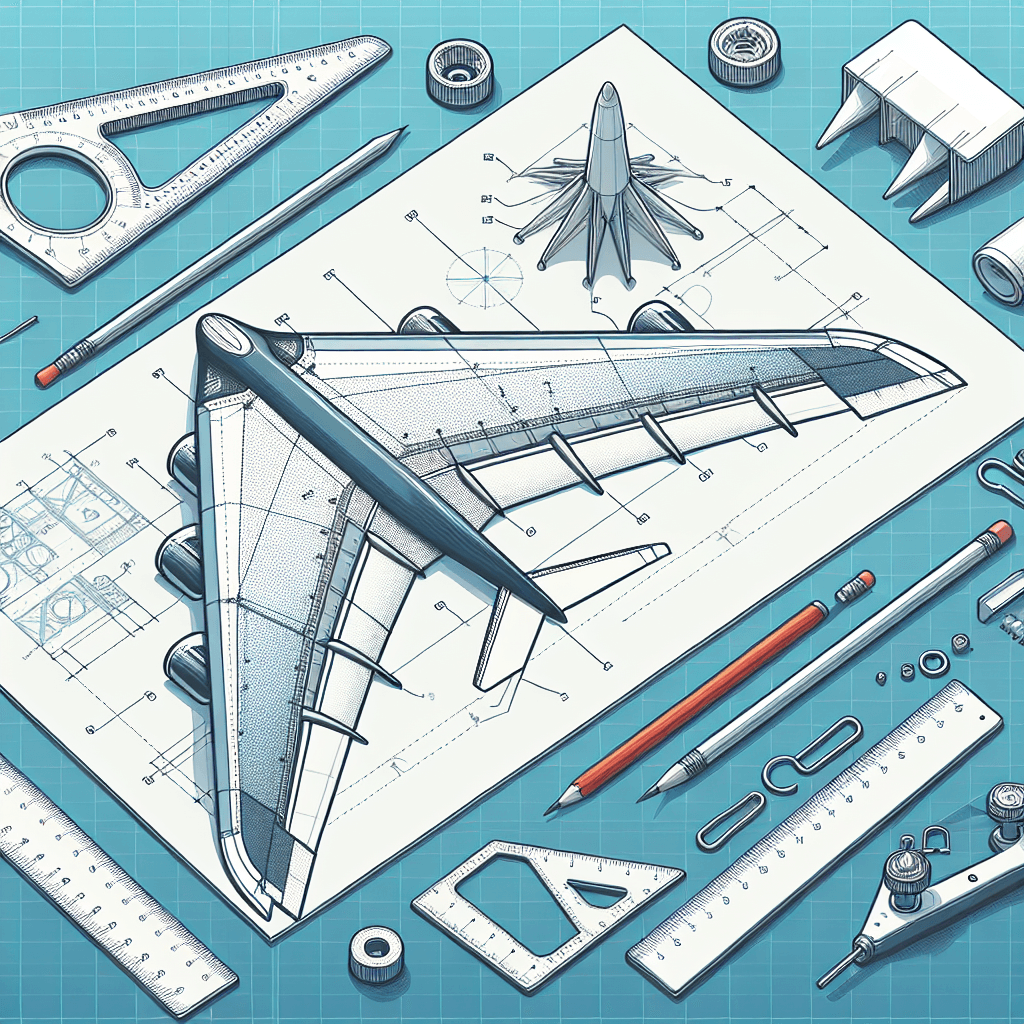
Winging It: Airplane Wing Design
Inquiry Framework
Question Framework
Driving Question
The overarching question that guides the entire project.How can we design and test airplane wings to minimize drag and maximize lift, and what are the scientific principles behind wing shape and air pressure that make flight possible?Essential Questions
Supporting questions that break down major concepts.- How do different wing designs affect lift and drag?
- What is the relationship between wing shape and air pressure?
- How can we measure and compare the performance of different wing designs?
- What are the design principles behind efficient airplane wings?
- How do engineers use their understanding of lift and drag to design aircraft?
Standards & Learning Goals
Learning Goals
By the end of this project, students will be able to:- Students will be able to design and build airplane wings of varying shapes.
- Students will be able to test and measure the lift and drag forces on their wing designs.
- Students will be able to analyze the relationship between wing shape, air pressure, lift, and drag.
- Students will be able to explain the scientific principles behind flight, including Bernoulli's principle and Newton's laws of motion.
- Students will be able to collaborate effectively in a team to design, build, and test their wing designs.
- Students will be able to communicate their findings and conclusions through a written report and oral presentation.
Teacher-Provided Standard
Entry Events
Events that will be used to introduce the project to studentsThe Great Wing Challenge
Present students with a collection of everyday materials (paper, cardboard, straws, etc.) and challenge them to design and build a wing that can carry a specific weight across a classroom 'runway.'Portfolio Activities
Portfolio Activities
These activities progressively build towards your learning goals, with each submission contributing to the student's final portfolio.Winging It: Design Brainstorm
Students will individually brainstorm and sketch initial wing designs, considering factors like shape, size, and materials. They will explore different wing shapes (e.g., rectangular, tapered, swept-back) and document their design rationale.Steps
Here is some basic scaffolding to help students complete the activity.Final Product
What students will submit as the final product of the activityA portfolio of wing design sketches with accompanying explanations of design choices and predicted performance.Alignment
How this activity aligns with the learning objectives & standardsAddresses learning goal: Students will be able to design and build airplane wings of varying shapes, and standard: Thrust and Drag.Blueprint Bonanza
Students will form teams, combine their design ideas, and select one wing design to build and test as a group. They will create a detailed blueprint of their chosen design, specifying dimensions and materials.Steps
Here is some basic scaffolding to help students complete the activity.Final Product
What students will submit as the final product of the activityA collaborative blueprint of the chosen wing design, including precise measurements, material specifications, and construction steps.Alignment
How this activity aligns with the learning objectives & standardsAddresses learning goals: Students will be able to design and build airplane wings of varying shapes and Students will be able to collaborate effectively in a team to design, build, and test their wing designs, and standard: Thrust and Drag.Taking Flight: Prototype Construction and Testing
Teams will construct their wing designs using the chosen materials and following their blueprint. They will then conduct initial tests to assess the wing's ability to generate lift and minimize drag.Steps
Here is some basic scaffolding to help students complete the activity.Final Product
What students will submit as the final product of the activityA completed wing prototype and initial test flight data, documenting lift and drag performance.Alignment
How this activity aligns with the learning objectives & standardsAddresses learning goals: Students will be able to design and build airplane wings of varying shapes and Students will be able to test and measure the lift and drag forces on their wing designs, and standard: Thrust and Drag.Uplift: Refining the Wing Design
Students will refine their wing designs based on the initial test results. They will analyze the relationship between wing shape, air pressure, and flight performance, documenting any modifications and explaining the scientific rationale behind them.Steps
Here is some basic scaffolding to help students complete the activity.Final Product
What students will submit as the final product of the activityA refined wing prototype with improved performance and a written report explaining the modifications made and the scientific reasoning behind them.Alignment
How this activity aligns with the learning objectives & standardsAddresses learning goals: Students will be able to test and measure the lift and drag forces on their wing designs and Students will be able to analyze the relationship between wing shape, air pressure, lift, and drag, and standard: Thrust and Drag.Flight School: Final Presentation
Students will present their final wing designs and findings to the class. They will explain the scientific principles behind flight, including Bernoulli's principle and Newton's laws of motion, and justify their design choices based on their experimental results.Steps
Here is some basic scaffolding to help students complete the activity.Final Product
What students will submit as the final product of the activityA final presentation showcasing the refined wing design, experimental findings, and an explanation of the scientific principles of flight.Alignment
How this activity aligns with the learning objectives & standardsAddresses learning goals: Students will be able to analyze the relationship between wing shape, air pressure, lift, and drag, Students will be able to explain the scientific principles behind flight, including Bernoulli's principle and Newton's laws of motion, and Students will be able to communicate their findings and conclusions through a written report and oral presentation, and standard: Thrust and Drag.Rubric & Reflection
Portfolio Rubric
Grading criteria for assessing the overall project portfolioAirplane Wing Design and Testing Rubric
Design and Innovation
Evaluates students' ability to innovatively design wing structures that meet the criteria for reducing drag and increasing lift.Design Creativity
Measures the originality and creativity of the wing designs.
Exemplary
4 PointsDesigns showcase advanced innovation and creativity, demonstrating a sophisticated understanding of aerodynamic principles.
Proficient
3 PointsDesigns show creativity and a sound understanding of aerodynamic principles, meeting specified requirements.
Developing
2 PointsDesigns display limited creativity with some understanding of aerodynamic principles, but lack depth.
Beginning
1 PointsDesigns demonstrate initial attempts at creativity but show minimal understanding of aerodynamic principles.
Functionality
Assesses the practicality and efficiency of the wing design in terms of reducing drag and increasing lift.
Exemplary
4 PointsDesigns efficiently minimize drag and maximize lift, with detailed considerations of aerodynamic efficiency.
Proficient
3 PointsDesigns meet the requirements for minimizing drag and maximizing lift, showing an effective application of aerodynamic principles.
Developing
2 PointsDesigns reduce drag and increase lift to some extent but lack comprehensive application of aerodynamic principles.
Beginning
1 PointsDesigns show basic attempts to modify drag and lift with minimal practical application.
Collaboration and Teamwork
Evaluates students' ability to work effectively in teams to design, construct, and refine wing prototypes.Team Engagement
Assesses the extent to which each student actively participates and contributes to team tasks.
Exemplary
4 PointsConsistently demonstrates leadership and facilitates active participation from all team members.
Proficient
3 PointsActively participates and contributes to the team's efforts, showing strong collaboration skills.
Developing
2 PointsContributes to team activities, though engagement may be inconsistent.
Beginning
1 PointsParticipates minimally in team tasks, often requiring guidance and support.
Scientific Understanding
Assesses comprehension of scientific principles related to thrust and drag and their application to design.Application of Principles
Measures how well students understand and apply scientific principles like Bernoulli's principle and Newton's laws to their designs.
Exemplary
4 PointsDemonstrates an advanced understanding and application of complex scientific principles to wing design.
Proficient
3 PointsShows a thorough understanding and appropriate application of scientific principles to wing design.
Developing
2 PointsDisplays a basic understanding of scientific principles with partial application in wing design.
Beginning
1 PointsShows limited understanding of scientific principles with little application.
Communication and Presentation
Assesses students' ability to effectively communicate their design process, results, and scientific understanding.Clarity and Coherence
Evaluates the clarity, coherence, and logical flow of students' presentations and written reports.
Exemplary
4 PointsPresents information in a clear, coherent, and engaging manner, with excellent organization and detail.
Proficient
3 PointsCommunicates ideas clearly and logically, with good organization and adequate detail.
Developing
2 PointsConveys information with some clarity but may be hindered by organization issues and lack of detail.
Beginning
1 PointsStruggles to present information clearly and coherently, often lacking organization.