
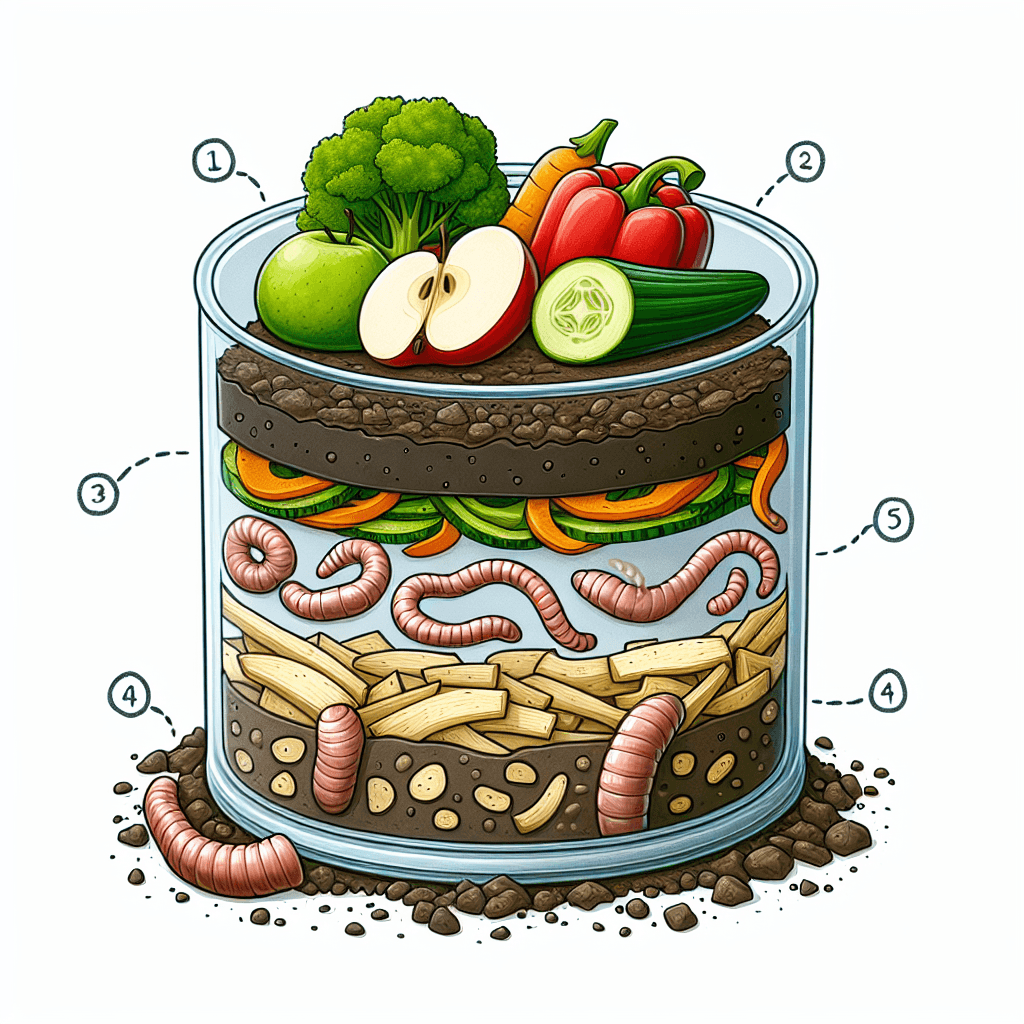
Wormery Wonders: Decomposition in Action
Inquiry Framework
Question Framework
Driving Question
The overarching question that guides the entire project.How can we design and build a wormery that helps break down organic matter and create healthy soil for our garden, keeping in mind what worms need to thrive and the benefits of composting?Essential Questions
Supporting questions that break down major concepts.- How do worms break down organic matter?
- What is the role of worms in creating healthy soil?
- How does decomposition contribute to plant growth?
- What kind of environment do worms need to thrive?
- How can we design a wormery to support a healthy worm population?
- What are the benefits of composting and using worms in a garden?
Standards & Learning Goals
Learning Goals
By the end of this project, students will be able to:- Students will be able to design and build a functioning wormery.
- Students will be able to explain the process of decomposition and the role of worms in this process.
- Students will be able to identify the benefits of composting and using worms in a garden ecosystem.
- Students will be able to observe and document the changes in the wormery over time.
- Students will be able to analyze the impact of different organic materials on the decomposition process.
Teacher Provided Standard
Entry Events
Events that will be used to introduce the project to studentsThe Great Waste Mountain
Imagine our school suddenly has mountains of food waste every day! How can we use nature's tiny recyclers to help our gardens and reduce waste?The Nutrient Factory
Uh oh! The garden is losing its nutrients, and plants aren't growing strong. How can we create a 'nutrient factory' using worms to enrich our soil and help our garden flourish?Portfolio Activities
Portfolio Activities
These activities progressively build towards your learning goals, with each submission contributing to the student's final portfolio.Worm Architects
Students will design their ideal wormery, considering the needs of worms and the decomposition process.Steps
Here is some basic scaffolding to help students complete the activity.Final Product
What students will submit as the final product of the activityA detailed blueprint or diagram of their wormery design, including labels and explanations of different components.Alignment
How this activity aligns with the learning objectives & standardsStudents will be able to design and build a functioning wormery.Wormery Construction Crew
Students will build their designed wormeries using recycled materials.Steps
Here is some basic scaffolding to help students complete the activity.Final Product
What students will submit as the final product of the activityA functioning wormery ready for worm inhabitants and organic matter.Alignment
How this activity aligns with the learning objectives & standardsStudents will be able to design and build a functioning wormery.Decomposition Detectives
Students will introduce worms to their wormeries and begin the composting process, observing and documenting the changes over time.Steps
Here is some basic scaffolding to help students complete the activity.Final Product
What students will submit as the final product of the activityA detailed observation journal with entries describing the changes in the wormery and the decomposition process.Alignment
How this activity aligns with the learning objectives & standardsStudents will be able to explain the process of decomposition and the role of worms in this process.Students will be able to observe and document the changes in the wormery over time.Students will be able to analyze the impact of different organic materials on the decomposition process.The Castings Connoisseurs
Students will analyze the final product of their wormery – the worm castings – and explain its benefits for the garden ecosystem.Steps
Here is some basic scaffolding to help students complete the activity.Final Product
What students will submit as the final product of the activityA presentation explaining the benefits of using worm castings in the garden and the process of decomposition.Alignment
How this activity aligns with the learning objectives & standardsStudents will be able to identify the benefits of composting and using worms in a garden ecosystem.Students will be able to explain the process of decomposition and the role of worms in this process.Rubric & Reflection
Portfolio Rubric
Grading criteria for assessing the overall project portfolioWormery Wonders Assessment
Design and Planning
Evaluates the student's ability to research, brainstorm, and design a comprehensive wormery plan considering the needs of worms.Research on Worm Needs
Assesses the depth and accuracy of the student’s research on worms' living conditions and necessities.
Exemplary
4 PointsDemonstrates comprehensive research showing deep understanding of worms' living conditions and necessities.
Proficient
3 PointsDemonstrates accurate research with good understanding of worms' living conditions and necessities.
Developing
2 PointsShows basic research with limited understanding of worms' living conditions.
Beginning
1 PointsProvides minimal research with little understanding of worms' needs.
Blueprint Design
Evaluates the creativity and functionality of the wormery blueprint designed by students.
Exemplary
4 PointsBlueprint shows innovative and functional design with detailed labels and thorough explanation of components.
Proficient
3 PointsBlueprint is functional with clear labels and reasonable component explanations.
Developing
2 PointsBlueprint lacks detail or explanation, shows basic functionality only.
Beginning
1 PointsIncomplete or unclear blueprint with poor functionality.
Construction
Focuses on assessing the construction process and the physical creation of the wormery.Material Selection
Assesses the appropriateness and sustainability of materials chosen for constructing the wormery.
Exemplary
4 PointsUses a creative variety of sustainable, recycled materials thoughtfully matching the blueprint.
Proficient
3 PointsUses appropriate recycled materials that align well with the blueprint.
Developing
2 PointsUses limited or partially appropriate materials, some alignment with the blueprint.
Beginning
1 PointsUses inappropriate materials with little to no alignment with the blueprint.
Assembly Quality
Evaluates the structural integrity and assembly of the wormery.
Exemplary
4 PointsWormery is robustly built, securely assembled, showing excellent craftsmanship.
Proficient
3 PointsWormery is well-assembled, functions as intended with minor improvements needed.
Developing
2 PointsWormery is assembled with noticeable flaws affecting function.
Beginning
1 PointsWormery assembly is poor, lacking structural integrity.
Observation and Analysis
Assesses the student’s ability to observe changes within the wormery and analyze decomposition process.Observation Journal
Evaluates the comprehensiveness and regularity of observations documented in the journal.
Exemplary
4 PointsJournal entries are detailed, regular, and insightful, showing thorough observation.
Proficient
3 PointsJournal entries are regular and cover most observations with clarity.
Developing
2 PointsJournal entries are inconsistent or lack detail.
Beginning
1 PointsJournal is minimal with vague or incomplete entries.
Decomposition Analysis
Assesses the student's analysis of decomposition and impact of different organic materials.
Exemplary
4 PointsProvides in-depth analysis with clear understanding of decomposition effects and organic material impacts.
Proficient
3 PointsAnalysis shows clear understanding with accurate interpretation of decomposition effects.
Developing
2 PointsAnalysis lacks depth or clarity, showing basic understanding.
Beginning
1 PointsMinimal or unclear analysis with limited understanding of processes.
Presentation and Reflection
Evaluates the student's ability to present findings and reflect on the wormery project experience.Presentation Quality
Assesses the clarity, engagement, and informativeness of the student's final presentation.
Exemplary
4 PointsPresentation is clear, engaging, informative, and well-organized.
Proficient
3 PointsPresentation is organized and informative with minor improvements needed for engagement.
Developing
2 PointsPresentation is functional but lacks clarity or engagement.
Beginning
1 PointsPresentation is unclear and unengaging, lacking coherence.
Reflective Insight
Assesses the depth of reflection on the learning process and project outcomes.
Exemplary
4 PointsReflection shows deep insight into personal learning and project outcomes.
Proficient
3 PointsReflection provides good insight with some depth on learning experiences.
Developing
2 PointsReflection lacks depth, providing basic insights into learning.
Beginning
1 PointsMinimal reflection with limited insights into learning process.