
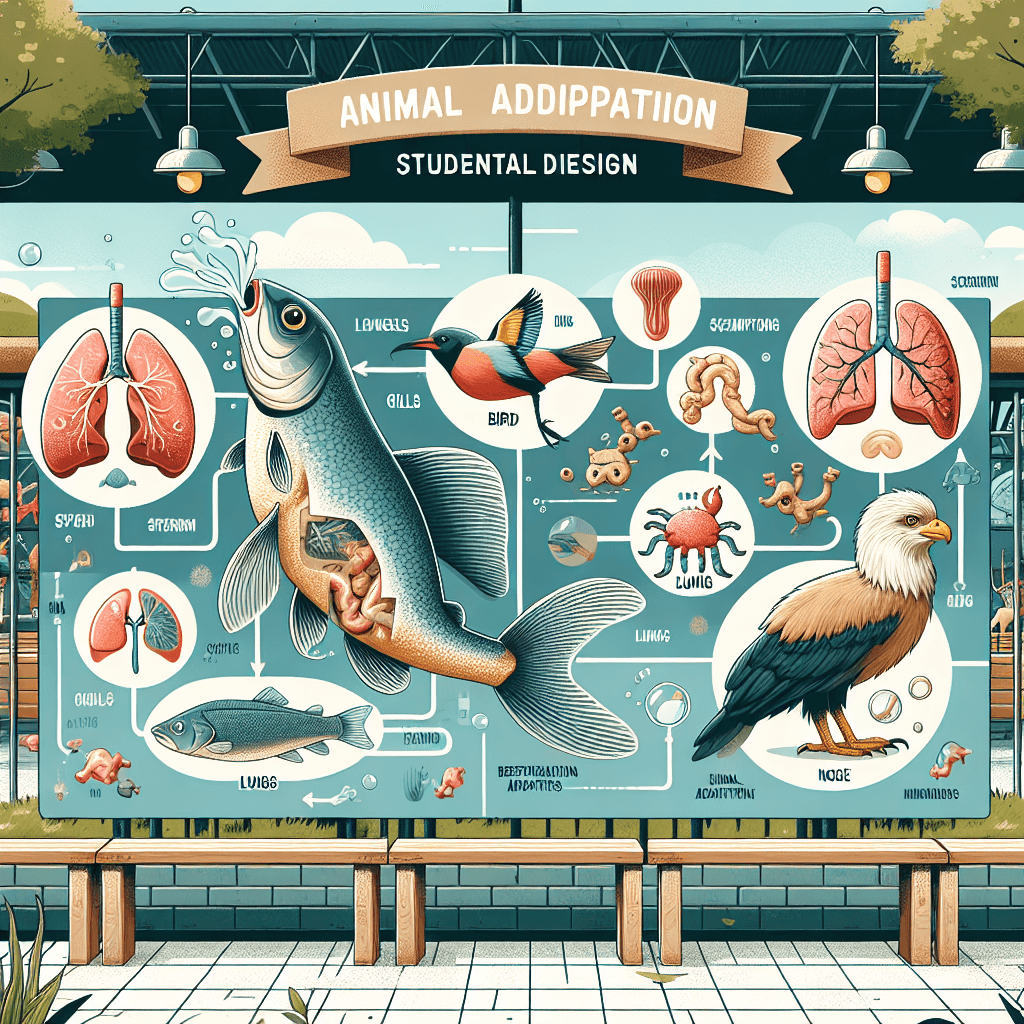
Zoo Exhibit Design: Animal Respiration Adaptations
Inquiry Framework
Question Framework
Driving Question
The overarching question that guides the entire project.How can we design a zoo exhibit that showcases the diverse ways animals use cellular respiration to obtain energy?Essential Questions
Supporting questions that break down major concepts.- How do different animals use cellular respiration to obtain energy?
Standards & Learning Goals
Learning Goals
By the end of this project, students will be able to:- Students will be able to explain the process of cellular respiration in animals.
- Students will be able to identify and describe different respiratory adaptations in animals.
- Students will be able to design a zoo exhibit that effectively showcases animal respiration adaptations.
Entry Events
Events that will be used to introduce the project to studentsATP Zoo Design Challenge
Students are challenged to design a brand-new zoo called "ATP Zoo," where exhibits are themed around how different animals obtain energy through cellular respiration. They'll act as zoologists, researching and designing exhibits that highlight the unique respiratory adaptations of animals from different kingdoms. Each major animal kingdom could have its own department within the zoo.Portfolio Activities
Portfolio Activities
These activities progressively build towards your learning goals, with each submission contributing to the student's final portfolio.Animal Respiration Explorers
Students will research different animals and their respiratory systems, focusing on how their adaptations help them obtain oxygen and perform cellular respiration. They will create a presentation showcasing their findings.Steps
Here is some basic scaffolding to help students complete the activity.Final Product
What students will submit as the final product of the activityA presentation (PowerPoint, Google Slides, or poster) comparing and contrasting the respiratory adaptations of at least three different animals.Alignment
How this activity aligns with the learning objectives & standardsLearning Goal: Students will be able to identify and describe different respiratory adaptations in animals.ATP Zoo Exhibit Designer
Students will design a zoo exhibit for one of the animals they researched, focusing on how the exhibit can educate visitors about the animal's respiratory adaptations and how these adaptations relate to cellular respiration. This will include a scaled model of the exhibit.Steps
Here is some basic scaffolding to help students complete the activity.Final Product
What students will submit as the final product of the activityA detailed exhibit design plan, including a scaled model or digital rendering of the exhibit, informational signage, and an explanation of how the exhibit teaches visitors about the animal's respiratory adaptations and their relation to cellular respiration.Alignment
How this activity aligns with the learning objectives & standardsLearning Goals: Students will be able to design a zoo exhibit that effectively showcases animal respiration adaptations; Students will be able to explain the process of cellular respiration in animals; Students will be able to identify and describe different respiratory adaptations in animals.Rubric & Reflection
Portfolio Rubric
Grading criteria for assessing the overall project portfolioAnimal Respiration and Zoo Exhibit Design Rubric
Animal Respiration Exploration
Assesses the student's research and presentation on animal respiratory adaptations.Connection to Cellular Respiration
Clarity and effectiveness of the presentation in explaining how the animals' respiratory adaptations facilitate cellular respiration.
Exemplary
4 PointsPresents a clear, concise, and insightful explanation of how each animal's respiratory adaptations directly support and enhance cellular respiration, using appropriate scientific terminology.
Proficient
3 PointsPresents a clear and effective explanation of how each animal's respiratory adaptations support cellular respiration, using mostly accurate scientific terminology.
Developing
2 PointsPresents an adequate explanation of how each animal's respiratory adaptations relate to cellular respiration, but may lack clarity or contain some inaccuracies in terminology.
Beginning
1 PointsPresents a limited or unclear explanation of how each animal's respiratory adaptations relate to cellular respiration, with significant inaccuracies in terminology.
Presentation Clarity and Visuals
Quality and clarity of the diagrams and descriptions used to illustrate the respiratory systems.
Exemplary
4 PointsIncludes detailed, accurate, and visually appealing diagrams and clear, concise descriptions that enhance understanding of the respiratory systems.
Proficient
3 PointsIncludes accurate and clear diagrams and descriptions that effectively illustrate the respiratory systems.
Developing
2 PointsIncludes diagrams and descriptions that are generally accurate but may lack detail or clarity.
Beginning
1 PointsIncludes incomplete, inaccurate, or unclear diagrams and descriptions that do not effectively illustrate the respiratory systems.
ATP Zoo Exhibit Design
Evaluates the student's zoo exhibit design, focusing on educational impact and creativity.Exhibit Creativity and Engagement
Creativity and innovation in the exhibit design, showcasing the animal's respiratory adaptations in an engaging way.
Proficient
3 PointsDemonstrates creativity and thoughtfulness in the exhibit design, offering an engaging and informative experience that showcases the animal's respiratory adaptations.
Developing
2 PointsDemonstrates some creativity in the exhibit design, but the exhibit may not be fully engaging or effectively showcase the animal's respiratory adaptations.
Beginning
1 PointsLacks creativity in the exhibit design and does not effectively showcase the animal's respiratory adaptations.
Signage Accuracy and Clarity
Accuracy and clarity of the informational signage in explaining the animal's respiratory system and its relation to cellular respiration.
Exemplary
4 PointsInformational signage is exceptionally clear, accurate, and engaging, providing a comprehensive explanation of the animal's respiratory system and its direct connection to cellular respiration.
Proficient
3 PointsInformational signage is clear, accurate, and engaging, providing a thorough explanation of the animal's respiratory system and its connection to cellular respiration.
Developing
2 PointsInformational signage is generally accurate but may lack clarity or depth in explaining the animal's respiratory system and its connection to cellular respiration.
Beginning
1 PointsInformational signage is inaccurate, unclear, or incomplete, failing to adequately explain the animal's respiratory system and its connection to cellular respiration.
Presentation Effectiveness
Effectiveness of the presentation in explaining the design choices and how the exhibit educates visitors about cellular respiration.
Proficient
3 PointsPresents a clear and thorough explanation of the design choices, articulating how the exhibit educates visitors about the animal's respiratory adaptations and their relationship to cellular respiration.
Developing
2 PointsPresents an adequate explanation of the design choices, but may lack clarity or depth in articulating how the exhibit educates visitors about the animal's respiratory adaptations and their relationship to cellular respiration.
Beginning
1 PointsPresents a limited or unclear explanation of the design choices, failing to adequately articulate how the exhibit educates visitors about the animal's respiratory adaptations and their relationship to cellular respiration.