
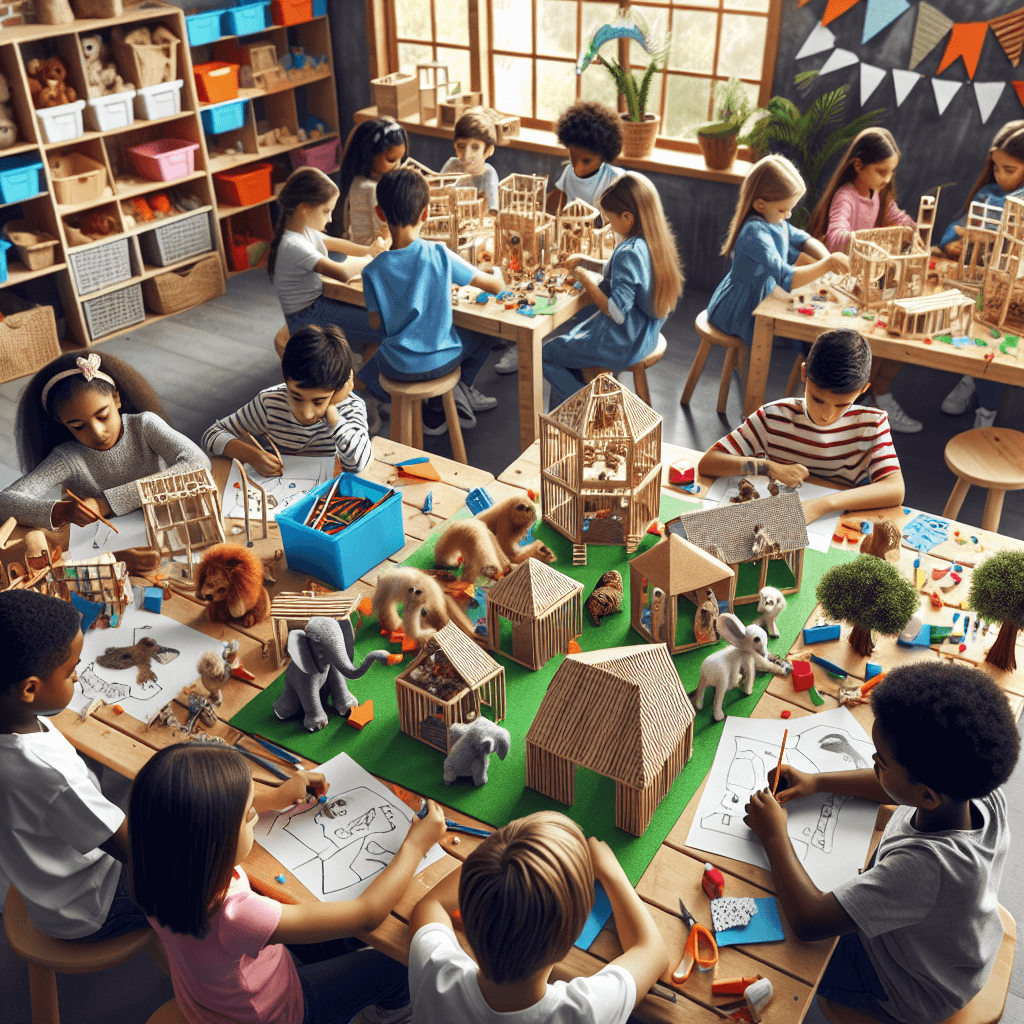
Zoo Exhibit Designer: Habitats for Animals
Inquiry Framework
Question Framework
Driving Question
The overarching question that guides the entire project.How can we design a zoo exhibit that provides a suitable habitat for a specific animal while educating visitors about its needs and the impact of humans on its environment?Essential Questions
Supporting questions that break down major concepts.- What does an animal need to survive?
- How do different environments support different animals?
- How do humans impact animal habitats?
- How can we design a space that meets the needs of animals and educates people?
Standards & Learning Goals
Learning Goals
By the end of this project, students will be able to:- Students will be able to identify the basic needs of animals (food, water, shelter, space).
- Students will be able to describe how different environments support different animals.
- Students will be able to explain how humans impact animal habitats.
- Students will be able to design a zoo exhibit that meets the needs of a specific animal.
- Students will be able to present their zoo exhibit design to an audience.
Entry Events
Events that will be used to introduce the project to studentsThe Mystery Animal
Students receive a mysterious package containing artifacts related to a specific animal (e.g., shed skin, a feather, droppings). They must use these clues to identify the animal, research its habitat needs, and begin planning a suitable zoo exhibit.Portfolio Activities
Portfolio Activities
These activities progressively build towards your learning goals, with each submission contributing to the student's final portfolio.Animal Needs Chart
Students create a visual chart detailing the basic needs of their chosen animal.Steps
Here is some basic scaffolding to help students complete the activity.Final Product
What students will submit as the final product of the activityA colorful chart with drawings and labels illustrating the animal's needs for food, water, shelter, and space.Alignment
How this activity aligns with the learning objectives & standardsAddresses the learning goal: Students will be able to identify the basic needs of animals (food, water, shelter, space).Habitat Diorama Builder
Students build a diorama showcasing the natural habitat of their animal.Steps
Here is some basic scaffolding to help students complete the activity.Final Product
What students will submit as the final product of the activityA shoebox diorama that accurately represents the animal's natural environment, including plants, terrain, and climate features.Alignment
How this activity aligns with the learning objectives & standardsAddresses the learning goal: Students will be able to describe how different environments support different animals.Habitat Heroes: Then and Now
Students create a 'Then and Now' poster showing how human actions affect the animal's habitat.Steps
Here is some basic scaffolding to help students complete the activity.Final Product
What students will submit as the final product of the activityA poster divided into two sections: 'Then' showing the animal's habitat before human impact, and 'Now' showing the same habitat with human impact (e.g., deforestation, pollution).Alignment
How this activity aligns with the learning objectives & standardsAddresses the learning goal: Students will be able to explain how humans impact animal habitats.Exhibit Blueprint Designer
Students draw a blueprint of their zoo exhibit, labeling key features that cater to the animal's needs.Steps
Here is some basic scaffolding to help students complete the activity.Final Product
What students will submit as the final product of the activityA detailed blueprint of the zoo exhibit, including labeled areas for feeding, sleeping, playing, and interacting with visitors.Alignment
How this activity aligns with the learning objectives & standardsAddresses the learning goal: Students will be able to design a zoo exhibit that meets the needs of a specific animal.Zoo Exhibit Presentation
Students present their exhibit designs to the class, explaining their choices and how the exhibit meets the animal's needs.Steps
Here is some basic scaffolding to help students complete the activity.Final Product
What students will submit as the final product of the activityA short presentation where students showcase their exhibit blueprint and diorama, explaining their design choices and how they meet the animal's needs. They should also discuss how their exhibit educates visitors about the animal and its habitat.Alignment
How this activity aligns with the learning objectives & standardsAddresses the learning goal: Students will be able to present their zoo exhibit design to an audience.Rubric & Reflection
Portfolio Rubric
Grading criteria for assessing the overall project portfolioZoo Exhibit Designer Portfolio Rubric
Animal Needs Chart
Assesses the student's ability to identify and represent the basic needs of their chosen animal in a clear and organized chart.Animal Needs Identification
Accuracy of details about animal needs
Exemplary
4 PointsDemonstrates comprehensive understanding of the animal's needs, including specific details about diet, water sources, shelter types, and space requirements. All details are accurate and well-researched.
Proficient
3 PointsDemonstrates a solid understanding of the animal's needs, including accurate details about diet, water sources, shelter types, and space requirements.
Developing
2 PointsShows a basic understanding of the animal's needs, but some details may be missing or slightly inaccurate regarding diet, water sources, shelter types, or space requirements.
Beginning
1 PointsStruggles to identify the animal's basic needs, with significant inaccuracies or omissions in diet, water sources, shelter types, and space requirements.
Chart Clarity and Organization
Clarity and organization of the chart.
Exemplary
4 PointsThe chart is exceptionally clear, well-organized, and visually appealing, using labels and illustrations effectively to communicate the animal's needs. Information is presented in a logical and easy-to-understand manner.
Proficient
3 PointsThe chart is clear, well-organized, and uses labels and illustrations to communicate the animal's needs effectively. Information is presented in a logical manner.
Developing
2 PointsThe chart is somewhat organized, but some labels or illustrations may be unclear or missing. The organization of information could be improved.
Beginning
1 PointsThe chart is disorganized and difficult to understand, with missing labels, unclear illustrations, and a lack of logical structure.
Habitat Diorama Builder
Evaluates the student's ability to construct a diorama that accurately represents the animal's natural habitat using appropriate materials and attention to detail.Habitat Accuracy and Realism
Accuracy and realism of the habitat representation.
Exemplary
4 PointsThe diorama accurately and realistically represents the animal's natural habitat, including appropriate plants, terrain, climate features, and other environmental elements. The habitat is instantly recognizable and convincingly portrayed.
Proficient
3 PointsThe diorama accurately represents the animal's natural habitat, including appropriate plants, terrain, and climate features. The habitat is recognizable and well-portrayed.
Developing
2 PointsThe diorama shows a basic representation of the animal's habitat, but some elements may be missing or inaccurate. The habitat's features are not fully developed or realistic.
Beginning
1 PointsThe diorama poorly represents the animal's natural habitat, with significant inaccuracies or missing elements. The habitat is not recognizable or realistic.
Materials and Detail
Use of materials and attention to detail.
Exemplary
4 PointsThe diorama demonstrates exceptional creativity and attention to detail in the use of materials. A variety of materials are used effectively to enhance the realism and visual appeal of the habitat. Craftsmanship is outstanding.
Proficient
3 PointsThe diorama demonstrates creativity and attention to detail in the use of materials. A variety of materials are used to enhance the realism and visual appeal of the habitat. Craftsmanship is excellent.
Developing
2 PointsThe diorama uses some materials to represent the habitat, but attention to detail is limited. The use of materials could be more creative and effective.
Beginning
1 PointsThe diorama shows minimal effort in the selection and use of materials. Little attention to detail is evident, and the craftsmanship is poor.
Habitat Heroes: Then and Now
Assesses the student's understanding of how human actions affect animal habitats and their ability to visually represent this impact on a 'Then and Now' poster.Understanding Human Impact
Demonstrates understanding of human impact on habitats.
Exemplary
4 PointsDemonstrates a deep and nuanced understanding of how human actions (e.g., deforestation, pollution, urbanization) profoundly impact animal habitats. The poster clearly illustrates both direct and indirect consequences with thoughtful examples.
Proficient
3 PointsDemonstrates a clear understanding of how human actions (e.g., deforestation, pollution, urbanization) impact animal habitats. The poster provides clear examples of these consequences.
Developing
2 PointsShows a basic understanding of how human actions impact animal habitats, but the examples may be simplistic or lack detail.
Beginning
1 PointsStruggles to explain how human actions impact animal habitats, with limited or inaccurate examples.
Visual Representation
Effectiveness of the 'Then and Now' visual representation.
Exemplary
4 PointsThe 'Then and Now' poster is exceptionally effective in visually contrasting the habitat before and after human impact. The images are compelling, thoughtfully chosen, and clearly labeled to convey the message powerfully. The layout is well-designed and enhances the poster's impact.
Proficient
3 PointsThe 'Then and Now' poster effectively visually contrasts the habitat before and after human impact. The images are clear, well-chosen, and labeled appropriately. The layout is visually appealing.
Developing
2 PointsThe 'Then and Now' poster attempts to show the contrast between the habitat before and after human impact, but the images may be unclear, poorly chosen, or lack adequate labels.
Beginning
1 PointsThe 'Then and Now' poster fails to effectively contrast the habitat before and after human impact. The images are confusing, irrelevant, or missing.
Exhibit Blueprint Designer
Assesses the student's ability to design a detailed blueprint of a zoo exhibit that meets the needs of their chosen animal.Blueprint Detail and Completeness
Completeness and detail of the exhibit blueprint.
Exemplary
4 PointsThe blueprint is exceptionally detailed and complete, including all essential features of the zoo exhibit (food, water, shelter, play areas, visitor interaction zones) with precise measurements, clear labels, and thoughtful annotations. The design demonstrates a comprehensive understanding of the animal's needs.
Proficient
3 PointsThe blueprint is detailed and complete, including all essential features of the zoo exhibit (food, water, shelter, play areas, visitor interaction zones) with clear labels. The design demonstrates a good understanding of the animal's needs.
Developing
2 PointsThe blueprint includes some essential features of the zoo exhibit, but some details may be missing or unclear. The labels may be incomplete or difficult to understand.
Beginning
1 PointsThe blueprint is incomplete and lacks essential features of the zoo exhibit. The labels are missing or unclear, and the design demonstrates a limited understanding of the animal's needs.
Animal Needs Consideration
Consideration of the animal's needs in the exhibit design.
Exemplary
4 PointsThe exhibit design demonstrates an exceptional understanding of the animal's specific needs, going above and beyond to create an environment that is not only functional but also stimulating and enriching for the animal. The design thoughtfully incorporates elements that promote the animal's physical and psychological well-being.
Proficient
3 PointsThe exhibit design demonstrates a clear understanding of the animal's specific needs, providing for its food, water, shelter, and space requirements. The design creates a suitable habitat for the animal.
Developing
2 PointsThe exhibit design attempts to address the animal's needs, but some elements may be inadequate or missing. The design may not fully consider the animal's specific requirements.
Beginning
1 PointsThe exhibit design fails to adequately address the animal's needs, with significant shortcomings in providing for its food, water, shelter, or space requirements.
Zoo Exhibit Presentation
Assesses the student's ability to present their exhibit design to the class, explaining their choices and answering questions effectively.Presentation Clarity and Audibility
Clarity and audibility of the presentation.
Exemplary
4 PointsThe presentation is exceptionally clear, engaging, and easy to understand. The student speaks loudly and clearly, maintains eye contact, and uses appropriate pacing and intonation to captivate the audience. The presentation demonstrates exceptional communication skills.
Proficient
3 PointsThe presentation is clear and easy to understand. The student speaks loudly and clearly, maintains eye contact, and uses appropriate pacing. The presentation demonstrates effective communication skills.
Developing
2 PointsThe presentation is somewhat clear, but the student may mumble, speak too softly, or lack eye contact. The pacing may be uneven or rushed.
Beginning
1 PointsThe presentation is unclear and difficult to understand. The student mumbles, speaks too softly, avoids eye contact, and speaks too quickly or slowly.
Design Explanation and Animal Needs
Explanation of design choices and connection to animal needs.
Exemplary
4 PointsThe student provides a comprehensive and insightful explanation of their design choices, clearly articulating how each element of the exhibit meets the animal's specific needs and contributes to its overall well-being. The student demonstrates a deep understanding of the animal's biology and behavior.
Proficient
3 PointsThe student provides a clear explanation of their design choices, explaining how each element of the exhibit meets the animal's specific needs. The student demonstrates a good understanding of the animal's needs.
Developing
2 PointsThe student attempts to explain their design choices, but the connection to the animal's needs may be unclear or incomplete. Some explanations may be missing or superficial.
Beginning
1 PointsThe student fails to adequately explain their design choices or connect them to the animal's needs. The presentation lacks clear explanations and supporting details.
Question Response
Ability to answer questions thoughtfully and accurately.
Exemplary
4 PointsThe student answers questions thoughtfully, accurately, and comprehensively, demonstrating a deep understanding of their design and the animal's needs. The student is able to elaborate on their choices and provide insightful responses to challenging questions.
Proficient
3 PointsThe student answers questions thoughtfully and accurately, demonstrating a good understanding of their design and the animal's needs.
Developing
2 PointsThe student attempts to answer questions, but some responses may be incomplete, inaccurate, or hesitant.
Beginning
1 PointsThe student struggles to answer questions, providing inaccurate or irrelevant responses. The student appears unprepared or lacks understanding of their design.